


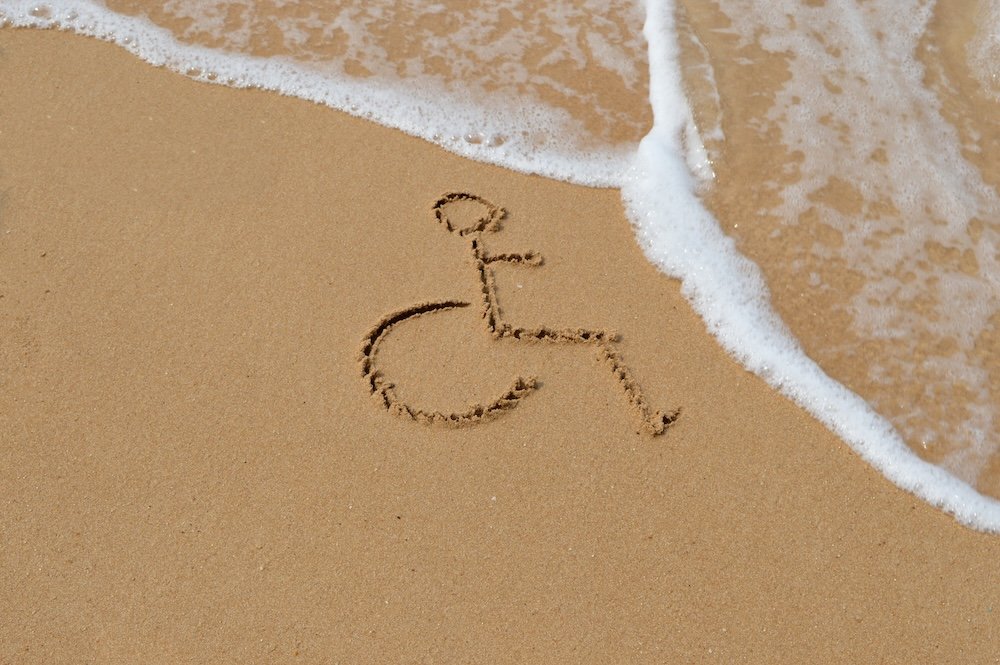
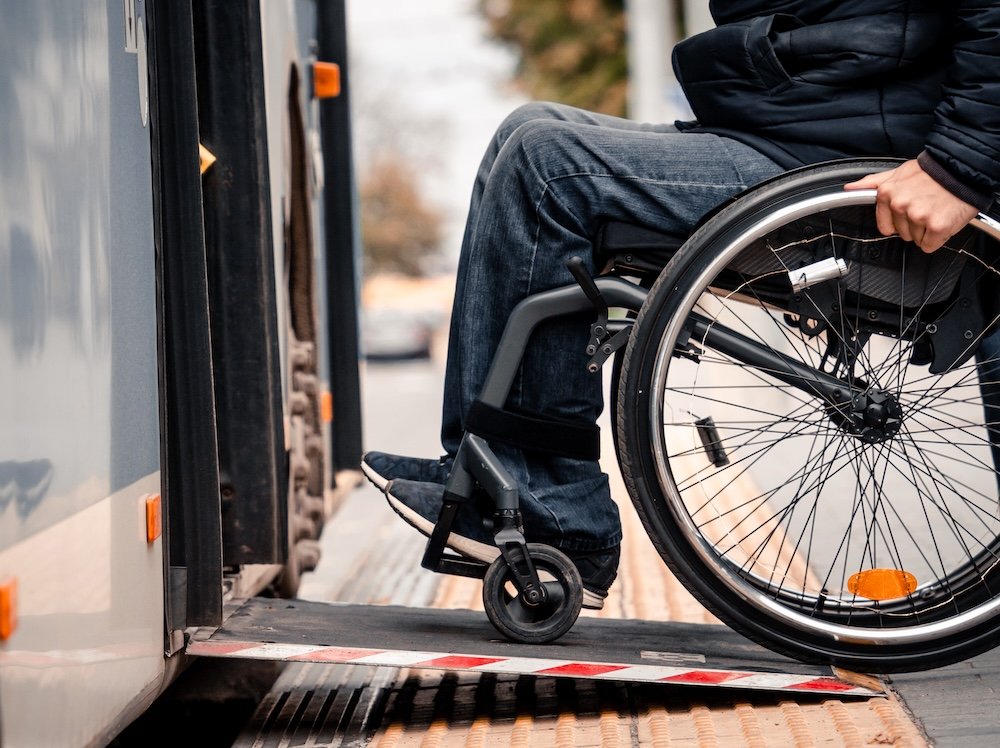
In the late 1960s and into the early 1970s, a group of University of California, Berkeley students calling themselves the Rolling Quads pressed the city to do something that sounds almost absurdly small now: cut ramps into the curbs along Telegraph Avenue, the four blocks between Bancroft Way and Dwight Way. Hale Zukas, one of the group’s members, designed the ramp himself and worked the city council until it agreed. Their most famous member, Ed Roberts, had spent years navigating Berkeley’s sidewalks in a wheelchair, dropping off curbs into traffic because there was no other way down. Berkeley’s program became, by most accounts, the first widespread municipal curb cut effort in the country. Every ramped corner a traveler now rolls a suitcase across, every sidewalk a stroller crosses without a jolt, traces back to that stretch of Telegraph Avenue. Their activism eventually shifted to public transit, forcing cities to implement bus wheelchair lifts, and low-floor bus designs.
Accessibility is not a natural feature of a place, like weather or elevation. It is a decision, made by a specific city council or hotel chain or national park service, usually decades after the buildings and streets it applies to were already finished. Some destinations made that decision early and often. Others never got around to it, or built their most famous attractions centuries before anyone was deciding anything. The gap between those two groups is the real geography a traveler with mobility limitations has to navigate, and it does not always line up with the gap between “developed” and “developing,” or between places that feel welcoming and places that don’t.
The Places That Decided Early
Singapore built accessibility into its transit system rather than retrofitting it, which shows. Ramps, elevators, and tactile flooring run through nearly all of its public transit, with loudspeaker announcements and digital displays backing up what a rider might miss visually. Gardens by the Bay and the National Gallery are both fully wheelchair accessible, and the National Gallery goes further, offering access guides designed for visitors with dementia as well as physical disabilities. Sydney tells a similar story: over 2,100 braille and tactile signs mark its pedestrian crossings, the Opera House runs accessible performances for deaf, low-vision, and sensory-sensitive audiences, and the ferries that make up a real part of the city’s transit system are wheelchair accessible, not just the buses.
Cape Town has built something a little different: a campaign called Limitless Cape Town that installed braille touch points across the city, paired with a bus system designed for wheelchair users and a tour guide, Winston Fani, who is Africa’s first certified blind tour guide leading sighted and low-vision travelers alike. That detail matters more than it might seem. A ramp gets a wheelchair user through a door. A guide who has lived the experience he’s describing gets a blind traveler an actual understanding of the place, which is a different and harder thing to build than concrete.
Rio de Janeiro splits the difference in an interesting way. Its buses, subway, and trams are wheelchair accessible, and its beaches, not exactly known for being flat or predictable, have accessible sections. Sugarloaf Mountain is reachable by cable car. Christ the Redeemer is only partially accessible: escalators handle most of the ascent, but the final approach to the statue itself still requires navigating stairs, a reminder that even cities committed to accessibility run up against monuments that were never built with a ramp in mind.
Berlin belongs on this list for a specific reason: much of its historic center was destroyed in World War II and rebuilt afterward, which means it skipped the centuries of unaltered cobblestone that trip up so much of the rest of Europe. Its museums lean into that advantage. The Berlinische Galerie has a tactile floor guidance system for visitors with low vision, alongside free wheelchair loans and German Sign Language tours. The Humboldt Forum runs tactile exhibitions and wide, elevator-served corridors throughout. It is an uncomfortable fact that a city’s worst chapter left it, decades later, more physically navigable than cities that were spared.
The American Version
The United States never achieved anything as coordinated as Singapore’s transit build-out, but the Americans with Disabilities Act, passed in 1990, set a nationwide floor that means a traveler doesn’t need to research each city’s baseline before booking a flight the way they might in Europe or parts of Asia. It’s not evenly applied. Older cities with older subway systems, Boston and Philadelphia and much of the New York system, still have stations without elevators. But newer or heavily renovated networks, and much of Chicago’s, are considerably more consistent, and the Chicago Transit Authority publishes real-time accessibility status for its stations rather than leaving travelers to guess.
The national parks make their own case for the American approach: practical, unglamorous, effective. The Access Pass, issued free for life to any U.S. citizen or resident with a documented permanent disability, gets a traveler into more than a thousand federal recreation sites, no different in privilege from the $80 annual pass everyone else buys. It requires a letter from a physician or documentation from an agency like the VA or Social Security, and it can be picked up in person, ordered by mail through the USGS store, or issued instantly as a digital pass through Recreation.gov. It is one of the few pieces of federal paperwork that does exactly what it says it will do.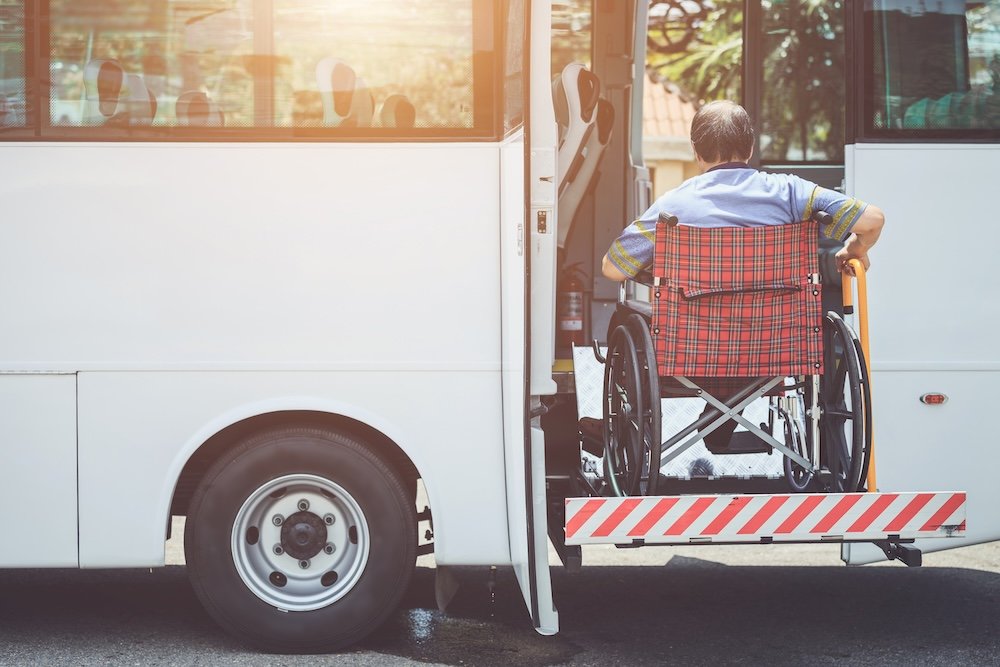
A study Upgraded Points released on May 29, 2026 tried to put an actual number on which American vacation towns deliver rather than just advertise, scoring 100 leisure destinations across eight measures: accessible Airbnbs and their price, accessible hotels, tours, trails, restrooms, restaurants, and bars. Pensacola Beach, Florida came out on top at 91.3 out of 100, with 64.3 wheelchair-accessible restaurants and 16 accessible public restrooms for every thousand residents. Gatlinburg, Tennessee took second at 89.6, which is worth sitting with for a second, because Gatlinburg isn’t flat. It’s a Smoky Mountains gateway town, proof that hill country can be built for wheelchairs as deliberately as a beach can.
The study comes with a catch worth taking seriously rather than skipping past: it measured accessible amenities per thousand permanent residents, not per visitor, which means a small town with an outsized seasonal tourism economy, exactly the profile of most of this list, will always out-score a big city with the same raw number of accessible restaurants spread across a far larger population. That’s a real measurement, not a broken one. It just measures density, not a guarantee, and a traveler still has to call ahead and confirm what “accessible” means at the specific restaurant or rental in question.
Cape May’s neighbor up the coast makes the same point from the other direction. Ocean City, New Jersey doesn’t crack anyone’s top ten, but it offers free beach wheelchairs on request at its information centers and has laid Mobi-Mats, rollable rubber matting, across six beach access points so a standard wheelchair can cross sand that would otherwise stop it dead. None of that shows up in a per-capita score. It shows up the moment someone actually tries to get from the boardwalk to the water.
Orlando runs its own version of accommodation through Disney’s Disability Access Service, which lets visitors avoid standing in a physical line while still getting a return time for a ride, essentially converting a wait into something a wheelchair user or a person with a chronic condition doesn’t have to endure standing up. It is not universally loved. Disney has tightened the program’s eligibility requirements more than once in recent years, and travelers with less visible or less easily documented conditions have complained about being turned away. But the fact that it exists at all, and that a theme park built its entire circulation model around lines, shows a level of attention that a lot of older attractions never had to develop.
The Places Time Left Behind
None of that changes what happens the moment a traveler with mobility limitations lands somewhere that was finished being built four hundred years before anyone considered them.
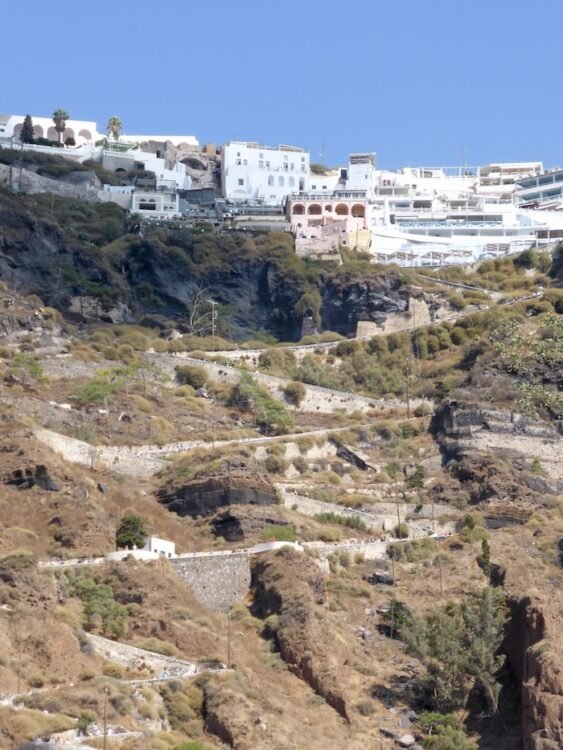
Santorini is the clearest example, mostly because its most photographed feature, the switchback path down the caldera cliff to the old port, is also its most punishing. Wheelchair users have two real options: a cable car that only runs at certain points and skips most of the town, or being carried, an option offered by donkey and mule handlers along the path and one that plenty of visitors, understandably, decline on principle. There is no third option that involves actually rolling down the cliff on your own terms.
Amsterdam presents a stranger case, because the city gets the easy part right and fails at the hard part. Its streets are flat and its bike and pedestrian paths are cleanly separated, genuinely good conditions for getting around by wheelchair. But the moment a traveler wants to go inside a seventeenth-century canal house, which is most of what there is to see, they run into architecture that predates the concept of accessibility by three centuries: narrow, steep interior stairs with no room for an elevator, restaurant bathrooms reached only by a flight up or down. The Anne Frank House is the starkest version of this. The hidden annex that gives the museum its entire reason for existing is reached by stairs, full stop, with no elevator and, by the nature of what it commemorates, probably no acceptable way to add one.
Petra has tried to solve this with money rather than infrastructure. A golf cart can carry a visitor through the Siq, the narrow gorge leading to the Treasury, for around $110 for two people round trip, but the carts themselves aren’t wheelchair accessible: a wheelchair user has to be lifted into the cart while the chair gets folded and stowed in the back, arriving at one of the most photographed ruins on earth separated from their own mobility equipment. Walking the Siq independently isn’t much better, alternating between paved sections and stretches of soft sand or loose rock that require real upper-body strength to cross. And Petra’s celebrated Monastery, reached by roughly eight hundred rock-cut steps, simply isn’t in the conversation.
Machu Picchu splits itself cleanly in two. The lower terraces and the main plaza of the Inca city are manageable by wheelchair, and shuttle buses will carry a traveler up from Aguas Calientes with staff assistance at boarding. But Huayna Picchu, the dramatic peak in the background of every photo of the site, is a steep run of stone stairs that was never going to accommodate anyone, and the upper agricultural terraces require the same. A visitor sees the postcard. They don’t climb into it.
What the Infrastructure Doesn’t Fix
The theme running under all of this is that ramps and elevators solve the physical half of the problem and leave the awareness half almost entirely alone. Petra has no guides trained to work with hearing or visually impaired visitors, according to the advocacy groups that track this kind of thing, which means a traveler who has already cleared the golf cart and the loose gravel still has to build their own understanding of the site without help suited to how they experience it. Cape Town solved that specific problem by putting a blind guide in charge of the tour rather than a ramp in charge of the entrance. That’s a staffing decision, not a construction project, and it costs far less than pouring concrete. Most places haven’t made it.
That’s the honest shape of it. A wheelchair user can see more of Singapore in a week than most walking tourists manage, and will lose most of Petra’s Monastery to a flight of rock-cut steps no golf cart will ever climb. Neither fact cancels the other out. They just mean the research has to happen before the ticket does, and the question worth asking about any destination isn’t whether it’s accessible, but who decided it should be, and when.