


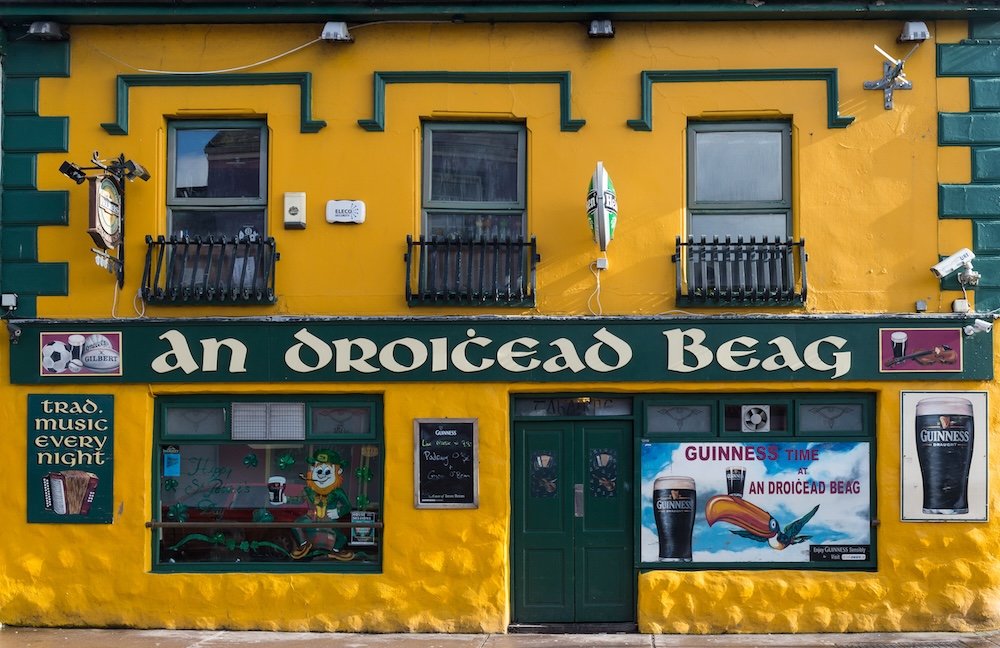
The rain started sideways somewhere around the second pint, which in Dingle seems to be less a weather event than a scheduling cue. Inside An Droichead Beag, a fiddle player and a woman with a bodhrán had been trading tunes for twenty minutes without announcing a single one, the way musicians do when they’ve played together long enough not to need a set list. A man at the bar, a fisherman by the look of his hands, leaned over and told me, unprompted, that the tune was called “The Kesh Jig,” then spent the next ten minutes arguing with the bartender about whether it was actually “The Kesh Jig” or something else entirely. Nobody resolved it. Nobody seemed to expect it would be resolved. I had been in the country eleven hours.
That is the case for Ireland as a first international trip, distilled into one wet Tuesday: you can walk into a pub as a stranger and leave twenty minutes later having absorbed a small, useless, wonderful piece of local disagreement, and you never once had to reach for a phrasebook to get there. There is a mild, comic pace to many of the local conversations. Asking directions on the street one of my first days in country turned into a group conversation with other pedestrians, each with their own variation of be best path onwards, including the one interesting fellow who assured me that “Oh, you can’t get there from here.”
First trips abroad can be problematic for a specific, predictable reason. The traveler spends so much cognitive effort decoding a menu, converting currency in their head, or figuring out which door of the train actually opens that there’s nothing left over to notice the place itself. Ireland removes that tax without removing the experience of being somewhere genuinely foreign. The language is English, but the rhythm of it, the understatement, the fondness for a story told sideways rather than head-on, is not American English, and the country underneath it runs on a different clock entirely. You are still abroad. You just aren’t entirely foreign.
The practical case backs this up. American citizens can enter Ireland for tourism without a visa and stay up to ninety days, and Ireland sits outside the Schengen zone, so none of the newer European entry paperwork applies there the way it increasingly does elsewhere on the continent. Direct flights run from a long list of U.S. cities, including New York, Boston, Chicago, and Charlotte, into Dublin, which means a first-timer can be standing in front of the Book of Kells at Trinity College the same day they left their own kitchen. Ireland also lands consistently among the ten safest countries in the world on the Global Peace Index, which matters more than travel writers usually admit when someone is choosing where to send a nervous new passport into the world.
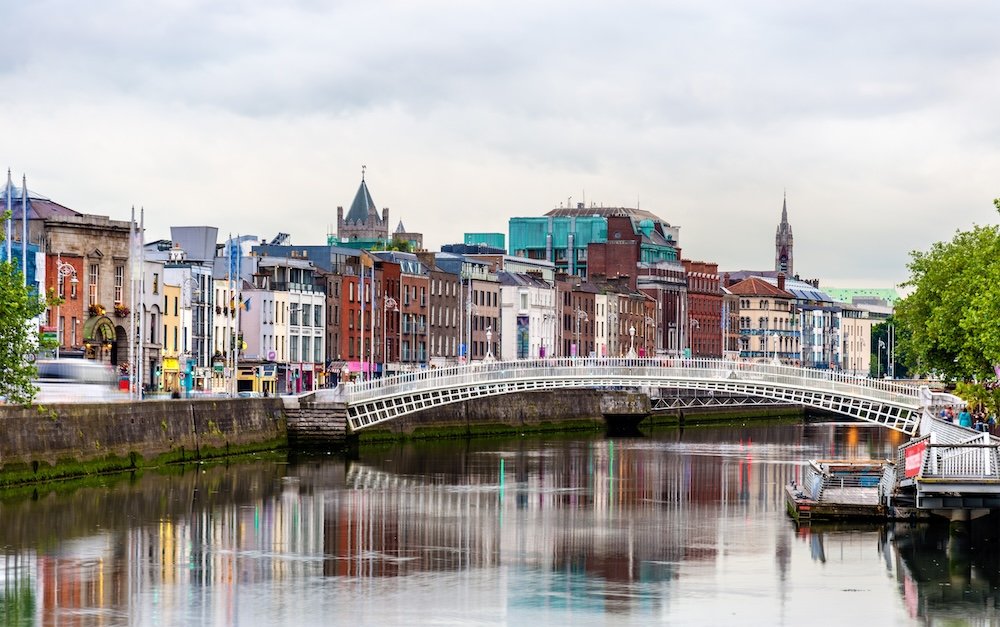
None of that would matter if the country itself didn’t deliver. It does, and it does it at a scale that suits a first attempt rather than overwhelming it. Dublin gives you the concentrated version: the Book of Kells and the Long Room library that looks like it was built for a purpose other than showing off, though it clearly does both. Temple Bar is worth walking through once and then avoiding, a district that has become a caricature of itself, priced for the tour buses rather than for anyone who lives there. Better to find a session in a smaller pub two streets over, where the music is the same and the pint costs less.
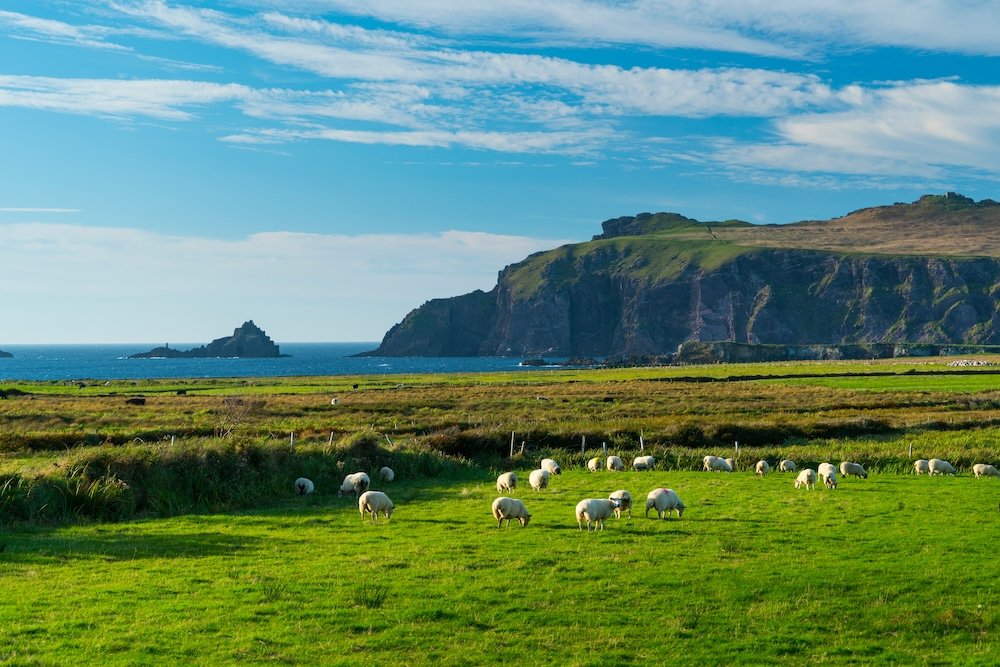
Outside the capital, the west coast is where the country stops being polite and starts being dramatic. The Cliffs of Moher rise over two hundred meters straight out of the Atlantic, and the wind up there has an actual opinion about your jacket. The Ring of Kerry and the smaller, less trafficked Dingle Peninsula loop past beehive huts that predate the Vikings, working farms, and beaches so empty they seem to have been misplaced. Galway, on the other end, moves at the pace of a college town that never quite grew out of its own energy, and the Aran Islands sit a short ferry ride offshore for anyone who wants to see Irish spoken as a first language rather than a museum piece.
Ireland has company. If it’s booked, or if a returning traveler wants the next step up in complexity, three other countries offer the same low-friction entry into international travel, each with its own case.

England solves the same language problem and adds depth of history that Ireland, for all its own past, does more subtlety. London handles the greatest-hits version: the British Museum, Westminster, a genuinely enormous transit system that is nearly impossible to get lost on for long. But the better first-timer move is getting out of London entirely, into the Cotswolds, where villages like Bourton-on-the-Water and Bibury look built rather than settled, all honey-colored stone and rivers running through the middle of town. Bath, with its Roman baths still holding the original spring water, and the Lake District, where Wordsworth’s hills are exactly as green as advertised, round out a country that rewards slowing down almost as much as it rewards checking boxes.

Scotland trades England’s density for open land. Edinburgh alone justifies the trip, a city built on extinct volcanoes with a castle at one end and a palace at the other, and every August it hosts the Edinburgh Festival Fringe, the largest arts festival in the world, when the entire city turns into a stage. Past the capital, the Highlands and the Isle of Skye offer the kind of landscape that makes conversation stop in a car, single-track roads winding past lochs and sheep that have never once yielded the right of way.
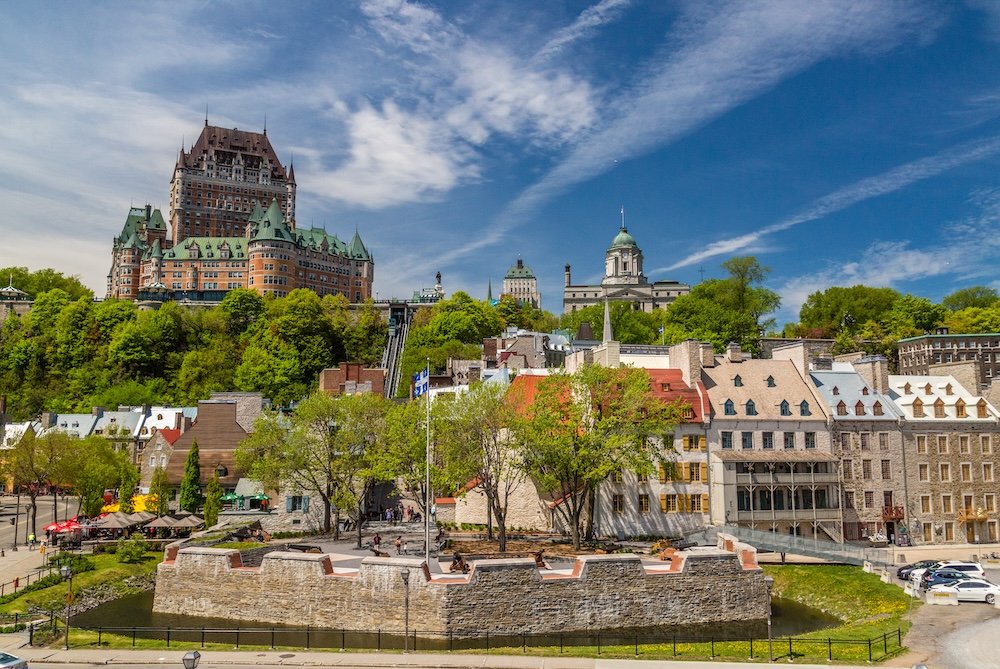
Canada is the outlier on this list, not European, but it offers the same core promise: English spoken everywhere (French in Quebec, which is its own reward), infrastructure a first-time traveler can lean on, and genuine cultural distance without a genuine language barrier. Banff National Park, Canada’s first, framed by the Rockies and turquoise glacial lakes, gives an entirely different kind of first trip, one built around scale rather than history. Quebec City’s Old Town, a UNESCO World Heritage site, offers the closest thing North America has to a walled European city, cobblestones and all.
Back in Dingle, the argument over the jig’s real name never did get settled. The fisherman left first, the fiddle player kept playing, and the rain, having made its point, eased off around closing time. Nobody in that pub had asked where I was from or seemed to care much either way. That, more than any cliff or castle, is what a first trip abroad should teach you: that the world runs fine without you, and it’s worth crossing an ocean just to watch it do that for a while.