


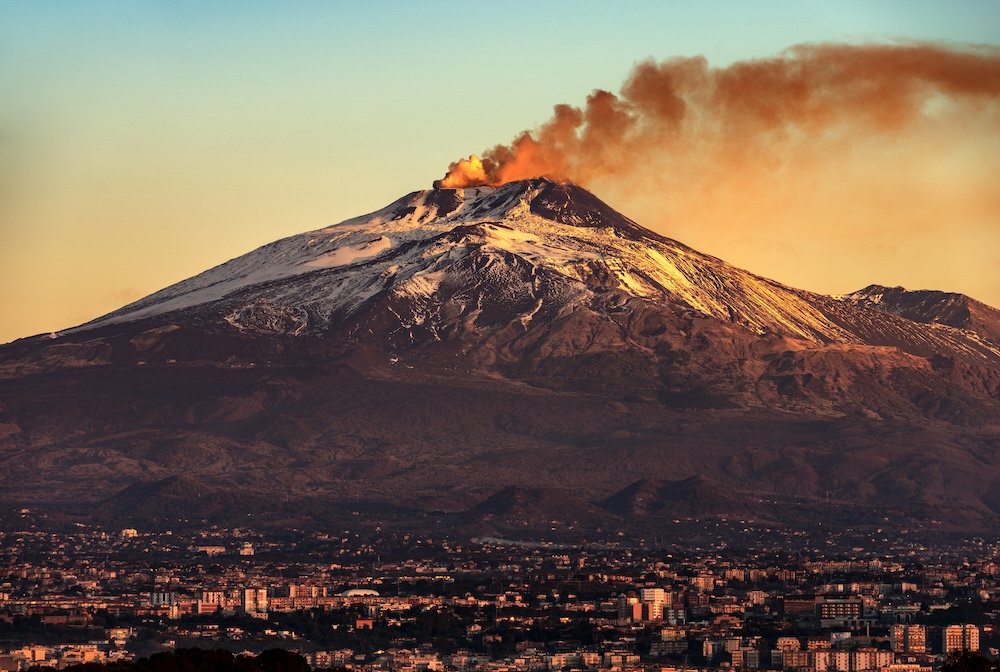
Mount Etna has been erupting since roughly August 6, when a new vent opened in the Valle del Bove and began sending ash south and east in whatever direction the wind chose. By August 13, Euronews was calling it the seventh consecutive day of activity, a stretch of sustained eruption Sicily hadn’t seen since the 1970s. Catania’s airport, the busiest in Sicily, stayed closed for five straight days, arrivals and departures suspended until 2am on the 15th, the longest emergency shutdown there since 2002. Of the nearly 2,000 flights scheduled between August 6 and 12, roughly 36 percent never left the ground. More than 600 were rerouted to Palermo, Trapani, Comiso, and airports across the strait in Calabria. On the heavier days, the ash plume reached as far as Malta and Libya. Catania Airport in Sicily on August 15th, resumed flights after the civil authorities lowered the aviation danger level from red to orange but some flight restrictions have been in place through August 17th.
None of this is really about lava. Etna’s flows have been contained to the upper slopes, moving slowly enough that nobody is fleeing a wall of fire down a hillside. The problem is finer than that. As the volcanologist Boris Behncke put it, ash is “a great risk for aircraft” because it can be sucked into the engines and cause them to stall, which is a mechanical problem, not a biblical one. It is worth sitting with that distinction for a second, because it separates this event from the volcano’s darker history. In 1669, Etna’s lava reached the walls of Catania itself, a slow four-month advance that residents fought with trenches and prayer in roughly equal measure, and the city still bears the scars in its black stone foundations. Nobody today is digging trenches. They’re rebooking connections through Palermo.
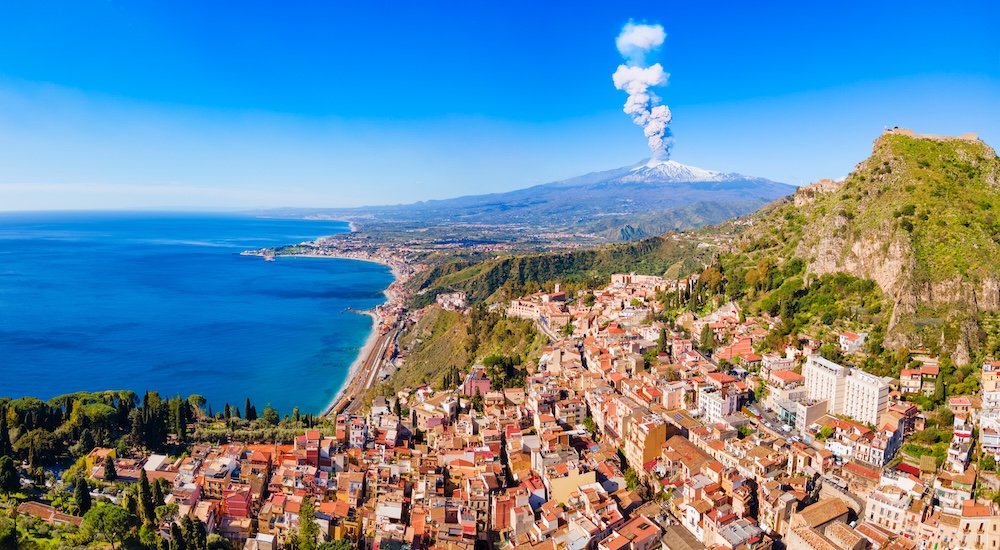
Etna is Europe’s tallest and most consistently active volcano, a UNESCO World Heritage site precisely because it never fully stops. It has been erupting in one form or another for thousands of years, sometimes a quiet plume from the summit craters that locals barely mention, sometimes a flank eruption serious enough to close an airport for the better part of a week. What makes this August unusual isn’t that Etna is erupting. It’s that it’s been doing it for this many consecutive days, in front of this many stranded travelers, during the one week of the year Sicily is fullest.
If you already have a trip booked, the practical advice is duller than the volcano itself but worth following. Neither the FCDO nor the US State Department has advised against travel to Sicily as a whole, so this is not a reason to cancel a trip to Palermo, Syracuse, or the coast. It is a reason to check Catania’s airport status directly before you head there, since closures have been opening and shutting within hours depending on the wind. Palermo has been running without ash disruption and is a reasonable fallback if your flight gets rerouted, and Trenitalia has added extra regional trains to help move people who land somewhere other than where they meant to. Airlines are required to offer rebooking, meals, and accommodation for passengers affected by cancellations, though cash compensation isn’t guaranteed once an airline can point to “extraordinary circumstances,” which an erupting volcano generally qualifies as. It’s also worth checking your travel insurance policy specifically for volcanic ash and eruption clauses before you go. Coverage on this varies more than people expect.
For travelers who actually want to see the volcano rather than just fly past it, access is still possible, just tighter than usual. Licensed guides are required, and the good ones have same-day information the tour brochures don’t. Current rules keep visitors at least 200 meters from any active lava flow, cap groups at around ten people, and require every excursion to end before sunset, so nighttime lava viewing, normally one of the better reasons to come, isn’t happening at the moment. The summit crater zone above roughly 2,850 meters opens and closes daily depending on what Italy’s Civil Protection authority and the national volcano institute, INGV, decide that morning. Lower routes, like the Monti Sartorius craters on the north side, have stayed open the whole time and are worth doing anyway, ash cloud or not.
Sicily has been doing this a long time. Somewhere on the slope above the terminal, the mountain that just canceled everyone’s flight has, for three thousand years, also been the reason people come.