


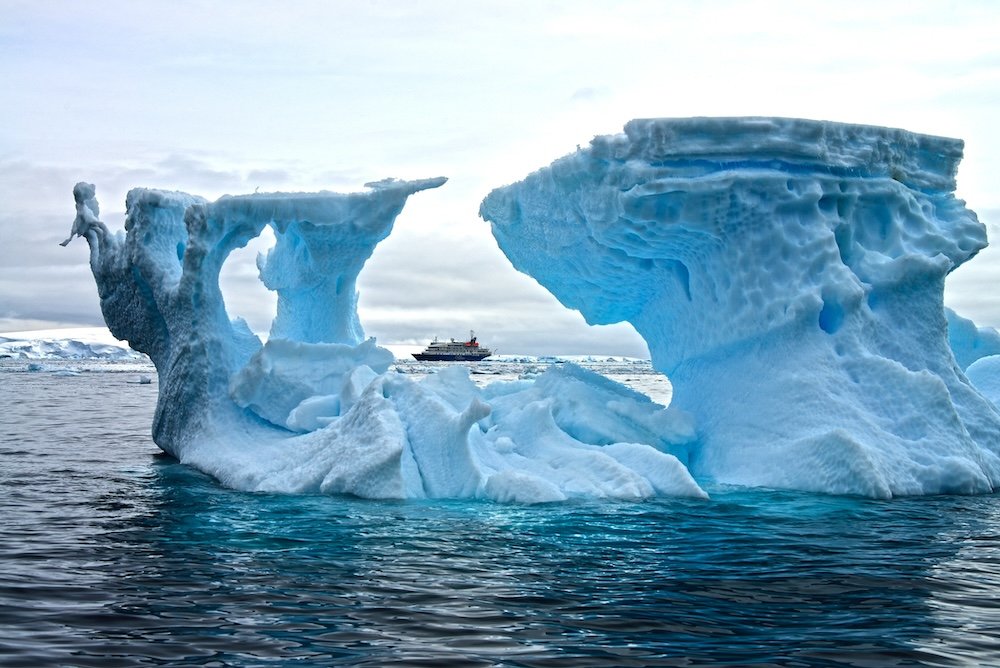
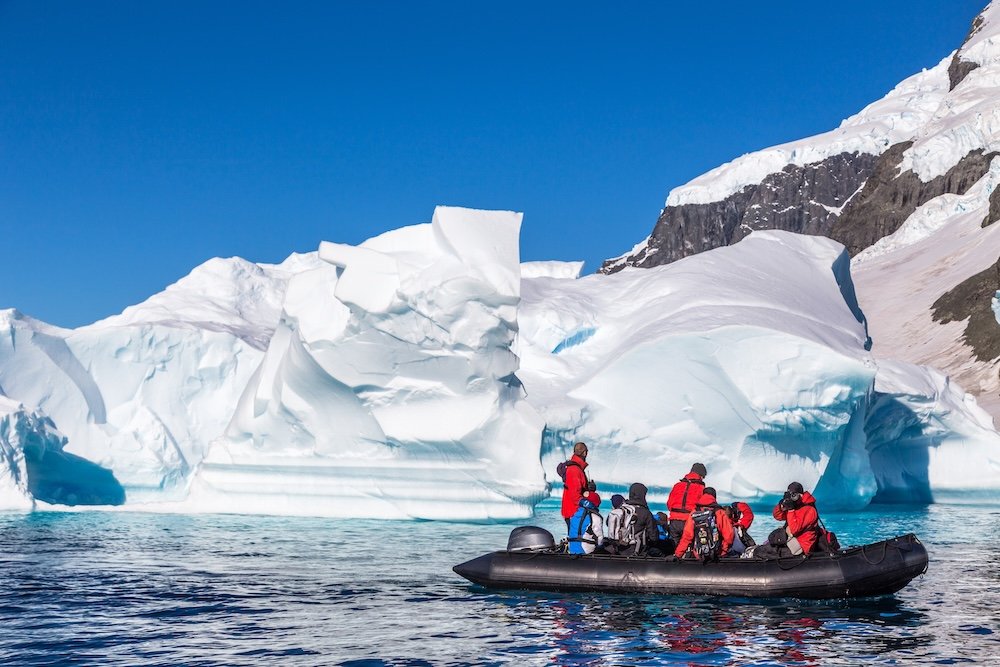
The zodiac engine cuts, and for a moment the only sound in the Gerlache Strait is water lapping against inflatable pontoons and the wet exhale of a crabeater seal hauled out twenty feet away, unbothered, barely opening one eye to register the eight strangers in red parkas now drifting past. Nobody on the boat says anything. The guide, a marine biologist who spent the morning’s briefing explaining pack ice formations with the patience of someone who has given this talk two hundred times and still means it, just lets the silence sit. An iceberg the size of a parking garage drifts by, veined blue where the pressure has squeezed the air out of it over centuries.
Three thousand miles north, on a ship built for seven thousand passengers, a midnight buffet is being restocked for the second time and a hypnotist is closing out his set in the main theater. Both of these are cruises. Almost nothing else about them is the same.
Expedition cruising has quietly become one of the fastest growing segments in an industry that just posted record numbers. The Cruise Lines International Association’s 2026 State of the Cruise Industry report put global passenger volume at 37.2 million for 2025, an all time high. Expedition cruising is composed of travelers wanting something more immersive than a typical . The appeal is not complicated once you understand what these ships are actually built to do. A mass market cruise sells a floating resort with a rotating cast of ports attached to it. An expedition ship sells access, to places a resort could never reach in the first place: a fjord with no dock, a beach with no airstrip within five hundred miles, an island where the wildlife has never learned to be afraid of people.
The differences start with the ship itself. Where a mainstream vessel might carry six thousand passengers and stack fourteen decks of waterslides, casinos, and specialty restaurants, an expedition ship typically holds somewhere between 12 and 500 guests, small enough to nose into channels a larger hull would run aground in. The crew skews toward naturalists, historians, glaciologists, and former park rangers rather than entertainers, and the itinerary is treated as a plan rather than a contract. If a pod of orcas shows up off the bow at six in the morning, the expedition leader will wake the ship for it. If pack ice blocks a planned landing, the captain reroutes and nobody complains, because the flexibility is the point, not a flaw to be tolerated. Landings happen by zodiac, not gangway, and under International Association of Antarctica Tour Operators rules that now shape expedition norms well beyond Antarctica itself, no more than 100 guests from a single vessel go ashore at once, which is why the smallest ships often deliver the least compromised experience even though they cost more per night. You are not paying for a bigger cabin. You are paying for a lower ratio of strangers between you and the actual wilderness.
The destinations for expedition and adventure cruising are varied and far flung.
Galapagos Islands

Charles Darwin spent five weeks here in 1835 and still managed to underestimate how strange it would remain. A marine iguana, black as volcanic rock, does not move for a passing human, does not move for much of anything except a hawk. Small expedition ships slip between islands overnight so that mornings begin already at anchor, ready for a walk among giant tortoises that predate most of the world’s nations or a snorkel alongside sea lions that treat swimmers as slow, uninteresting cousins. Each island in the chain evolved its own finches, its own tortoise shell shape, its own logic, and a good naturalist guide, mandatory here by law, will spend the week making that logic visible rather than simply pointing at animals.
Maldives
Most visitors know the Maldives as an overwater bungalow and a room service menu. Expedition cruising in the same waters is close to the opposite experience: a small ship threading between more than a thousand coral islands scattered across twenty six atolls, most of them uninhabited, some barely above the waterline at high tide. Days run toward whale sharks and manta rays gliding through channels still healthy enough to support them, coral gardens that never made it onto a resort’s dive map, and the occasional stop at a fishing village where the economy still runs on tuna rather than tourism. The lagoons are shallow enough for kayaking without much skill involved, which is its own kind of luxury.
Australia

Three different Australias show up on an expedition itinerary here, and none of them resemble Sydney Harbour. In the Kimberley, ships navigate gorges cut so sharply into red sandstone that some can only be entered on a rising tide, pastand Wandjina rock art sites that Traditional Owners have maintained for tens of thousands of years, among the oldest continuous art traditions on the planet. Further north and east, the Great Barrier Reef offers the kind of biodiversity that made it a UNESCO World Heritage Site in the first place, best appreciated slowly, snorkeling or diving rather than glancing at it from a glass bottom boat. South, in Tasmania, the wildlife turns endemic and slightly feral: Tasmanian devils exist nowhere else on Earth in the wild, and the island’s coastline of dolerite sea cliffs, among the tallest in the Southern Hemisphere, gets far fewer visitors than the animal’s name recognition would suggest it deserves.
Antarctica

Getting there requires the Drake Passage, roughly 48 hours of open Southern Ocean between Ushuaia and the Antarctic Peninsula that can be glassy or genuinely rough depending on what the week decides to do, and expedition travelers tend to wear the crossing as a badge of honor once it’s over. What waits on the other side justifies the trip regardless: penguin colonies numbering in the hundreds of thousands, icebergs calved from glaciers that have been building for millennia, and the strange psychological effect of 24 hour daylight during the austral summer, when photographers simply stop sleeping on schedule. Zodiac landings put guests on the seventh continent itself, at historic huts from the Shackleton and Scott era or at research stations where working scientists explain, often bluntly, what they are watching change in real time.
Alaska
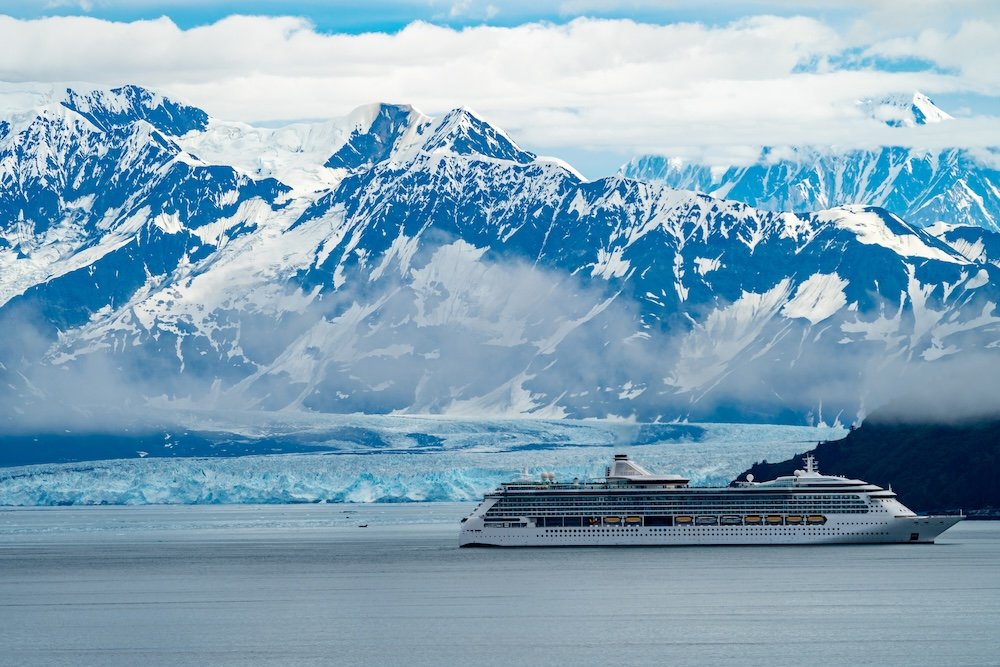
The Inside Passage does something few destinations manage: it delivers wildlife, geology, and human history in the same afternoon without much effort required. Tidewater glaciers calve into the sea with a crack and roar locals call white thunder, sending swells rolling toward zodiacs that know to keep their distance. Humpbacks and orcas feed in the nutrient rich channels through summer, brown bears work the salmon streams, and Skagway, a gold rush boomtown preserved as the Klondike Gold Rush National Historical Park, still has the wooden boardwalks that stampeders walked on their way north in 1898. The days run long this far north in summer, which turns out to be the whole point: more light means more time on deck, more time to notice an eagle nobody announced. Many Inside Passage ships are larger, more traditional ships.
Patagonia

South America simply runs out of easy land access before it runs out of coastline, and Patagonia’s fjords and channels are the reward for anyone willing to reach them by sea instead. Expedition ships work both the Chilean and Argentine sides, threading toward Cape Horn and the Beagle Channel through water Magellan’s crew found genuinely terrifying five centuries ago and modern captains still respect. Guanacos and rheas graze windswept plains onshore, Magellanic penguins and elephant seals crowd the beaches, and stops at working estancias offer a different kind of history than the wildlife does, the story of European settlers who arrived expecting farmland and found something closer to the edge of the map.
Faroe Islands and Iceland

The pairing makes sense the moment you see them side by side: two North Atlantic nations that took wildly different paths from the same Norse starting point. In the Faroes, turf roofed houses seem to grow directly out of hillsides between eighteen islands connected by tunnel, ferry, and a stubborn refusal to be anything other than themselves, villages of a few hundred people where the sheep frequently outnumber the residents and nobody finds that strange. Iceland, reached by the same expedition itinerary, trades intimacy for scale: geothermal vents steaming out of black rock, waterfalls that seem engineered rather than grown, and a volcanic landscape so unearthly that NASA once sent astronauts here to train. Puffins and arctic terns work both coastlines, and the region’s famously unstable weather turns out to be a photographer’s asset rather than a liability, since the light rarely holds still long enough to get boring.
Norway

The country’s coastal geography does most of the marketing work on its own. Geirangerfjord and Nærøyfjord, both inscribed as a UNESCO World Heritage Site, deliver the waterfalls and vertical cliffs that appear on every Norway postcard, while fishing villages the color of hard candy cling to rock beneath peaks that hold snow well into summer. Push further north to Svalbard and the itinerary changes character entirely: polar bears, walrus colonies, and arctic foxes replace stave churches as the main event, and the midnight sun means a landing at eleven at night looks exactly like one at eleven in the morning. Further south, the emphasis shifts back toward Viking history and Scandinavian design, proof that one coastline can hold two entirely different trips depending on which direction the ship points.
The Adriatic Coast

Croatia and Montenegro offer something the rest of this list mostly doesn’t: history old enough to have its own graffiti. More than a thousand islands scatter along the Dalmatian coast, most reachable only by small vessel, and a good expedition itinerary uses that access to skip the cruise ship crowds gathering at the obvious stops. Dubrovnik’s city walls still ring the old town nearly intact after seven centuries. Diocletian’s Palace in Split has spent seventeen hundred years being lived in rather than preserved behind glass, laundry lines strung between Roman columns as a matter of routine rather than irony. The water stays warm and clear enough for swimming well into autumn, and the food, grilled fish, black risotto, olive oil that tastes like it was pressed that morning because it often was, gives the region a claim mass market Mediterranean cruises rarely bother making: that the coast and the plate are telling the same story.
What all eleven of these places share is a kind of resistance to being seen easily, and that resistance is exactly what expedition cruising was built to answer. The industry’s biggest ships keep getting bigger, chasing water parks and Broadway style theaters that have nothing to do with the places they technically visit. Expedition ships are doing something closer to the opposite: getting smaller, going further, and betting that travelers still want to feel, occasionally, like the first people to arrive somewhere.
Judging by the booking numbers, that bet is paying off.