


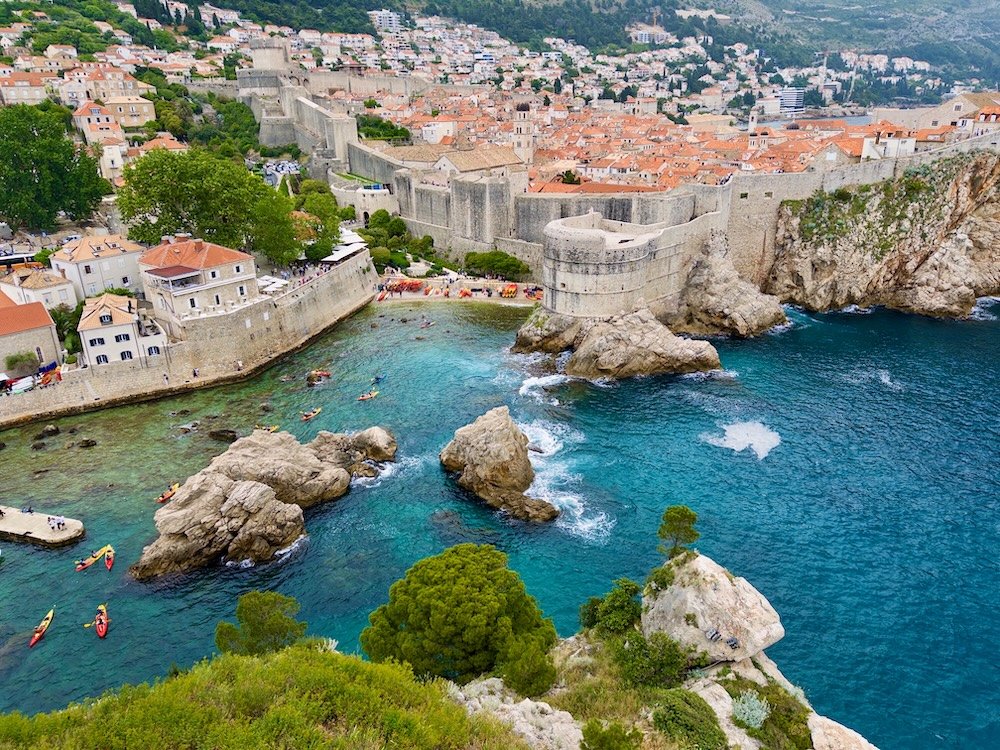
Above the entrance to Fort Lovrijenac, someone carved a warning in Latin five centuries ago: Non bene pro toto libertas venditur auro: Freedom is not well sold for all the gold in the world. The Republic of Ragusa, as Dubrovnik was then known, meant it literally. This was a city-state that paid tribute to the Ottomans, flattered Venice, and played every regional power off every other one for four centuries rather than surrender its independence to any of them. The fortress itself makes the point in stone: the seaward walls run twelve meters thick, built to withstand cannon fire from Venetian ships, while the wall facing the city measures barely sixty centimeters, thin enough that Ragusans could demolish their own fortress rather than let an occupying army use it against them. They would rather lose the building than the idea.
A tour group stood beneath that inscription the afternoon I visited, phones raised, waiting for their guide to finish explaining that this cliff-top fort also played the Red Keep in Game of Thrones, host to Joffrey’s name-day tournament and a fair amount of fictional bloodshed. Nobody seemed to find the juxtaposition strange, a monument to hard-won sovereignty now better known for a television show about people scheming to steal a throne. Dubrovnik has gotten used to being two things at once.
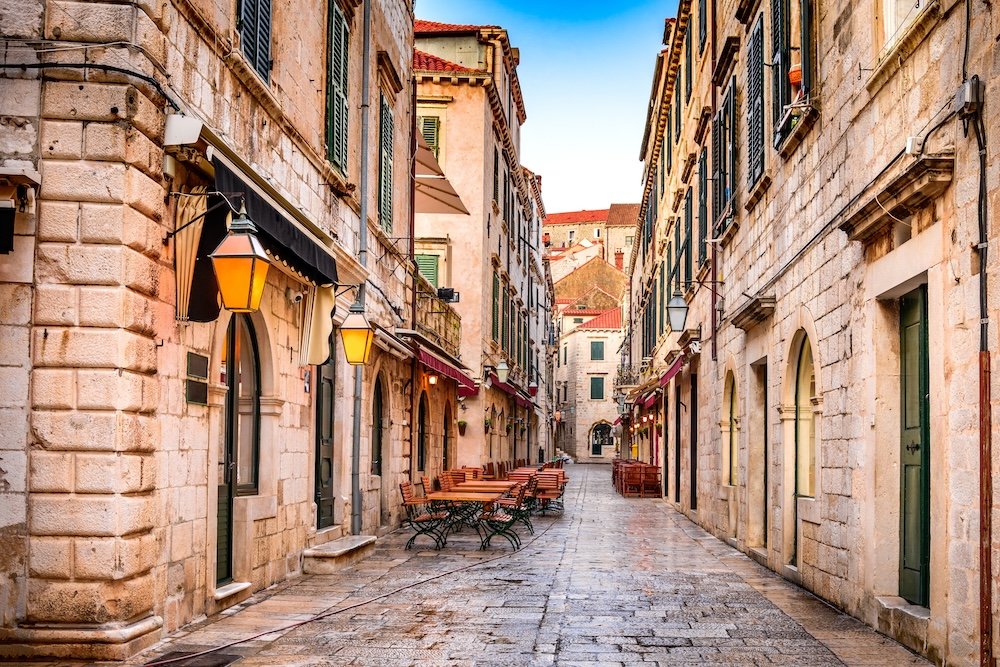
The Old Town below the fort is the reason UNESCO listed the entire walled city as a World Heritage Site in 1979, and the reason it briefly landed on the List of World Heritage in Danger between 1991 and 1998, after Yugoslav shelling damaged roughly two-thirds of its rooftops. Walk the mile and a quarter of ramparts today and you can still spot the newer, brighter terracotta tiles patched in among the older, sun-bleached ones, a visible seam between the city that survived a siege and the city that rebuilt itself for tourists. Inside those walls, the streets narrow into a limestone maze so polished by seven centuries of foot traffic that it turns slick and mirror-bright after rain, a detail every visitor learns the hard way at least once.
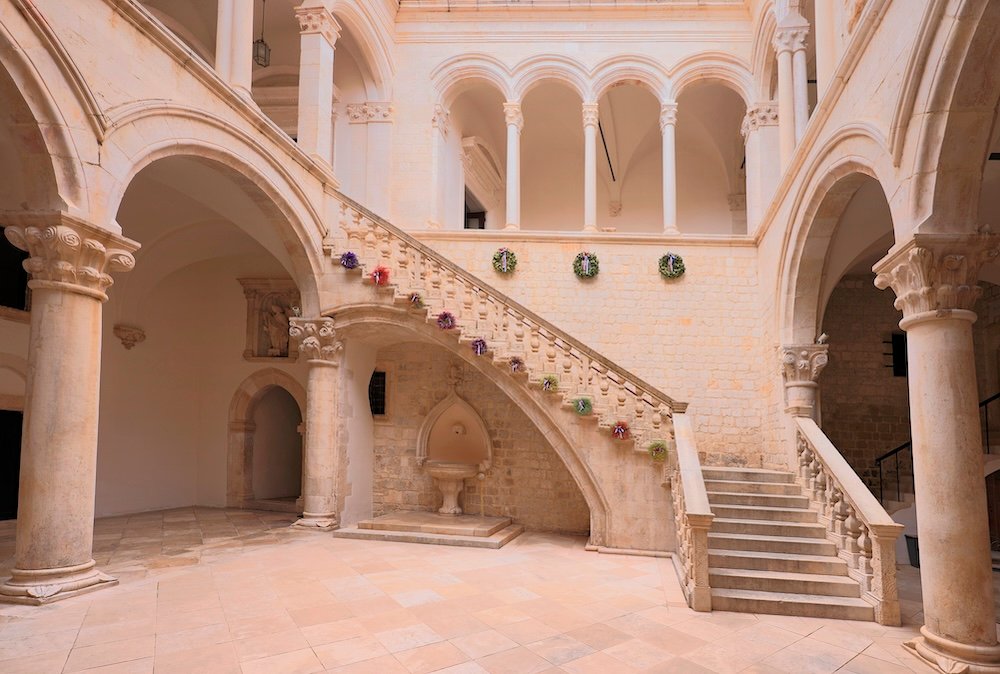
The Rector’s Palace anchors the Old Town’s civic history. From the 14th century until Napoleon dissolved the Republic in 1808, this was where the Rector, elected for a single month at a time so no individual could accumulate real power, conducted the business of governing. The building has survived a fire, a gunpowder explosion, and two earthquakes, which is why its facade reads as an argument between architectural styles rather than a single vision: Gothic arches, a Renaissance loggia, Baroque repairs stitched in wherever the last disaster required them. It now houses the Museum of Dubrovnik’s history collection, and walking through the old rector’s private chambers, you get a clearer sense of the job’s built-in humility than any placard could offer. A month in charge, then back to civilian life.
A few steps away, Sponza Palace did the unglamorous work that kept Ragusa solvent. Built between 1516 and 1522, it served at various points as customs house, mint, armory, and bank, the sort of building where a Renaissance city actually earns its money rather than displays it. Its inner courtyard, all Gothic tracery and Renaissance columns, now shelters the Dubrovnik State Archives, with documents running back to the 12th century, and each August its arcade becomes the ceremonial opening stage for the Dubrovnik Summer Festival.
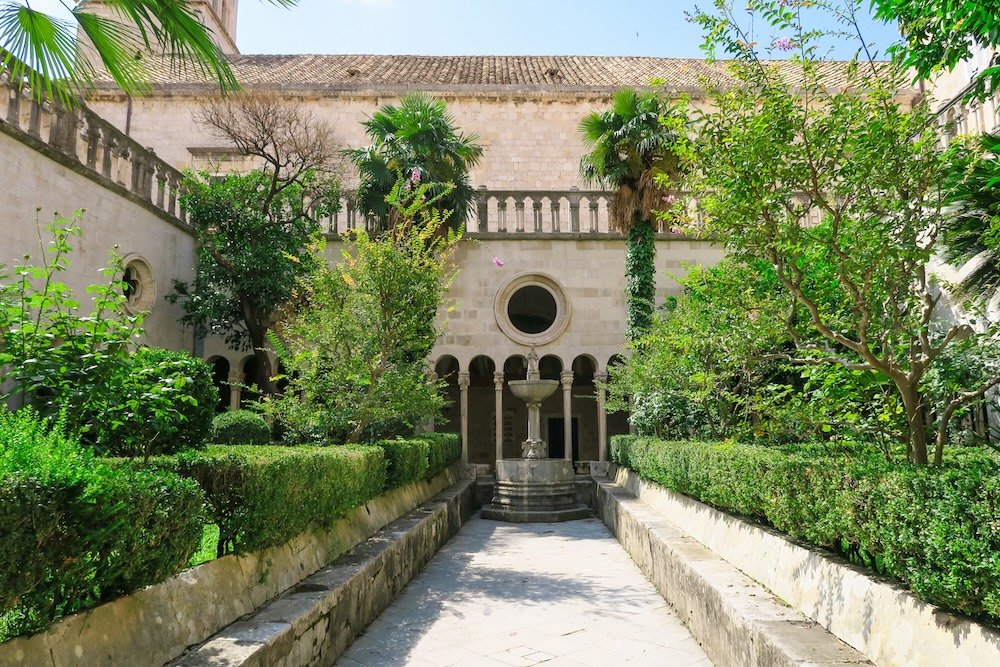
If you want the city’s spiritual counterweight to all that commerce, walk to the Franciscan Monastery near the Pile Gate. Built in 1317, its pharmacy has been dispensing remedies continuously since the same year, making it, by most accounts, the oldest still-functioning pharmacy in Europe and the third oldest in the world. The 1667 earthquake that flattened much of the monastery’s church spared the cloister, so you can still walk the arcaded garden where friars once ground herbs, then step next door to buy rosewater cream from a shop that has occupied the same spot since the reign of the last Byzantine emperors was still recent memory.
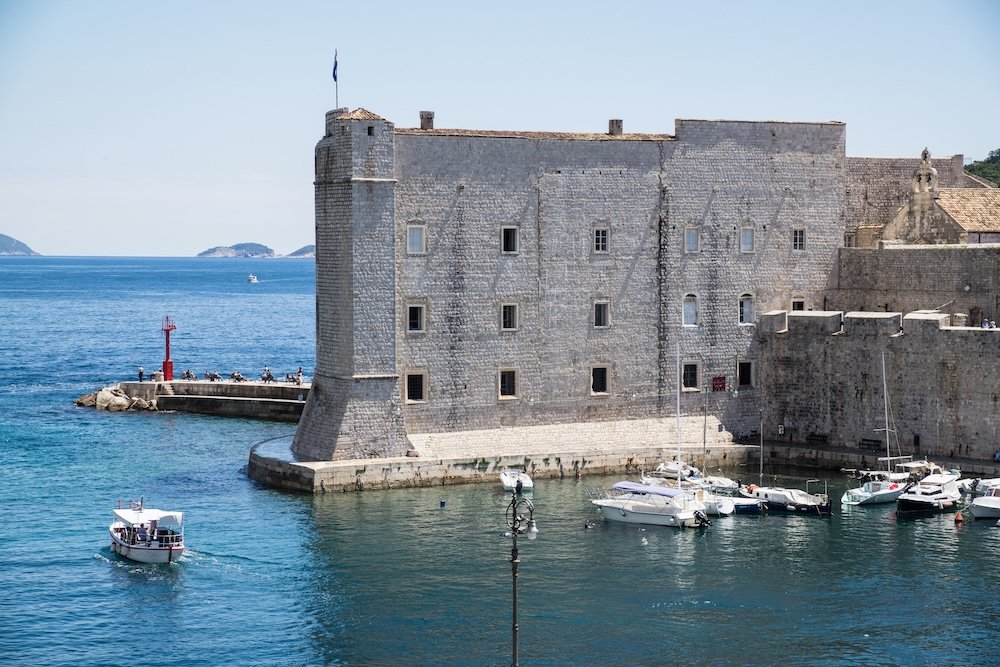
Down at the Old Port, the working harbor that Sponza Palace once helped finance, the business is entirely current: wooden boats loading day-trippers for the Elaphiti Islands, ferries to Mljet National Park with its saltwater lakes and Benedictine monastery on an islet within an islet, and captains hawking sunset cruises along a coastline that made this whole city rich in the first place. Above the harbor, St. John’s Fortress holds the Maritime Museum, ship models and navigational instruments tracing how a republic this small built a merchant fleet that once rivaled Venice’s.
For elevation, take the cable car up Mount Srd, a four-minute ride that replaced the original 1969 line after Yugoslav forces destroyed it during the 1991 siege; it reopened in 2010, five million euros later. From 412 meters up, on a clear day, you can see sixty kilometers of coastline, the walled city reduced to a honey-colored postage stamp against the Adriatic. Napoleon’s Fort Imperial sits at the summit alongside a small Homeland War museum, a reminder that this view has been fought over more than once.
Come evening, find a konoba and order Pošip, historically a Kor?ula grape now grown across Dalmatia, or Plavac Mali, whose parent variety turned out through DNA testing in 1994 to be the same grape as Zinfandel, grown an ocean away and renamed by people who never knew the connection. The best of it comes from Dinga?, a nearly vertical vineyard on the Pelješac peninsula where farmers still harvest by boat because there’s no road down to some of the plots. Ragusans always did prefer clever workarounds to head-on confrontation. It’s how a republic this size stayed independent for four hundred years, and it’s not a bad way to get a decent bottle of wine down a cliff, either.