


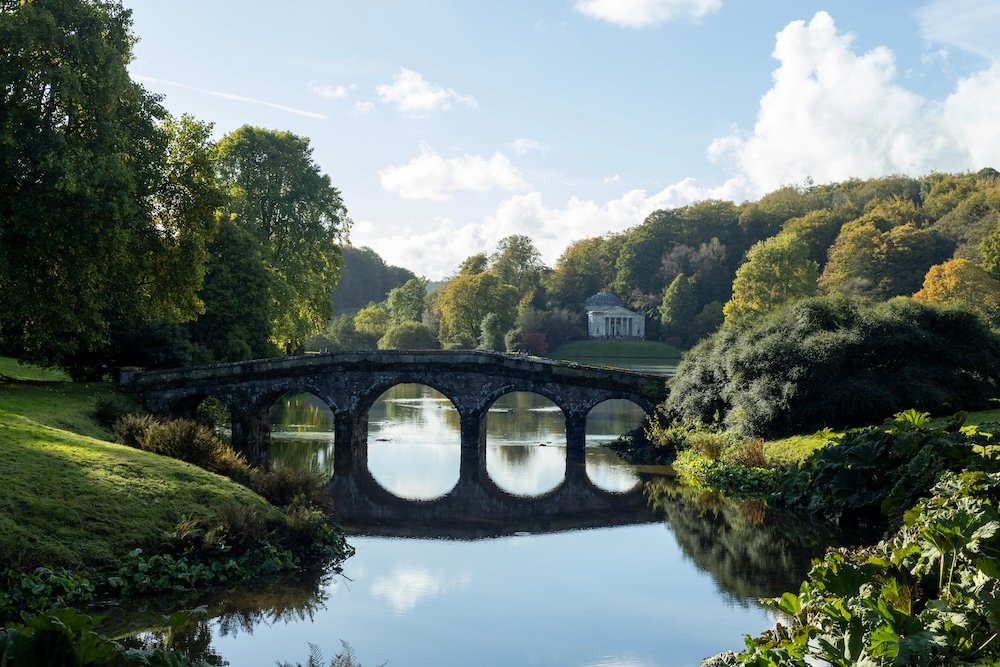
At Stourhead, in Wiltshire, the path around the lake was designed to be walked in one direction only. Round a bend past the grotto and the Pantheon appears across the water at the exact angle Henry Hoare II intended when he began digging the lake in 1741, damming a small stream until it held still enough to double every temple on its banks. Hoare had a painting in mind while he worked, a Claude Lorrain canvas called “Aeneas at Delos,” and he moved earth and planted beech until the actual landscape resembled the painted one. He even wrote instructions to later gardeners about it: greens should be “ranged together in large masses as the shades are in painting,” light against dark, exactly as a picture is composed. Stourhead looks like nature having a good day. It is closer to a stage set with roots.
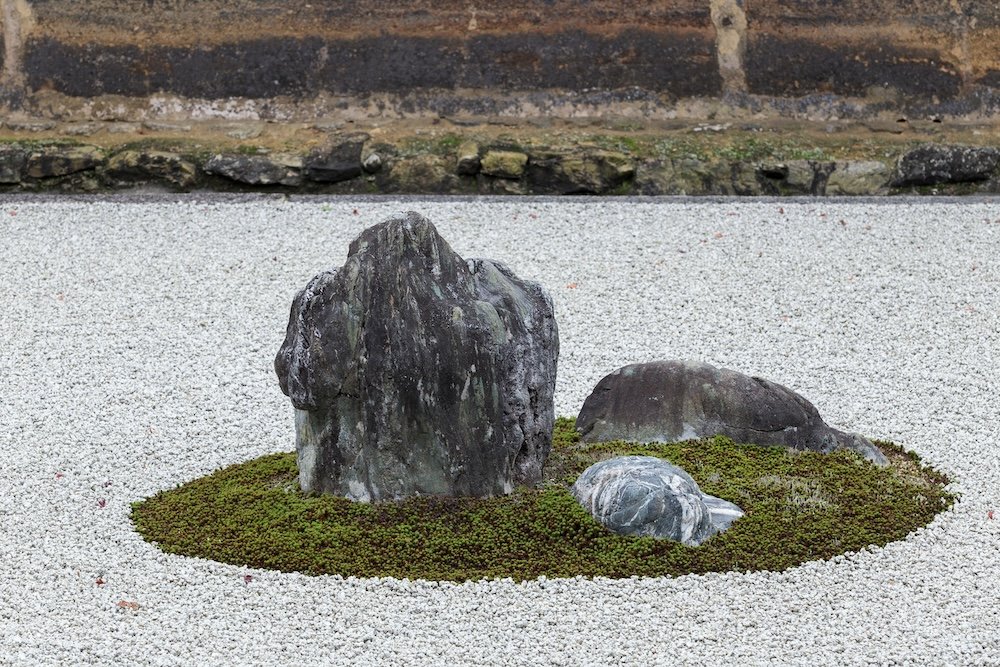
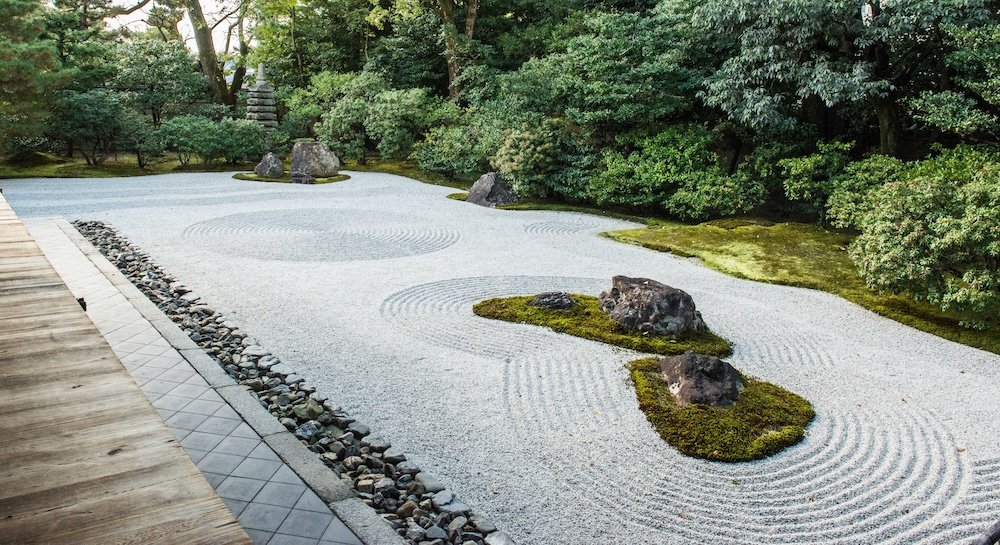
Five thousand miles east, at Ryoan-ji in Kyoto, visitors sit on a wooden veranda and look at fifteen stones arranged in five groups across a rectangle of raked gravel roughly the size of a tennis court. No one knows who designed it, sometime in the late fifteenth century, though a monk-painter named Soami gets credited on faith more than evidence. The stones are placed so that from any seat on the veranda, one of them is always hidden behind another. You can never see all fifteen at once. Guides mention this fact so often that it risks becoming a party trick, but sit there long enough and it stops being a trick and starts being the whole point: the garden is built around what you cannot fully hold in view.
Both places are trying to produce the same feeling in a visitor, something between calm and awe, and they get there by opposite roads.
The English landscape garden was, at its start, an argument. Through the early 1700s, English estates still followed the French model of Versailles: clipped hedges, straight avenues, parterres laid out like carpet patterns, nature arranged to prove that a wealthy owner could dominate it completely. William Kent began pushing back against that in the 1720s and 30s, opening up views, softening edges, letting a lawn run to the horizon instead of stopping at a wall. Lancelot Brown, who joined the gardening staff at Stowe as an undergardener in 1741 and picked up the nickname “Capability” because he told clients their properties had “capability” for improvement, took Kent’s idea and turned it into a career. Brown reworked more than 170 estates in his lifetime: Blenheim, Chatsworth, Warwick Castle, Highclere, the guest list of British landholding. His formula was turf, water, and clumps of trees, arranged so that a visitor walking the grounds would never see the seams. The entire point of a Brown landscape was that it should look like nobody had touched it, which required moving thousands of tons of earth, damming rivers, and planting trees decades before their owners would live to see them mature. It is, when you say it plainly, one of the most elaborate acts of concealment in the history of design: enormous labor spent making labor invisible.
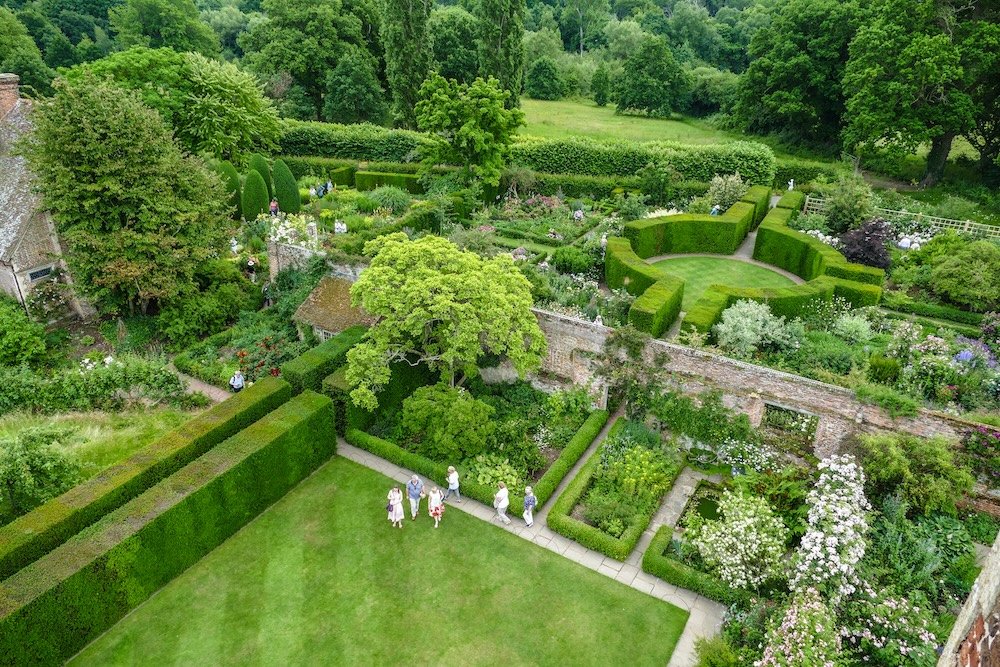
Sissinghurst, two centuries later, was an argument against that argument. When Vita Sackville-West and Harold Nicolson bought the ruined estate in Kent in 1930, they built something almost the reverse of Brown’s open sweep: a series of walled enclosures, what Nicolson called “a succession of privacies,” each room formal in its bones and riotous in its planting. The White Garden, finished in the winter of 1949, is a tightly geometric bed given over entirely to white and pale flowers, structure and abandon in the same four walls. English gardening, it turns out, has spent three hundred years arguing with itself about how much control to show.
Japanese gardens rarely bother hiding the hand behind them. Karesansui, the dry gardens of raked gravel and standing stone, trace back to garden manuals like the Sakuteiki, written around the end of the eleventh century, and reached their fullest form in Zen temples during the Muromachi period, the 1300s and 1400s, after Zen Buddhism had taken hold among the samurai class. These gardens were built for meditation, and meditation does not require an illusion of wilderness. It requires something to look at that resolves nothing, so the mind has to keep working. Saiho-ji, the moss temple founded in 1334, does something similar with texture instead of stone, an estimated 120 varieties of moss covering the ground in shades of green that shift with the humidity of a given morning.
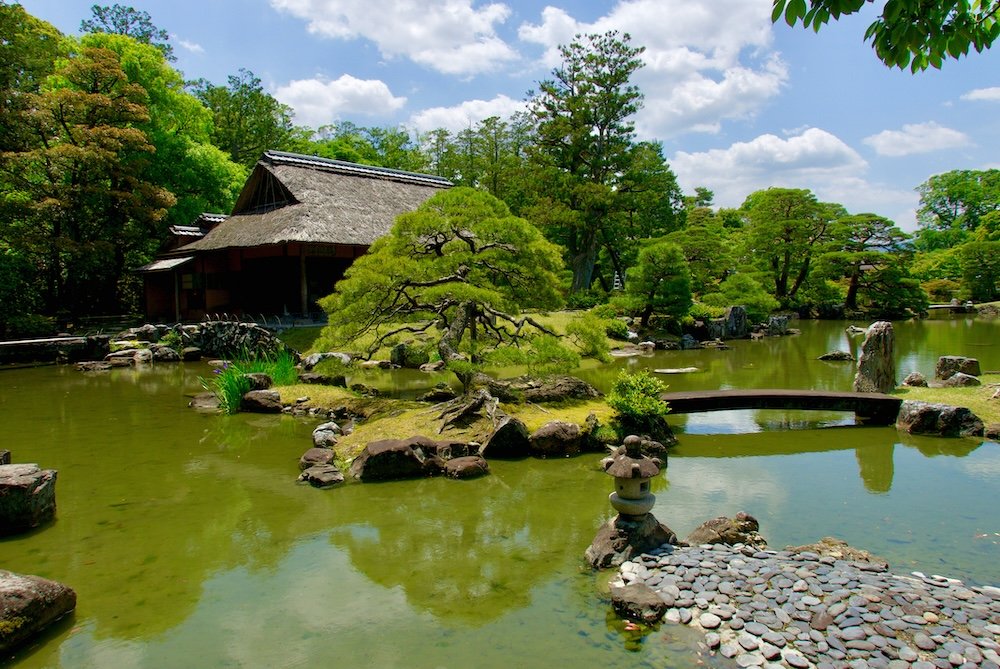
The stroll gardens came later and worked a different register entirely. Katsura Imperial Villa, built starting in 1624 for Prince Toshihito, unfolds as a sequence of framed views along a path around a central pond, borrowing the shape of a distant hill or the line of a pine as part of its own composition, a technique called shakkei, borrowed scenery. The garden ends where it wants to and pretends the mountain behind it was always part of the plan. When the German architect Bruno Taut visited in the 1930s, his writing about Katsura helped convince a generation of modernists, on both sides of the Pacific, that restraint could be its own kind of grandeur. Nothing at Katsura pretends to be untouched. Every stone was placed by someone, and the garden does not ask you to forget that.
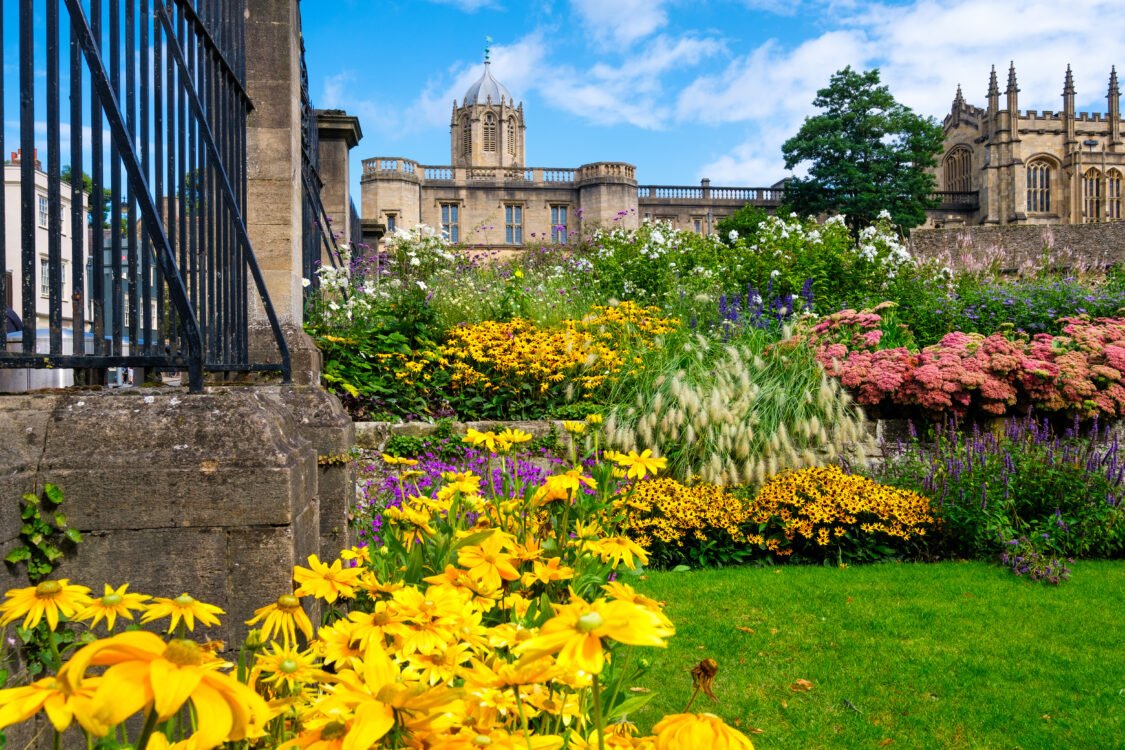
That is the real difference, more than climate or plant selection. The English garden’s finest trick is persuading you that a fully engineered landscape simply grew that way, a hundred and seventy estates built on the fantasy of a hand that was never there. The Japanese garden’s finest trick is the opposite: it shows you the hand plainly, fifteen stones and a rake’s teeth in the gravel, and asks you to find the infinite anyway, in the gaps between what was placed. One achieves rapture through abundance disguised as accident. The other achieves it through restraint that never bothers disguising itself as anything else.
The gravel at Ryoan-ji gets raked again after every rain and every strong wind, sometimes within hours of the last raking. Nobody treats that as a flaw in the design. It is closer to the design’s whole argument: that the beautiful thing was never going to hold still, and pretending otherwise was never the point.