


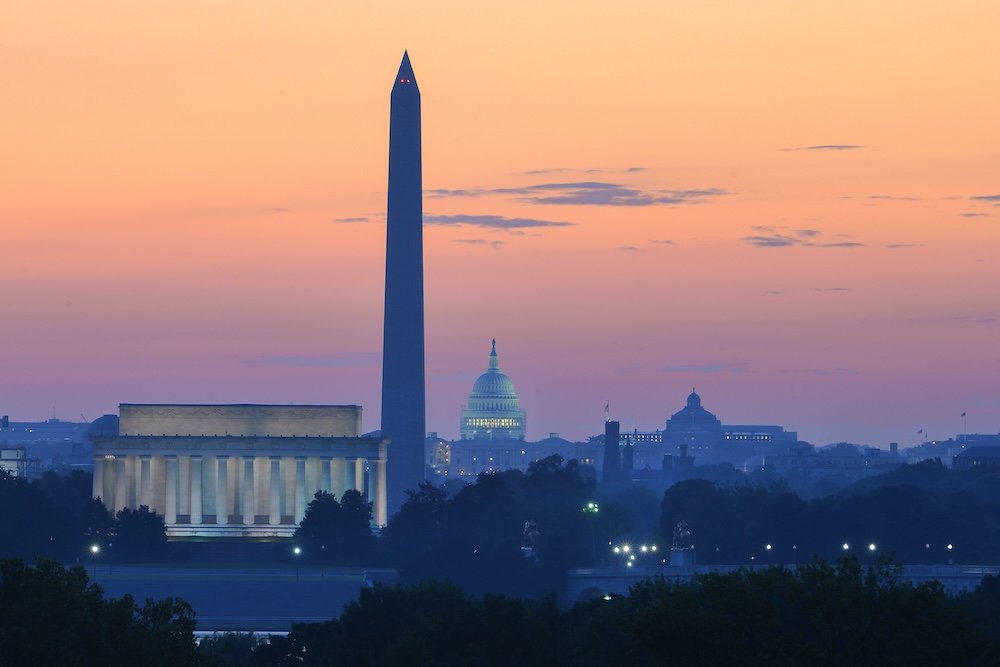
A ranger at the Washington Monument ticket booth is busy. It’s early October, the sky over the Mall is doing that flat, high-pressure blue that only shows up a few weeks a year, and the line of people rearranging their afternoon around a fifteen-minute window is short enough that you can actually hear the conversation. In July, this same booth runs a different kind of crowd: bigger, slower, sweating through shirts by nine in the morning, tempers a little shorter. The monument hasn’t changed. The month has.
That’s the case for shoulder season in one scene. Washington in September, October, April, and May offers the same 555-foot obelisk, the same free museums, the same marble men staring out over the same reflecting pools, minus the two things that make peak summer a small ordeal: the humidity that turns a walk across the Mall into a laundry problem, and the crowds that turn every monument into a group photo you’re not in. Fall brings crisp air and turning leaves without the cherry blossom stampede of late March; spring, once the blossoms themselves have dropped (usually by mid-April), settles into the same mild, walkable weather with far fewer people fighting you for a spot at the Tidal Basin railing. Hotel rates soften in both windows too, since neither falls squarely inside summer’s peak-tourism math, though prices firm back up whenever Congress is in session and lobbyist budgets are doing the booking.
Standing at the Center of It
Climb the Washington Monument, or more realistically, take the elevator up after securing one of the timed tickets the National Park Service hands out (free at the Monument Lodge starting at 8:45 a.m. for same-day visitors, or reserved up to 30 days ahead online for a one-dollar service fee), and the entire logic of the city reveals itself. You are standing at the hub of the National Mall and everything worth walking to radiates outward from that one point like spokes on a wheel some very deliberate 18th-century urban planner drew before there was anything here to plan.
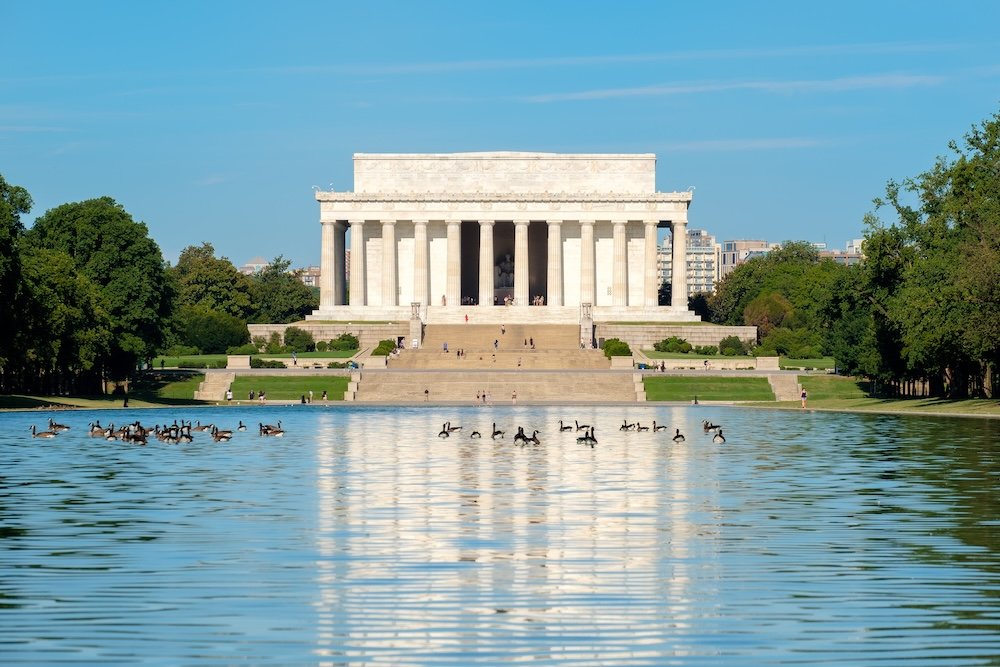
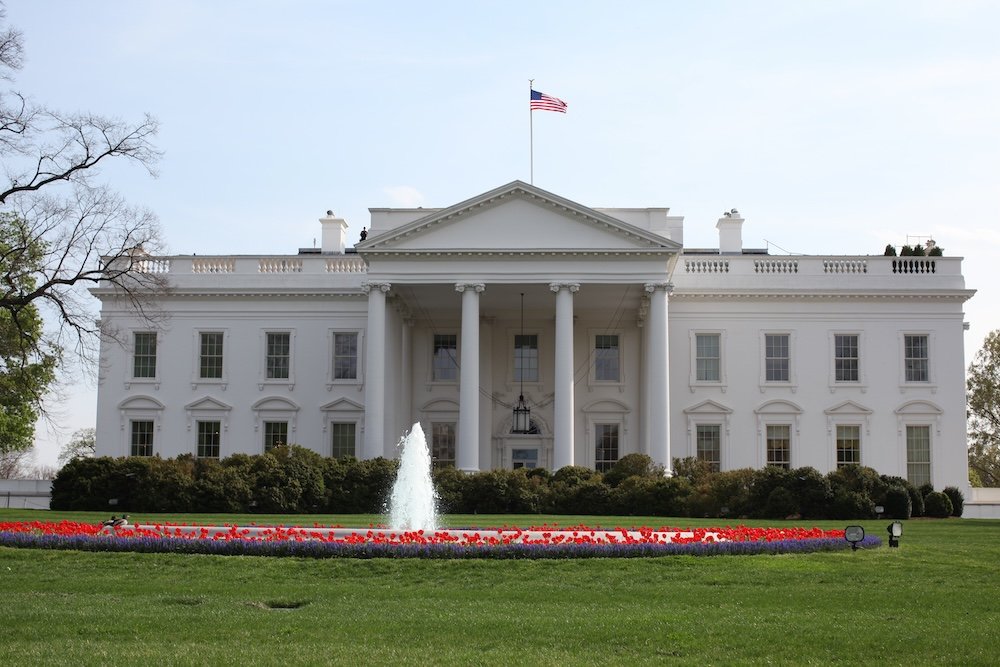
To the west, past the length of the Reflecting Pool, the Lincoln Memorial sits at the top of its own stairs, the ones Marian Anderson sang from in 1939 and Martin Luther King Jr. spoke from in 1963, which is a lot of history to ask thirty-six marble columns to carry, and they carry it well. To the north, the White House is visible from the Ellipse without a ticket of any kind, though touring the inside requires requesting a slot through your member of Congress somewhere between 7 and 90 days ahead, a bureaucratic scavenger hunt that rewards planning far more than spontaneity.
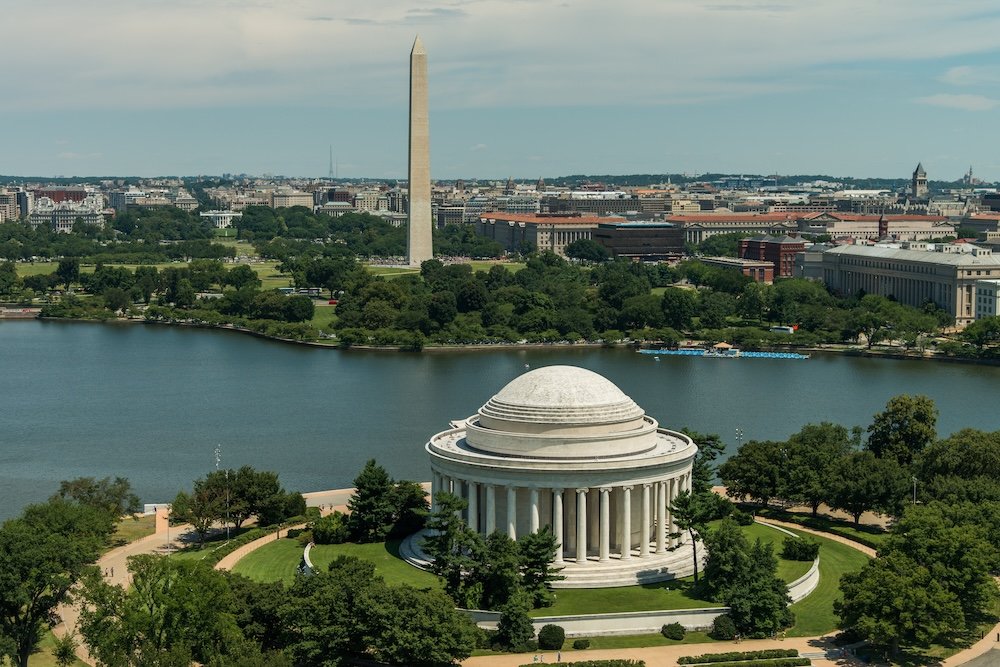
South of the monument, past a stretch of paddle-boat-dotted water, the Jefferson Memorial sits on the edge of the Tidal Basin, ringed by the Japanese cherry trees that turn the whole scene into a snow globe for roughly ten days every spring, and into a perfectly pleasant, much less photographed spot for the other 355. East, the Capitol dome closes out the line of sight, its own tours bookable free through the Capitol Visitor Center.
To the monument’s southwest, tucked along the Tidal Basin’s edge, the Martin Luther King, Jr. Memorial rises out of a granite “Mountain of Despair,” with the “Stone of Hope” appearing to have been pushed forward from it. The memorial has its own uncomfortable footnote: a paraphrased inscription on the statue’s side once had King declaring himself a “drum major for justice, peace and righteousness,” a compression of his actual words that poet Maya Angelou and others said made him sound boastful rather than humble. The National Park Service had it carved out, striation by striation, in the summer of 2013, in time for the fiftieth anniversary of the march for which King is most remembered.
The Free Part Nobody Quite Believes
Ring the whole circumference of the Mall and you’re walking past the Smithsonian museums, all of them free, no ticket required for most, which is the detail that still seems to surprise first-time visitors who keep patting their pockets for a wallet they don’t need. The exception at the moment is the National Air and Space Museum, which has spent the better part of a decade in a rolling renovation, building’s worth by building’s worth. Entry is still free. It just requires a timed pass, booked in advance, the one piece of friction in an otherwise frictionless museum district. Everyone grumbles about it and gets in line anyway.
Eating Your Way Around the World Without Leaving Town
Washington’s restaurant scene has never quite gotten credit for being what it actually is: one of the more internationally stacked food cities in the country, a byproduct of decades of diplomats, immigrants, and international organizations setting up permanent residence around a government town. The city has long been home to one of the largest Ethiopian communities in the United States, and while a lot of that community’s day-to-day life has shifted out to Silver Spring and Alexandria over the past two decades, the injera and doro wat are still very findable within city limits if you know to ask a local rather than trust whatever list comes up first online. The city represents the kind of density that makes deciding where to eat dinner an actual negotiation rather than a formality. Union Market has turned a former wholesale food distribution hub into a stall-by-stall tour of a dozen different countries’ cooking. Add in the embassy dinners and cultural-center events that pop up around the diplomatic calendar, and DC quietly offers a harder-to-match proposition: you can eat a genuinely different country’s food every night for two weeks and never repeat, all within a city built around men in marble.
That’s the case for coming in October, or April, rather than August. Not because the monuments are any different. Because you’ll actually be able to see them, eat well afterward, and get a hotel room for it without feeling like you funded a small embassy’s operating budget.