


On Christmas Day, most of Seattle’s Chinatown-International District goes dark. The neon signs stay lit for show, but the doors are locked, the kitchens are cold, and the sidewalks along King Street belong to whoever is out walking off a family dinner. Tai Tung, on South King Street, does not close. Current owner Gordon Chan’s great-grandfather opened the place in 1935, and Christmas has quietly overtaken Mother’s Day as the restaurant’s busiest day of the year, family lore has it, because someone in this neighborhood has always needed a place to eat that isn’t their own kitchen. By early evening, the dining room is packed with a mix of regulars, off-duty restaurant workers from other kitchens with nowhere else to eat, and the occasional tourist who wandered in not knowing what they’d stumbled into. Bruce Lee ate here often when he lived in Seattle, always in the same back booth, always facing the door. Staff still bring out his usual, oyster sauce beef and garlic shrimp, when regulars order it in his memory.
That is a reasonable place to start understanding Seattle, a city that treats its oddities as a matter of course and its inconveniences, the rain chief among them, as simply part of the deal. Downtown pulled in roughly 3.7 million visitors in July 2026 alone, a record and a 12 percent jump over pre-pandemic numbers, boosted by a run of FIFA World Cup matches that filled the waterfront with more flags than a city this famously understated usually allows. But the crowds are recent. The character underneath them, the fishing boats and float planes sharing water with container ships, the coffee culture that predates the chain everyone blames it on, the tech money sitting a few blocks from restaurants that have not changed their menus in decades, is not.
A short history
Before any of it, the land belonged to the Duwamish and other Coast Salish peoples, who had fished these waters and camped along these shorelines for thousands of years before anyone thought to found a city on top of them. The Denny Party landed at Alki Point on November 13, 1851: a group of settlers from Illinois who arrived by schooner in a cold, wet, largely unbuilt landscape and quickly discovered that Alki’s exposed beach made a poor harbor. Within months they moved across Elliott Bay to what is now Pioneer Square, closer to deep water and shelter from the weather that would define the place for everyone who came after.
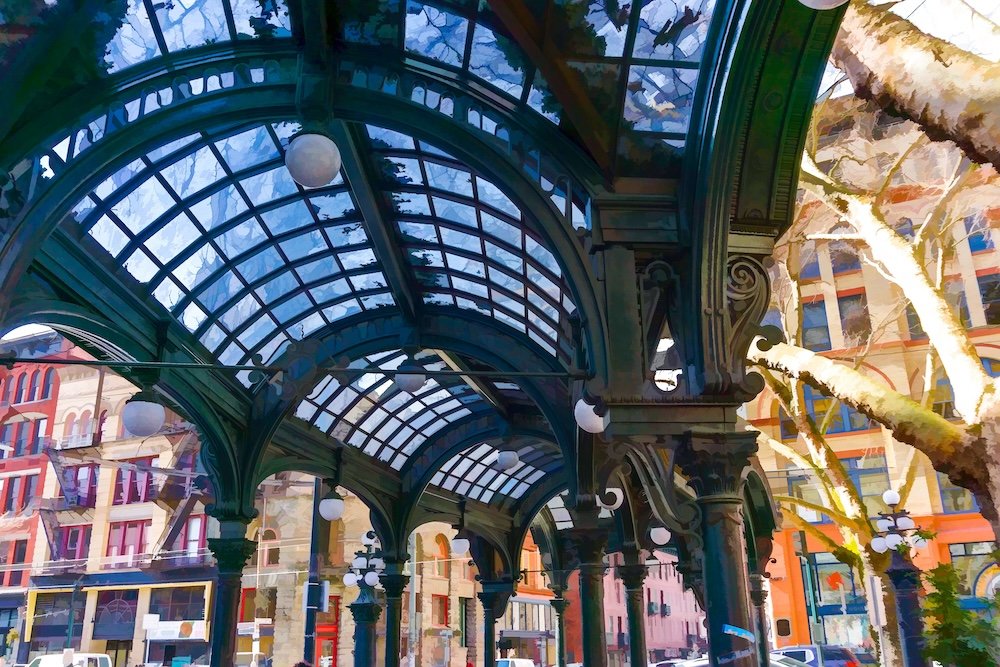
The city that grew from that second try nearly erased itself on June 6, 1889, when a pot of glue boiled over in a cabinet shop and started a fire that took 29 blocks of wooden downtown with it. Seattle rebuilt in brick and stone rather than timber, and in the process raised its streets a full story above the old ones to solve a chronic tide and sewage problem, leaving a warren of below-grade storefronts and sidewalks that still exist under Pioneer Square today. You can walk through them on the Underground Tour, and it is worth doing if only to see how literally the city built its second act on top of its first.
The Klondike Gold Rush arrived on Seattle’s doorstep on July 17, 1897, when the steamer Portland docked with a reported “ton of gold” aboard, and outfitters across the city spent the next several years selling picks, tents, and false confidence to prospectors bound for the Yukon. Most of them never struck anything worth the trip. Seattle, playing supplier rather than gambler, did. Boeing turned that momentum into an industrial one, building thousands of aircraft here through both World Wars, and the 1962 World’s Fair left behind the Space Needle, the Pacific Science Center, and the fairgrounds that became Seattle Center, a rare case of a temporary exhibition permanently reshaping a skyline. Microsoft moved its headquarters to the area in 1979, Amazon set up a few decades later, and grunge, for a strange and specific stretch of the early 1990s, made this the epicenter of American rock. Not every chapter photographed well. On Beacon Hill, a pioneer-era burial ground called Comet Lodge Cemetery was rezoned for development in 1986 and had its remaining gravestones bulldozed the following year to trench a sewer line, a detail the postcards leave out and the city has never fully reckoned with.
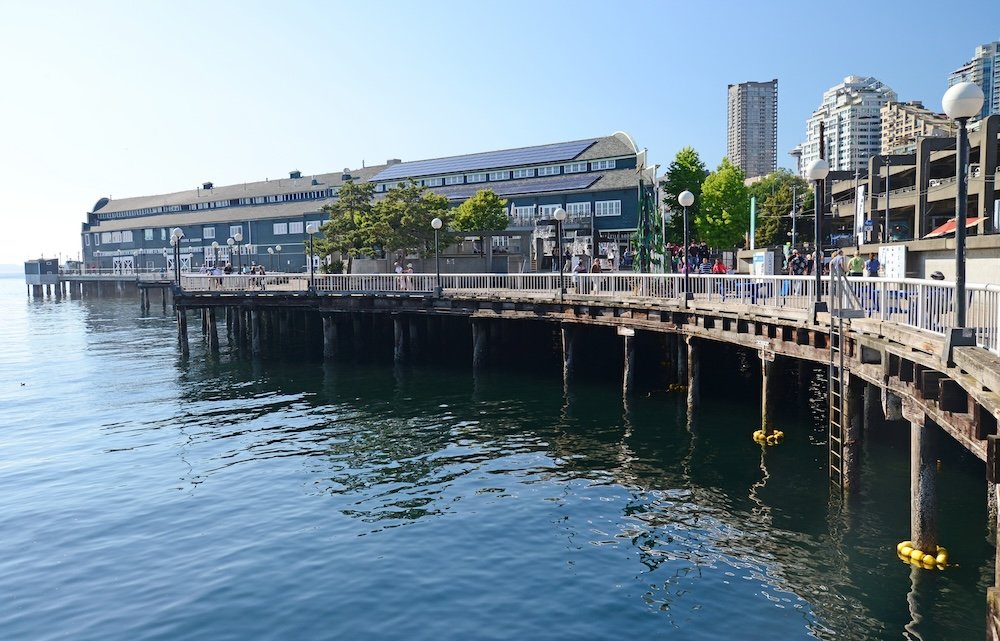
The most recent chapter is still under construction, in places literally. The elevated highway that once cut the city off from its own waterfront came down after years of debate, and the resulting Overlook Walk opened in October 2024, connecting Pike Place Market directly down to the water for the first time in generations. The Seattle Aquarium’s Ocean Pavilion opened that same year, its cedar-clad building housing a shark and ray tank nearly half a million gallons deep. For a city that spent a century turning its back on its own shoreline in favor of trucks and freight, giving it back to pedestrians is close to an apology.
The most important points of interest
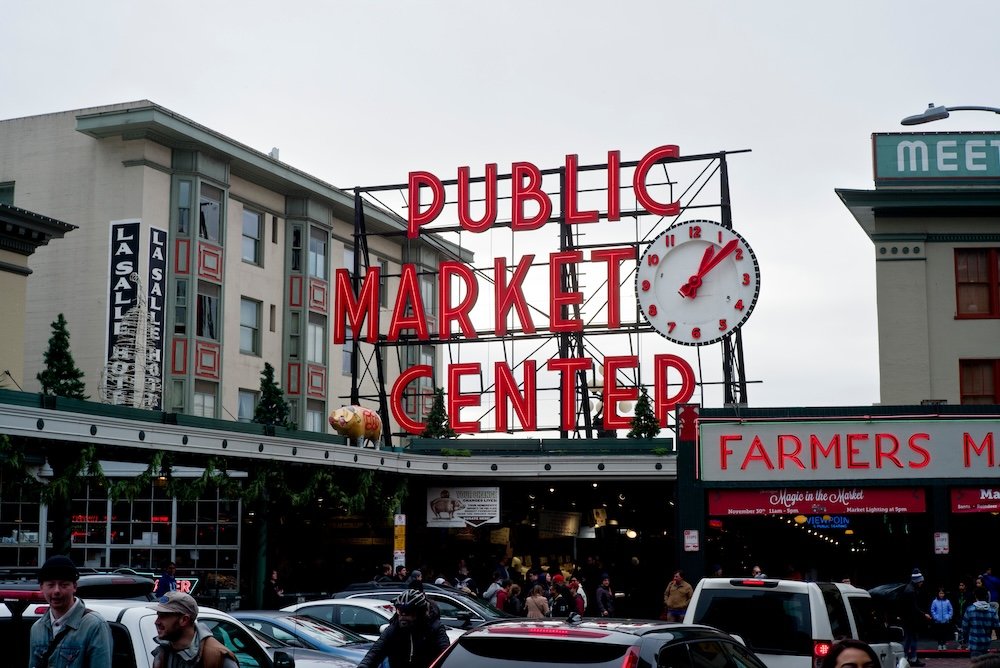
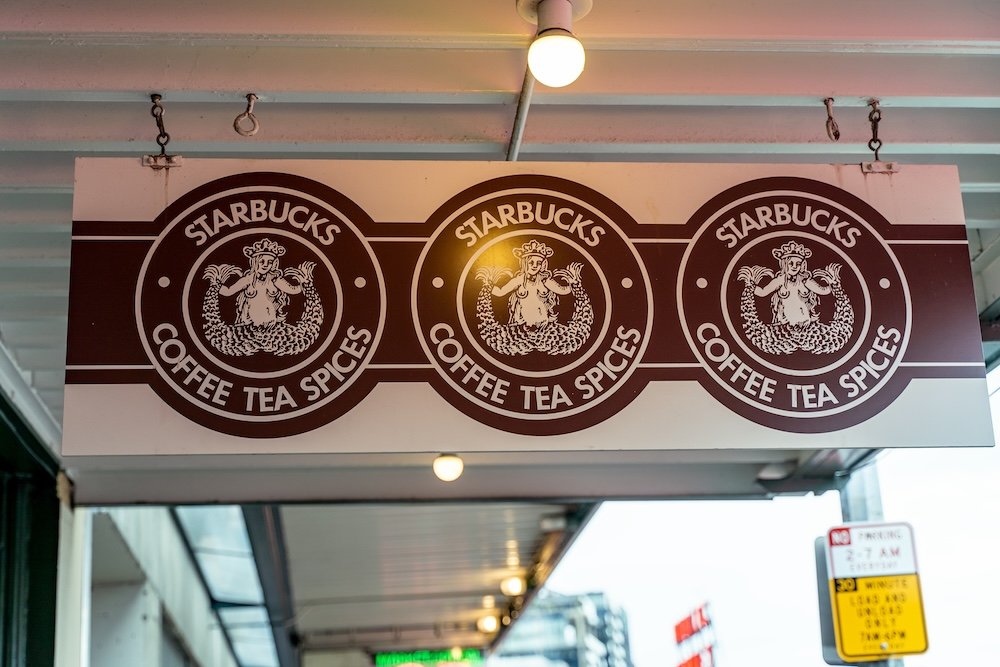
Pike Place Market remains the center of gravity, and it earns the position honestly. It opened on August 17, 1907, after a city councilman discovered farmers were losing most of their profit to middlemen on what was then called Produce Row, and the market’s original purpose, letting growers sell directly to the public, still governs how it operates. Fishmongers still throw salmon over the counter for the cameras, the flower stalls still sell bundles for less than a coffee costs two blocks away, and the gum wall in Post Alley, a wall of chewed gum stuck there by theatergoers since the early 1990s, remains one of the more baffling things people photograph in this country. A few doors down, the original Starbucks reopened in June 2026 after a renovation, now running on timed reservations with staff trained as much as storytellers as baristas, which tells you something about how far the company has traveled from a single coffee counter in a farmers market.
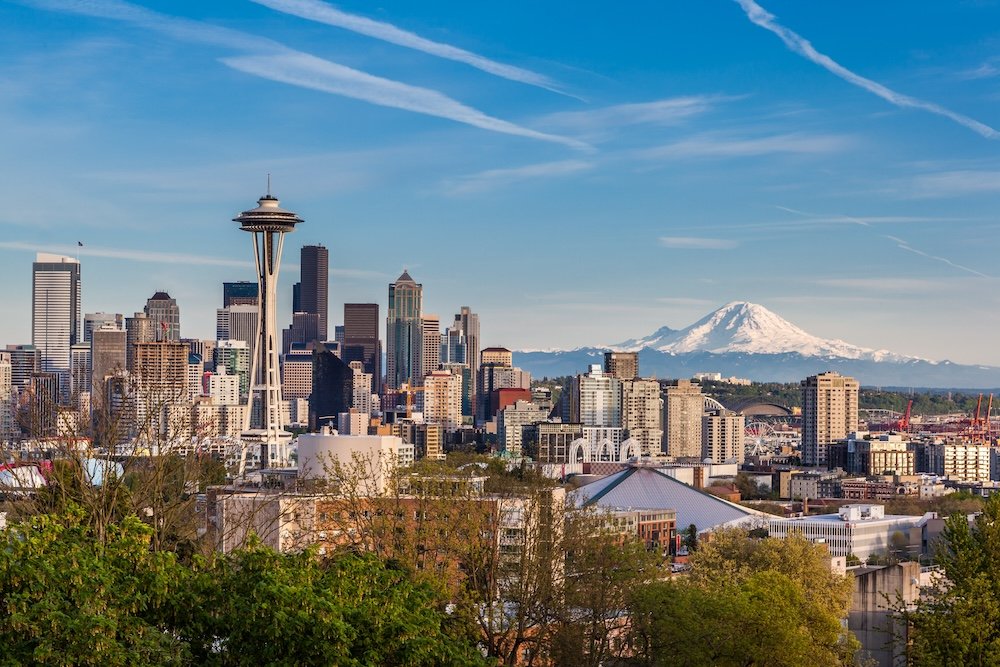
The Space Needle, built for that 1962 World’s Fair, still anchors the skyline at 605 feet, and the observation deck’s rotating glass floor remains the kind of thing that makes even jaded travelers stop talking for a second. Buy tickets online and go near closing, when the crowds thin and the light does something the postcards can’t quite capture. Chihuly Garden and Glass sits at its base, Dale Chihuly’s blown-glass sculptures arranged through a garden and a glasshouse in colors that have no business existing in nature and somehow work anyway. Down at the water, the new Overlook Walk and Ocean Pavilion have made the waterfront worth a slow afternoon rather than a quick pass between cruise terminals, and Kerry Park on Queen Anne Hill offers the postcard view of the skyline, Space Needle included, that you have probably already seen without knowing where it was taken.
What to do and what to see
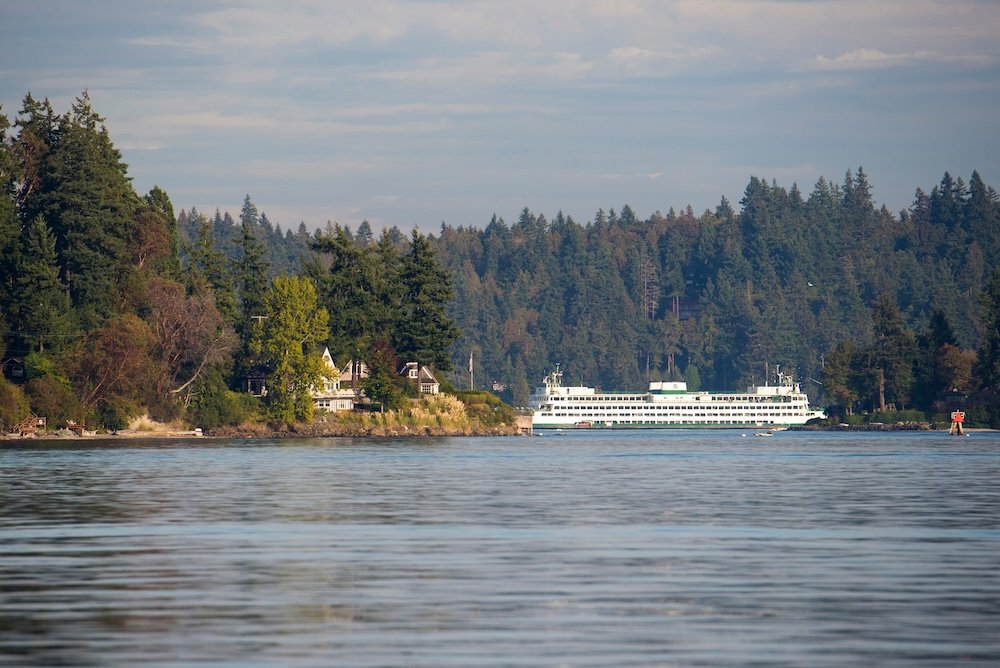
Ride the ferry to Bainbridge Island, not because the island itself demands a full day, but because the thirty-five-minute crossing is the best cheap view of the skyline that exists, better than any observation deck because it moves and it’s free if you’re only going as a foot passenger round trip on a slow afternoon. Walk Pioneer Square with an eye on the architecture that survived the 1889 fire, then head north to Fremont for the giant concrete troll crushing a Volkswagen under a highway overpass, a piece of public art with no explanation offered or needed. The Museum of Pop Culture, its exterior built to evoke a smashed electric guitar, houses serious collections on Jimi Hendrix and Nirvana alongside science fiction and horror exhibits that go deeper than the building’s shape suggests. For something quieter, Discovery Park’s forested bluffs and driftwood beaches sit inside city limits but feel like they don’t, and the Chinatown-International District rewards an unhurried walk past Tai Tung, herbal shops, and the Wing Luke Museum, which tells Pacific Northwest Asian American history through objects donated by the families who lived it.
What to eat
Seafood is the given here, and it should be. Dungeness crab, wild salmon, and geoduck, the enormous clam that looks like a practical joke and tastes considerably better than it looks, show up on menus from food trucks to white tablecloths. Pike Place Chowder, tucked into an alley off the market, has built a following on a clam chowder rich enough to justify the line that forms most afternoons. But the dish that actually belongs to this city is teriyaki, and its story starts with a Japanese immigrant named Toshihiro Kasahara, who opened Toshi’s Teriyaki on lower Queen Anne’s Roy Street in March 1976 and built a menu around skewered chicken, rice, and a sweet soy glaze he adapted from a much older Japanese technique. A favorable review in the Seattle Times turned the place into a phenomenon, and by the late 1990s Seattle had more teriyaki shops than McDonald’s locations, most of them, as the city’s food writers have documented, opened and run by Korean immigrant families who took the concept and made it their own. It is unglamorous, inexpensive, and everywhere, which is exactly the point. Ask a Seattle native for their favorite, and you will likely launch an argument.
What to drink
Coffee is the obvious answer, and the city has more than earned the association, though the original Starbucks on Pike Place is now closer to a heritage site than the neighborhood coffee shop it once was.
The more interesting drinking, honestly, happens elsewhere. Fremont Brewing, still pouring out of its own neighborhood taproom, and Elysian Brewing, now concentrated at its original Capitol Hill beer hall after closing its Georgetown production facility at the end of 2024, both helped anchor Seattle’s craft beer scene through the 2000s and 2010s, and the neighborhoods of Ballard, Fremont, and Georgetown remain dense with other taprooms worth an afternoon of walking between. For wine, head northeast to Woodinville, a thirty-minute drive from downtown, where more than 130 wineries and tasting rooms cluster around Chateau Ste. Michelle, which relocated its production there in 1976 partly to avoid hauling grapes over snowbound mountain passes in winter. Most of the fruit still comes from eastern Washington’s Columbia and Yakima valleys, but the tasting happens here, close enough to the city that a designated driver can make it a half-day trip rather than an overnight one.
Great day trips
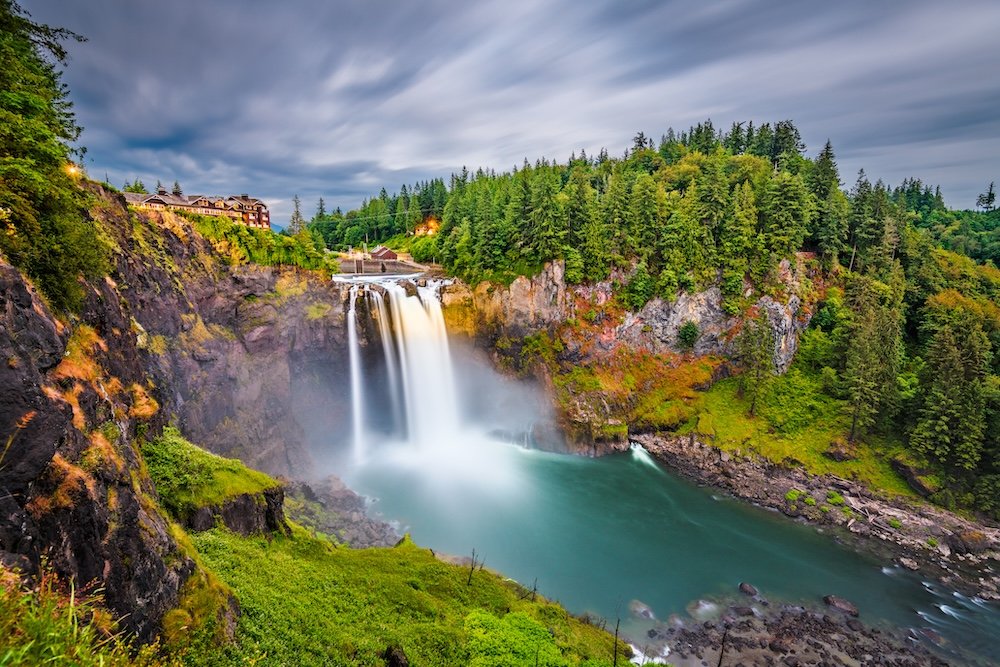
Snoqualmie Falls, forty-five minutes east of downtown, drops 270 feet over a basalt ledge that David Lynch fans will recognize from “Twin Peaks,” and both the upper viewing platform and the lower trail are worth the short walk.
Bainbridge Island, already mentioned as a ferry ride worth taking for its own sake, has enough galleries and waterfront restaurants to fill a half day once you’re across. San Juan Islands trips run anywhere from a few hours to a full day depending on whether you fly, drive to Anacortes for the ferry, or book a whale-watching boat outright, and the resident and transient orca pods that move through these waters make the extra travel time worth it in the right season. For something with a stronger theme, Leavenworth, two and a half to three hours east over Stevens Pass, is a former logging town that reinvented itself in the 1960s as a Bavarian-style village, complete with half-timbered buildings and a Nutcracker Museum that is exactly as specific as it sounds. And Mount Rainier, roughly 95 miles and two hours south on a quiet morning, closer to three on a summer Saturday, is worth the traffic. Paradise, the most popular entry point, earns its name honestly once you’re standing in a subalpine meadow with the mountain’s 14,410 feet rising directly above you.
Weather for high, middle, and low season
High season runs June through August, and it is Seattle’s best-kept non-secret: summer highs sit in the low to mid 70s, July and August are the driest months of the year at under an inch of rain each, and the city gets long, mild evenings that make its parks and waterfront genuinely worth the crowds and the higher hotel rates that come with them. Shoulder season, April through May and September through October, is the value play. Highs run from the low 60s into the low 70s depending on the month, rain becomes more frequent without dominating the forecast, and hotel prices and crowd sizes both ease considerably, particularly in late September when the summer visitors have gone home but the weather hasn’t fully turned. Low season, November through March, is when Seattle earns its reputation. November alone averages around 7.5 inches of rain, the wettest month of the year, and rain falls on more than half the days across the entire stretch, with highs settling into the high 40s and low 50s and lows dipping into the high 30s in December. It is also, for what it’s worth, the season locals actually recommend to visitors who don’t mind a coat: fewer crowds, better hotel rates, and a city that looks genuinely different wrapped in cloud, lit windows reflecting off wet pavement instead of glinting off sunglasses.
Back at Tai Tung, the last of the Christmas crowd was finishing their tea, and the cook came out from the kitchen to say goodnight to a table of regulars by name. Outside, the rain had started again, the ordinary kind that nobody in this city much bothers to mention anymore.