


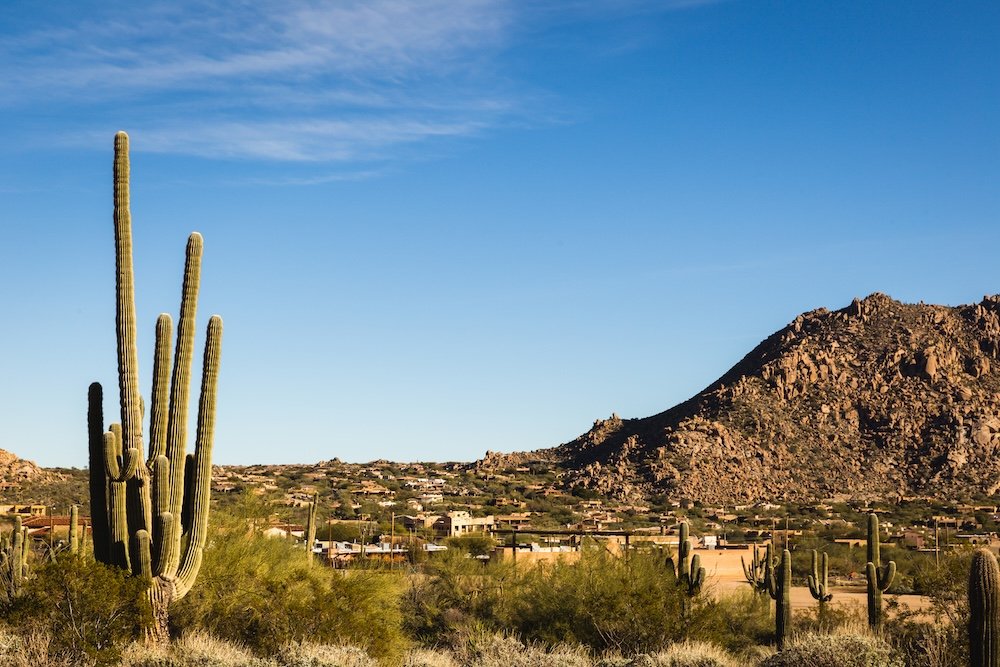
Phoenix runs on a kind of negotiated truce with its regional climate: get up early, plan around the heat rather than against it, and the desert will hand over a genuinely good life in return. Ignore the terms, however, and it will not warn you twice. Summer 2026 just tied for the 2nd hottest on record at Phoenix Sky Harbor. Average daily temp: 97.0°, same as 2023. Only 2024 was hotter at 98.9°. On August 26th, 2026, the city marked the peak of the current heat wave as Phoenix reached a record-tying 117 degrees.
Phoenix was incorporated as a city on February 25, 1881, with a population around 2,500. It was a farm town, an agricultural service center trading in cotton, citrus, and cattle. Air conditioning changed that math entirely. Evaporative “swamp coolers” arrived in the early twentieth century and made summer survivable. Motorola opened a solid-state electronics research lab in 1949, and the postwar decades brought a wave of manufacturing and retirees who wanted winter without shoveling anything.
The population has not stopped climbing since: the city now holds roughly 1.65 million people, the fifth largest in the country, and the greater metro area crossed five million in 2023, spreading into a sprawl of suburbs that occasionally makes locals forget where one city ends and the next begins. Phoenix is now a city whose defining twenty-first-century problem is not obscurity but scale: enough water for the growth, enough shade for the heat, enough identity to not simply become Los Angeles with cacti.
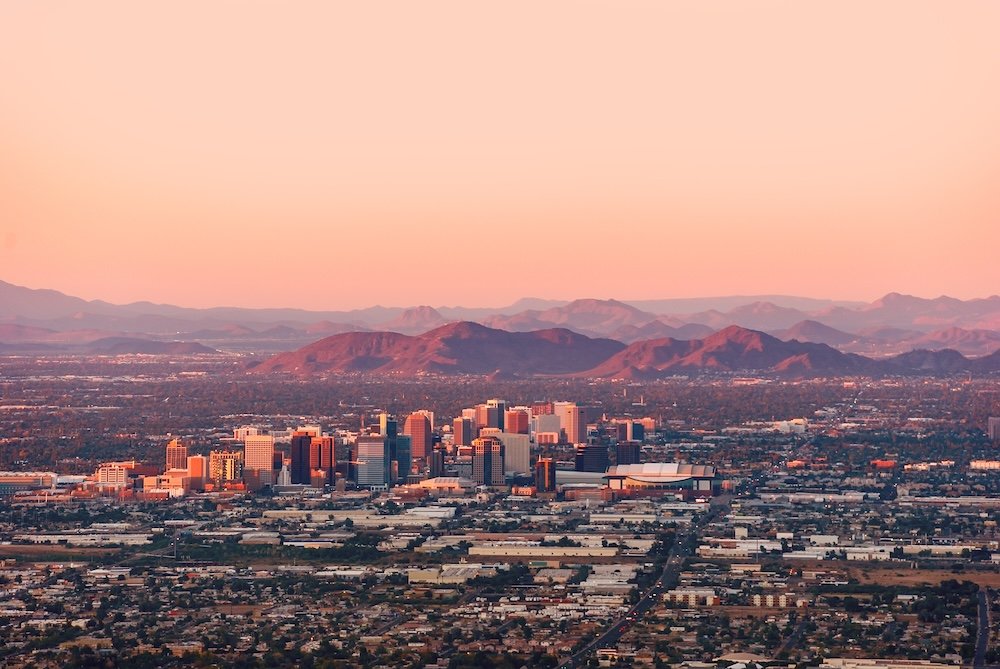
Not every chapter of that growth was generous, and Phoenix has its share of stories that don’t resolve neatly. One of them is a South Phoenix landmark called Mystery Castle. Boyce Luther Gulley, a Seattle man, moved to the desert alone after a tuberculosis diagnosis and, as local legend tells it, left his family behind to do it. Through the 1930s and into the 1940s, until he died in 1945, he built his daughter Mary Lou an eighteen-room castle out of native rock, telegraph poles, wagon wheels, and whatever else the desert and the local dump offered him, a strange act of atonement disguised as a folk-art masterpiece. It drew tourists for decades. Repeated vandalism finally closed it to public tours in 2022, and in 2025 the National Trust for Historic Preservation named it one of America’s eleven most endangered historic places, with restoration estimates running near three million dollars. You can still see it from the road below South Mountain, and it says something about this city that one of its most beloved oddities is currently a preservation fight rather than a museum.
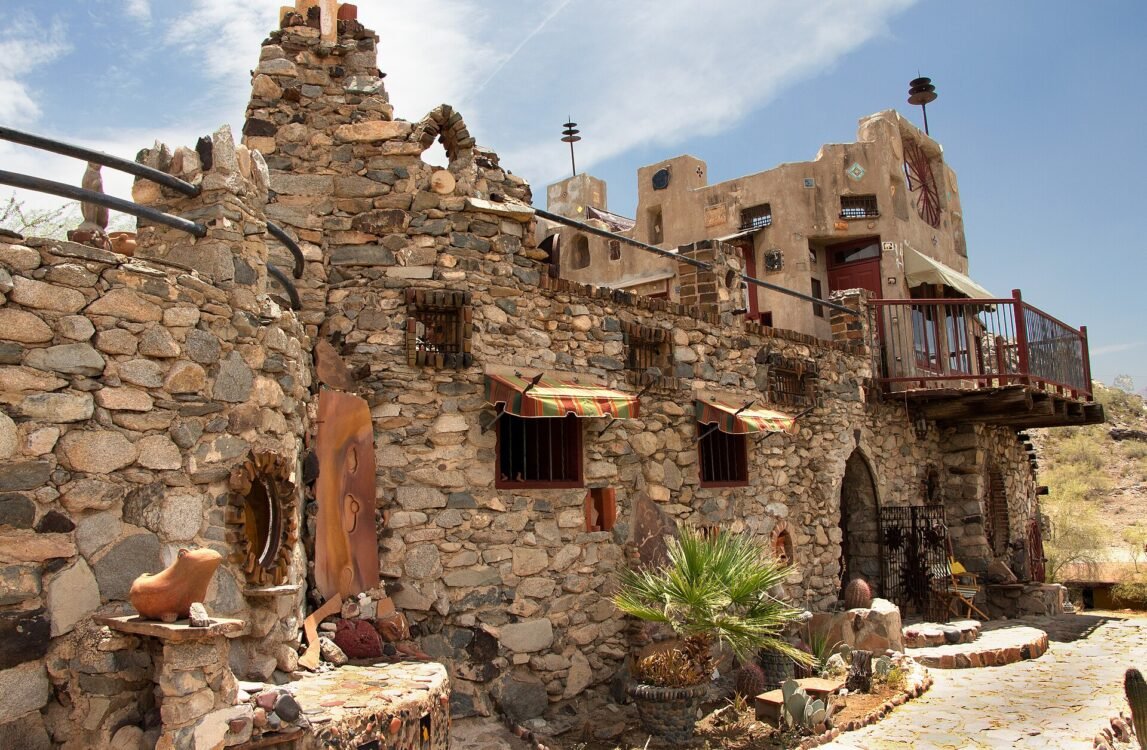
The Desert Botanical Garden, in Papago Park, is the best single argument for why the Sonoran Desert deserves more attention than most people give it before they’ve been here. Fifty-five cultivated acres, inside a 140-acre preserve, hold more than two-thirds of the species in the cactus family alongside agave, wildflowers, and desert trees, and the garden runs evening light installations and after-dark programming through the brutal months specifically so people have a reason to come when the trails are otherwise unwalkable at noon. Next door, Papago Park’s Hole-in-the-Rock, a natural sandstone opening you can climb up into, frames a sunset over downtown that draws a small, quiet crowd most evenings, no ticket required.

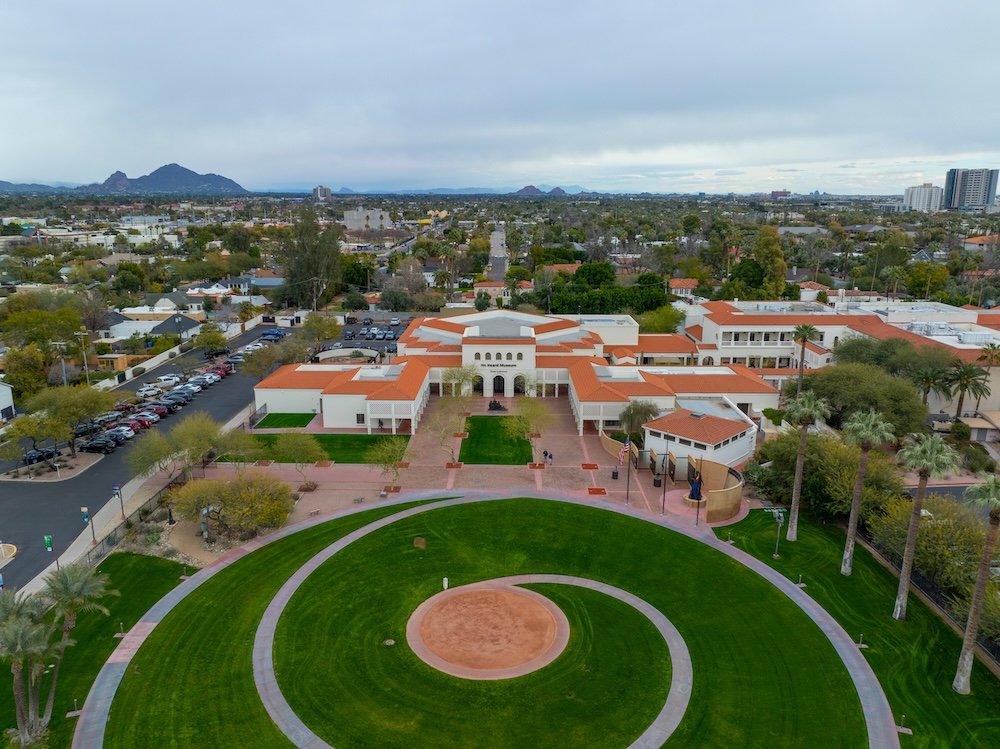
The Heard Museum, downtown, holds one of the country’s most serious collections of Native American art and history, built specifically around Southwestern tribes and told, importantly, with considerable input from Native curators and artists rather than around them. The Musical Instrument Museum, in north Phoenix, opened in 2010 and houses more than fifteen thousand instruments from nearly two hundred countries, a two-hundred-thousand-square-foot building that sounds like a niche curiosity until you’re three hours in with a pair of headphones watching a Mongolian throat singer perform on the exhibit’s video screen and you’ve lost track of time.
Out east in Scottsdale, Taliesin West was Frank Lloyd Wright’s winter home and working desert laboratory from 1937 until he died in 1959, built by his own apprentices from local stone and sand in a style he called “organic architecture,” meaning it looks like it grew out of the site rather than being dropped onto it. Tours run most days, with hours that tighten in summer and open up to daily through the winter and spring, and they’re worth booking ahead, particularly in the cooler months when demand is highest. South Mountain Park, at more than sixteen thousand acres, claims to be one of the largest municipal parks in the country and offers a genuinely different Phoenix experience: paved scenic drives, quiet ridgelines, and views back over the entire valley that don’t require the crowds or the risk that Camelback does.

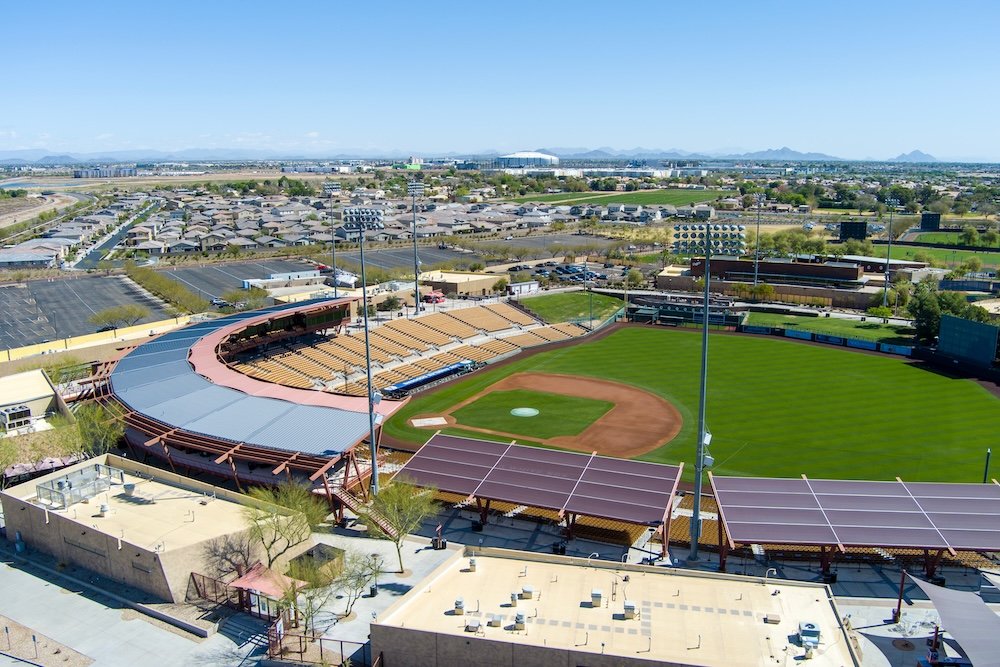
Spring means the Cactus League, Major League Baseball’s Arizona answer to Florida’s Grapefruit League, with fifteen teams playing spring training games across ten stadiums scattered through Phoenix, Scottsdale, Tempe, Mesa, Surprise, and Glendale from late February into late March. Tickets are cheap relative to the regular season, stadiums are small enough that foul balls are a real threat, and the whole affair has the loose, sunburned atmosphere of a sport that hasn’t started keeping score yet. In Old Town Scottsdale, the free ArtWalk runs every Thursday evening, with galleries staying open late along Main Street and Marshall Way, a low-key way to see a neighborhood that otherwise reads mostly as patio bars and boutique shopping. Hot air balloon operators launch at sunrise year-round except during peak summer heat, drifting silently over the Sonoran landscape. Meanwhile, the ground below is still cool enough to be pleasant.
If you get hungry in Phoenix, start with the Sonoran hot dog, which is not really a hot dog so much as an argument for what a hot dog could be: bacon-wrapped, grilled, tucked into a soft bolillo roll, and buried under pinto beans, onions, tomato, mayonnaise, mustard, and a jalapeño salsa. The dish crossed north from Hermosillo, Sonora, sometime around the late 1980s and took hold on both sides of the Arizona-Sonora corridor; by the late 2000s, Phoenix had more Sonoran dog carts than Tucson did, run mostly by dogueros working folding-table stands outside gas stations and strip malls, which remains, honestly, the correct way to eat one.

For something more formal, Chris Bianco’s Pizzeria Bianco in the restored Heritage Square building downtown has been drawing lines since the 1990s and a James Beard Award since 2003, wood-fired pies built on a philosophy so stubbornly simple- good flour, good tomatoes, restraint- that it still reads as a minor rebellion against everything else Phoenix could have become. The Fry Bread House, a modest storefront on 7th Avenue, won a James Beard America’s Classics award in 2012 for fry bread rooted in Tohono O’odham tradition, chili and cheese piled onto dough fried to order, a dish with a harder history behind it than the crowd waiting for a table usually pauses to consider. And it’s worth noting, if only as a measure of how fast this city’s food scene turns over, that Barrio Café, the modern Mexican restaurant chef Silvana Salcido Esparza built into a twenty-two-year Phoenix institution, closed for good in 2024 when she retired, on her own terms, saying simply that without her there was no Barrio. A new restaurant has since moved into the space. The building remembers what it used to be even when the menu doesn’t.
Phoenix’s craft beer scene runs deeper than the desert setting suggests. Wren House Brewing, which opened a second Paradise Valley location in 2025 to complement its original 24th Street taproom, and SanTan Brewing in Chandler both anchor a scene that has been building steadily since the 2010s, with taprooms scattered from downtown through the East Valley suburbs. More distinctive is the city’s growing agave spirits culture: bars like Barcoa Agaveria, tucked into a downtown storefront on 1st Avenue, pour deep lists of mezcal and lesser-known agave spirits alongside tequila, treating the category the way a serious whiskey bar treats bourbon, single-village bottles and all, a reasonable specialty for a desert city two states north of where most of that liquid is actually made. Coffee has its own local footing too, with a cluster of independent roasters filling the space between chain drive-throughs, worth seeking out on a morning before the heat makes anything with a lid feel unnecessary.
Sedona sits about two hours north on Interstate 17, red-rock formations rising out of high desert at a cooler elevation that alone makes it worth the drive in summer, with Oak Creek Canyon, hiking trails, and a well-developed tourist infrastructure that can feel either charming or overrun depending on the season and your tolerance for crystal shops.
The Apache Trail, State Route 88 northeast of the city, is the more rugged option: a narrow, winding, partly unpaved road through the Superstition Mountains and Tonto National Forest, past Canyon Lake and the faux-Old West tourist stop of Tortilla Flat. Monsoon damage closed sections for years, and it reopened fully only in the summer of 2026 after repairs; check current conditions before committing, since a road this exposed to flash flooding closes again quickly when storms roll through.
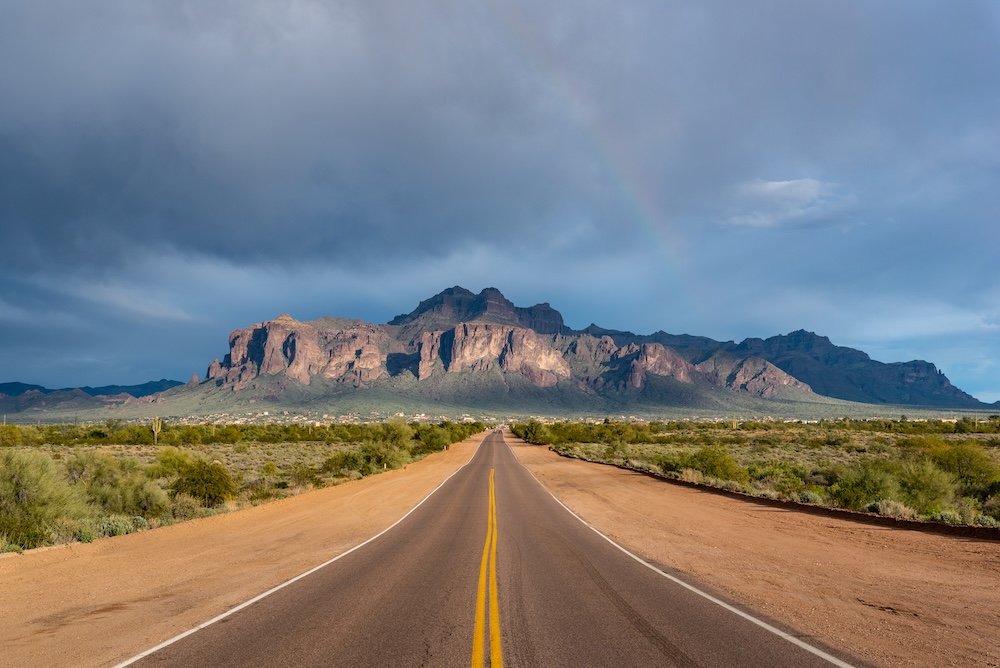
The Superstitions themselves carry one of the Southwest’s most durable legends: a German-born prospector named Jacob Waltz, “the Dutchman,” is said to have found a fortune in gold hidden somewhere in these mountains sometime in the 1870s, and died in Phoenix in 1891 without ever leading anyone back to it. Treasure hunters have chased the story for more than a century since. A handful have died doing it, which is either a tragic coincidence or the mountain’s own way of keeping a secret, depending on who’s telling the story around a campfire at Lost Dutchman State Park, which sits at the trailhead and makes the legend easy to visit even if you have no intention of searching for gold.
For a longer, more ambitious day, the Grand Canyon’s South Rim is roughly four to four and a half hours north, about 230 miles up Interstate 17 through Flagstaff, a genuine full-day commitment rather than a simple excursion, but doable if you leave before sunrise and don’t mind getting back after dark.
Hiking is the default local pastime, and Camelback Mountain gets the spotlight below, but it is far from the only option. Piestewa Peak, closer to central Phoenix, offers a shorter, still strenuous summit hike without Camelback’s technical scrambling. South Mountain’s Holbert and Mormon trails reward less punishment with real views. For something gentler, Papago Park’s low sandstone buttes make an easy morning walk that still delivers a good skyline photo.
Camelback Mountain is the tallest peak in the Phoenix area. Echo Canyon is one of two main hiking paths leading to the top of Camelback Mountain. It is steep and popular. It is mostly a scramble up; no real technical skills are required, but it’s a challenge to even fit individuals. At 5:40 on a July morning, the parking lot at the Echo Canyon trailhead is already full. Headlamps bob up the first switchback in a loose, unspoken relay, dozens of people who have set an alarm before dawn for the privilege of climbing a mountain. Phoenix Fire crews logged around fifty mountain rescues in 2025, most heat-related, several on this exact trail. By mid-morning, the same rock that appeared merely steep at sunrise will be almost too hot to touch. Everyone on that trail already knows this. They come anyway.
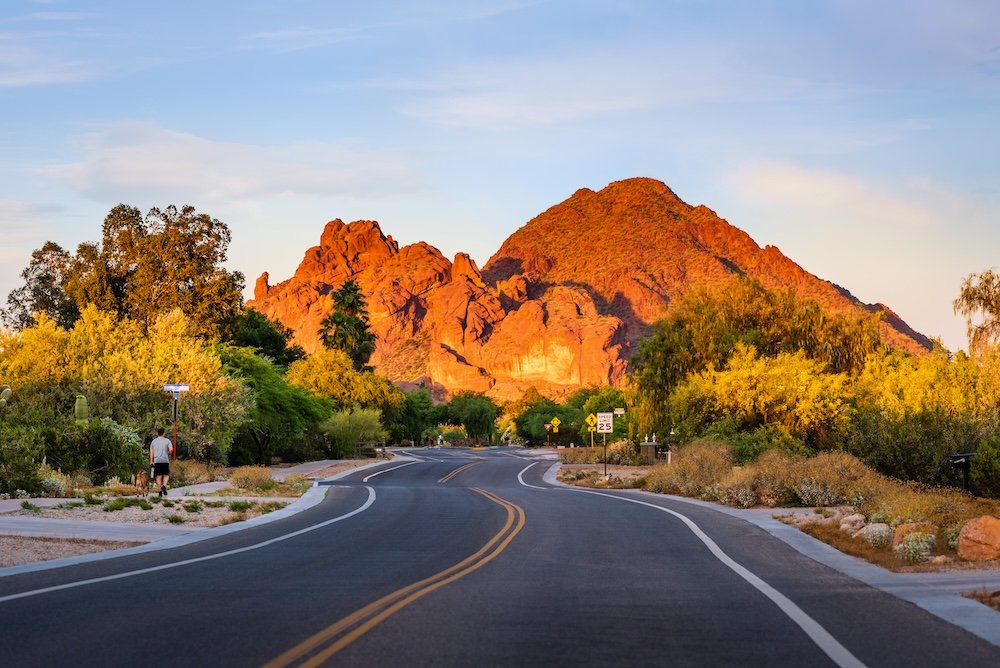
Camelback Mountain is not a stroll, and the city’s own trail signage says so bluntly: both routes to the summit are rated extremely difficult, and rangers warn that capable, well-prepared hikers regularly underestimate them anyway. The Echo Canyon Trail, on the western side, is the shorter of the two at about 1.1 miles each way but gains roughly 1,400 feet in that distance, including a hand-over-hand scramble section near the top that turns back plenty of hikers who assumed the parking lot’s popularity meant the trail was routine. It closed for several months in late 2025 after monsoon storms loosened boulders along the path, reopening in December once crews stabilized the rock and installed new safety cables. The Cholla Trail, on the east side, runs slightly longer at about 1.5 miles with comparable elevation gain, a marginally more gradual ascent that turns technical in its final third; it has no water or restrooms at the trailhead, only limited street parking that the city tows aggressively.
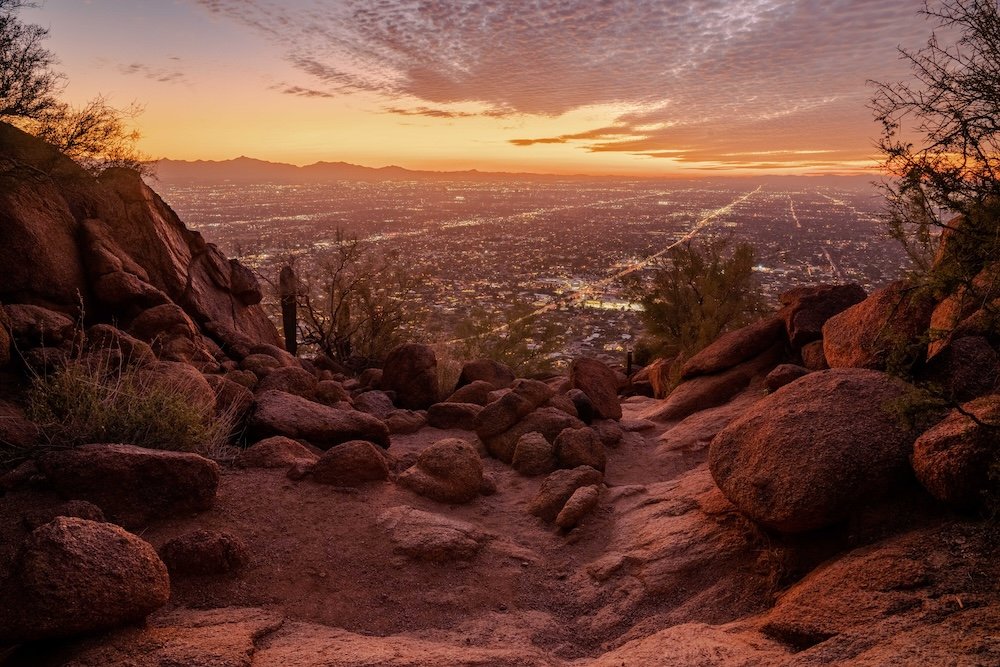
Either way, this climb wants an early start, real hiking shoes, more water than feels necessary, and an honest self-assessment of your fitness and heat tolerance. Both trails close outright to the public during National Weather Service extreme heat warnings, a rule the city added after enough rescues that it stopped being optional. Start at first light, turn around if you’re struggling rather than pushing for the summit, and treat the mountain’s reputation as a warning rather than a dare. The view from the top, the entire valley laid out below a sky that has usually gone that particular pale gold by the time serious hikers reach it, is real. So is the fact that Phoenix Fire pulls dozens of people off this rock every year who thought they had it handled.
High season runs roughly December through February, when Phoenix does the thing that built its tourism economy in the first place: highs in the mid to upper 60s, lows that dip into the 40s at night, and consistently blue, dry skies while most of the country is shoveling something. This is when snowbirds arrive in earnest, hotel rates climb accordingly, and the golf courses and resort pools fill with people who planned their whole year around this stretch.
Middle season covers March through May and again September through November, the shoulder months when the math still works in the visitor’s favor. Spring brings Cactus League baseball and wildflowers alongside climbing daytime highs, from the mid-70s in March to the mid-90s by May; fall reverses the pattern, cooling from the high 90s in September to the pleasant 70s by November, with crowds and prices both easing off their winter peak. Both stretches offer the best ratio of good weather to manageable cost, and locals will tell you October and April are, unofficially, the best two months actually to live here.
Low season is June through August, and it earns the label honestly. Average highs run from the low 100s into the low 110s; July and August are the hottest, and 2025 alone brought 31 separate extreme heat warning days and a record-breaking 118 degrees at Sky Harbor on July 9. This is also monsoon season, officially June 15 through September 30, when sudden dust storms and violent, brief thunderstorms roll through most afternoons and evenings, dropping temperatures fast and occasionally flooding washes that were bone dry an hour earlier. Hotel rates fall to their lowest point of the year, pools and misted patios become mandatory rather than decorative, and the trails that draw crowds all winter empty out except in the hour after sunrise, when the people who live here anyway are already headed back down before anyone else has drunk their coffee.
Down at the Echo Canyon lot, the morning crowd was thinning by 8:15, most of them already back at their cars, sweat-soaked and satisfied, trading trail conditions with strangers the way people compare notes after surviving the same weather. Somebody’s dashboard thermometer read 94 degrees. It wasn’t even 8:30 in the morning.