


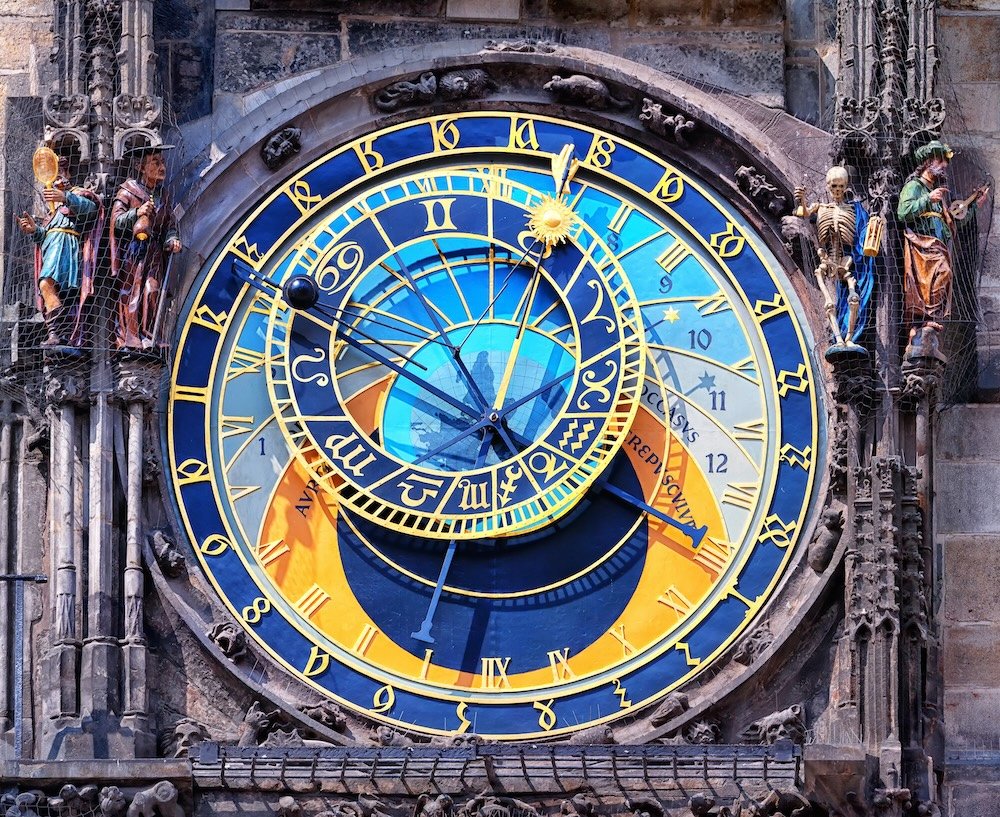
At nine in the morning, a crowd gathers under the Old Town Hall tower with its necks craned and its phones already raised, waiting for a skeleton to ring a bell. This happens every hour, on the hour, from eight until eleven at night, and it never stops working as a piece of theater: the figure of Death tips an hourglass and pulls a cord, two shuttered windows open above the clock face, and twelve apostles shuffle past in procession before a cockerel crows and the whole mechanism resets to wait for the next hour. A guide standing near me told his group that the Astronomical Clock has been running since 1410, which is true, and let them believe the apostles they were watching were the same figures Prague had been watching for six centuries, which is not. The originals burned in early May 1945, in the last week of the war, when retreating German forces shelled the Old Town Hall during the Prague Uprising. What tourists photograph today are wooden replacements carved in 1948. The clock survived four hundred years of plague, siege, and empire, and nearly didn’t survive the final week of a war that was already lost. Nobody in the crowd seemed to know that, and the clock didn’t look any less remarkable for it.
That contradiction, something ancient and something rebuilt standing in for each other so seamlessly that most visitors can’t tell the difference, is close to the whole story of Prague.
A short history, compressed
The city’s founding is legend before it’s record: Princess Libuše is said to have stood on a rock above the Vltava sometime in the 8th century and prophesied a city whose glory would touch the stars, then sent men to find a farmer named P?emysl ploughing a field and made him her husband and king, founding the dynasty that would rule Bohemia for the next four hundred years. What’s better documented is what came after.
Prague Castle and the fortress at Vyšehrad both trace back to the 9th and 10th centuries, but the city didn’t become Prague as anyone would recognize it today until Charles IV took the Bohemian throne in 1346. He would go on to become Holy Roman Emperor as well, and he used the weight of both titles to remake his capital: he founded Charles University in 1348, the oldest in Central Europe; laid out New Town that same year, a planned district of some 2.4 square kilometers ringed by its own walls, designed to house tens of thousands of new residents; started construction on St. Vitus Cathedral inside the castle walls; and began the stone bridge across the Vltava that still carries his name, a project that took 45 years to finish.
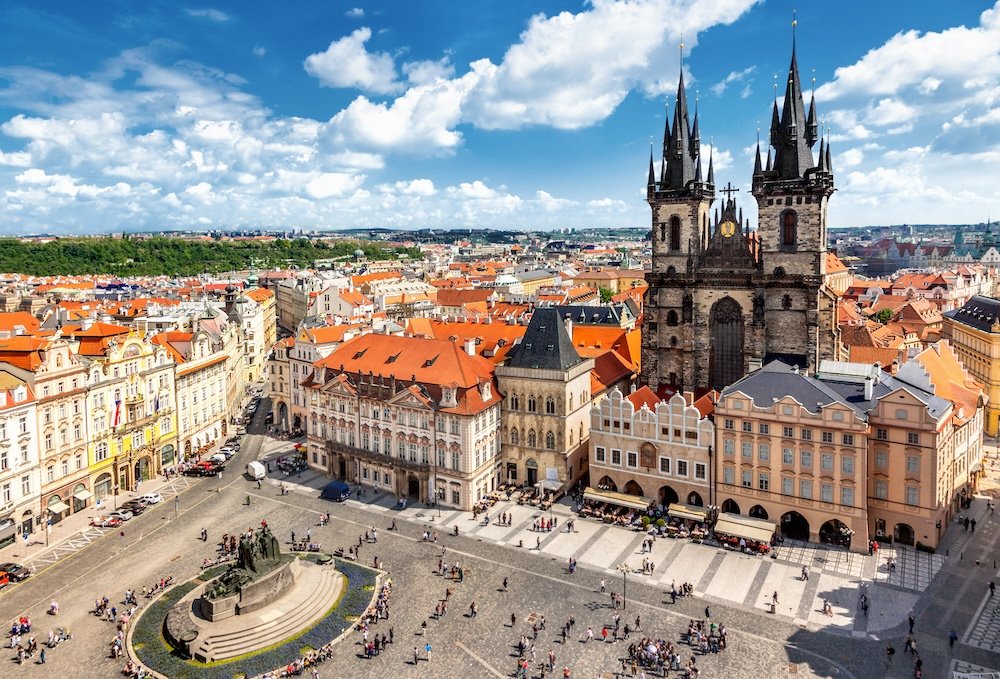
The centuries after Charles IV were rougher. Bohemia became a flashpoint of the Protestant Reformation and then the opening battlefield of the Thirty Years’ War, a conflict that started in Prague in 1618 when Protestant nobles threw two Catholic regents and their secretary out of a castle window, an incident so specifically Bohemian it has its own name, the Defenestration of Prague. All three men survived the fall. The Habsburgs eventually absorbed Bohemia into their empire, and Prague spent the next three centuries as a provincial capital rather than a seat of power, a demotion that at least meant its medieval core wasn’t leveled and rebuilt the way so many capitals were.
Independence came in 1918 with the founding of Czechoslovakia. It didn’t last. The Nazis occupied the city in 1939, the Soviets effectively controlled it after 1948, and Prague spent four decades behind the Iron Curtain, most visibly interrupted by the Soviet tanks that crushed the Prague Spring reforms in 1968.
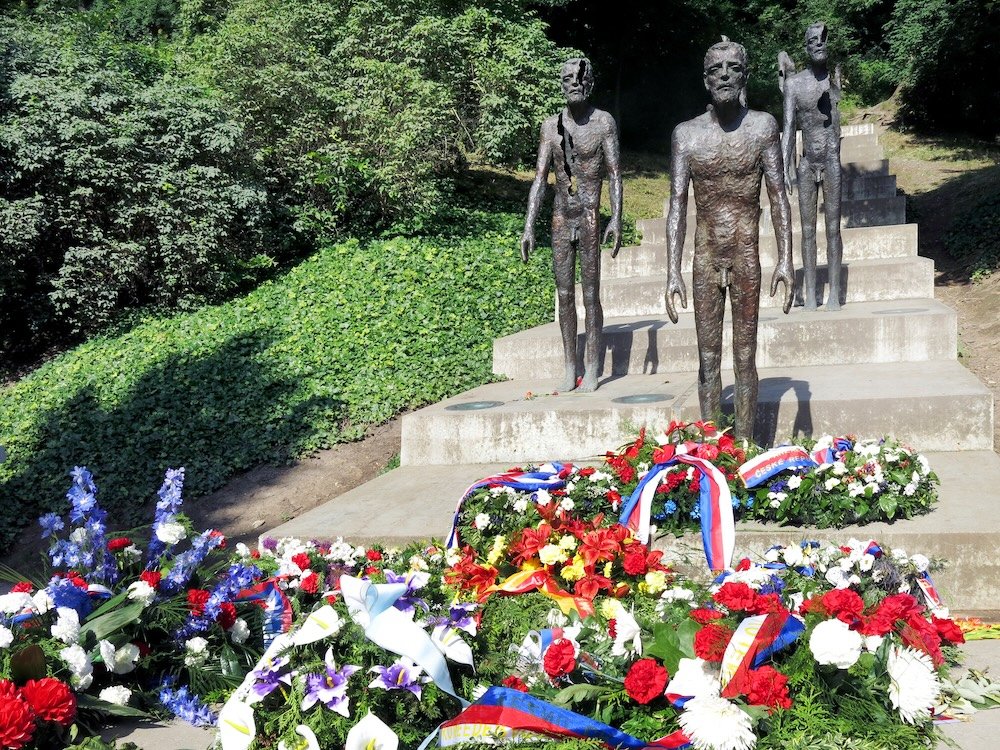
The Velvet Revolution ended communist rule in November 1989, without a single reported death, and the country split peacefully into the Czech Republic and Slovakia in 1993. Prague has been the Czech capital, EU member, and one of the most visited cities on the continent ever since, a status that would have surprised the city’s mid-century residents about as much as anything else that happened to them.
Where to spend your attention
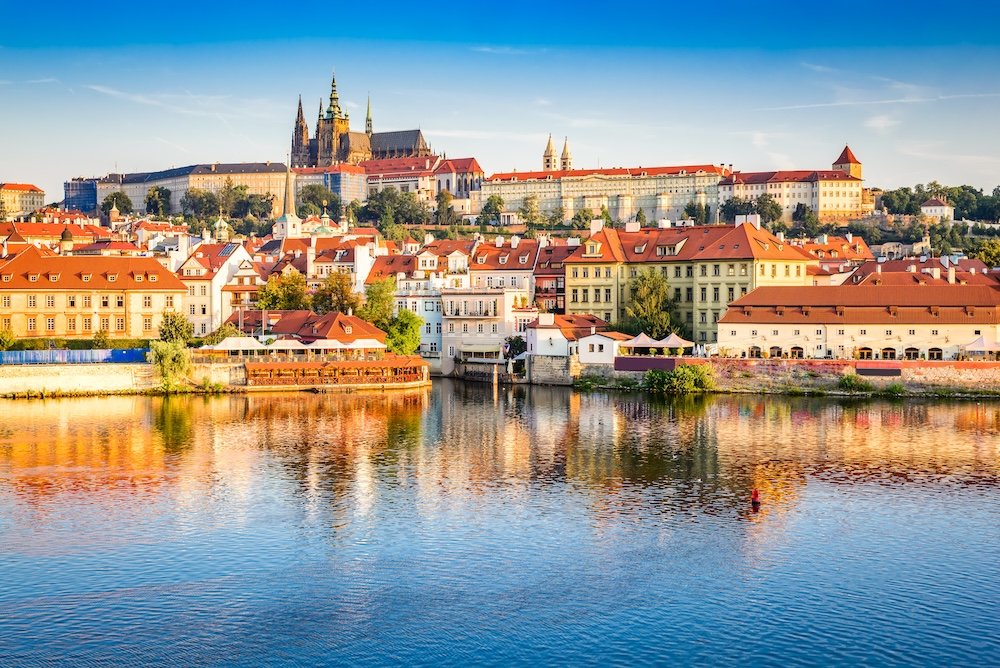
Prague Castle credibly claims to be the largest ancient castle complex in the world: 45 hectares of courtyards, palaces, and fortifications that took over a thousand years to accumulate. St. Vitus Cathedral inside its walls is the centerpiece, its Gothic spires visible from most of the city, though the building itself wasn’t actually finished until 1929, nearly six hundred years after Charles IV broke ground on it. Golden Lane, the row of tiny 16th-century houses along the castle’s northern wall, is worth the extra few minutes if only because it’s the one part of the complex built at human scale rather than imperial scale. The castle grounds are open daily and free to walk; the interiors require a ticket, and the crowds thin out considerably if you arrive at opening.
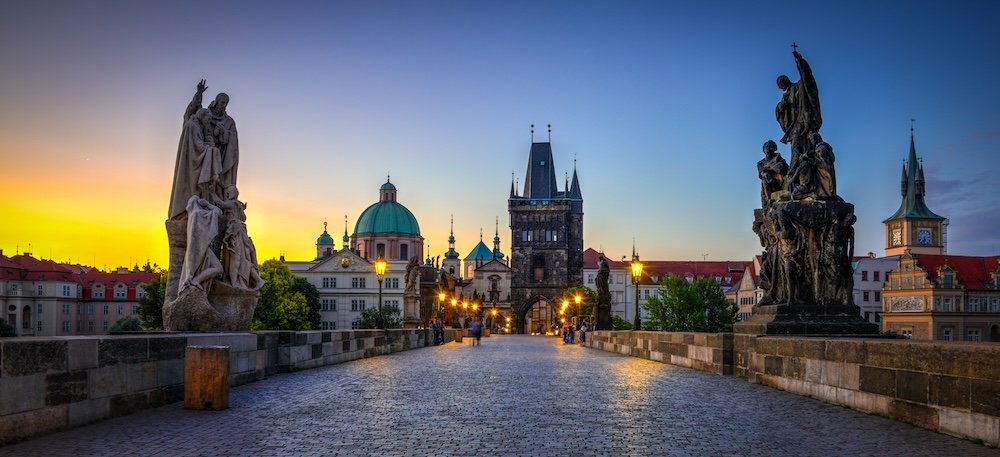
Charles Bridge is the other fixed point, a pedestrian crossing lined with thirty Baroque statues, a growing number of them copies standing in for originals moved into the National Museum’s lapidary collection, where weather can’t erode them further. The bridge’s most touched statue is St. John of Nepomuk, thrown into the Vltava on the king’s orders in 1393; a bronze plaque near the spot shows a small relief that, according to a tradition nobody can quite trace to its origin, grants a wish to anyone who rubs it. The bronze is worn bright by exactly that kind of repetition. Cross before eight in the morning and you’ll have the statues mostly to yourself; cross at three in the afternoon and you’ll understand why every guidebook tells you not to.
Josefov, the old Jewish Quarter tucked between the river and Old Town Square, holds a harder history well. The Old-New Synagogue, built around 1270, is the oldest active synagogue in Europe. The Old Jewish Cemetery next door packs nearly twelve thousand visible gravestones into a plot that was used for burials from the 15th century to the 18th, stacked in layers because the community wasn’t permitted to expand its boundaries. The Pinkas Synagogue lists, on its interior walls, the names of roughly 80,000 Czech Jews murdered in the Holocaust. It is not a place to rush through, and the quarter doesn’t ask you to.
On Josefov’s northern edge, the house at Haštalská 1 carries the name U Rabbiho Loewa, after the same rabbi buried a few streets away in the Old Jewish Cemetery, though the building’s stranger secret has nothing to do with him. Believed to be one of the oldest houses in Prague, with written records reaching back to around 900, it served as a 15th-century apothecary before Rudolf II, the Holy Roman Emperor who ruled from Prague Castle and kept alchemists on retainer the way other monarchs kept court painters, installed a working laboratory in its cellars sometime in the 16th century. The lab was sealed and forgotten for roughly four hundred years, rediscovered only in August 2002, when catastrophic flooding sent the Vltava over its banks, displaced tens of thousands of residents, and, during the cleanup that followed, opened a hole in the floor leading straight down into it. What’s there now, run as the Speculum Alchemiae museum, includes a bookshelf that swings open on a hidden hinge, a narrow stone stair, and a chamber of crucibles, stills, and a mummified crocodile that alchemists hung from the ceiling and passed off to visitors as a dragon, a dead reptile being a harder sell than a live legend. A locked passage past the main chamber is said, according to the story the museum tells, to have once connected the lab to Prague Castle, the Old Town Hall, and a nearby barracks, a network built for a quick exit if the Inquisition ever came calling. Tours run every half hour and last about thirty minutes; bring cash, since the alchemists didn’t anticipate a card machine.

For a version of Prague with fewer tour groups, walk south to Vyšehrad, the fortress on the rock where Libuše is said to have made her prophecy. The cemetery here holds Dvo?ák, Smetana, and much of the Czech cultural pantheon, and the ramparts offer a river view that rivals the castle’s without the ticket line. Pet?ín Hill, reachable by funicular from Malá Strana, has its own small monument to civic ambition: a 63.5-meter steel tower built in 1891 by Prague’s tourism club, four months after members returned from Paris impressed by a much larger tower there. It is, unmistakably, a shrunken Eiffel Tower, and the city has never pretended otherwise.
What to do, beyond looking at it
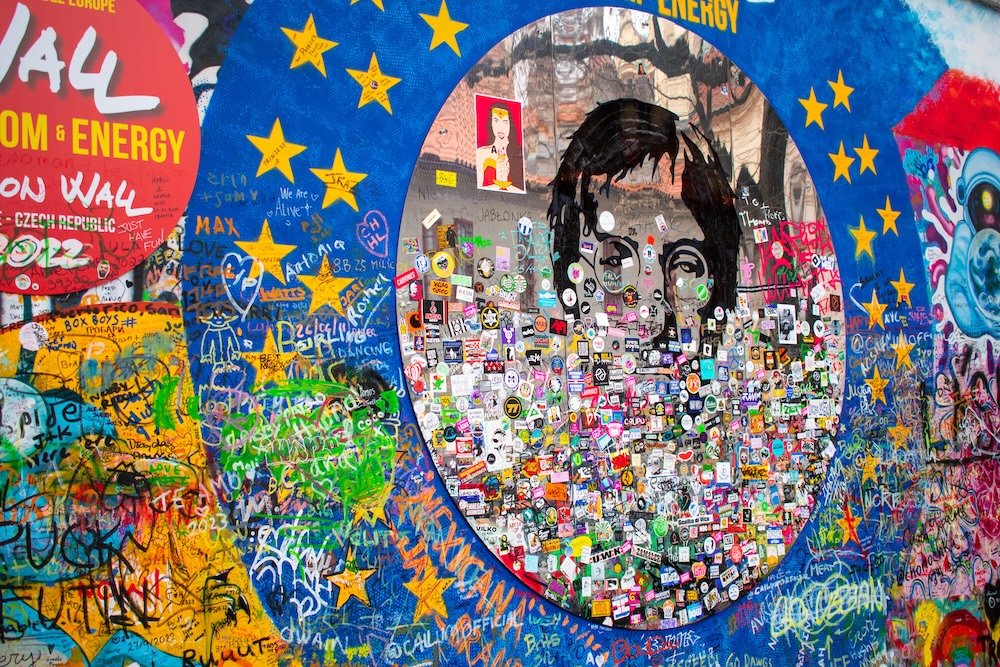
Walk the John Lennon Wall in Malá Strana early in the morning if you want to see it before the day’s fresh graffiti buries whatever was painted there the night before. It started in December 1980, days after Lennon’s murder, as an unofficial memorial that the communist secret police kept whitewashing and Prague’s young people kept repainting, until the gatherings around it grew large enough that police broke them up and the regime started calling participants “Lennonists.” The wall’s politics evaporated after 1989, but the impulse to write on it didn’t, and it now belongs to whoever has a marker.
Take a boat, even a short one, onto the Vltava. The city reads differently from the water, less like a postcard and more like the working river it’s always been. In the evening, find a beer garden on Letná or Riegrovy Sady and watch the sun go down over the castle from a plastic chair with a half-liter in hand, which is, more or less, what a large percentage of Prague’s population is doing at the same moment. If you care about classical music, both Dvo?ák and Smetana are local, and the city’s concert calendar takes that seriously; a summer evening in a baroque hall listening to either composer, performed by musicians who grew up on them, is a different experience than hearing the same music anywhere else.
What to eat
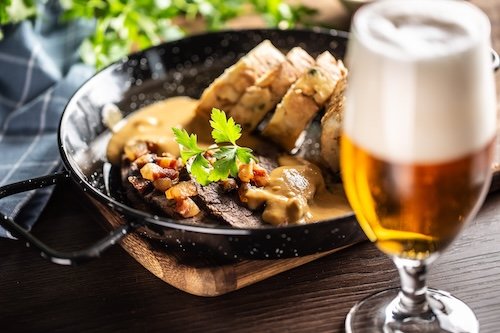
Czech food is built for cold weather and long dinners, whatever the season. Sví?ková, beef marinated and braised until it falls apart, is served under a vegetable cream sauce with bread dumplings, a spoonful of whipped cream, and a dab of cranberry sauce on the side, an odd-sounding combination that works because the sweetness cuts the richness.

Vep?o knedlo zelo, roast pork with dumplings and braised cabbage, is closer to the everyday version, the dish a Czech grandmother makes without a recipe because she doesn’t need one. Guláš here is thicker and more paprika-forward than its Hungarian cousin, usually served with a dumpling instead of rice. Dumplings themselves come in two families: bread dumplings sliced like bread and potato dumplings that are denser and slightly sweet, and a Czech meal without one or the other feels unfinished.
One thing worth knowing before you order it: trdelník, the sugar-and-cinnamon pastry cylinder sold from nearly every cart in the Old Town, filled with ice cream or Nutella and photographed relentlessly, is not Czech. It originated in Slovakia, likely via Hungary, and the ice-cream-stuffed version sold in Prague was invented for tourists within roughly the last fifteen years. Locals don’t eat it. There’s no harm in trying one, but it’s worth knowing you’re eating a marketing decision, not a tradition.
What to drink
Beer isn’t a beverage choice in Prague so much as a civic identity. Czechs drink more beer per capita than any other country in the world, something like 160 liters a year per person, and the culture that produces that number is built around the pub rather than the bottle: half-liter glasses, conversation that runs to football and politics, and a general suspicion of anyone drinking alone with a phone instead of company. The style the country is famous for, pale golden lager, was essentially invented here.

Before 1842, beer brewed in the town of Plze?, about ninety minutes southwest of Prague, had gotten so bad that whole casks of it reportedly had to be poured out. The town’s burghers hired a Bavarian brewer named Josef Groll, who brewed a bottom-fermented beer with soft local water, kilned malt, and Saaz hops. It debuted in November 1842 as Pilsner Urquell, and it became the ancestor of nearly every pale lager made anywhere since. Order one in a Prague pub, and you’re not drinking a regional specialty. You’re drinking the prototype.
Day trips worth the train ticket
Karlštejn is the closest of the group, and the one most people attempt first, forty minutes from Prague’s main station by train, followed by an uphill walk of about two and a half kilometers that takes most visitors half an hour and humbles anyone who packed for a museum day rather than a hike. Charles IV built it starting in 1348, not as a residence for entertaining but as a vault: the Chapel of the Holy Cross inside the Great Tower was finished in 1365 specifically to hold the Bohemian and imperial crown jewels and a collection of holy relics, and it was considered so sacred that for centuries almost no one but the emperor was permitted to set foot inside it. The chapel’s walls hold 129 panel paintings by the court painter Theodoric, the largest surviving collection of his work anywhere, gilded and jewel-studded to the point that photographs of it look faked. Access to the chapel itself is limited and requires a separate, advance-booked tour, so reserve before you go rather than after you’ve made the climb. The castle looks built to withstand an army, and in 1422 it actually had to: Hussite forces under Jan Žižka besieged Karlštejn hoping to seize the treasures inside, and the Great Tower’s thick walls and narrow approach held them off. The jewels stayed put, on and off, for the better part of three centuries.

Kutná Hora, fifty minutes from Prague by direct train, holds two things people come for: the Gothic Cathedral of St. Barbara, funded by silver-mining wealth in a town that once minted much of Central Europe’s currency, and the Sedlec Ossuary a short walk away, a small chapel where a 19th-century woodcarver arranged the bones of an estimated forty to seventy thousand people into chandeliers, garlands, and a coat of arms. It reads as macabre until you notice how carefully it was done, which somehow makes it more unsettling rather than less.
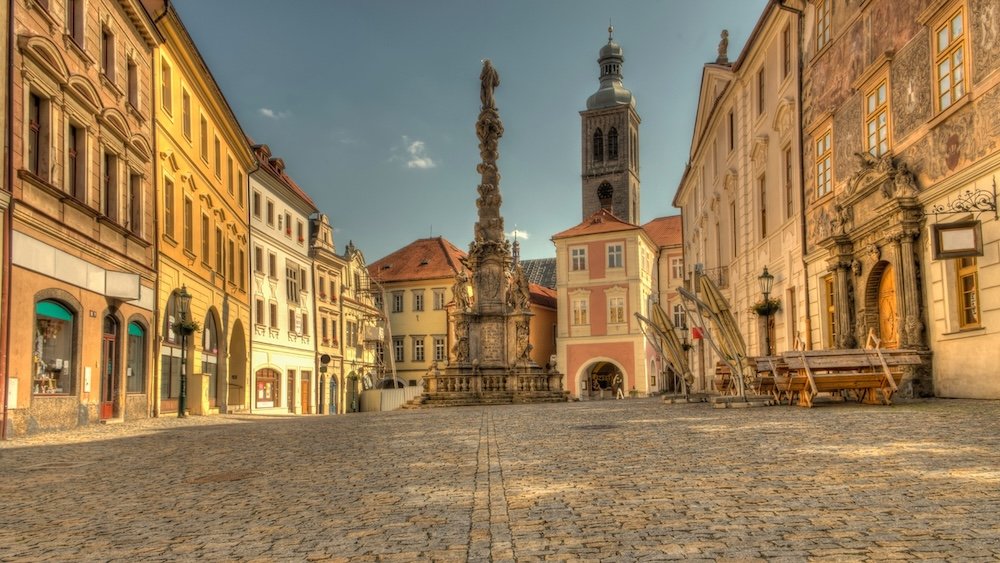
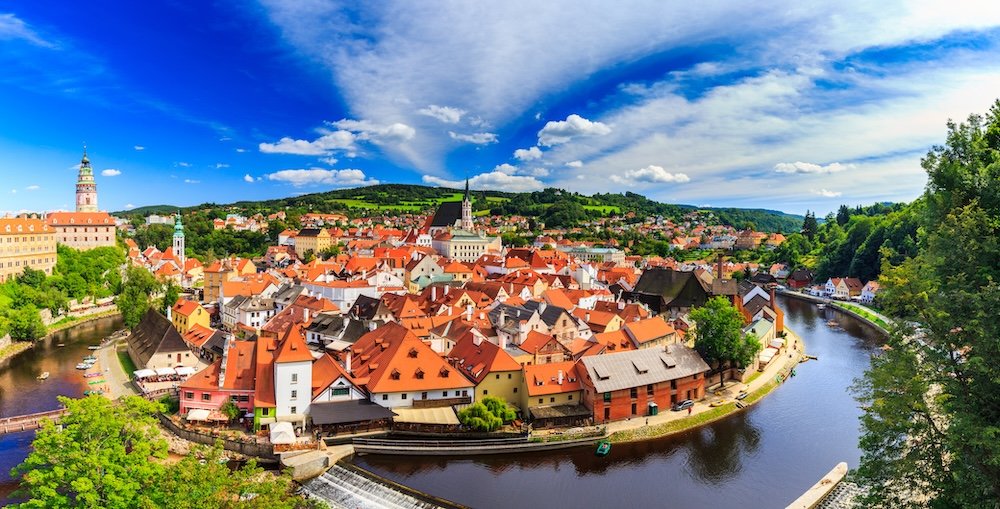
?eský Krumlov, roughly three hours away, is a medieval town wrapped almost entirely around by a bend in the Vltava, with a castle on the bluff above it. It’s far enough that a day trip means a long day, and the town rewards an overnight stay more than a rushed one; if your schedule allows it, stay.
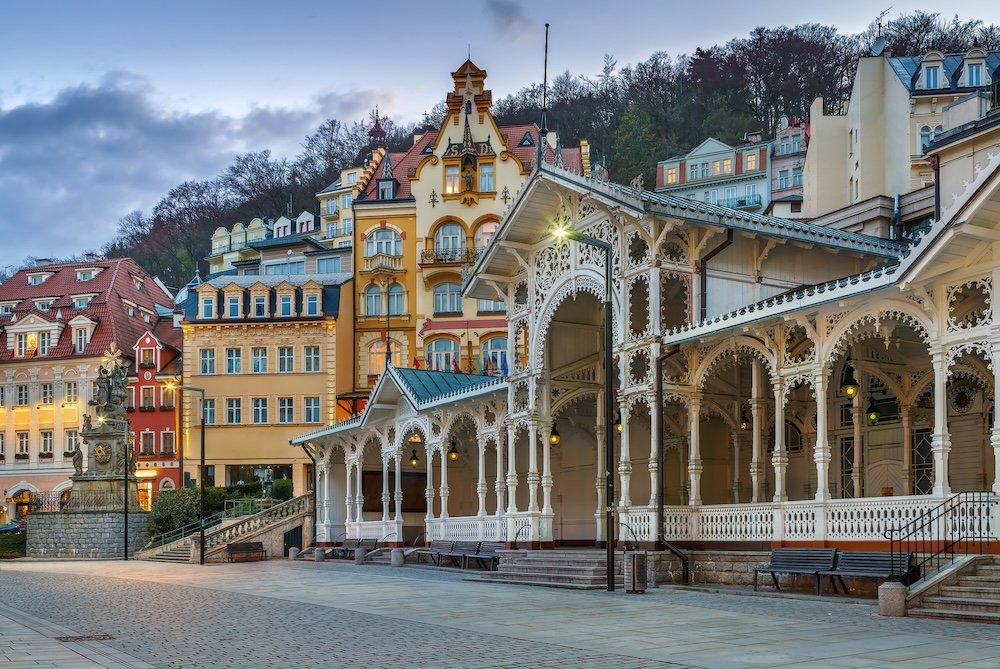
Karlovy Vary, about two hours northwest, is a spa town built around a cluster of mineral hot springs, its colonnades and pastel facades dating largely from the 19th century when European aristocracy came to take the waters. Locals still walk the promenade sipping mineral water from small spouted cups, a ritual that looks strange until you’ve tried it yourself.
Terezín, less than an hour north, is not a day trip in the same register as the others. The town served as a Nazi concentration and transit camp during the war, and roughly 150,000 people passed through it before being sent onward, most to their deaths. It’s worth visiting, and worth visiting with a guide, since the sites that matter are scattered across a town where residents still go about ordinary life.
Weather, and when to go
High season runs from mid-May through mid-September, when Prague gets its warmest weather, its longest daylight, and its heaviest foot traffic through Old Town Square in roughly equal measure. July and August average highs in the mid-70s Fahrenheit, occasionally pushing into the 80s, and Old Town at 2 p.m. in August is not a place for anyone who dislikes crowds.
Shoulder season, spring and early autumn, is the sensible traveler’s answer. April and May bring the city’s parks and hillsides into bloom without summer’s density of visitors, and September and early October offer some of the year’s clearest skies, along with the year’s most agreeable light for photographing the castle from across the river. Rain is more of a fixture in these months than in summer, so pack for it.
Winter is the low season, and it’s worth defending despite the cold. December brings Christmas markets to Old Town and Wenceslas Square, mulled wine sold from wooden stalls, and a city lit up against genuinely cold, often gray days that average around freezing and can dip well below it. January and February are the quietest months by far, with fewer tourists, shorter museum lines, and a version of the castle silhouette against a low winter sky that summer visitors never see. It asks more of you in the form of layers and daylight hours, and it gives back a city that isn’t performing for anyone.
By the time the clock struck ten that morning in Old Town Square, the crowd from nine o’clock had mostly moved on to the next thing on their list, replaced by a fresh one already lifting their phones. The apostles would make the same circuit they’d been making since 1948, standing in, as so much of this city does, for something older that didn’t survive to see this century. Nobody seemed to mind. The bell still rang.