


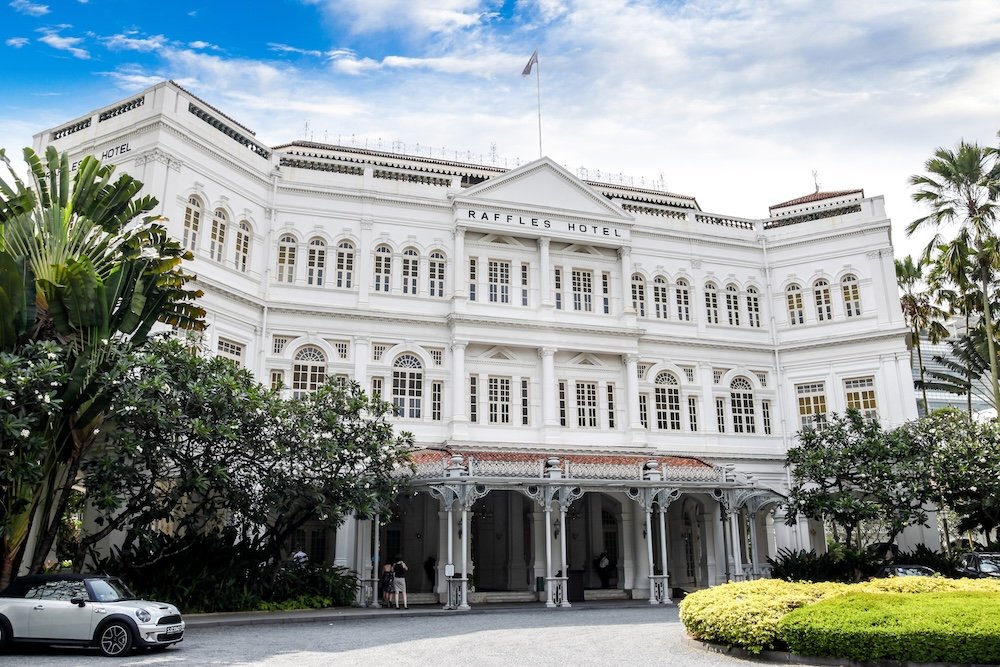
At the Long Bar inside Raffles Hotel, the colonial-era grand hotel on Beach Road that has hosted travelers since 1887, the floor crunches. Guests are invited to brush their peanut shells off the tables and onto the floor, and staff sweep them up by the thousands. In a country known for fining people who forget to flush a public toilet, this is the one room where littering is practically required. The drink that arrives with the peanuts is the Singapore Sling, a pink gin cocktail that Hainanese bartender Ngiam Tong Boon created here in 1915 so that ladies of the colonial era could enjoy a drink that looked like fruit punch. It costs about S$39 before tax and service, roughly $30, which is a fair price for a glass of history.
That small, sanctioned rebellion says a good deal about the place. Singapore earns its reputation for rules. It also hides a sense of humor behind them, along with stranger stories than its spotless sidewalks let on.
A KINGDOM CLAIMED BY THE BROTHER WHO MISSED THE CORONATION
Modern Singapore began with a family grudge. In late January 1819, Sir Stamford Raffles, a British colonial official serving as lieutenant-governor of a trading post in Sumatra for the British East India Company, landed at the mouth of the Singapore River looking for a new port. The island was ruled by the Sultan of Johor, and the sitting sultan, Abdul Rahman, was too close to the Dutch to sign anything British. Raffles found his opening in the sultan’s older brother. Tengku Hussein had been away in Pahang getting married when their father died, and came home to find his younger brother already on the throne. The treaty they signed on February 6, 1819, is still counted as the founding of modern Singapore.
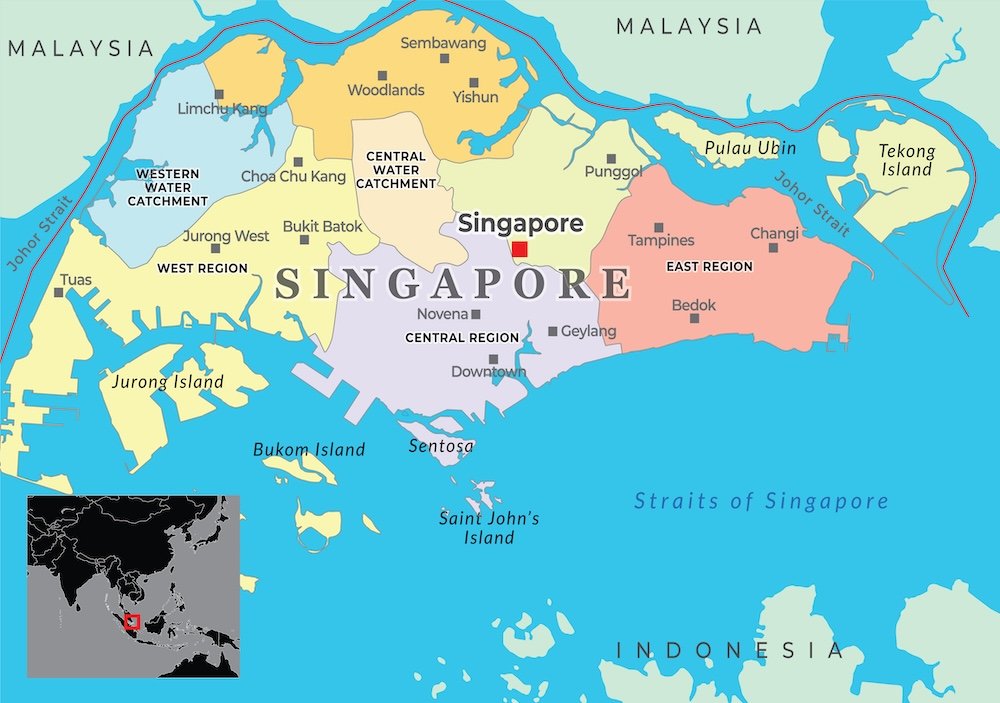
By 1860, more than 80,000 people lived here, over half of them Chinese, and the port became the crossroads it remains. Today, Singapore‘s total population is 6.2 million. After two uneasy years as part of the Federation of Malaysia, Singapore was separated on August 9, 1965. Lee Kuan Yew, the country’s founding prime minister, who led the government from 1959 to 1990, teared up at a televised press conference and called it “a moment of anguish.” Over the following decades, the island built the polished, relentlessly efficient city visitors see today.
WHY SINGAPORE
On one island at the southern tip of the Malay Peninsula, smaller than New York City, four cultures share the same streets: Chinese, Malay, Indian and Peranakan, the community descended from early Chinese traders who married into local Malay families and created a cuisine and style all their own. A visitor can stand in a Hindu temple founded in 1827, eat lunch at a hawker stall with a Michelin nod, and walk through an indoor cloud forest before dinner, all connected by the MRT, the city’s subway, which runs with the punctuality of a Swiss watch. English is spoken everywhere, and the streets are safe. For first-time travelers to Asia, families with children, and anyone nervous about finding one’s way through a foreign city, there is no gentler introduction.
On one island at the southern tip of the Malay Peninsula, smaller than New York City, four cultures share the same streets: Chinese, Malay, Indian and Peranakan, the community descended from early Chinese traders who married into local Malay families and created a cuisine and style all their own. A visitor can stand in a Hindu temple founded in 1827, eat lunch at a hawker stall with a Michelin nod, and walk through an indoor cloud forest before dinner, all connected by the MRT, the city’s subway, which runs with the punctuality of a Swiss watch. English is spoken everywhere, and the streets are safe. For first-time travelers to Asia, families with children, and anyone nervous about finding one’s way through a foreign city, there is no gentler introduction.
THE ATTRACTIONS EVERYONE COMES FOR
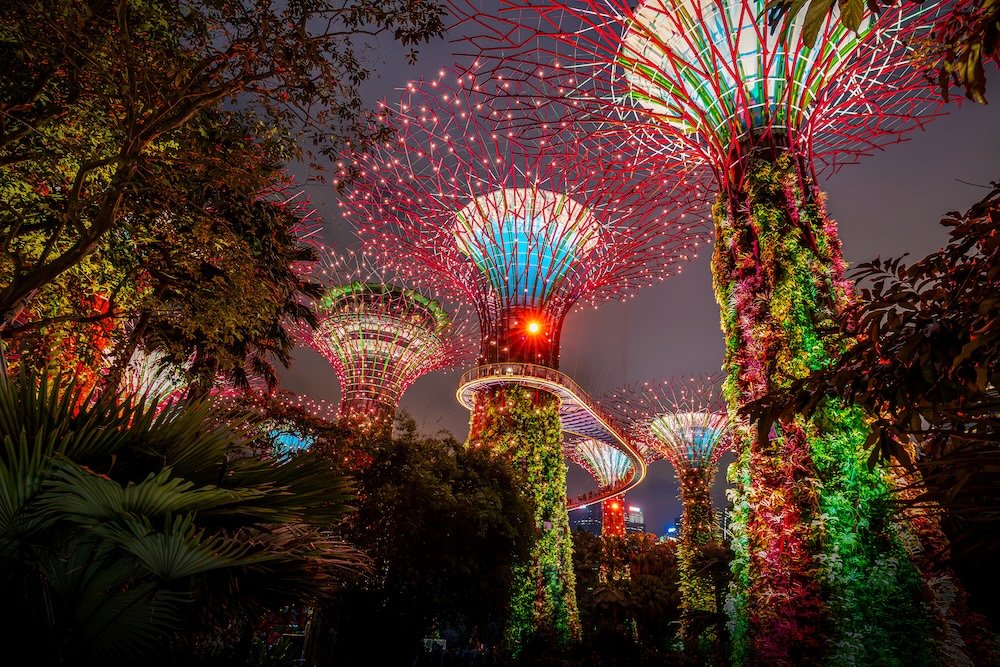
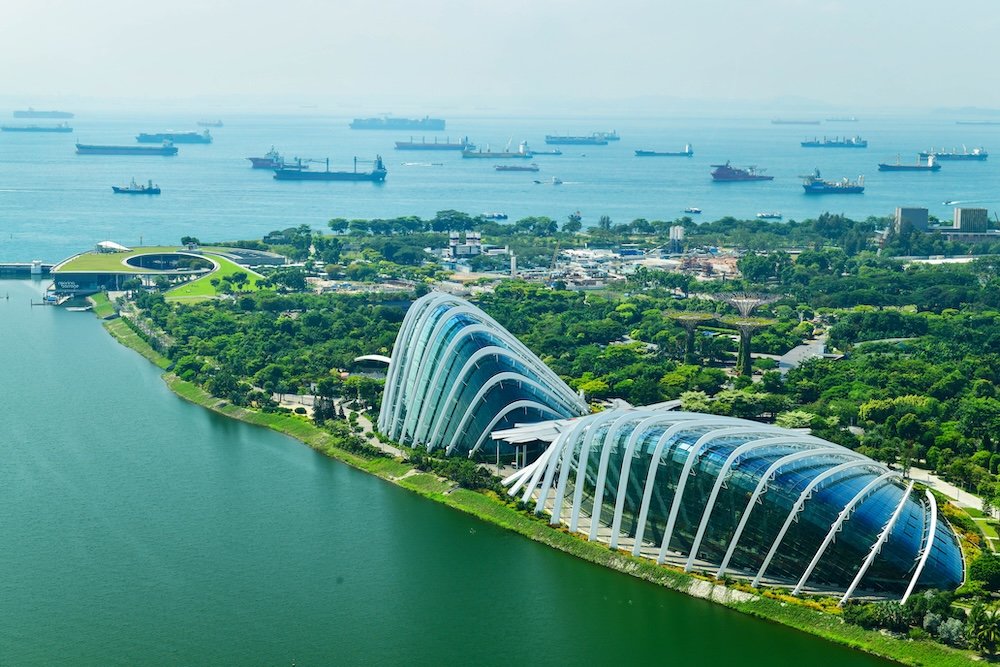
Gardens by the Bay. If Singapore has a single must-see, this is it: a 260-acre waterfront park opened in 2012 on reclaimed land beside Marina Bay. Its signature sight is the Supertree Grove, 18 steel structures between 82 and 160 feet tall, wrapped in living ferns and orchids so they look like giant trees from a science fiction film. The grove and the outdoor gardens are free. Every evening at 7:45 and 8:45, the Supertrees light up to music for Garden Rhapsody, a free show best watched lying flat on the plaza below.
Two enormous glass conservatories require tickets. The Flower Dome, recognized by Guinness World Records as the world’s largest greenhouse, holds a cool, dry Mediterranean garden of plants from five continents. The Cloud Forest recreates the cool, misty climate of a tropical mountaintop: visitors walk through a 138-foot artificial mountain covered in orchids, ferns and pitcher plants, with a 115-foot indoor waterfall thundering at the entrance and elevated walkways circling the summit. A combined ticket runs about S$46 for non-residents, roughly $36, and the Cloud Forest has lately shared its mountain with a Jurassic World dinosaur exhibit, so some residents are larger than usual. Who will love it: garden lovers, photographers, families, and anyone who wants the postcard view of Singapore.
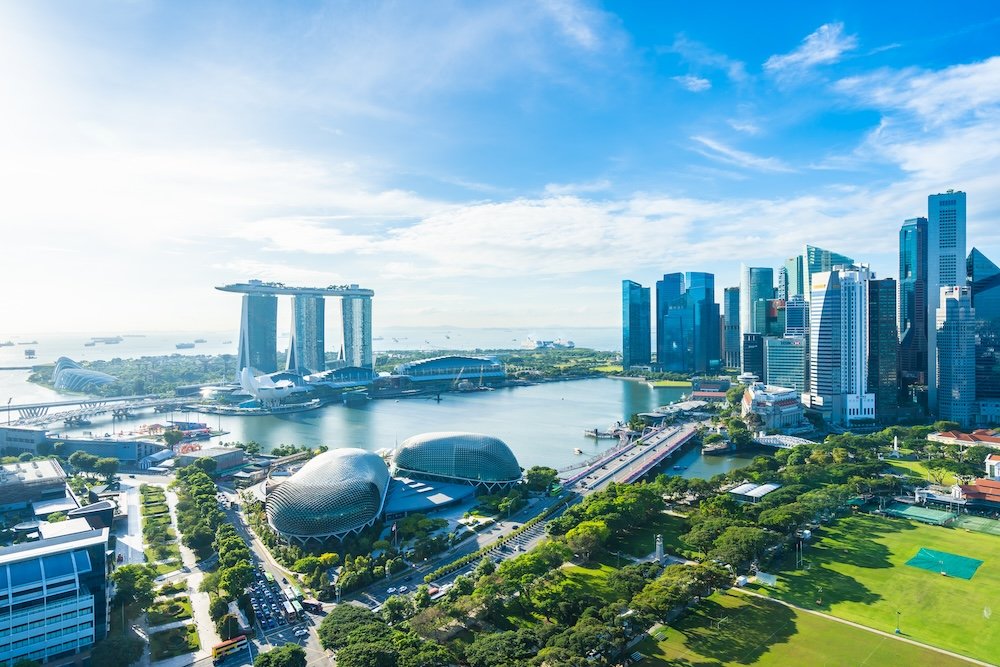
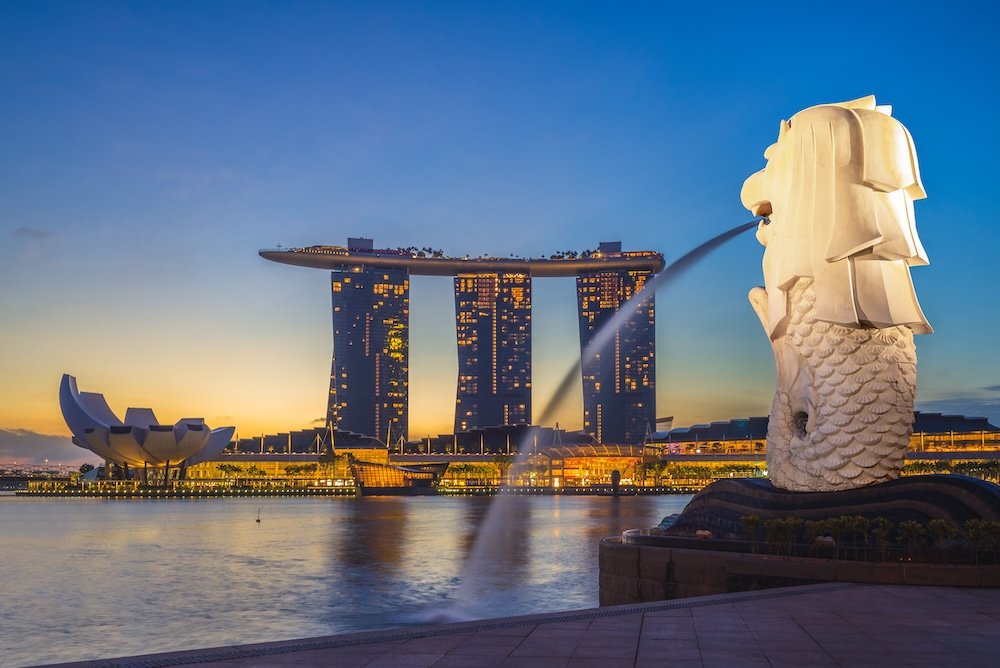
Marina Bay Sands and the Merlion. Across the water stands Marina Bay Sands, the resort of three 55-story hotel towers joined at the top by a ship-shaped rooftop deck. The famous infinity pool is reserved for hotel guests, but anyone can buy a ticket to the SkyPark Observation Deck, about 650 feet up, for around S$23. At the foot of the towers, Spectra, a free light-and-water show, plays nightly at 8 and 9 p.m., with a 10 p.m. encore on Fridays and Saturdays. A short walk around the bay leads to the Merlion, the city’s mascot: a 28-foot statue with the head of a lion and the body of a fish, unveiled in 1972. The lion nods to Singapura, “lion city,” and the fish to the island’s beginnings as a fishing village. Who will love it: first-time visitors, skyline photographers, couples and evening strollers.
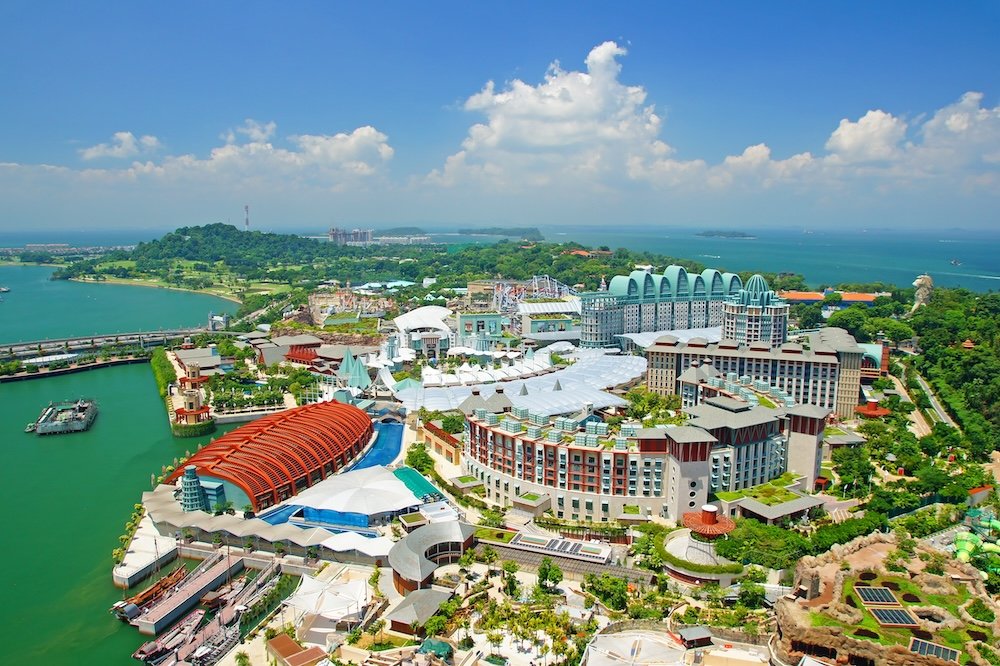
Sentosa. Singapore’s resort island, connected to the main island by a monorail, a cable car and a free boardwalk, is the city’s playground. It holds Universal Studios Singapore, a movie theme park with adult tickets from about S$83, the Singapore Oceanarium aquarium, a mountain luge, and three free beaches: Siloso, Palawan and Tanjong. Who will love it: families with children, thrill-ride fans and travelers who want a beach day without leaving the city.
The Singapore Zoo and the Night Safari. In the Mandai rainforest in the north of the island, the Singapore Zoo is known for open enclosures that separate animals from visitors with moats and plantings rather than cages. Next door, the Night Safari, opened on May 26, 1994, was the world’s first zoo built to be visited after dark. A tram glides through moonlit habitats while walking trails lead past flying squirrels, leopards and slow-moving tapirs. Book a timed entry ahead and go on a weeknight to dodge the crowds. Who will love it: families, wildlife lovers and anyone looking for an evening unlike any back home.
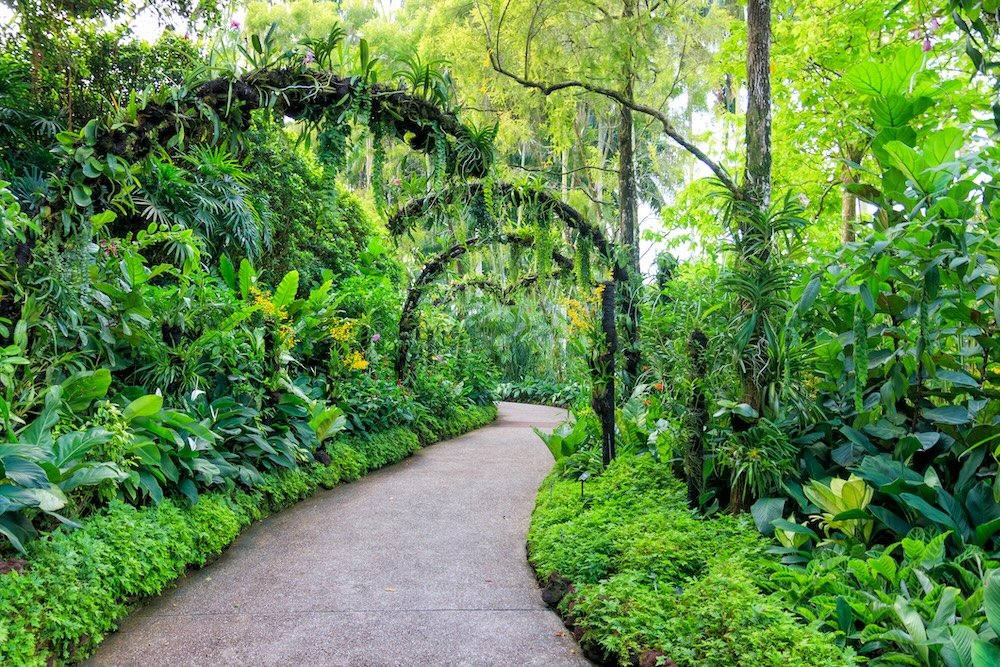
Singapore Botanic Gardens. Founded in 1859 and named a UNESCO World Heritage Site in 2015, this 19th-century garden of lakes, rain trees and lawns is free and open from 5 a.m. to midnight. The only ticketed section is the National Orchid Garden, which displays more than 1,000 species of orchid, the national flower. Who will love it: early risers, walkers, garden enthusiasts, and anyone who needs a quiet morning.
Haw Par Villa, on Pasir Panjang Road in the west of the island, is a free outdoor sculpture park built in 1937 by Aw Boon Haw and Aw Boon Par, Burmese-Chinese brothers who made their fortune with Tiger Balm, the menthol pain ointment still sold worldwide. They meant it to teach Chinese values through folklore, and their names, which mean “tiger” and “leopard,” gave the park its name.
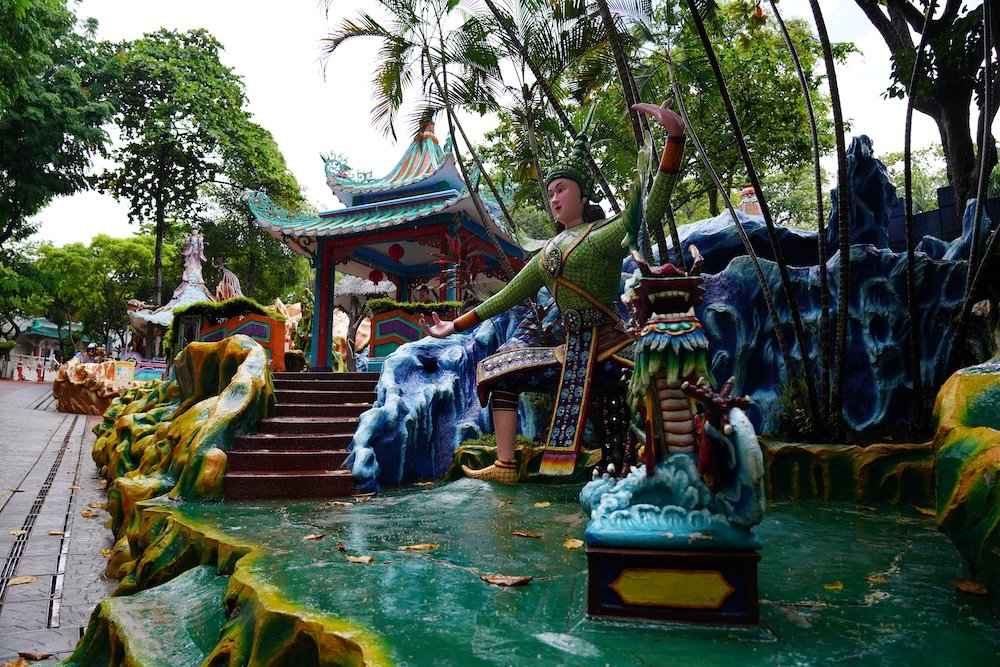
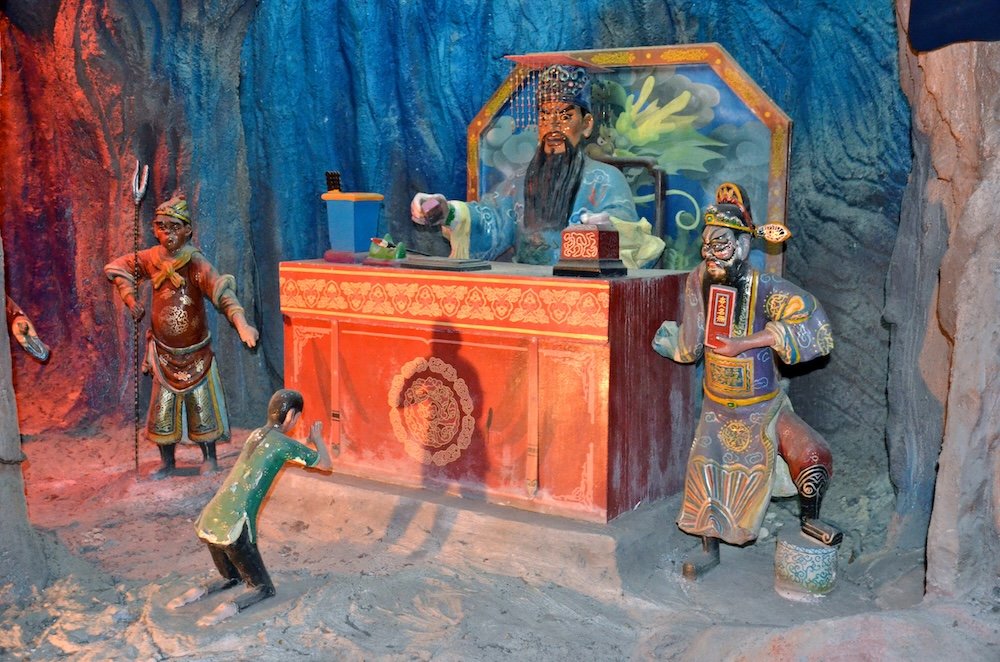
More than 1,000 painted statues and some 150 dioramas fill the grounds, from the Monkey King to a battle between rabbits and rats. Its centerpiece, the Ten Courts of Hell, a walk-through depiction of the punishments awaiting sinners in Chinese and Buddhist belief, now sits inside Hell’s Museum, which charges S$18 for adults. Generations of Singaporean children were brought here to learn their manners. It works. Who will love it: lovers of the wonderfully strange, folklore fans and older children with strong stomachs.
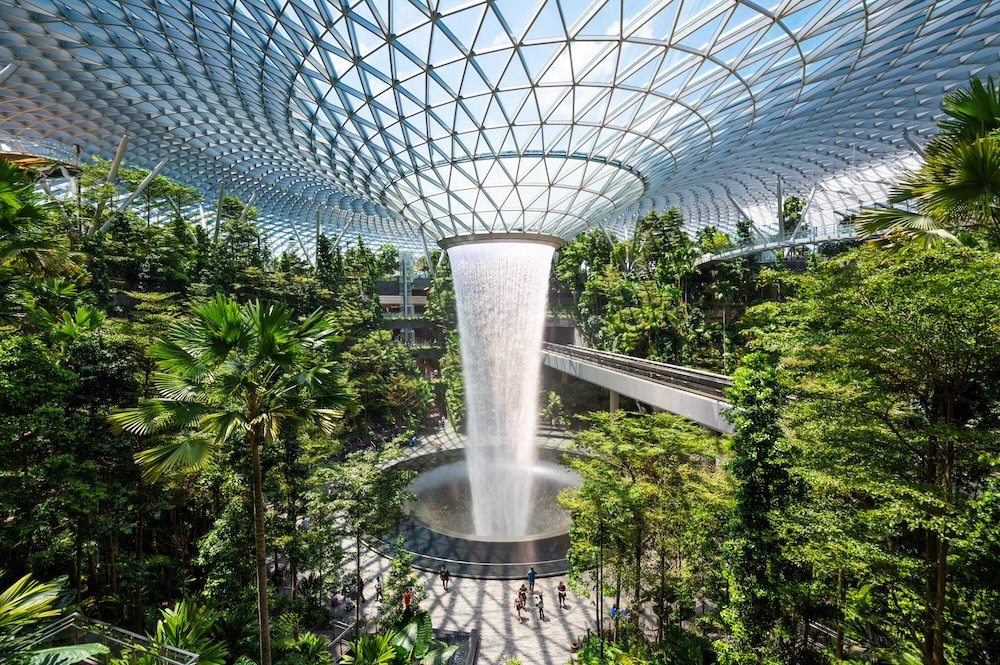
Jewel Changi Airport. Singapore’s airport has a shopping and garden complex that people visit even when they are not flying. At its center is the HSBC Rain Vortex, the world’s tallest indoor waterfall, which pours 131 feet from a hole in the glass roof and hosts free light shows each evening. Who will love it: everyone with a long layover.
THE NEIGHBORHOODS AND HAWKER CENTERS
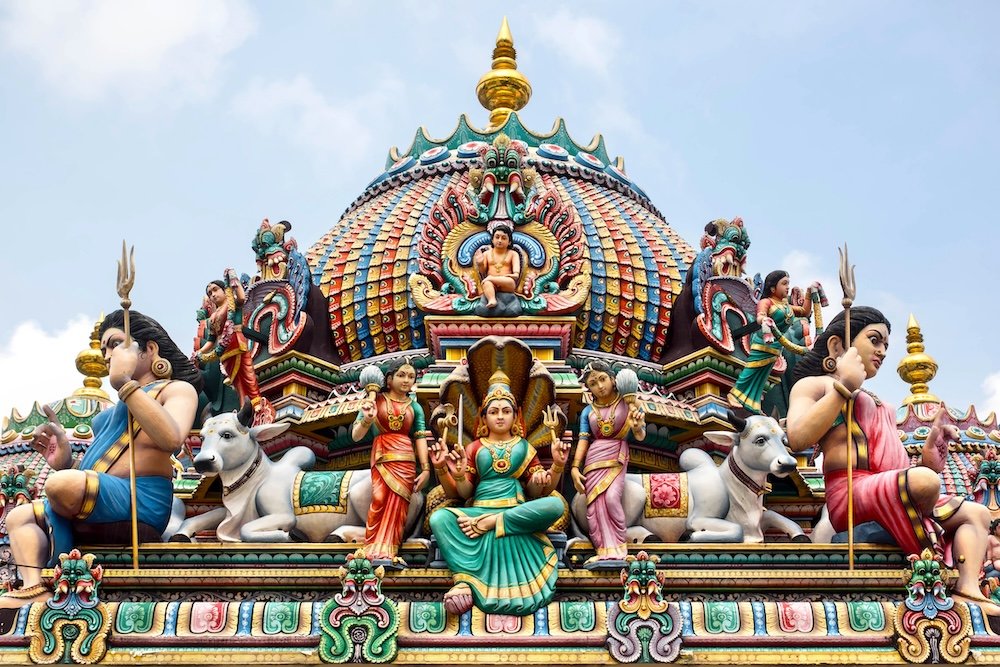
Singapore’s historic districts are where its cultures are easiest to see. In Chinatown stands the Sri Mariamman Temple, the city’s oldest Hindu temple, founded in 1827 by Naraina Pillai, a clerk for the British East India Company who had arrived with Singapore’s founder. Each October or November, devotees walk barefoot over hot coals there during the Theemithi firewalking festival. Kampong Glam, the historic Malay and Muslim quarter, centers on the golden-domed Sultan Mosque and Istana Kampong Gelam, the palace where the descendants of Singapore’s first sultan lived until the 1990s. Little India, the Indian community’s district, is filled with spice shops, sari stores, and flower-garland stalls.
Singapore’s historic districts are where its cultures are easiest to see. In Chinatown stands the Sri Mariamman Temple, the city’s oldest Hindu temple, founded in 1827 by Naraina Pillai, a clerk for the British East India Company who had arrived with Singapore’s founder. Each October or November, devotees walk barefoot over hot coals there during the Theemithi firewalking festival. Kampong Glam, the historic Malay and Muslim quarter, centers on the golden-domed Sultan Mosque and Istana Kampong Gelam, the palace where the descendants of Singapore’s first sultan lived until the 1990s. Little India, the Indian community’s district, is filled with spice shops, sari stores, and flower-garland stalls.
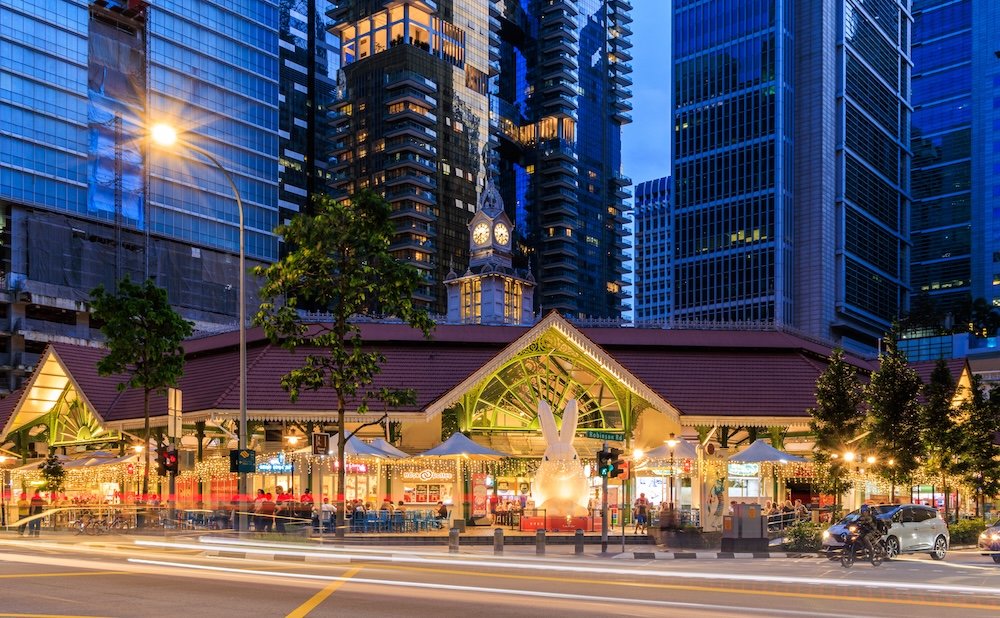
Eating is the national pastime, and hawker centers are where it happens. The government built these open-air food courts starting in the 1970s to move street vendors into clean, permanent stalls, where a full meal often costs a few dollars. In December 2020, UNESCO added Singapore’s hawker culture to its list of the Intangible Cultural Heritage of Humanity, and dozens of stalls now hold the Michelin Guide’s Bib Gourmand award for good food at modest prices. Three make easy starting points. Maxwell Food Centre in Chinatown is home to the long-famous Tian Tian Hainanese Chicken Rice. Chinatown Complex Food Centre, with more than 230 stalls, is the largest in the country. Lau Pa Sat in the financial district occupies a Victorian cast-iron market hall rebuilt in 1894; after dark, the street beside it fills with satay grills. Who will love it: every traveler who eats, which is to say every traveler.
PRECAUTIONS WORTH TAKING
Every visitor must submit the free SG Arrival Card, an online immigration and health declaration, within three days before arrival. Copycat websites charge fees for the same form, so use the official Immigration and Checkpoints Authority portal. Passports should be valid for at least six months. Vaping has been illegal since 2018, and since September 1, 2025, penalties have stiffened sharply; foreigners caught with e-cigarettes face fines, and repeat or drug-linked cases can mean deportation and a ban on returning. Red disposal bins at the airport and border checkpoints accept devices without question. Singapore’s drug laws are among the world’s harshest, and trafficking above set quantities carries a mandatory death sentence. Importing chewing gum is banned, eating or drinking on the MRT can bring a fine of up to S$500, and the durian, the region’s famously pungent fruit, is not welcome on trains at all.
Every visitor must submit the free SG Arrival Card, an online immigration and health declaration, within three days before arrival. Copycat websites charge fees for the same form, so use the official Immigration and Checkpoints Authority portal. Passports should be valid for at least six months. Vaping has been illegal since 2018, and since September 1, 2025, penalties have stiffened sharply; foreigners caught with e-cigarettes face fines, and repeat or drug-linked cases can mean deportation and a ban on returning. Red disposal bins at the airport and border checkpoints accept devices without question. Singapore’s drug laws are among the world’s harshest, and trafficking above set quantities carries a mandatory death sentence. Importing chewing gum is banned, eating or drinking on the MRT can bring a fine of up to S$500, and the durian, the region’s famously pungent fruit, is not welcome on trains at all.
The climate needs respect too. Daytime highs hover around 88°F year-round with heavy humidity, so plan outdoor sightseeing for mornings and evenings, save museums and malls for midday, and carry water and an umbrella.
DAY TRIPS WORTH THE DETOUR
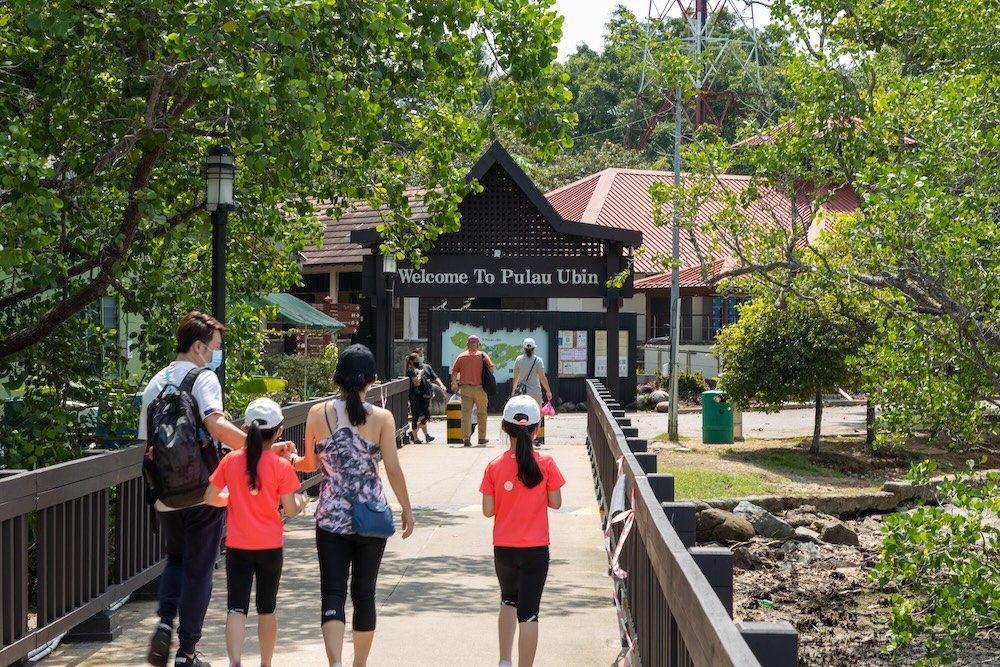
Pulau Ubin, a small island off Singapore’s northeast coast, is the easiest and most charming escape. It preserves the country’s last traditional kampong, or village, life, with wooden houses, mangroves and quiet trails. A bumboat, a small wooden ferry, leaves Changi Point Ferry Terminal whenever about a dozen passengers have boarded, charges S$4 each way, and reaches the island in roughly ten minutes. Visitors rent bicycles at the jetty and ride to the boardwalks of Chek Jawa Wetlands, a glimpse of Singapore before the skyline. It suits cyclists, nature lovers and anyone curious about the island’s past.
Across the water, Bintan, an Indonesian island of beach resorts, is about 70 minutes by ferry from Tanah Merah Ferry Terminal and makes an easy overnight. Johor Bahru, the Malaysian city just over the Causeway bridge, draws shoppers and families heading to LEGOLAND Malaysia, and the new RTS Link, a five-minute cross-border train from Woodlands North, is scheduled to open around late 2026. History lovers can go farther to Melaka, the old Malaysian trading port shaped by Portuguese, Dutch and British rule and a UNESCO World Heritage city since 2008, though at roughly four hours each way by bus it rewards an overnight stay.
WHEN TO GO
February through April is the driest and most comfortable stretch. The northeast monsoon runs roughly December through March, with the wettest weeks between November and January, while the in-between months of April, May, October and November bring dramatic afternoon thunderstorms that clear as fast as they arrive. Singapore is a year-round destination, and the rain rarely cancels anything; it simply moves everyone indoors to eat. Prices typically peak during major local events like the Formula 1 Grand Prix season, Christmas, and Chinese New Year.
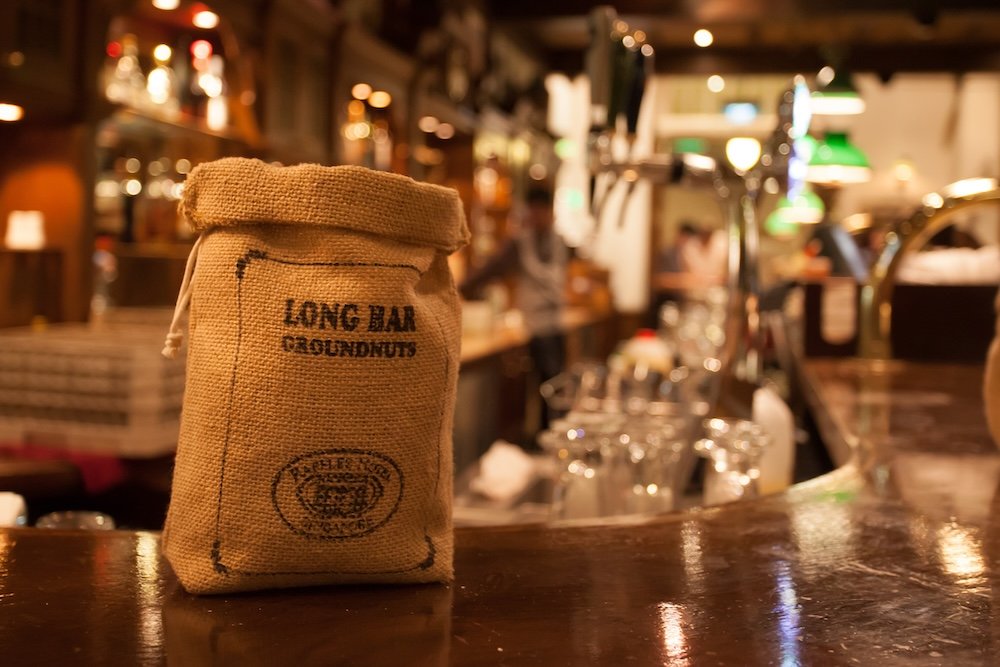
Back at the Long Bar, the evening crew reaches for the brooms. The peanut shells disappear, the floor shines again, and Singapore returns to perfect order, at least until the next bowl arrives.