


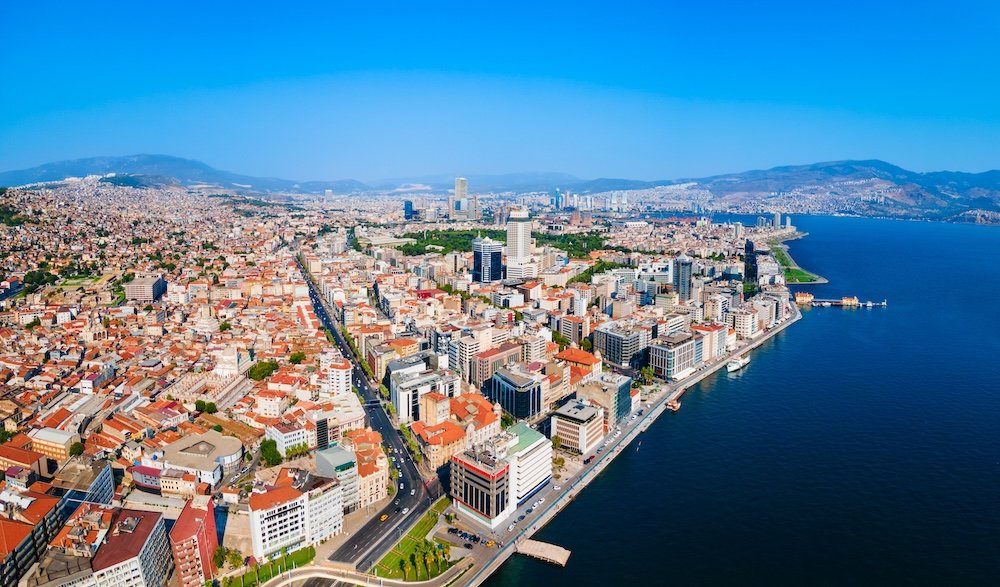
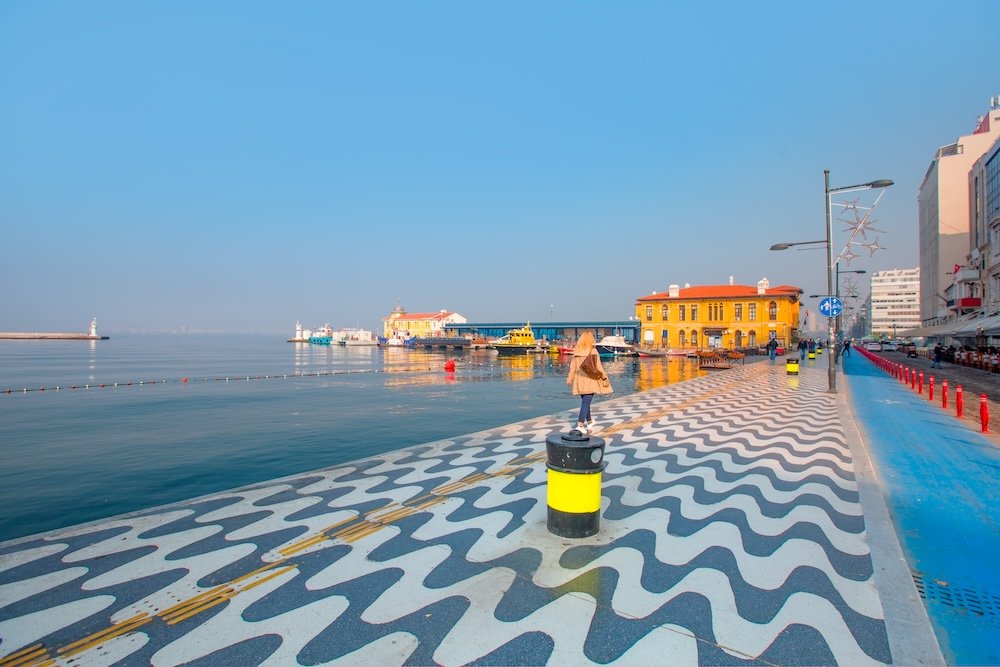
Turkey’s third-largest city has more than 2,300 years of history, but İzmir isn’t defined by one famous monument. Instead, it’s a real Turkish city with its own food and character, and it’s close to three of the Aegean’s top day trips. After a few days, most visitors settle into the local rhythm. Around five in the afternoon, a sea breeze drifts in from the Gulf of İzmir and cools the air along the Kordon, the long waterfront street and promenade. By sunset, the promenade fills with couples and families, and the tables outside the taverns are packed with small plates and tall glasses of rakı.
Many tourists skip İzmir, often heading straight to other destinations. The city’s airport is the gateway to Ephesus, Pergamon, and the Çeşme peninsula, so many travelers land, rent a car, and move on within an hour. But after a few days, it’s clear they’re missing out. With about 4.5 million people in the province, İzmir is a lively port and university city with a relaxed, open-minded vibe, and a terrific base for exploring the region.
For most of its history, the city was called Smyrna and first grew on a mound in the bay at Bayraklı; it was only later moved to its present location, one of the more unusual cases of urban planning. As the travel writer Pausanias wrote in the second century, Alexander the Great was hunting on Mount Pagos, the hill which is now occupied by the Kadifekale fortress, and after that he lay down under a plane tree beside a spring in a sanctuary devoted to the Nemeses; the two goddesses appeared to him in a dream and told him to found a city there. The Smyrnaeans, being sensible people and wanting a second opinion, sent messengers to the oracle of Apollo at Claros, which told them that the people who settled on Pagos would be happier.
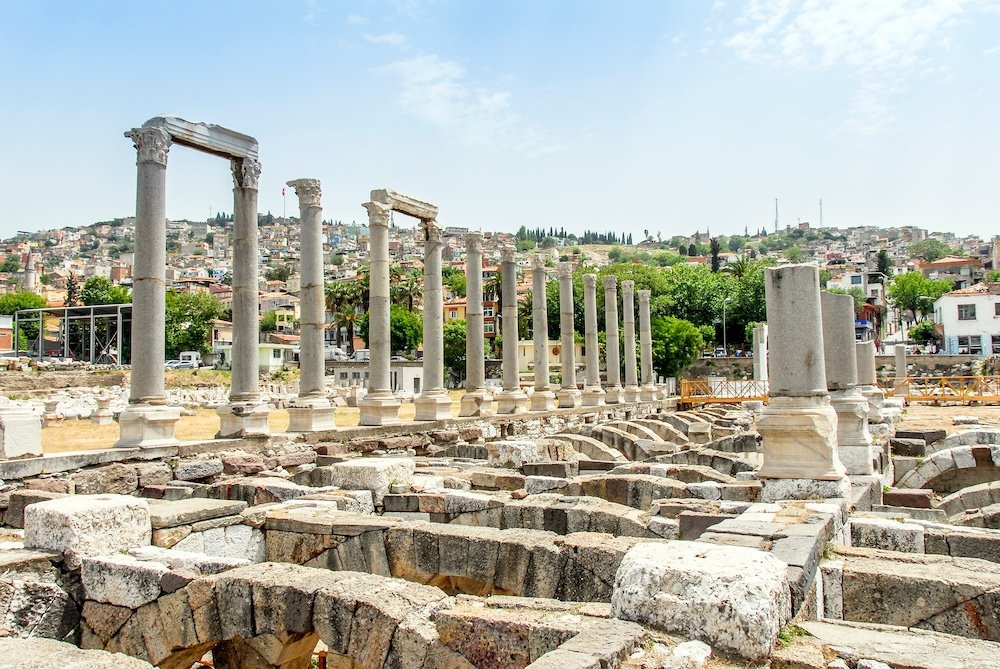
The city was originally Hellenistic and later came under Roman rule; after an earthquake destroyed it in AD 178, Emperor Marcus Aurelius funded the rebuilding. In gratitude, the citizens placed a portrait of his wife, Faustina, in the keystone of the western gate of the agora, where it has remained above the ruins. During the Ottoman period, Smyrna became one of the eastern Mediterranean’s major trading cities and housed large numbers of Turks, Greeks, Armenians, Sephardic Jews, and European merchant families. Other Turks sometimes called it “Gavur İzmir”, or infidel İzmir. People still use this name today as a joking reference to the city’s liberal stance. Nevertheless, the city’s cosmopolitan character came to an end in September 1922 when a fire destroyed the Greek and Armenian districts at the end of the Greco-Turkish War, and it is still not known who was responsible. İzmir then rebuilt itself as a modern Turkish city, and the various layers are still visible to anyone who walks slowly.
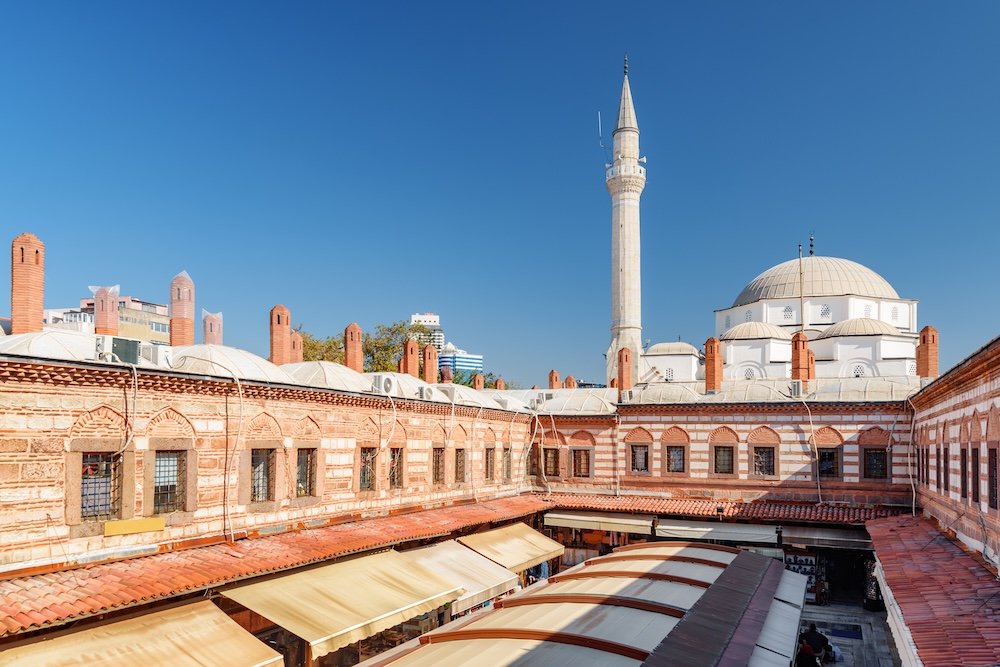
The heart of old İzmir is the Kemeraltı area, a bazaar district that stretches from Konak Square to the ancient agora. The principal building is the Kızlarağası Han, an Ottoman caravanserai with two stories dating from 1744, which now houses craft and souvenir stalls around a courtyard café. Next to it stands the Hisar Mosque, finished in the late 1500s, and it is one of the city’s largest and most elaborately decorated mosques.
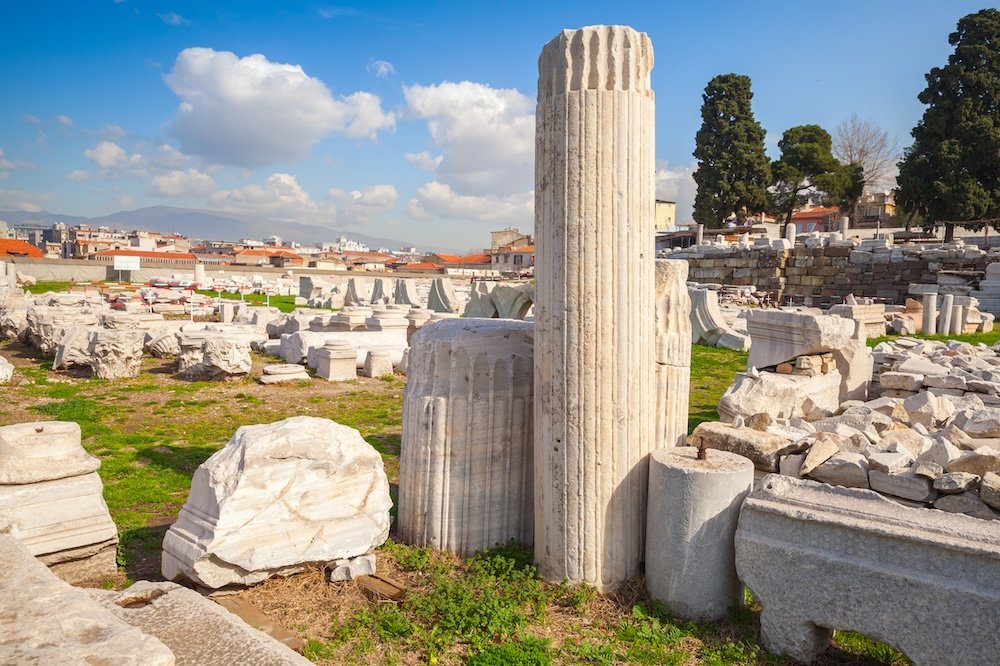
The Agora in Smyrna offers an enjoyable experience while attracting the fewest visitors. In the vaulted basement of the Roman basilica, archaeologists have noted hundreds of pieces of graffiti scratched and painted into the plaster since the late second century, including images of merchant ships, gladiators, animals, and personal messages.
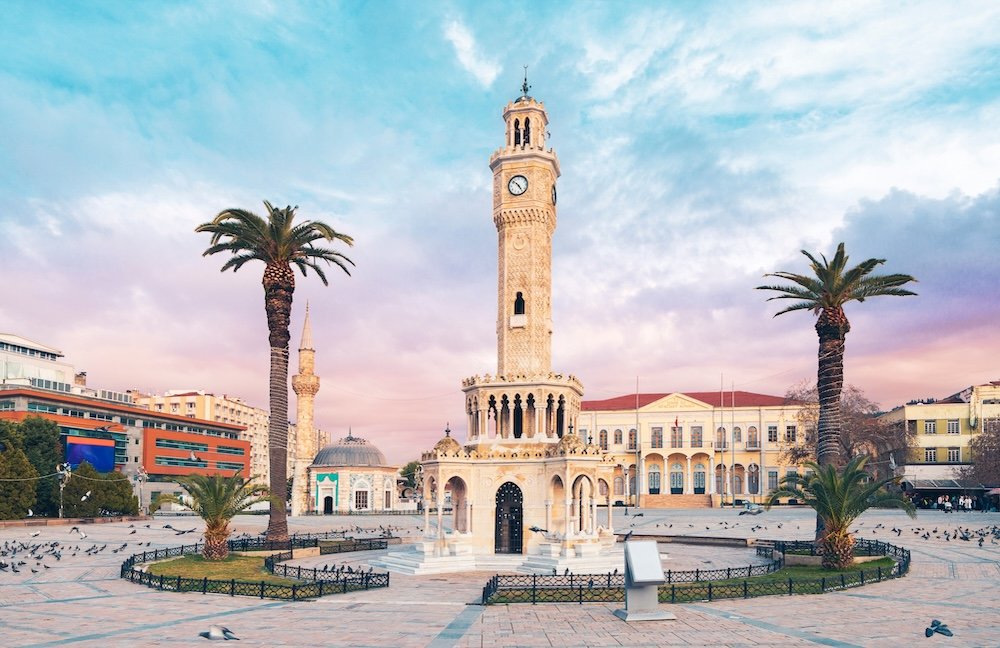
The Clock Tower in Konak Square is the city’s symbol and has an ornate, Ottoman-Moorish look. Designed in 1901 by Levantine French architect Raymond Charles Péré to mark the 25th anniversary of Sultan Abdülhamid II’s accession to the throne, the clocks were generally thought to be a gift from Kaiser Wilhelm II. Yet local historians consider this claim unproven.
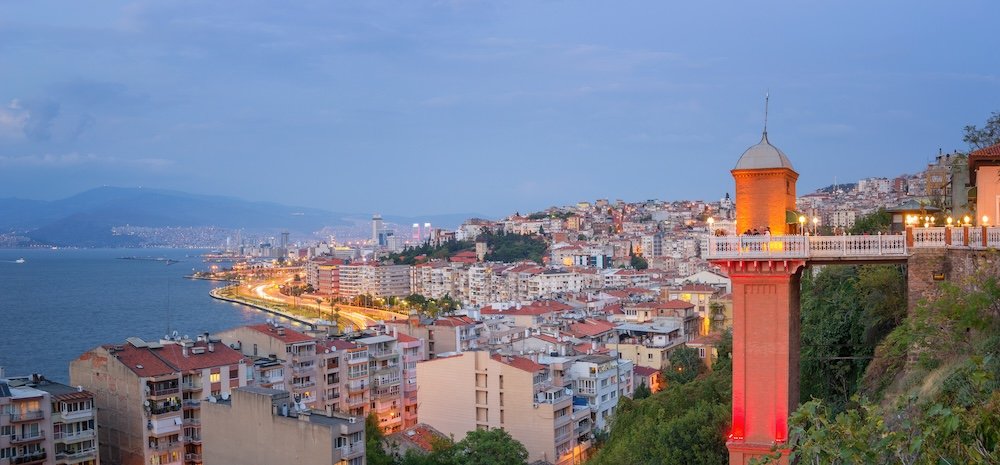
One of the city’s most attractive features was made possible by a man who broke his leg. In the Karataş area, people used to climb 155 steps from the seashore to the district at the top of the cliff, which is roughly 190 feet above sea level. When the head of the Devidas family fell on those steps and broke his leg, his friend Nesim Levi built the Asansör, a brick tower with an elevator, which was completed in 1907. The elevator originally ran on water power; today it runs on electricity and takes visitors to a terrace with the best view in the city.
What to eat
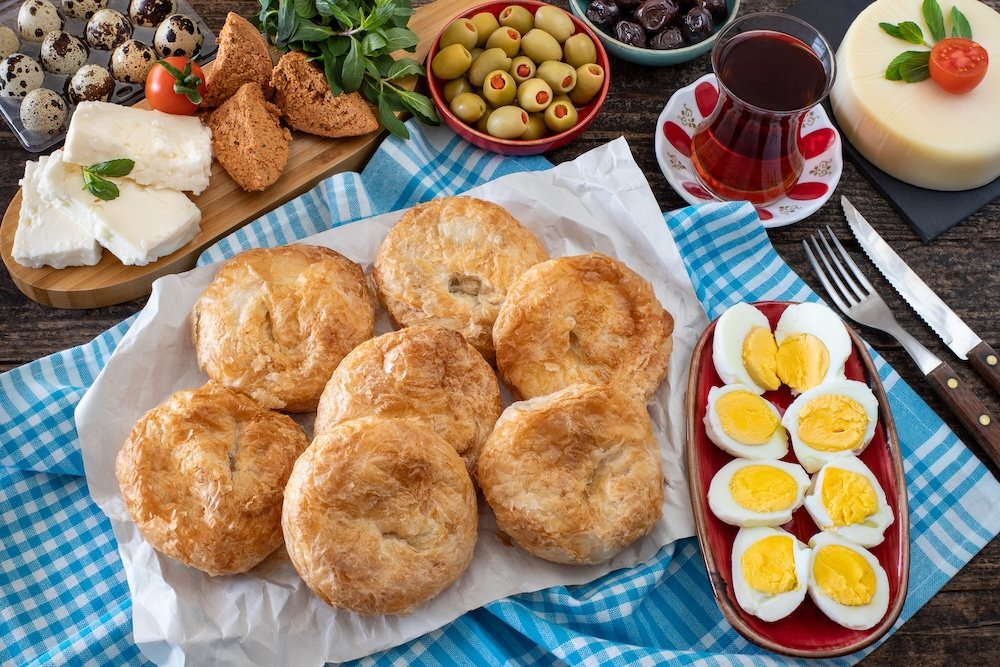
In İzmir, people eat boyoz: a crispy round pastry made of flour, oil,, and tahini, that Sephardic Jews brought to the city after their expulsion from Spain in 1492. Locals serve it with a peppered hard-boiled egg and a glass of tea. Even though gevrek resembles a simit, İzmir residents will tell anyone who says it is similar that it is not even close; they dip it in molasses, fry it briefly, then cover it with sesame before baking. At lunchtime, the kumru, a sandwich named for the dove whose bread was once shaped like it, comes out pressed and hot, with cheese, sausage, and tomato.
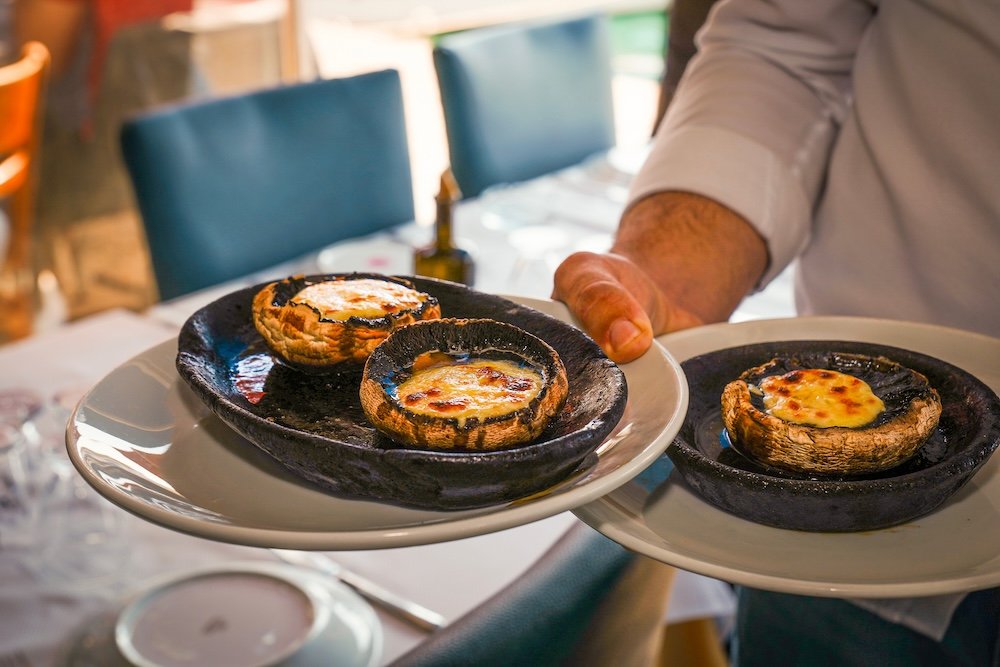
In the evening, meyhanes can be found in the Kordon area and in the back streets of Alsancak; these are traditional Turkish taverns and a social institution where people gather to talk, eat small dishes known as meze, and drink rakhat, an anise-flavored spirit, while enjoying Aegean-style mezes made from wild greens, olive oil, salads, mushrooms, and seafood.
Culture and Etiquette
Izmir rightly has a reputation among Turkey’s bigger cities as the most relaxed, since alcohol is readily available, summer-casual clothing is common in the Kordon area, and the pace of life is considerably slower than in Istanbul. The city’s civic pride is closely tied to Atatürk and the Republic; each September, the İzmir International Fair fills Kültürpark with trade stalls and open-air concerts.
In a mosque, you must cover both your shoulders and your knees; women should bring a scarf to cover their heads and must take off their shoes before walking on the carpet. It is best to avoid the prayer times, particularly the Friday noon service. Bargain in the bazaar, not in restaurants or shops that sell branded goods. If a shopkeeper offers you tea, this is an expression of hospitality rather than an offer for sale, and accepting it is a sign of good manners. In restaurants, it is good to leave a tip of around 10 percent unless the bill says that the service is included. Most importantly, by law Atatürk’s memory and the Turkish flag are protected, and it is undesirable to make unpleasant remarks about them.
Day Trips Worth Taking
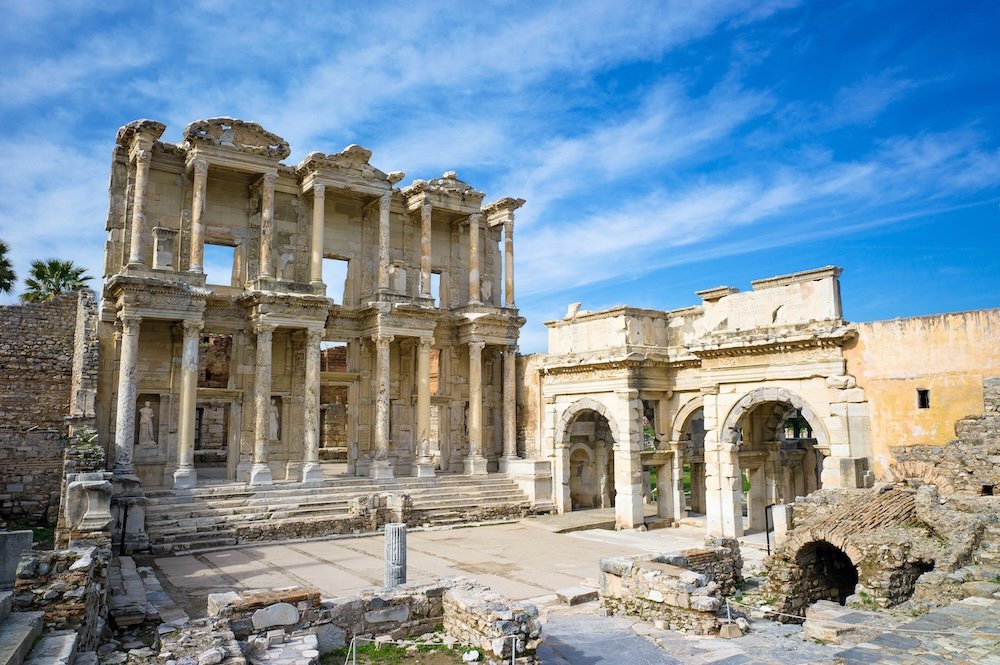
Ephesus is roughly 50 miles to the south and can be reached from Basmane station by regional train in about one and a half hours, with the nearby town of Selçuk as the destination. The city is still one of the best-preserved Roman cities in the Mediterranean and is worth a visit if you go early in order to avoid the tour buses. Five miles along a zigzagging road from Selçuk is the hill village of Şirince, where old Greek houses now offer tastings of fruit wines made from mulberry, peach, and sour cherry.
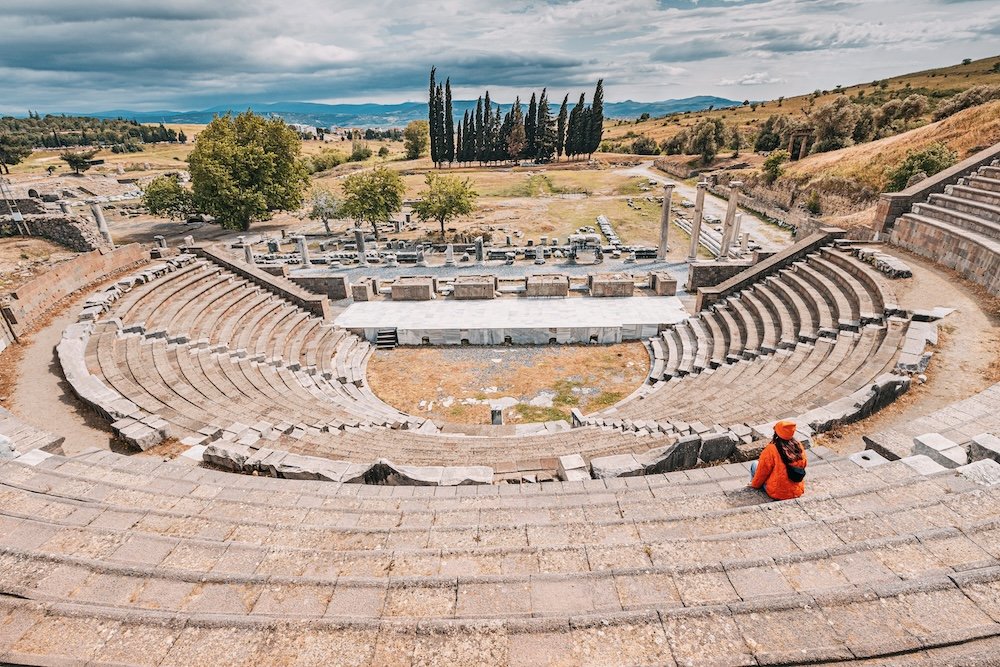
Bergama, roughly 73 miles north of Konak, hosts the ruins of Pergamon, which was added to the UNESCO World Heritage List in 2014. To reach the acropolis, you have to take a cable car, and the theater drops so sharply down the hillside that it is often called the steepest in the ancient world. Field tours are easily available.
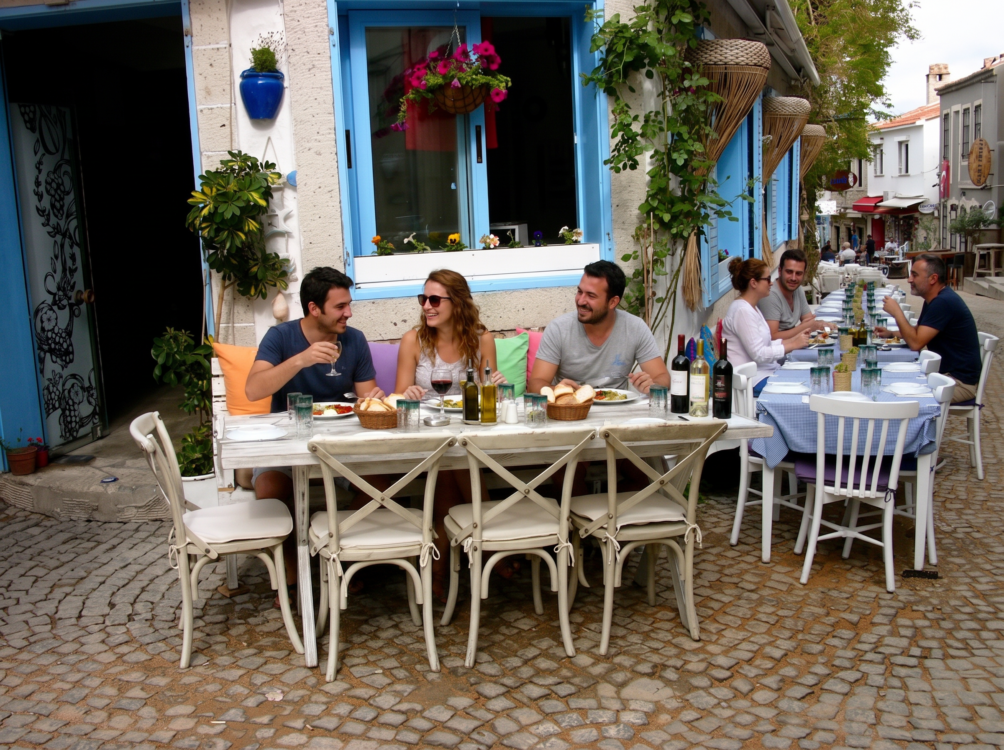
Located some 45 miles west of the city on the Çeşme peninsula, Alaçatı features stone houses covered in bougainvillea, windmills on the hilltops, and a bay with steady winds, which is why it is one of Turkey’s best-known windsurfing destinations.
When to Go
Peak season runs from late June through August, when İzmir is hot and very dry, with daily temperatures usually ranging from the lower to the mid-90s Fahrenheit. Although the city doesn’t get overcrowded, both Çeşme and Alaçatı are full of domestic tourists, and Ephesus becomes a test of endurance in the afternoons. Go to the ruins when they open, then stay outside the Kordon until evening.
The shoulder seasons, from April to early June and from September to October, are at their best: temperatures reach the 70s and low 80s, the sea stays warm enough for swimming right through autumn, and the main attractions are much more enjoyable.
From November through March, the low season, temperatures reach the upper 50s and most of the rain falls during this period, particularly in December and January. The seaside towns shut down, but the city keeps operating; prices fall, and Ephesus can feel almost private on a clear winter morning.