


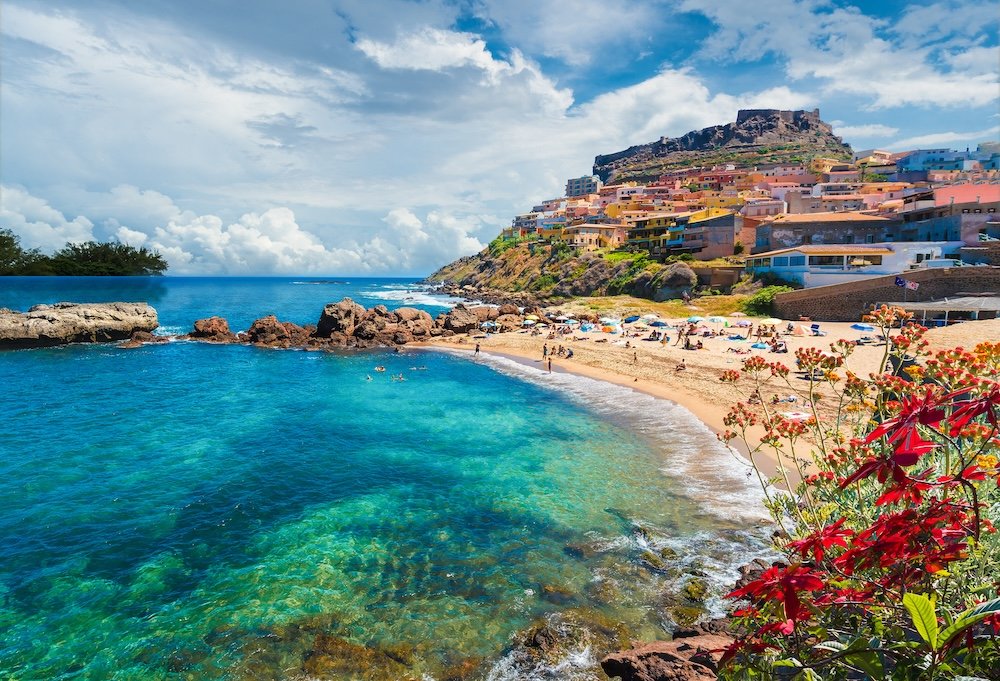
Castelsardo is a striking medieval hilltop town sitting on a dramatic volcanic overlook on Sardinia’s northern coast, on the Gulf of Asinara. Officially recognized as one of the Borghi più belli d’Italia (Most Beautiful Villages of Italy), it perfectly blends ancient maritime history, colorful coastal architecture, and living artisanal traditions, making it a near-perfect destination for travelers seeking an authentic Sardinian experience. Most visit for only a night or two on the way to other Sardinian locations, but it captures the essence of Sardinia, an often-overlooked Italian destination.
Sardinia is the second-largest island in the Mediterranean, trailing only Sicily, a chunk of granite and limestone roughly the size of Vermont and New Hampshire combined, sitting closer to Tunisia than most visitors expect and considerably more isolated from mainland Italy than a glance at the map suggests. About 1.6 million people live here, thinly enough that the island still feels emptied out in a way Tuscany or the Amalfi Coast never quite manage. It has its own language, Sardinian, a Romance tongue distinct enough from Italian that Rome bureaucrats and Cagliari shepherds genuinely cannot understand each other without switching.

Over 7,000 stone towers dot the Sardinian landscape, ranging from simple single towers to large multi-tower complexes with ramparts and surrounding hut villages. Archaeologists estimate that at one time as many as 10,000 structures may have existed. The people who built those towers are called Nuragic, after the nuraghi themselves, conical fortress-houses of dry-stacked basalt, roughly one every few square miles, the densest concentration of Bronze Age megalithic architecture left standing anywhere in Europe. Construction began around the eighteenth century BCE and continued for more than a millennium, and nobody fully agrees on why a Bronze Age society needed so many fortified towers, though the leading theory involves competing clans that never unified into anything resembling a single kingdom. The best-preserved example, Su Nuraxi di Barumini, features a central defensive keep surrounded by a village of circular stone huts, and UNESCO listed the complex as a World Heritage Site in 1997.
Su Nuraxi is the ruin to visit first, because nothing else here explains the Nuragic mystery as directly. Visits are guided only, departing every thirty minutes, roughly nine to eight in summer and nine to five in winter, and a single ticket covers the site along with the adjoining Casa Zapata museum, which was built directly over a second nuraghe its Spanish owners didn’t discover until centuries after they’d moved in. Closed shoes are non-negotiable; the stairwells inside the tower are steep, dark, and unforgiving of sandals.
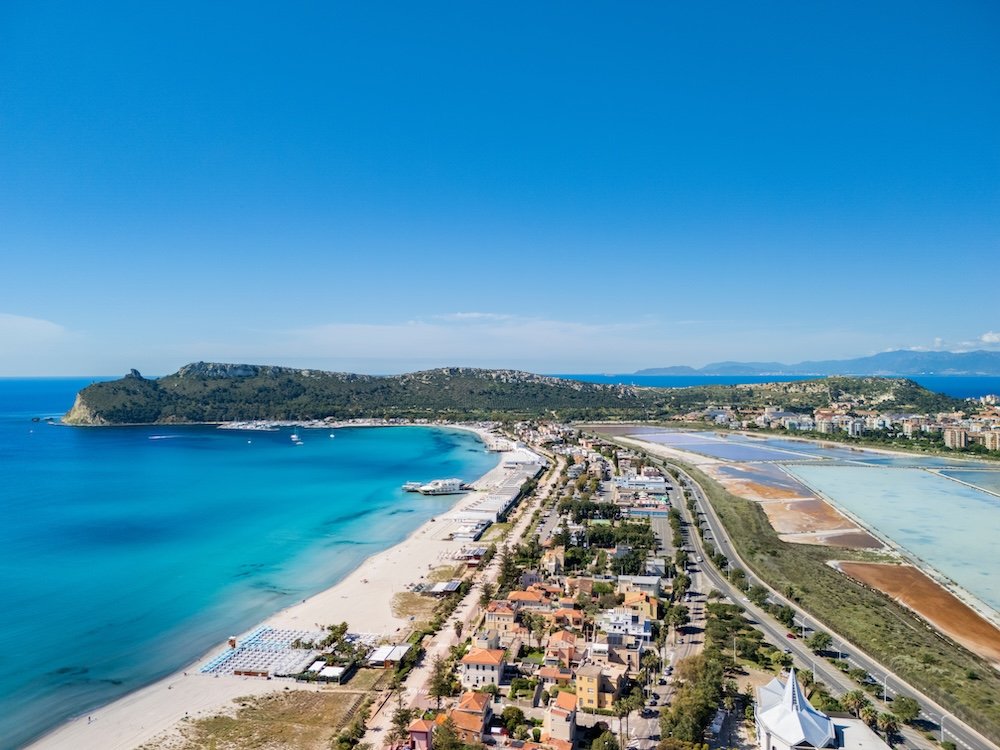
Cagliari’s Castello quarter sits on a limestone hill ringed by Pisan-built ramparts, the Torre dell’Elefante and Torre di San Pancrazio still standing guard at either end, and from its terraces you can look down at Poetto, the five-mile city beach, and at Sella del Diavolo, the locals will tell you is either Lucifer’s fallen saddle or the imprint of his body after angels threw him out of the sky, accounts differ depending on which barista you ask.
Alghero rewards an evening more than an afternoon, its medieval sea walls catching the last light while people work through plates of lobster and glasses of local white at outdoor tables, and a short boat or a genuinely punishing set of stairs (the Escala del Cabirol, 654 steps carved into a cliff face) gets you to Neptune’s Grotto, a limestone cave system that runs back into the headland with an underground lake at its center. Take the boat on the way there if your knees have any say in the matter, and save the steps for the way back, when at least you’re walking toward something.

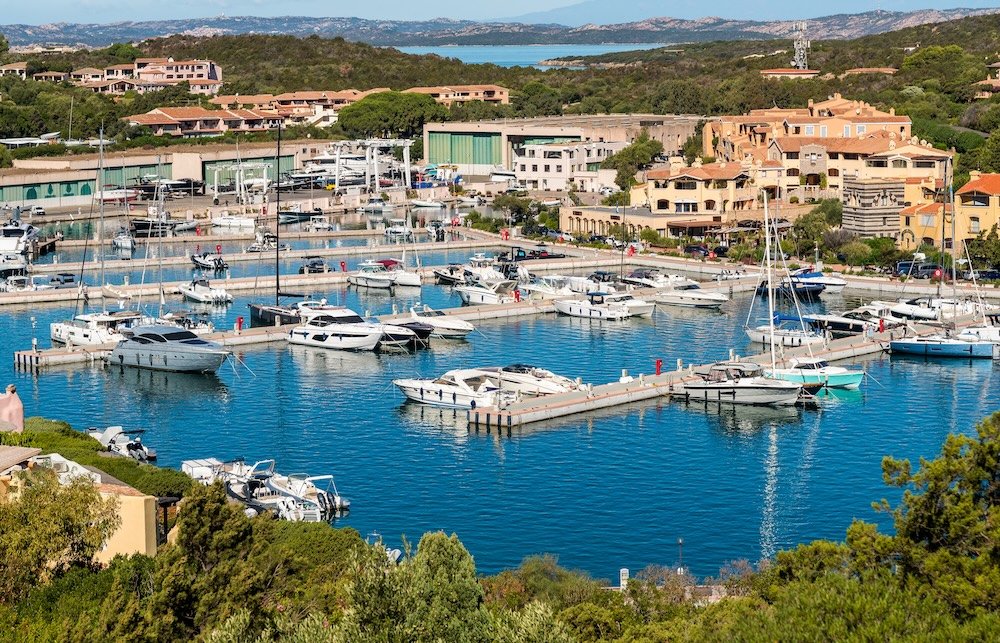
Costa Smeralda, the “Emerald Coast”, is a 12-mile stretch of coastline in Gallura, Sardinia, famous for clear turquoise waters. Offshore, the La Maddalena archipelago holds Budelli, whose Spiaggia Rosa gets its color from crushed coral and shell fragments mixed into the sand by Posidonia seagrass beds just offshore. Boats aren’t allowed within seventy meters of it anymore, following years of anchors tearing up that seagrass, so you view it from the water or from a ranger-led boardwalk, not by walking on it. Further west, Bosa climbs in tiers of pink, ochre, and yellow houses toward the Malaspina castle above it, a town that photographs like a movie set and functions like an actual fishing village.
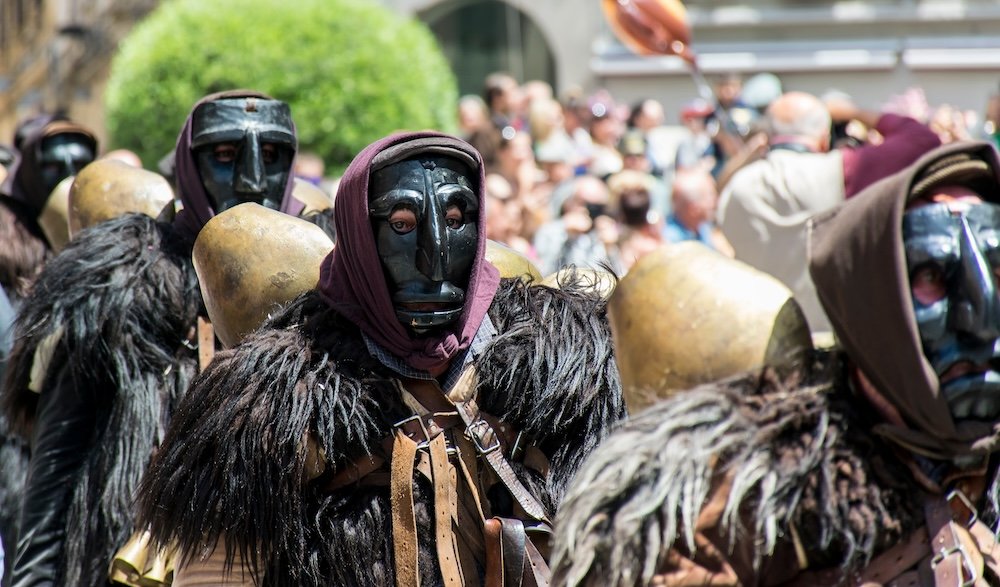
Inland, in the mountainous Barbagia region, the village of Mamoiada holds onto a Carnival rite considerably older than most. Its Mamuthones tradition sends twelve men through the streets in ash-blackened wooden masks and black sheepskins, each hauling up to thirty kilograms of cowbells strapped across his back, moving in a slow, deliberate rhythm that scholars trace to pre-Christian rites meant to drive off winter and coax the next harvest awake. Red-clad Issohadores move alongside them, lighter on their feet, catching onlookers with braided rope lassos in a gesture that’s meant as a blessing rather than a threat.
The Golfo di Orosei coastline, the limestone wall of cliffs and coves running along Ogliastra, is best understood on foot or from the water, ideally both. Boats out of Cala Gonone, Santa Maria Navarrese, or Arbatax reach the same cove but must stay around 300 meters offshore, which makes them a good way to see it and a poor way to spend real time on the sand. Do the hike if your legs will cooperate.
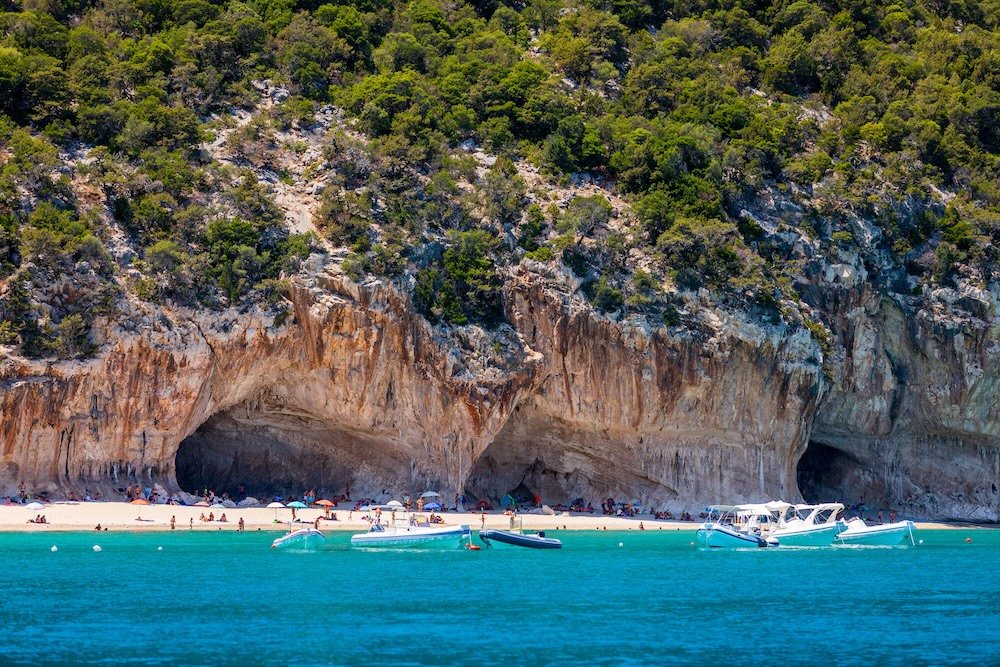
That same regulatory tightening has reached beaches across the island in 2026, which is worth knowing before you build a day around a specific stretch of sand. None of this is designed to keep visitors away; it’s designed to revitalize the beaches, a trade-off that feels overdue rather than punitive once you’ve seen what unlimited beach traffic did to some of these coves a decade ago.
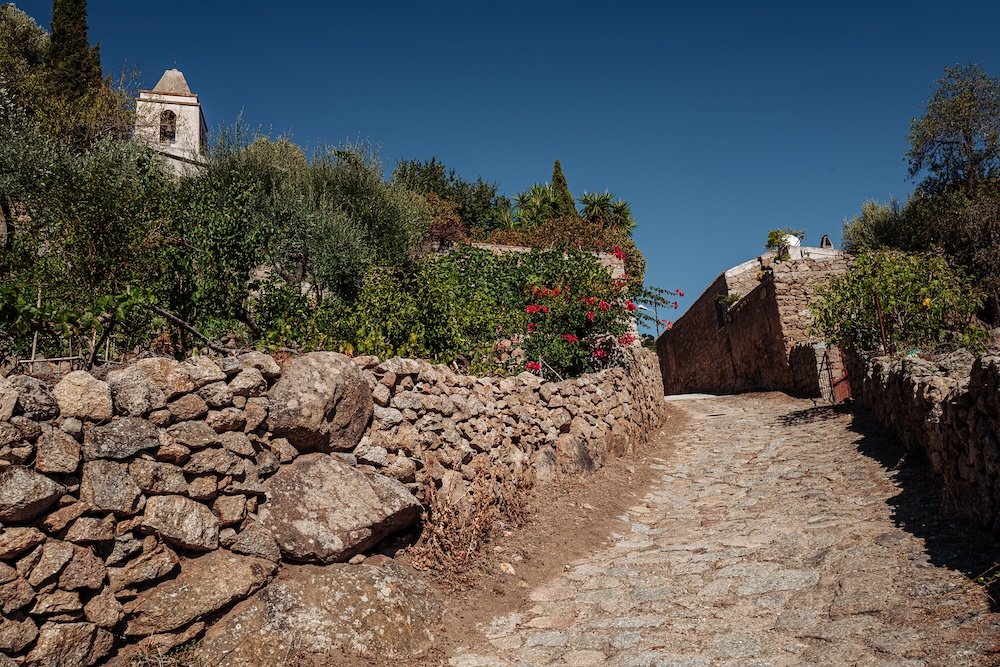
Away from the water, the interior rewards slower attention: the Golgo plateau itself, grazed by half-feral goats and cut by drystone walls that predate anyone’s memory of who built them, or a wander through Barbagia’s stone villages, where the pace of daily life has less to do with tourism and more to do with people who have simply always lived this way.
What to eat
Pane carasau starts most meals, a paper-thin, twice-baked shepherd’s bread originally made to survive weeks in a saddlebag, and it turns into pane frattau when layered with tomato sauce, pecorino, and a poached egg, essentially Sardinia’s answer to the question of what to do with bread that refuses to go stale. Culurgiones, hand-pinched dumplings of potato, pecorino, and mint sealed into a wheat-ear pattern along the seam, show up on nearly every trattoria menu, and the sealing pattern is a genuine point of local pride, the kind of detail a Sardinian grandmother will critique on sight. Malloreddus, small saffron-tinted semolina shells, usually arrive under a sausage ragu; fregula, toasted pasta pearls closer in texture to couscous, turns up in seafood broths along the coast. Inland, porceddu, a whole suckling pig slow-roasted over embers and finished with myrtle branches, remains the dish of celebration, while the coast counters with bottarga, cured mullet roe grated over pasta or shaved thin over bread with olive oil. For dessert, seadas, fried pastry discs stuffed with tangy pecorino and drenched in honey, manage to be both a cheese course and a dessert at once, and taste better than that description suggests. If someone offers you casu marzu, the cheese fermented until it contains live larvae, know that it’s technically outlawed for sale under EU food safety rules and still, somehow, turns up at the right table if you ask the right person.
Cannonau carries Sardinia’s only DOCG red designation and is, by most accounts, genetically the same grape as Spain’s Garnacha, though it has grown here long enough that locals consider the relationship reversed. Its wines run deep and high in polyphenols, and researchers studying Sardinia’s unusually high concentration of centenarians, particularly in the Barbagia and Ogliastra interior, have floated Cannonau as one contributing factor among many, alongside diet and a mountain lifestyle that keeps people walking well into old age. Vermentino di Gallura, from the granite hills of the north, holds the island’s only white DOCG and pours crisp and citrus-bright, built for the seafood it’s usually served alongside. Vernaccia di Oristano, made only in the province whose name it carries, ages oxidatively under a flor-like yeast layer in a style that drinks more like sherry than table wine, a genuine outlier worth trying once even if it isn’t for everyone. To close a meal, mirto, a liqueur steeped from myrtle berries (red) or myrtle leaves (white, milder), gets served ice-cold in small glasses, the kind of local digestivo that never quite makes it off the island in any form that tastes the same.
Weather for high, shoulder, and low season
High season runs June through August, with highs of 82 to 88 degrees Fahrenheit, overnight lows in the high 50s to mid-60s, next to no rain, and sea temperatures between 70 and 77 degrees, warm enough for long swims without much acclimating.
Shoulder season covers April through May and September through October, with daytime highs ranging from the low 60s up into the low 80s depending on the month, cooler nights in the 40s and low 50s, and rain becoming a more regular presence without dominating the forecast. It’s the season locals recommend for the interior in particular: cool enough to hike the Golgo plateau or the Gulf of Orosei coast trails without the summer heat working against you, and quiet enough that Su Nuraxi’s guided tours don’t require a mid-morning wait.
Low season runs November through March, with highs in the high 50s to mid-60s, lows dropping into the high 30s and 40s, and the year’s heaviest rainfall concentrated in these months. The Gennargentu massif in the interior sees occasional snow most winters, which surprises visitors who arrive expecting a Mediterranean island to behave like one. Hotels and ferries slow down, prices drop accordingly, and the coastal towns that felt overrun in August return to being fishing villages that happen to have some nice architecture.