The slogan appears on San Diego’s city seal and tourism buses. It didn’t start as a compliment. It started as damage control. In 1972, San Diego was supposed to host the Republican National Convention, President Nixon’s self-declared “lucky city.” Then a lobbyist left behind a memo tying a $400,000 convention donation from ITT to a dropped antitrust case, with the line “please destroy this” scrawled at the bottom. The story landed in a thousand newspapers across the country, and the GOP pulled the convention and moved it to Miami. Mayor Pete Wilson needed the city to feel good about itself again. He declared “America’s Finest City Week,” borrowing a line Look magazine had once used. The slogan stuck. Fifty-some years later, almost nobody remembers it was invented to distract from an embarrassment.
San Diego is a Navy town two miles from an international border, a beach city with a genuinely serious research and biotech economy, and a place that has spent a century being eclipsed by Los Angeles to the north and, more recently, outpaced in national attention by cities half its age. It does not seem to mind. The weather does most of the persuading, the harbor does the rest, and the city has gotten comfortable letting other places compete for the spotlight while it keeps doing what actually works.
The indigenous Kumeyaay lived here first, fishing San Diego Bay in reed canoes and creating pottery and shellwork so sophisticated that museums still build exhibits around it. Juan Rodríguez Cabrillo sailed into the bay in 1542 and named it San Miguel; Sebastián Vizcaíno came through sixty years later and renamed it San Diego after the saint whose feast day was closest. Spain mostly ignored the place for another century and a half.
That changed in 1769, when Gaspar de Portolá and Father Junípero Serra arrived by land and sea to found a presidio and Mission San Diego de Alcalá, the first in the chain of California missions and, on paper, the city’s founding. Mexico won independence in 1821. Old Town, the first settlement below Presidio Hill, became a Mexican pueblo in 1835. The Mexican-American War brought it under American control in 1846. However, for years afterward San Diego stayed a modest, sun-baked trading post, more useful as a stop for gold prospectors heading inland to Julian than as a destination in its own right.
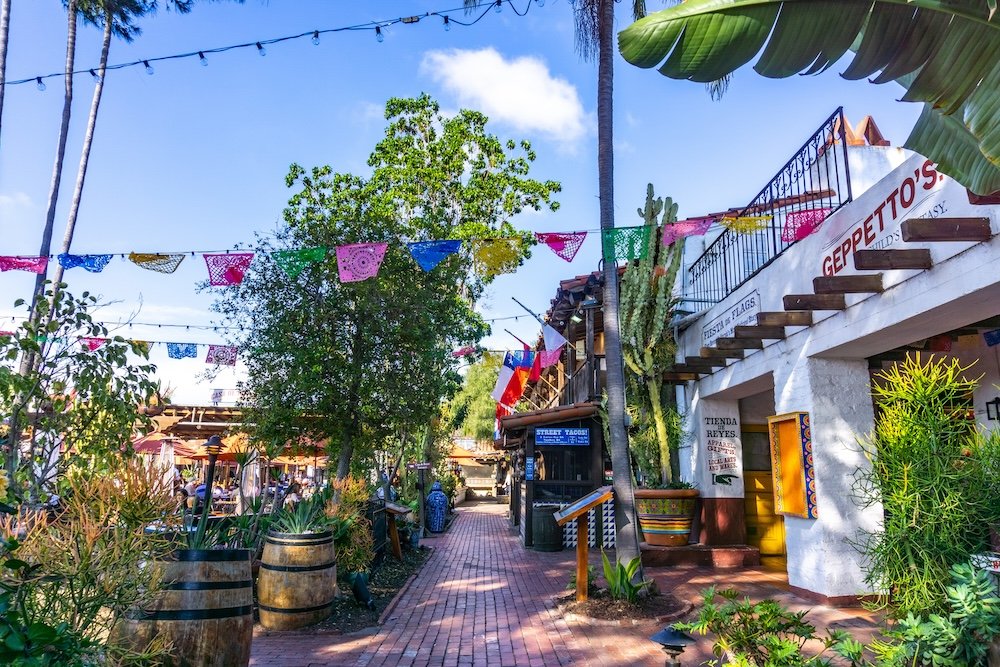
Shops and restaurants in Old Town San Diego State Historic Park. Only Sundry Photography – stock.adobe.com
The city’s real pivot came from real estate. William Heath Davis tried to build a “New Town” near the bay in 1850 and failed badly enough that locals called it Davis’s Folly. Alonzo Horton tried again in 1867, buying waterfront land for pennies an acre and building around what is now Fifth Avenue and Broadway, and this time it worked, pulling the city’s center of gravity away from Old Town for good. What Horton’s New Town eventually grew into, the blocks around Fifth Avenue, spent the late 1800s as the Stingaree, San Diego’s red-light district: gambling halls, opium dens, and saloons operating more or less openly. Wyatt Earp, of Tombstone fame, spent roughly a decade here starting around 1885, leasing four gambling halls, including an oyster bar inside the Louis Bank of Commerce. The land boom that fed the Stingaree collapsed in 1888, and the city’s population dropped by more than half. Earp stuck around a while longer anyway before finally moving on toward the mid-1890s. The same blocks sat rough for decades before a 1980s and 90s restoration turned them into the Gaslamp Quarter, now the part of downtown where you least imagine a red-light district ever having been.
The vintage Gaslamp Quarter sign in San Diego
Balboa Park, the city’s other major inheritance, came out of the 1915 Panama-California Exposition, staged to celebrate the opening of the Panama Canal and to argue that San Diego deserved to be considered the first American port of call for ships coming through it. The Spanish Colonial Revival buildings raised for that fair still stand. The Navy arrived in force during and after World War II and never really left. Aerospace, biotech, and telecommunications companies followed the Navy. Today, San Diego has just over 1.4 million people within its city limits, and Mayor Todd Gloria was sworn into a second term in December 2024 and elected president of the U.S. Conference of Mayors in 2026.
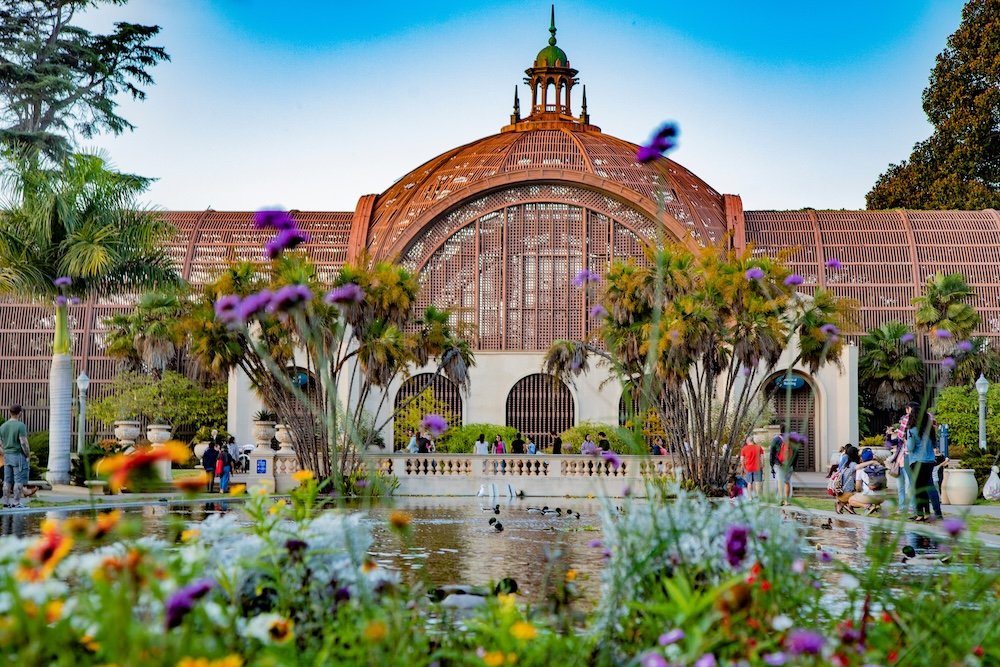
The Lily Pond at Balboa Park
Balboa Park is 1,200 acres and houses the San Diego Zoo, more than a dozen museums, including the Natural History Museum and the San Diego Museum of Art, and the Japanese Friendship Garden. The San Diego Zoo, inside the park, is the marquee draw and lives up to its reputation, home to giant pandas returned to the collection in recent years and consistently among the most visited zoos in the country; single-day adult admission runs $78, with discounted “value days” occasionally bringing it down a few dollars.
Down on the harbor, the USS Midway Museum puts you on the decommissioned aircraft carrier that served until 1992, the longest-serving carrier of the 20th century, with restored fighter jets on the flight deck and enough retired sailors volunteering as docents that the tours carry a first-person weight most museums can’t manufacture.
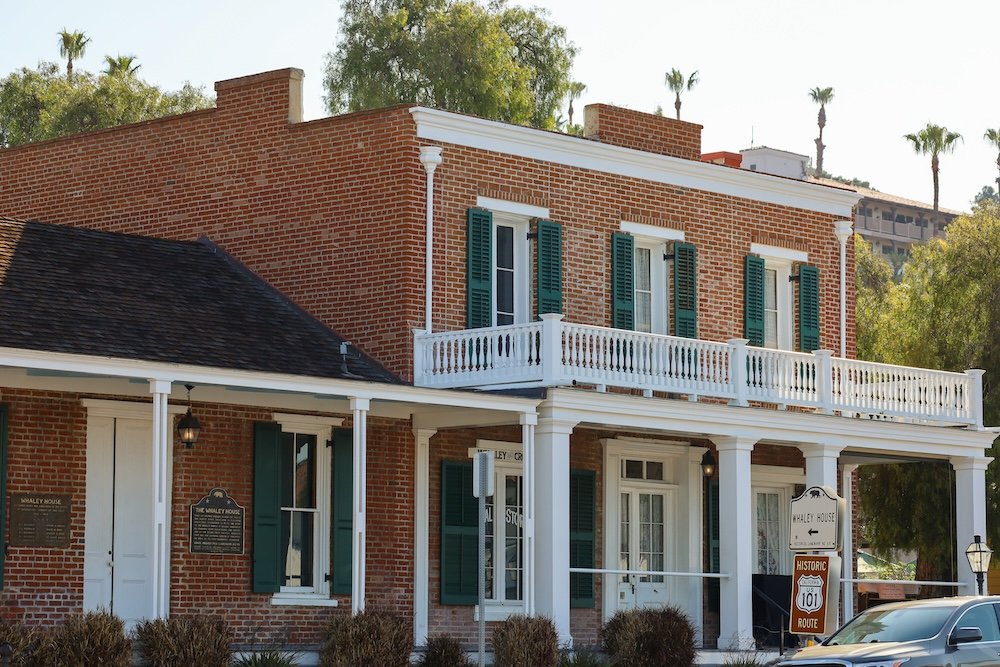
Old Town San Diego State Historic Park preserves the authentic Mexican-era pueblo, and next to it sits the Whaley House, built in 1857 by Thomas Whaley on the exact lot where he had watched a man named James “Yankee Jim” Robinson hanged for stealing a rowboat five years earlier. Whaley bought the former gallows site in 1855, knowing full well what had happened there, and built anyway. The house later served as a courtroom, a theater, and eventually a family home again, and generations of visitors and paranormal investigators have reported hearing what they assume are Robinson’s footsteps upstairs. Whatever you make of that, it’s one of the more honestly strange buildings open to the public in Southern California, less a haunted-house gimmick than an actual 170-year-old house that happens to have an unresolved local legend attached to it.
Whaley House, “America’s most haunted house” at Old Town San Diego Romar66 – stock.adobe.com
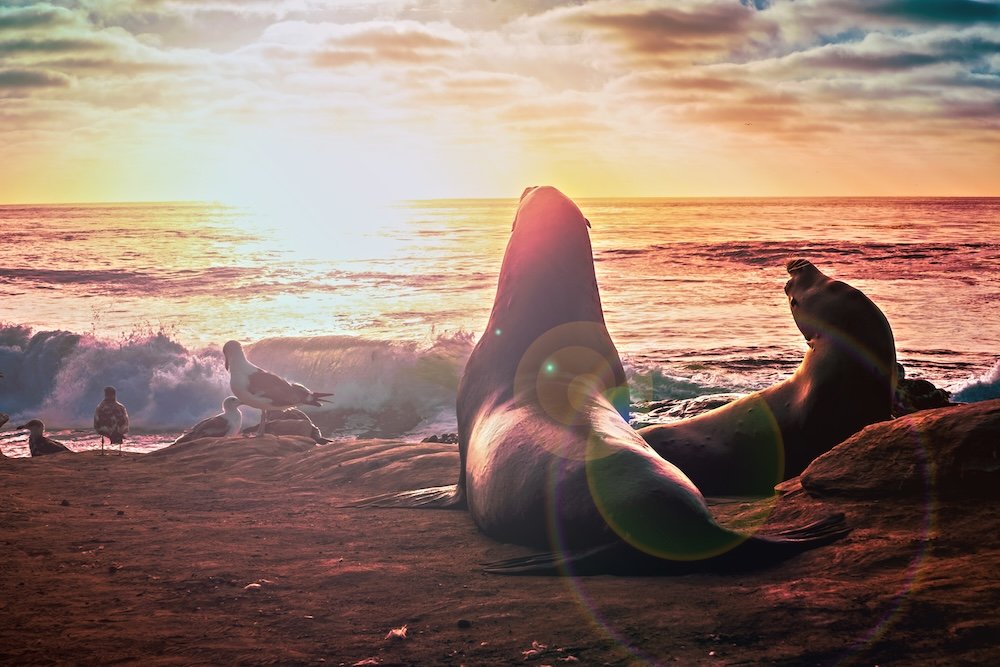
La Jolla Cove earns its reputation for tide pools, snorkeling, and sea lions, though the sea lion situation has gotten more complicated than the postcards let on. Point La Jolla and Boomer Beach have been closed to the public since November 2023 after years of visitors ignoring the recommended fifty-foot distance, and the Children’s Pool now closes seasonally, mid-December through mid-May, so harbor seals can raise pups undisturbed. You can still watch plenty from the boardwalk above; binoculars recommended.
Sea Lions La Jolla Cove
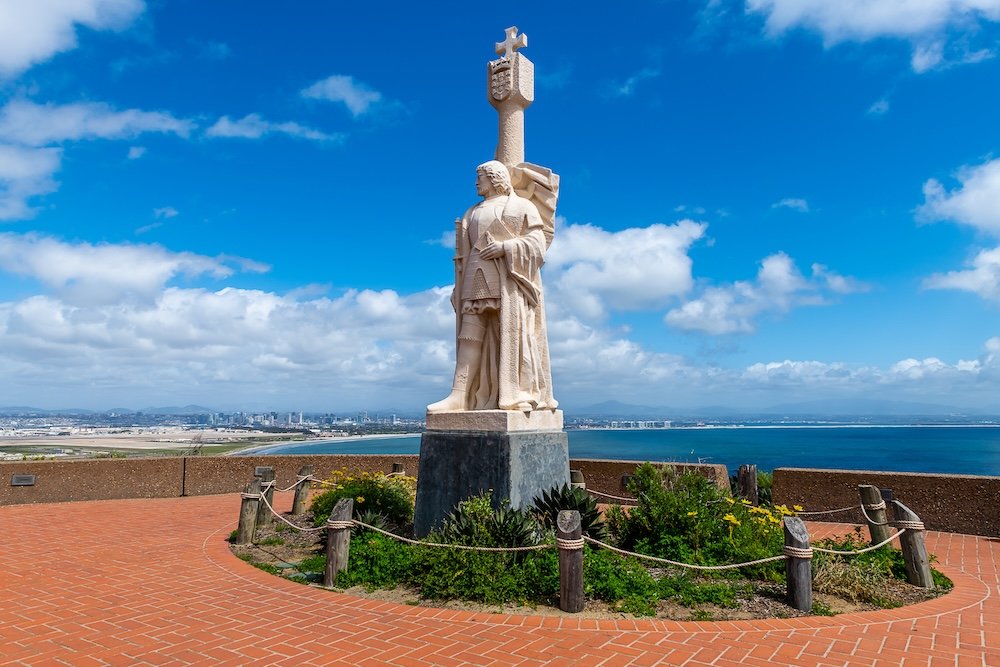
Cabrillo National Monument, out at the tip of Point Loma, marks roughly where Cabrillo came ashore in 1542 and delivers one of the best harbor views in the city for the price of a national park entrance fee, historic lighthouse included. Torrey Pines State Natural Reserve protects one of the rarest pine species in the country along sandstone cliffs above the Pacific, with trails short enough for a morning and views that make the crowds forgivable; just south, the Torrey Pines Gliderport lets you watch paragliders launch off the same cliffs into the coastal wind, weather permitting. Sunset Cliffs, along Point Loma’s western edge, does exactly what the name promises and gets crowded doing it; worth timing for a weeknight if you want the view without fighting for a parking spot. Coronado’s beach, wide, flat, and often shockingly quiet given its proximity to downtown, sits across the bay from the skyline and makes an easy half-day even before you factor in the hotel described below.
The Cabrillo National Monument
For a livelier evening, Petco Park downtown hosts the Padres from spring through fall. It does open-air stadium baseball about as well as any park in the country, with the Gaslamp Quarter’s restaurants and bars a short walk away for before or after. And if your visit happens to land in late July, Comic-Con International runs July 22 through 26, 2026, at the San Diego Convention Center, an event that alters downtown hotel prices and street traffic for the better part of a week whether or not you have a badge.
Petco Park
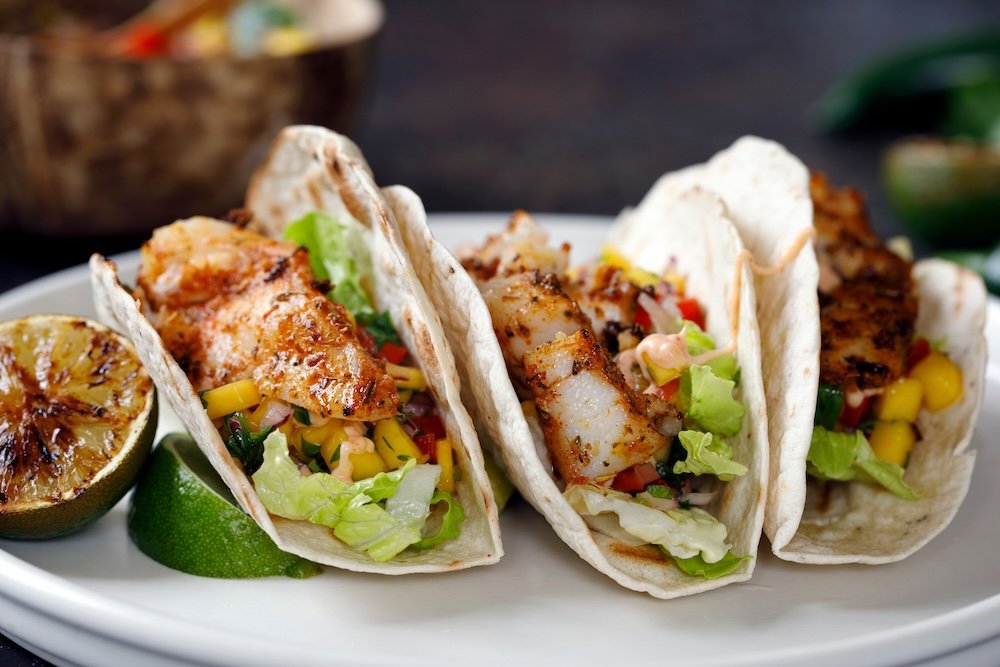
Fish tacos are a San Diego favorite. Ralph Rubio didn’t invent it; a few Mission Beach and Cardiff spots were serving versions first, but he built a business around it in 1983, opening the first Rubio’s on Mission Bay Drive in Pacific Beach after eating something similar on a spring break trip to San Felipe, Mexico. Fish tacos sold for 99 cents at that original location; the chain has since sold north of 100 million of them and turned a Baja beach snack into the dish most visitors associate with the city. Independent taco shops all over town do their own versions, usually better, and asking a local for their favorite is a reliable way to start a genuine argument.
Fish tacos with mango salsa
Barrio Logan, the historically Mexican-American neighborhood south of downtown built around Chicano Park and its murals under the Coronado Bridge, remains one of the city’s more honest places to eat, with taquerias and Mexican bakeries. The California burrito, stuffed with carne asada, cheese, sour cream, and French fries, is a San Diego invention in its own right and shows up at taco shops across the county, a dish that makes no claims regarding authenticity and doesn’t need to.
San Diego calls itself the Capital of Craft Beer, and with more than 150 independent breweries operating in the county, the claim holds up better than most tourism slogans. Stone Brewing and Ballast Point both trace back to San Diego taprooms and now ship well beyond it, but the more interesting drinking happens at the smaller operations scattered from North Park to Miramar, few of which bother distributing outside the county at all. The city’s brewers’ guild runs the Capital of Craft Beer Fest on Broadway Pier each September, this year on the 19th, with dozens of local breweries pouring in one place if you’d rather sample than commit to a brewery crawl.
Coffee culture runs a close second, with a growing cluster of independent roasters in North Park and South Park giving the chains real competition. And for something specific to the region, a good michelada- beer, lime, and spice built into something closer to a meal than a drink- shows up on menus across the city’s Mexican restaurants and makes more sense with a fish taco than most cocktails would.
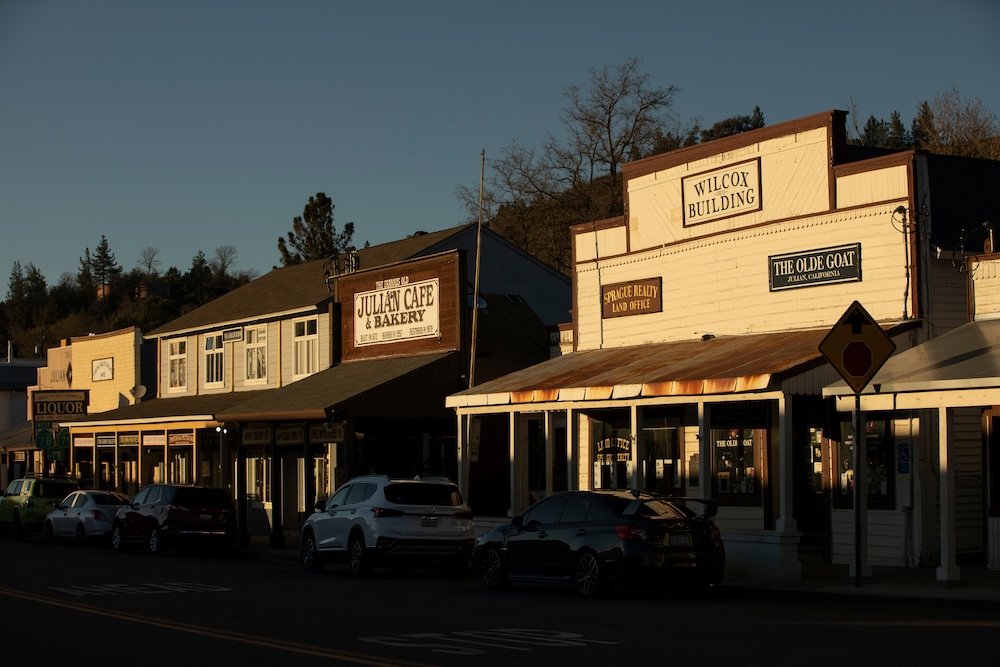
Julian, California. Matt Gush – stock.adobe.com
Julian, an hour and a half northeast in the Cuyamaca Mountains, started as a gold town after a formerly enslaved man named Fred Coleman found gold in a local creek in the winter of 1869, kicking off California’s third gold rush. More than 200 mines eventually operated in the surrounding hills, including the Eagle Mine, which still runs public tours down its 425-foot shaft for about $10 per person. The gold ran out by the 1930s, but the apples that miners’ families planted stuck around, and Julian has spent the past several decades reinventing itself as the place San Diegans drive to for pie, with an annual Apple Days festival that’s been running since 1949. Whether the pie is worth the drive is a genuinely contested local question, and part of the fun is finding out.
Temecula wine country sits about an hour north up I-15, with more than 40 wineries clustered along Rancho California Road, most of them doing a respectable job with Mediterranean varietals suited to the climate. Coronado, reachable by bridge or a short ferry across the bay, has its own draw beyond the beach: the Hotel del Coronado, a large Victorian beach resort opened in 1888 that has hosted eleven U.S. presidents and served as the exterior filming location for “Some Like It Hot,” still operating as a working hotel rather than a museum piece.
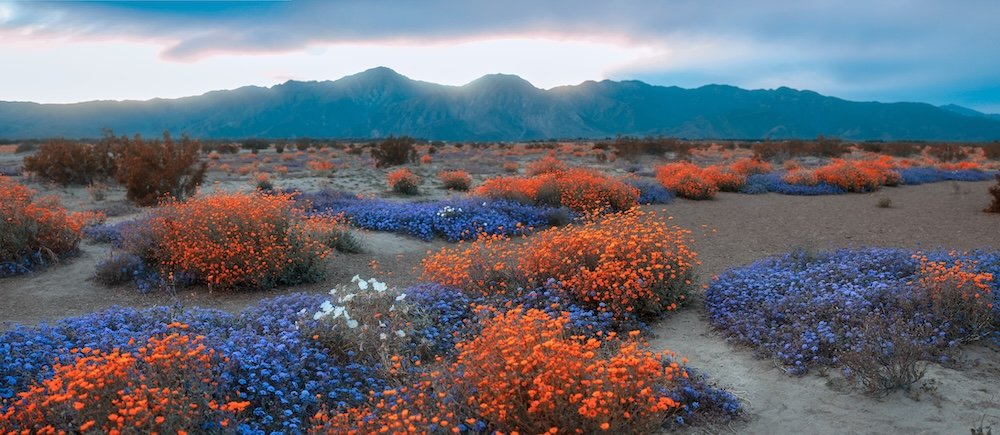
Wildflowers at Anza Borrego State Park
For something further out, Anza-Borrego Desert State Park, roughly a two-hour drive east, is the largest state park in California and, in a good wildflower year, draws crowds for a “super bloom” that can turn the desert floor genuinely colorful for a few weeks each spring. And Tijuana, just across the San Ysidro border crossing, the busiest land border crossing in the Western Hemisphere, is still a legitimate day trip for anyone with a passport card and a reasonable tolerance for the pedestrian crossing line back into the U.S., which can run anywhere from a few minutes to well over an hour depending on the day.
San Diego’s high season, by tourism math, runs roughly Memorial Day through Labor Day, when daytime highs sit in the high 70s to low 80s and the beaches, hotels, and Balboa Park all fill up accordingly, prices climbing right along with the crowds. What that season doesn’t advertise is June Gloom, the marine layer that keeps coastal mornings gray and cool well into the afternoon through late May and June, usually burning off by early afternoon but occasionally not burning off at all. Locals plan beach days around it; first-time visitors sometimes spend a whole overcast morning wondering if they got the wrong city.
Middle season, roughly March through May and again September through November, is when most people who actually live here will tell you to come. September in particular tends to be the most reliably warm and sunny month of the year, once the marine layer has burned off for the summer. Before the occasional fall Santa Ana winds kick up, with smaller crowds and softer hotel rates than July offers.
Low season runs December through February, and “low” here means something different than it does in most American cities: highs still average in the mid-60s, lows rarely drop below the high 40s, and rain is genuinely rare, concentrated mostly in a handful of storms between December and March rather than spread evenly through the season. It is the cheapest and least crowded time to visit the city.