


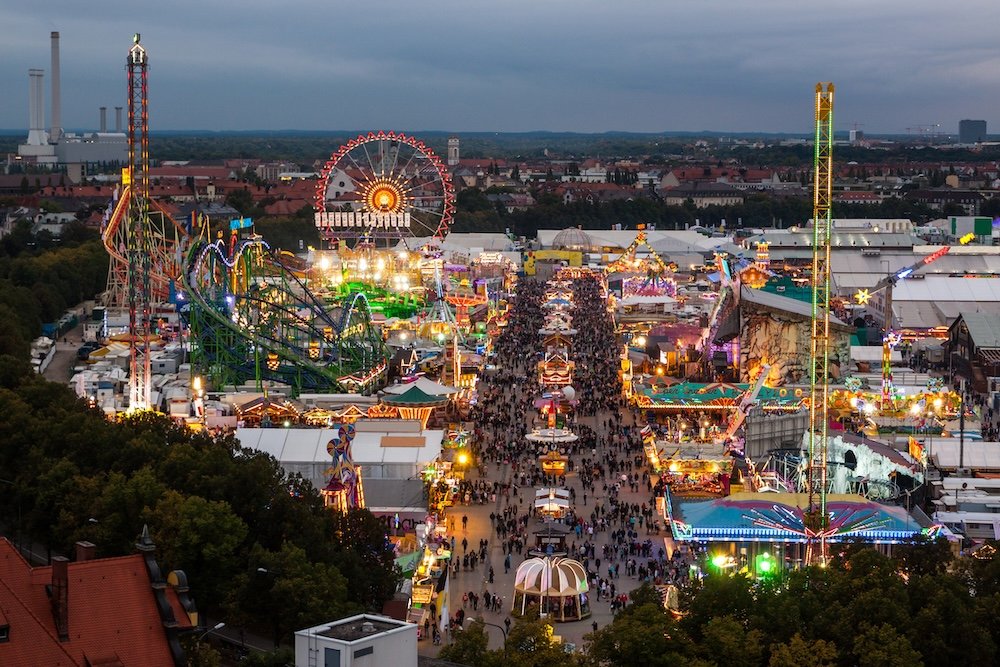
Each autumn, between six and seven million people gather in a 103-acre meadow in southwest Munich. They wear traditional dress like their grandparents and drink beer from heavy glasses that hold exactly one quart. Locals call the meadow the Wiesn, but the rest of the world knows it as Oktoberfest. More than two centuries old, the festival has grown louder, larger, and more Bavarian each year.
HOW A WEDDING BECAME A WORLD’S FAIR
Oktoberfest began in 1810, when Crown Prince Ludwig of Bavaria married Princess Therese of Saxe-Hildburghausen. Unlike many royal weddings, the royal couple wanted to involve the people of Munich in the celebration. The five-day event culminated in a horse race held on an open field just outside the city. Some 40,000 spectators watched from where Theresienhöhe now stands; the field was named Theresienwiese (Therese’s meadow) in the bride’s honor.
The crown prince, however, did not invent the race. In 1810, a National Guard major suggested it as a throwback to the past: the scarlet-themed race (Scharlachrennen) Munich held in 1448. In October of that year, 30 horses competed in the two-mile race, and coachman Franz Baumgartner emerged the victor. The Bavarian minister of state awarded him a gold medal.
That could have ended the small festival, but Munich brought it back in 1811 and added an agricultural fair where locals could show off their livestock and crops. By 1819, the city had assumed official responsibility for the fair and declared it an annual event. The horse race has been missing except for special anniversaries, but the rest of the festival has continued every year since.
Oktoberfest has run for more than 215 years, a long time for any beer-centric event, and has had its share of troubles. It was canceled during the Napoleonic Wars, the cholera outbreaks of 1854 and 1873, both world wars, and the coronavirus pandemic, which closed it for two years. A bombing at the main entrance in 1980 killed 13 people and remains Oktoberfest’s worst day. Yet after cancellations, Oktoberfest has returned each year. In 2026, Munich celebrated its 191st Oktoberfest. Mayor Dominik Krause tapped the first keg in two strokes at the Schottenhamel tent, 15 more than the mayor who started the tradition in 1950. When the mayor taps the keg, he announces “O’zapft is” (It is tapped), marking the festival’s official start, followed by a twelve-gun salute signaling to all tents that beer service is ready.
WHAT A VISITOR ACTUALLY FINDS ON THE WIESN
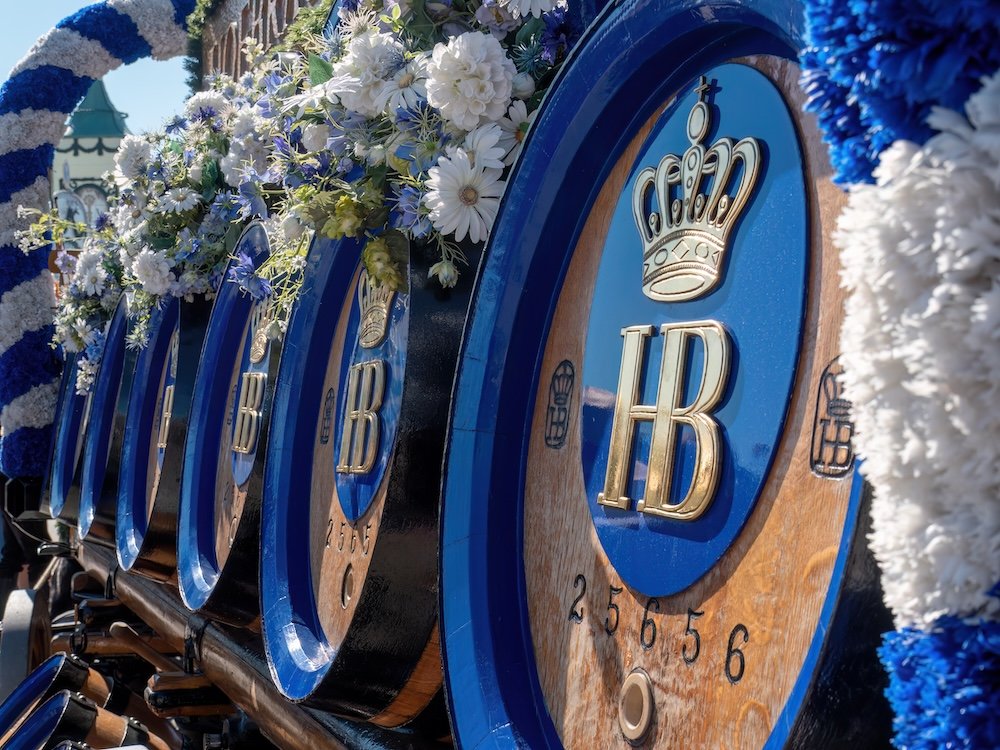
In September, 14 large beer tents and about 20 smaller ones are set up on the Theresienwiese. Some of the large tents seat up to 10,000 patrons. A full-blown amusement park, complete with Ferris wheels, roller coasters, and carnival games (much like a state fair), also runs alongside the festival. The festival starts on the first Saturday after September 15, with a parade of the Oktoberfest landlords and breweries. Decorated beer wagons, brewery horses, and marching bands parade through the city center to the fairgrounds. The next day, a much larger folk costume parade features people in traditional dress from all over Bavaria and beyond.
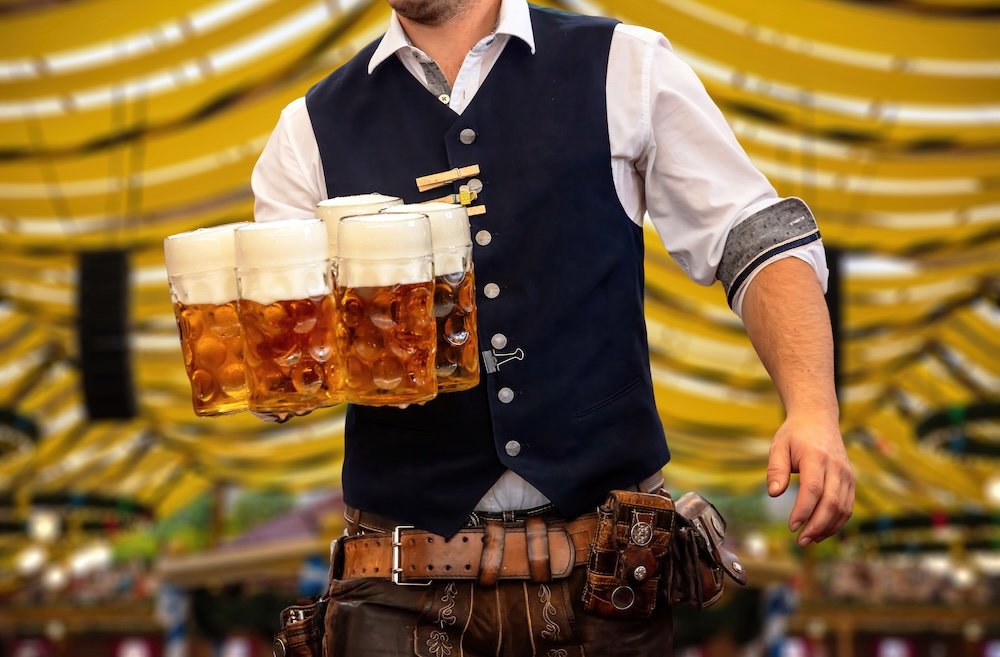
The performances inside the tents are a visual extravaganza. Servers can balance up to 10 full liter mugs at a time. Brass bands play oompah music and include a few pop hits to get everyone involved. With a drink in hand, most people, slightly worse for wear, link arms and sway together on the benches within ten minutes. Since 2005, Oktoberfest has had a more family-friendly afternoon atmosphere: tents play only traditional music until 6 p.m. and keep the volume down. This makes Oktoberfest more family-friendly during the day, with access to rides, games, and Tuesday discounts.
The festival has become a year-round international affair, not just a fall event. Oktoberfest Zinzinnati in Cincinnati draws about half a million people each September. Kitchener, Ontario, home to one of Canada’s largest historic German communities, hosts an 18-day festival that attracts more visitors than some European countries. Blumenau, Brazil, settled by German immigrants in the 19th century, hosts a 17-day festival each October at Vila Germânica Park and is the world’s second-largest Oktoberfest. In Qingdao, China, a beer culture developed around a German-founded brewery in the early 20th century. Its International Beer Festival, held earlier in the summer, draws crowds comparable to Munich’s. Frankenmuth, Michigan, is the first Oktoberfest in the U.S. officially recognized by Munich; it serves beer flown in from Hofbrau, one of the six historic breweries allowed to serve beer at the Wiesn. Along with smaller festivals in Denver, Tokyo, Auckland, and many other places with weak German ties, Oktoberfest truly has no off-season.
A TABLE BUILT FOR STAMINA
Oktoberfest food is equally impressive; the star dish is Hendl, a half-roasted chicken with crisp skin— and, most popular of all at the festival, about half a million are sold. Schweinshaxe is the most photographed “meal” taken: slowly roasted pork knuckles with a crunchy coating. A whole tent (Ochsenbraterei) is even dedicated to roasting whole oxen on a spit. A long-standing favorite at the refrigeration stands is Kässpätzle, a Bavarian take on macaroni and cheese with soft egg noodles and caramelized onions. No Oktoberfest visit is complete without sampling a large Brezn (pretzel) and a wheel of Obatzda, a tangy cheese spread.
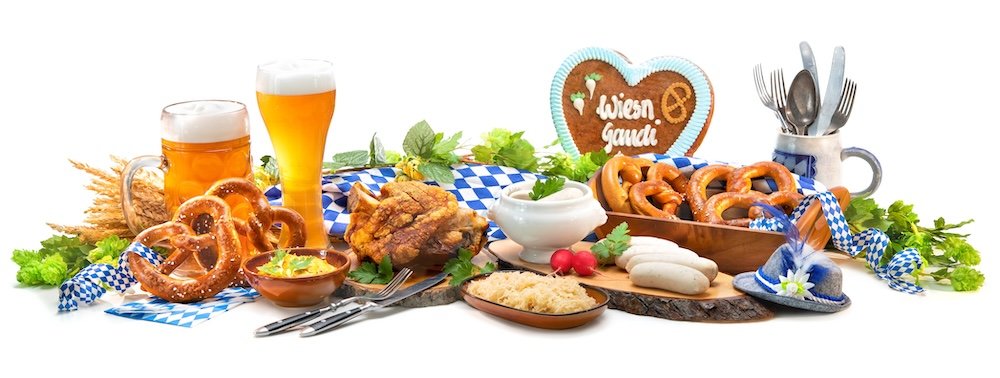
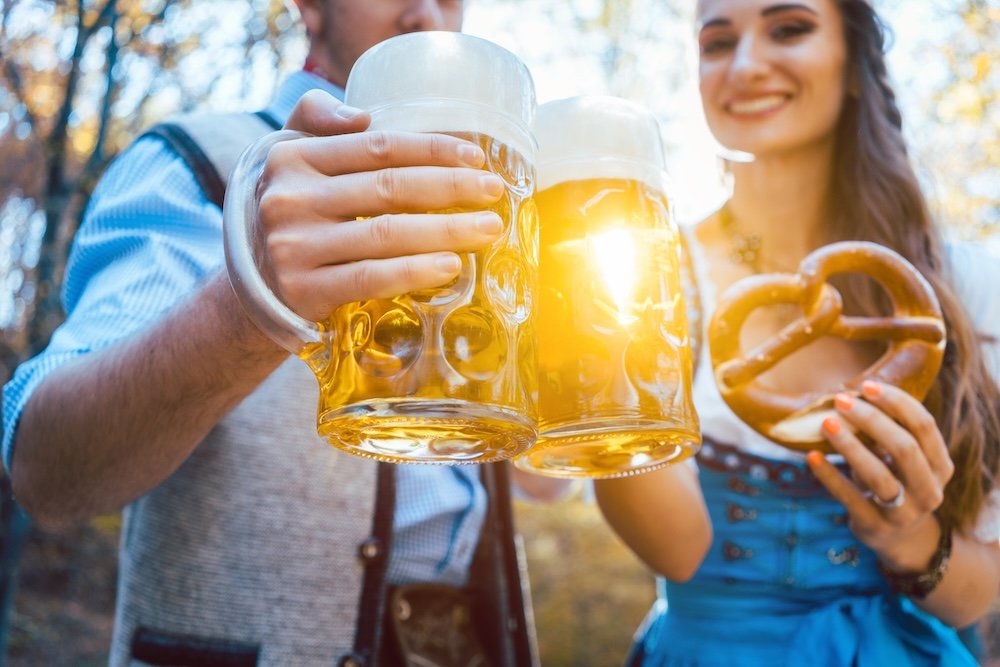
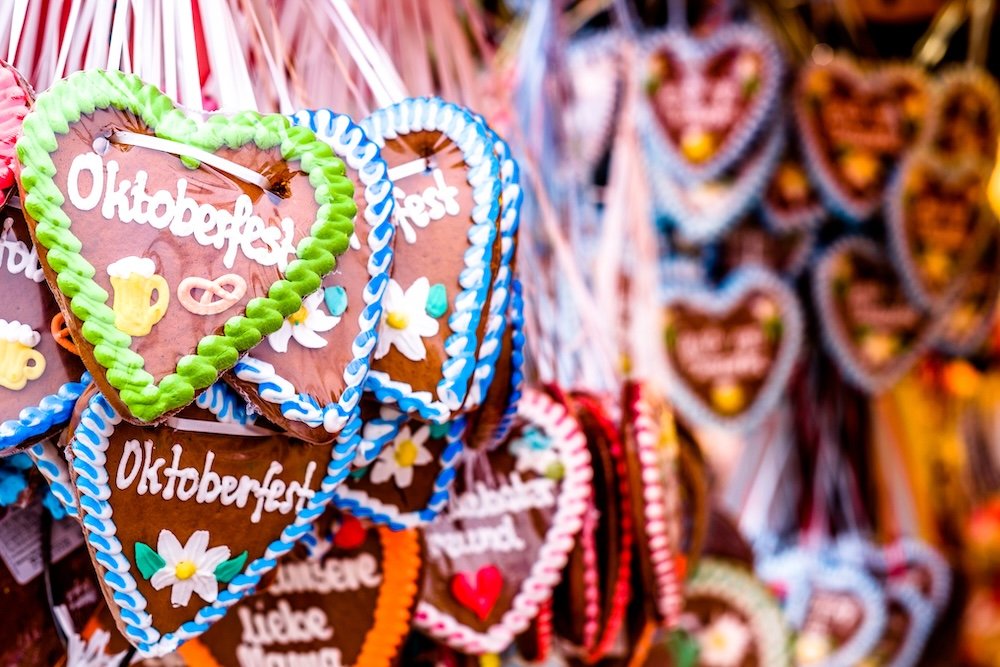
Beer is the mainstay of Oktoberfest, and it is more strictly regulated than many think. Six historic Munich breweries Augustiner, Hacker-Pschorr, Hofbräu, Löwenbräu, Paulaner, and Spaten, are permitted to serve beer in the festival tents. Each brewery serves its own Festbier, a lighter, more quaffable take on the malty amber Märzen that has defined Oktoberfest for most of its history. The Lebkuchenherz, an iced gingerbread heart worn around the neck on a ribbon, is a popular treat or take-home souvenir. Traditionally, men buy one for their partners, often with a sentimental message written in Bavarian dialect.
THE COSTUME DRAWER OF A NATION
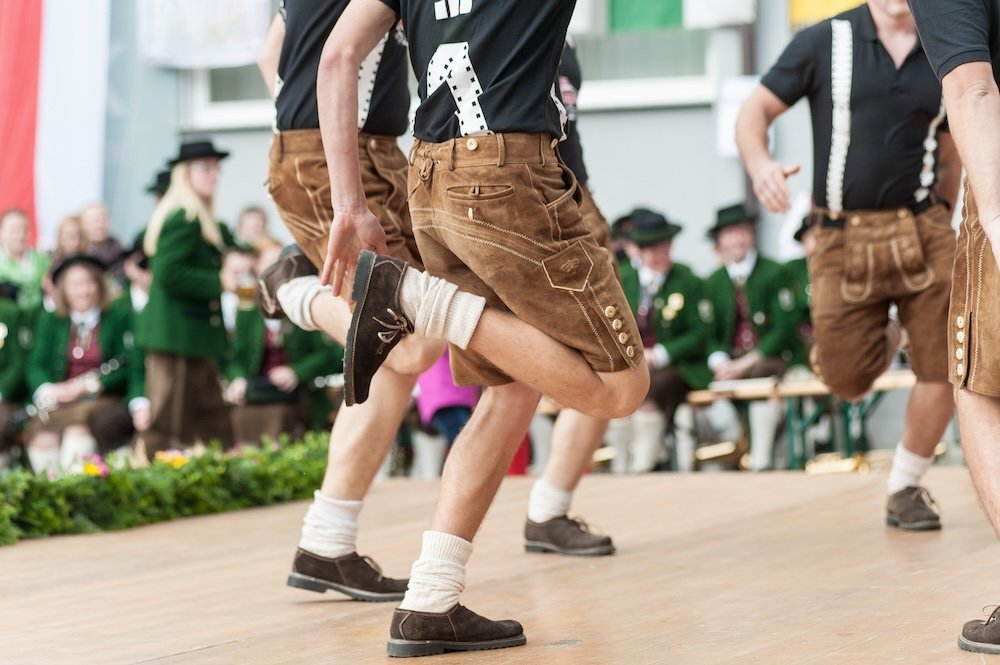
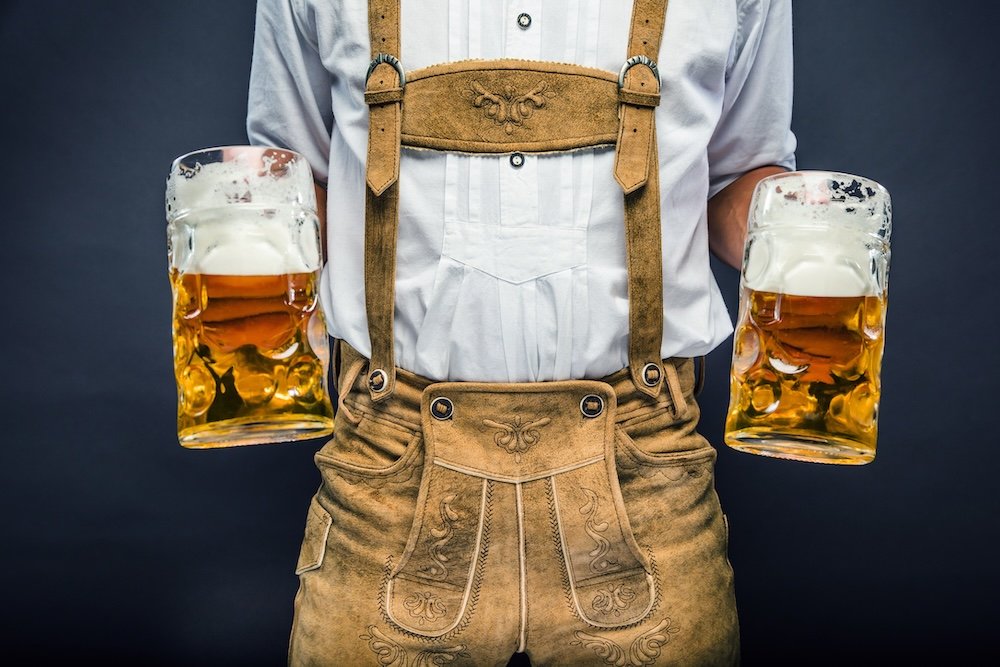
Dirndls and lederhosen appear everywhere at Oktoberfest. Originally work clothes for rural farming and hunting, they have become the festival’s unofficial garb. You will see all manner of styles, from family heirlooms to last-minute purchases, worn by teenagers, grandparents, and even tourists who picked up costumes on vacation. Brass bands, edelweiss embroidery, and painted wooden beer mugs complete the look. The gingerbread heart is as iconic as the beer mug.
WHY MUNICH DESERVES MORE THAN THE WIESN
Oktoberfest visitors should remember that Bavaria offers much more than the tents. It is easy to visit when the festival tents still have openings; it’s a great idea. Limiting yourself to the tents means missing out on much of Bavaria. Munich is close to some of the region’s best day trips and is fantastic to visit in the morning before the crowds build. Neuschwanstein Castle, 75 miles southwest of Munich, is easily accessible by train or bus and was King Ludwig II’s fairy-tale castle. Andechs Monastery is a shorter, possibly more enjoyable trip to a still-active Benedictine monastery and brewery perched on a hill above the Ammersee. Take the S-Bahn to Herrsching and catch a short bus ride or walk three miles. Take a boat to King Ludwig’s unfinished Versailles, Herrenchiemsee, on Chiemsee, Bavaria’s largest lake. The Dachau Memorial Site offers a serious and important contrast to Oktoberfest’s frivolity and is just 20 minutes north of Munich by S-Bahn. You do not have to spend the night in a tent to enjoy these day trips. Visit Munich a day or two before the beer flows, and you’ll have plenty to see, and you won’t regret it.