


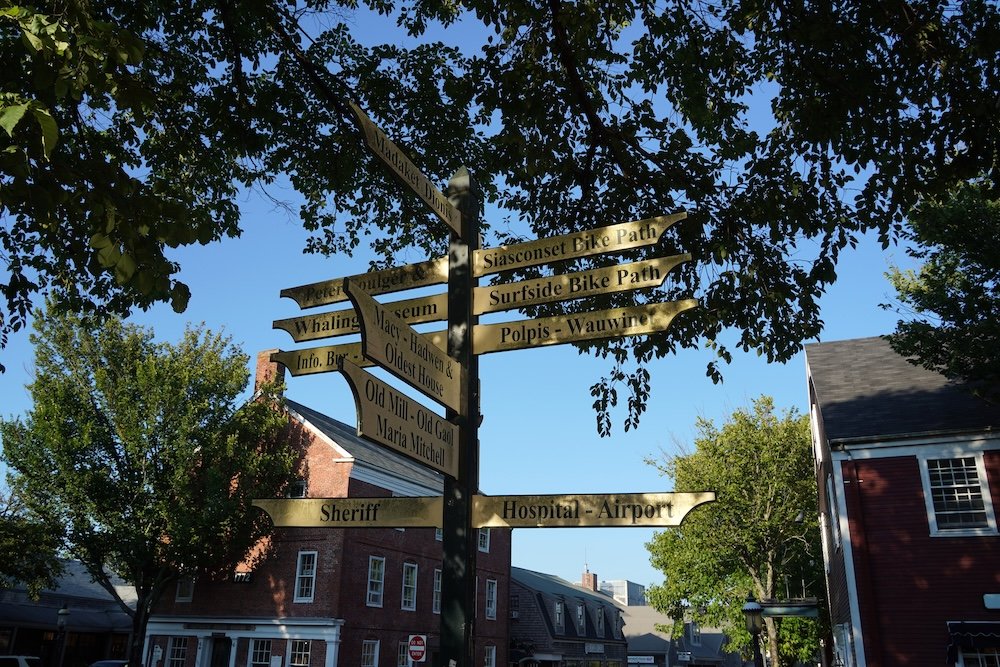
Thirty miles out in the Atlantic, past the last reliable cell signal, sits an island that once ran the world’s whale oil supply and now mostly runs on cranberry bogs, cedar shingles, and a waiting list for dinner reservations. Nantucket has spent three and a half centuries figuring out what it wants to be, and the current answer, equal parts historic seaport, art colony, and extremely well-funded beach town, seems to be working.
In 1659, a group of English settlers led by Thomas Macy bought the island from Thomas Mayhew, who had acquired the rights to it years earlier. Macy himself had reason to leave the mainland in a hurry. He had sheltered a group of Quakers from Puritan authorities in Salisbury, Massachusetts, and rather than face the consequences, he loaded his wife, five children, and a few neighbors into an open boat t and sailed for an island most of them had never seen. They spent that first winter at Madaket, on the island’s western end, and survived largely because the Wampanoag people already living there helped them. It is a founding story with almost none of the usual mythology sanded off: no grand charter, no triumphant landing, just a man running from a fight he had picked on someone else’s behalf, and a community that took him in anyway.
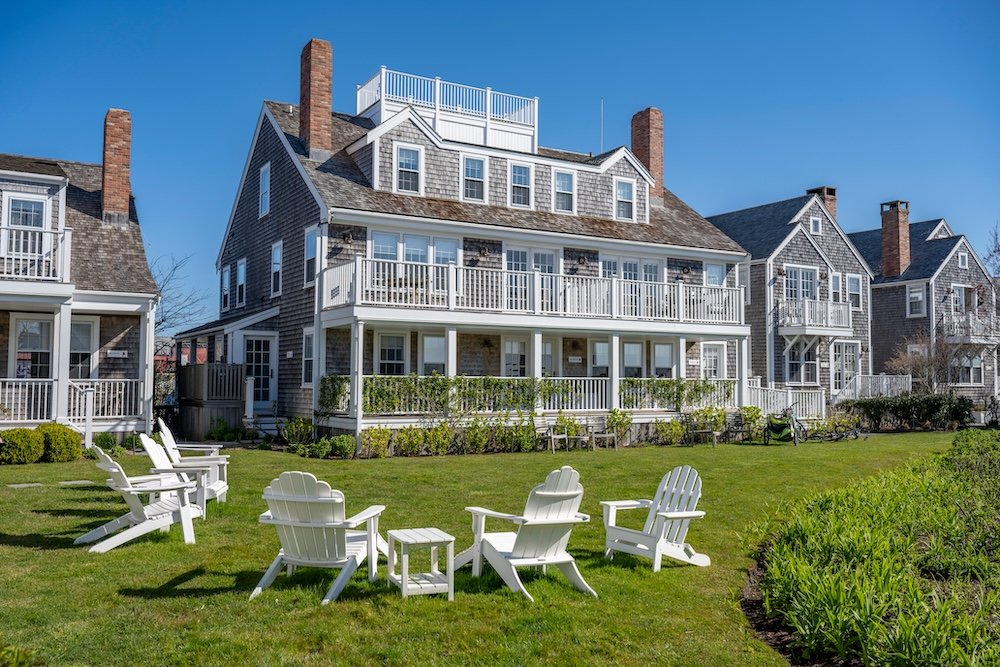
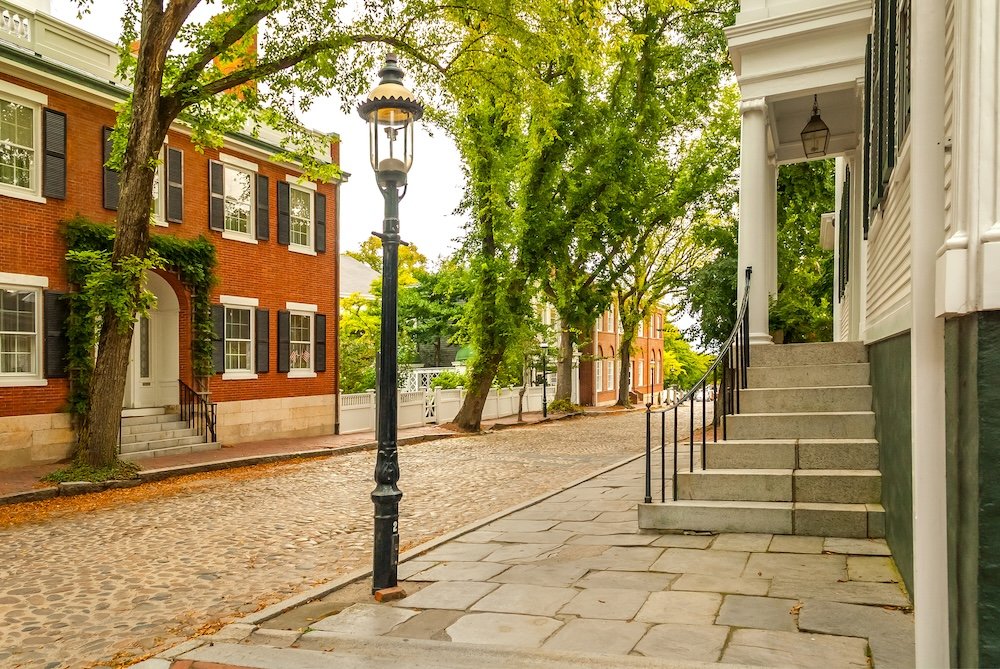
The Quaker imprint on Nantucket did not fade with that first winter. It shaped the island for nearly two centuries, and its fingerprints are still visible in the architecture. Nantucket houses of the eighteenth and early nineteenth centuries are famous for their restraint: gray shingles left to weather naturally, white trim, symmetrical facades, almost no ornamentation. The Quakers considered flashy decoration a form of pride. That plainness, oddly enough, is what makes Nantucket Town look so striking today. Nearly eight hundred structures built before the Civil War still stand within the historic district, which is why the whole town earned National Historic Landmark status in 1966. Walking down Main Street, past the same cobblestones that whaling captains’ wives once moved through in heeled boots, a visitor is looking at one of the most intact colonial and Federal-era streetscapes in the country, kept not because anyone set out to build a museum, but because generations of islanders kept quietly maintaining what they had rather than tearing it down for something newer.
Nantucket’s transformation from a subsistence farming community into the wealthiest town per capita in America happened because of one animal: the sperm whale. Whaling began modestly, with island crews chasing right whales from small boats launched off the beach, but the real fortune arrived in 1712, when a captain named Christopher Hussey, blown off course while hunting closer to shore, encountered a pod of sperm whales in open water and killed one. Sperm whale oil burned cleaner and brighter than anything else available, and its head cavity yielded spermaceti, a waxy substance prized for candles that did not drip or smoke. Suddenly, the entire Atlantic seaboard wanted what Nantucket had figured out, and the island spent the next 130 years building ships, training captains, and sending men on voyages that could last three or four years and cover the entire Pacific.
By the early 1800s, Nantucket was the whaling capital of the world, a title it held even as its own harbor worked against it. The sandbar at the harbor mouth was too shallow for the increasingly massive ships the industry demanded, forcing crews to build floating dry docks to launch loaded vessels into open water. The island’s Quaker merchants grew enormously wealthy anyway, wealthy enough that Main Street filled with brick mansions. Herman Melville never actually lived on Nantucket, but he came, he looked, and he decided the island’s whaling culture deserved a novel, which is how a small Massachusetts island ended up as the spiritual home port of Moby-Dick’s Pequod. The island earned that literary attention honestly. In 1820, the Nantucket whaleship Essex was rammed and sunk by an enraged sperm whale in the South Pacific, and the surviving crew’s three-month ordeal adrift, a story of starvation, open ocean, and eventually cannibalism, became the real event Melville drew on for his novel’s ending.
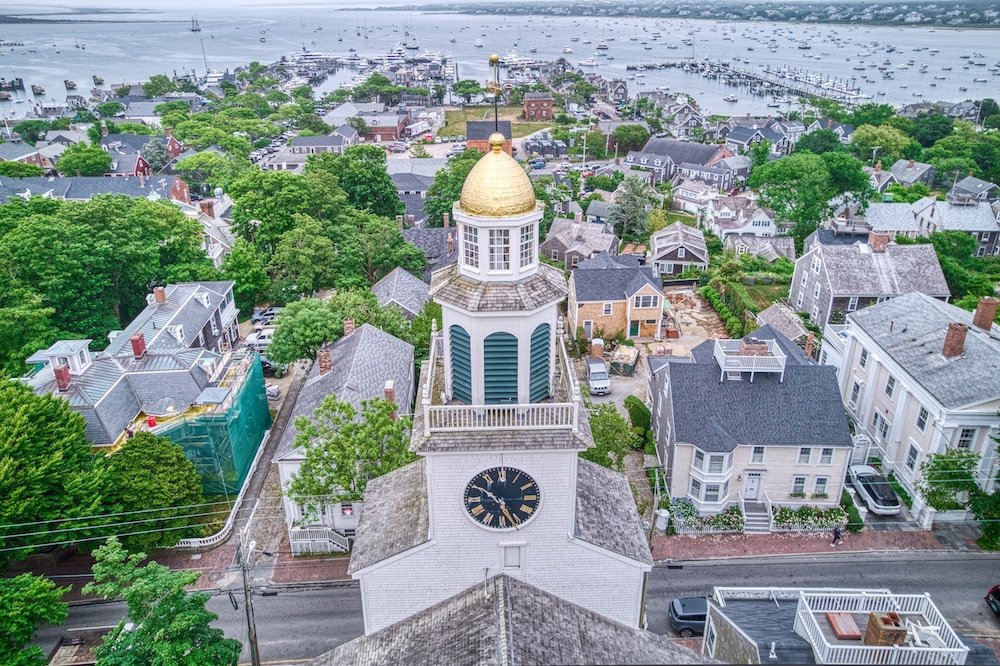
The industry’s fall came almost as fast as its rise. On the night of July 13, 1846, a fire broke out in a hat shop on Main Street and tore through the commercial district, an inferno made worse by the very product that had built the town: barrels of whale oil on the wharves burst and burned atop the harbor water itself. Roughly a third of the town, some three hundred buildings, went up in a single night. Whaling was already sliding by then, undercut by overfishing, by a shallow harbor that could no longer accommodate the industry’s ever-larger ships, and by New Bedford’s rail connections stealing away the trade. The fire simply hastened what was already underway. Two years later, gold turned up at Sutter’s Mill in California, and a fair number of Nantucket’s remaining whalemen decided that chasing fortune on dry land sounded considerably less dangerous than chasing it in the South Pacific. Petroleum, discovered in Pennsylvania in 1859, delivered the final blow to an industry already wounded twice. The island’s population, which topped ten thousand at its whaling peak, would not return to those levels until 2000.
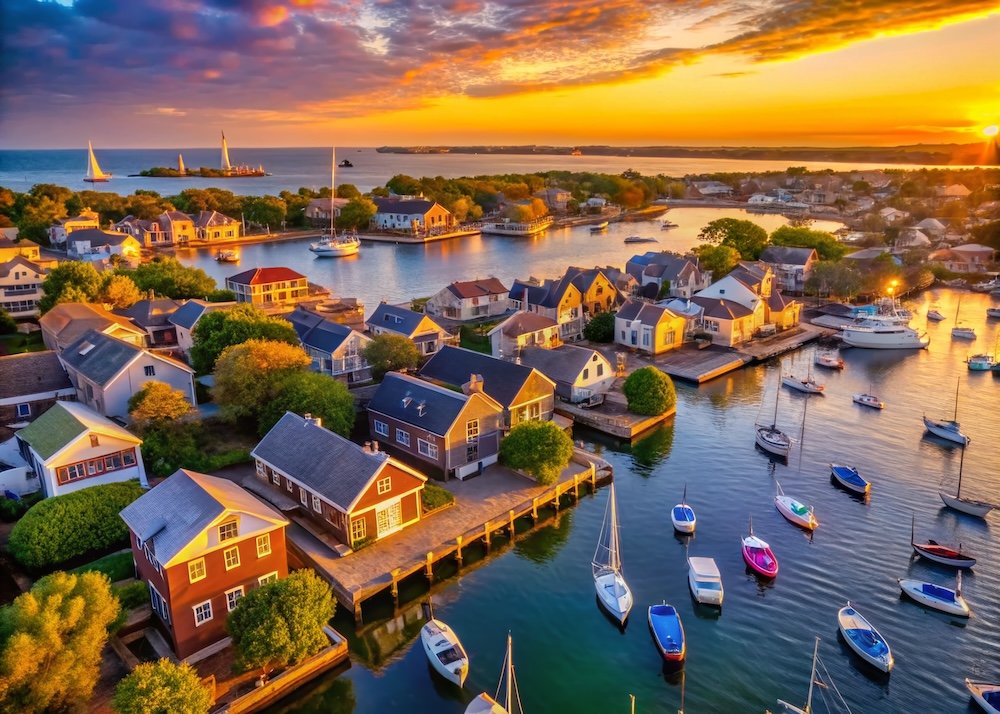
Nantucket’s second act began earlier than most visitors assume. As early as the 1870s, with whaling gone and the population still shrinking, islanders started courting a different kind of arrival: the summer visitor. Rail service and steamship connections to the mainland made the island reachable in a single day, and mainlanders, particularly from Boston and New York, discovered that a town built for sober Quaker merchants also had some of the finest beaches on the East Coast. Hotels went up where warehouses had stood empty. The very austerity that whaling wealth had built, all that gray shingle and white trim, turned out to photograph beautifully, reframed as charm rather than thrift.
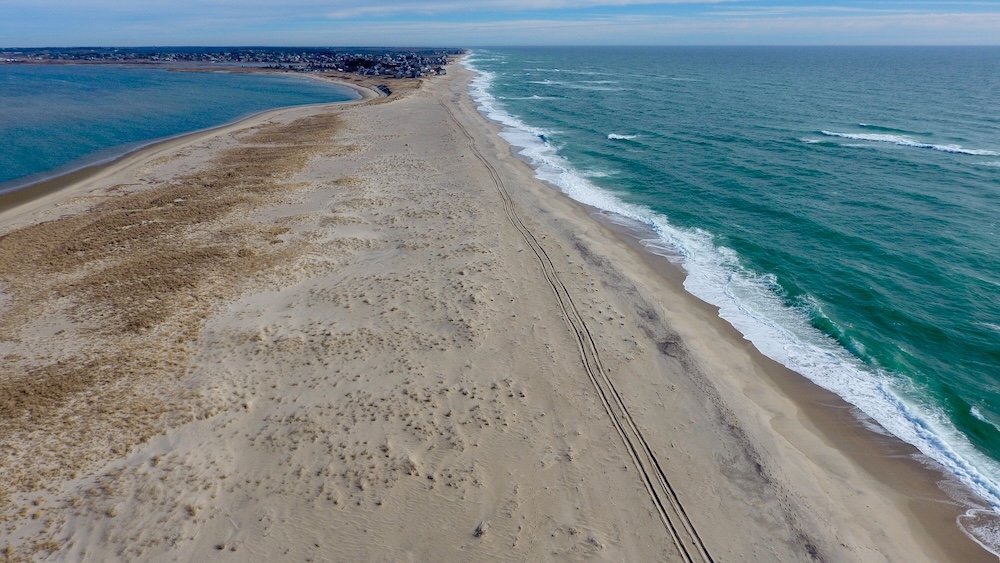
Today Nantucket’s year-round population hovers around fourteen thousand, and its summer population swells to something closer to eighty thousand. The appeal holds up under scrutiny, though. Nantucket has more than eighty miles of coastline and roughly a dozen public beaches, ranging from the mild, warm-water swimming at Children’s Beach and Jetties, both an easy walk from town, to the wilder Atlantic surf breaks at Cisco and Surfside, to the pink-sand calm of Madaket at sunset. Bike paths, mostly flat and well-maintained, connect town to nearly every beach and village on the island, which means a family can leave the car at the hotel for a week and never miss it.
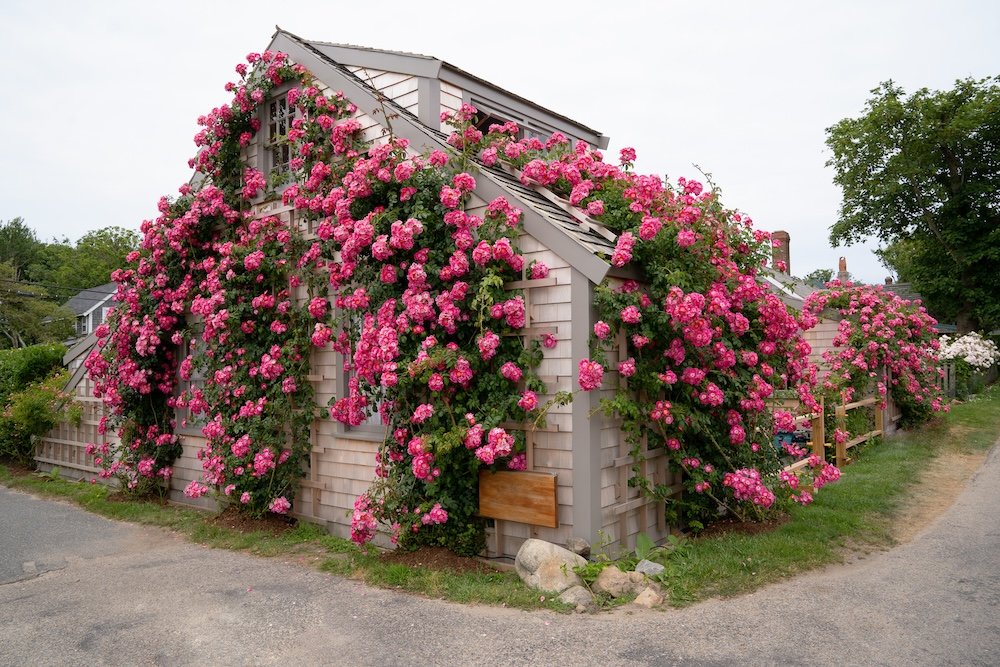
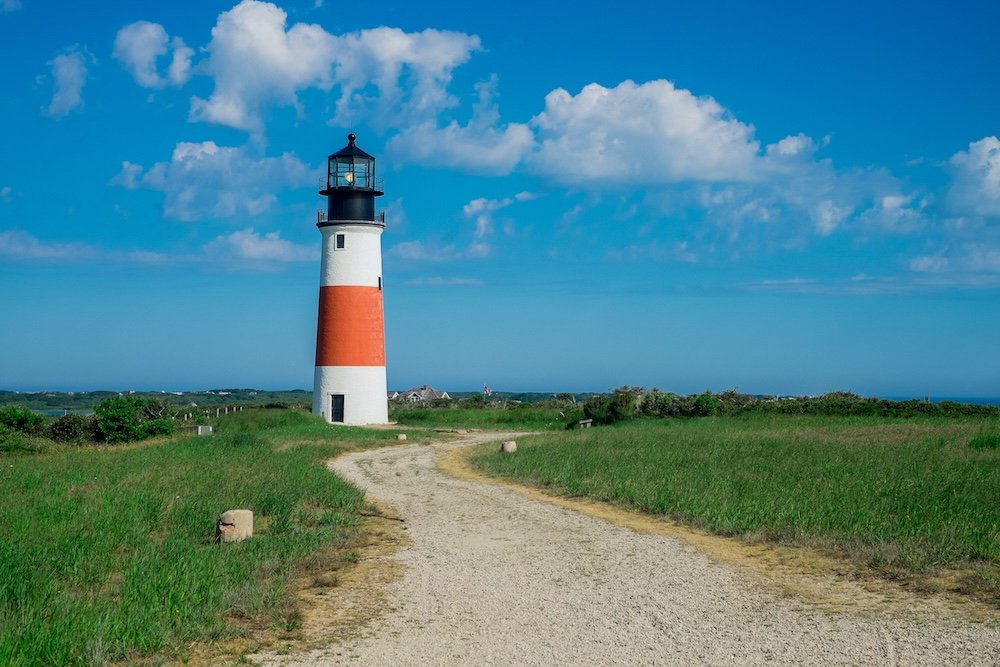
No account of Nantucket’s appeal is complete without a stop in Siasconset, universally shortened by anyone who has spent more than a day on the island to ‘Sconset. This former fishing village on the island’s eastern bluff is where Nantucket’s restraint briefly loses its nerve. Tiny, rose-covered cottages, some barely larger than a single room, cluster along lanes with names like Broadway, their facades smothered every July in climbing pink and white rambler roses that seem intent on covering the buildings entirely. A short bike ride or a hop on the seasonal shuttle from town gets a visitor to ‘Sconset for lunch at the Summer House, whose poolside cabanas sit directly on the bluff above the Atlantic, or to the Sankaty Head Lighthouse, whose red-topped tower has watched over this stretch of coast since 1850.
The Nantucket Whaling Museum, run by the Nantucket Historical Association in a former 1847 candle factory on Broad Street, remains the best introduction to the island’s maritime past. A forty-six-foot sperm whale skeleton hangs over the main gallery, a massive Fresnel lens from a decommissioned lighthouse sits nearby, and the rooftop deck offers one of the better harbor views in town, free of charge once inside. The museum runs daily from 10 a.m. to 5 p.m. through most of the summer season, though hours shrink in the shoulder months, so a quick check before visiting saves a wasted trip. The Nantucket Historical Association also maintains a scattering of historic properties around town, including the 1686 Jethro Coffin House, the island’s oldest surviving structure and a rare survivor of a settlement that has otherwise burned down more than once.
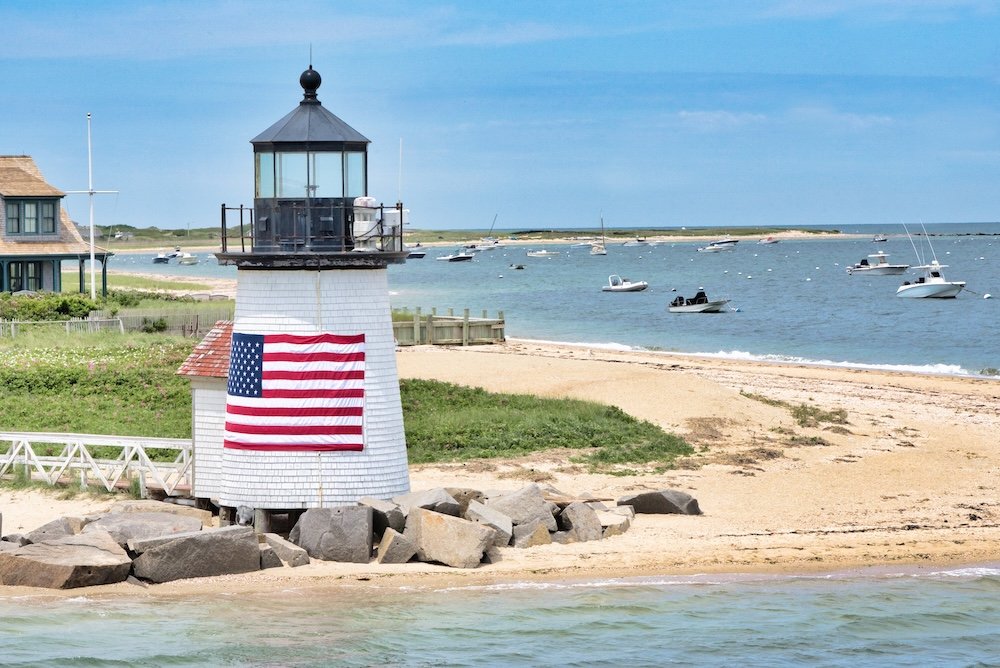
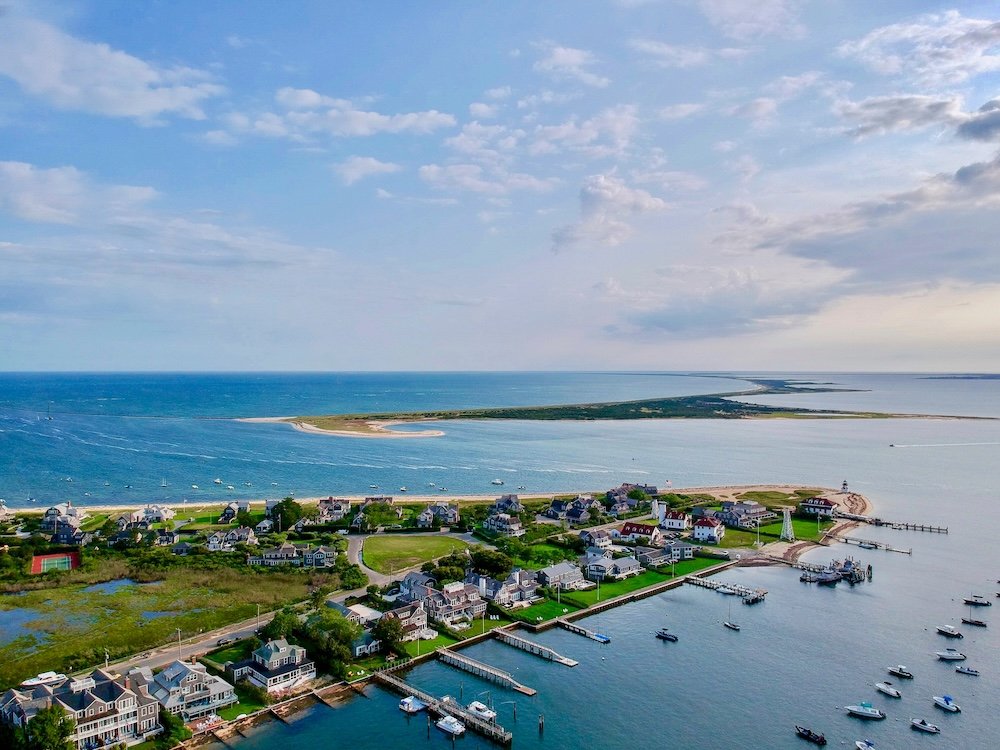
Brant Point Light, at the harbor entrance, has a fair claim to being the second oldest lighthouse site in the country, first lit in 1746, though the current white tower dates only to 1901, the ninth structure to stand on that spot after fire, storm, and at least one outright collapse took the previous eight. It is also the shortest working lighthouse in New England, just twenty-six feet tall, which somehow makes it more endearing rather than less. Ferries arriving from Hyannis pass close enough to Brant Point that regulars know to have a camera ready, and local tradition holds that tossing a penny toward the light guarantees a return trip to the island, an oddly reasonable bargain for a lighthouse that has already survived nine reincarnations.
Accommodations on Nantucket run from the historic to the frankly indulgent, often in the same building. The Jared Coffin House, a brick mansion built in 1845 by one of the island’s most successful whaling merchants, has operated as a hotel for well over a century and once hosted Herman Melville himself, giving it perhaps the strongest literary claim of any bed on the island. Down at the harbor, the White Elephant delivers a more polished, resort-style stay with water views from nearly every room. At the same time, its sister property, the Wauwinet, sits on a quiet stretch of the island’s northeastern reach, reachable by land or by the hotel’s own launch, for travelers who would rather not see another car for a few days. Smaller inns and guesthouses fill the gaps around town for visitors who want a walkable, historic base without the resort price tag, and Nantucket’s peak summer season books up early. Reservations made in February for a July stay are not paranoid; they are how the island works.
The Steamship Authority runs the main ferry service to Nantucket from Hyannis on Cape Cod, with a choice between the traditional car ferry (a two-hour-and-fifteen-minute crossing) and the seasonal high-speed passenger ferry, which makes the trip in about an hour. Monday through Thursday, the high-speed ferry offers a discounted same-day round-trip fare aimed squarely at day-trippers, and it is a genuinely appealing option for anyone based on the Cape who wants a taste of the island without committing a whole vacation to it. A single day is enough time to walk the cobblestones of Main Street, tour the Whaling Museum, grab lunch at the harbor, and catch the return boat with sand still in your shoes.
That said, Nantucket rewards a longer stay more than most islands of its size. A day trip covers the highlights but misses the slower rhythms that make the place worth returning to: an early morning bike ride out to Sankaty before the day-trippers arrive, a sunset at Madaket with the whole beach nearly to yourself, a quiet dinner at one of the island’s excellent seafood spots after the last ferry has pulled away and the crowds have thinned. For travelers already on Cape Cod or Martha’s Vineyard, a seasonal inter-island ferry connects Nantucket to the Vineyard from late May through early October, making it possible to string both islands together into one trip rather than choosing between them.
Nantucket has spent three hundred and sixty-odd years reinventing its own economy without ever quite abandoning what came before. The whaling fortune built the houses that the tourism economy now protects. The Quaker restraint that once discouraged ornament now reads as understated luxury. Even the fog, which rolls in off the Atlantic with enough regularity that islanders long ago nicknamed their home the Little Gray Lady, has become part of the charm rather than a complaint, the kind of atmospheric hazard that makes a lighthouse necessary and a harbor town feel like it is keeping a secret. Few places manage to wear their entire history at once: a whaling captain’s mansion beside a rose-covered cottage beside a candle factory turned museum. Nantucket somehow does, and that alone is worth the ferry ticket.