


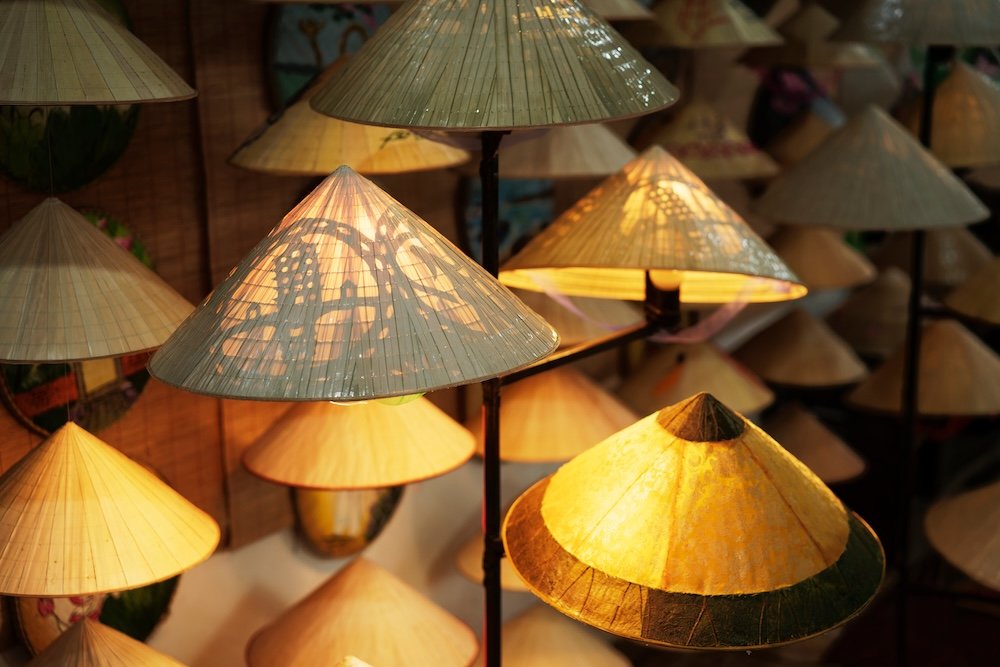
At Dong Ba Market, a vendor raises a conical hat toward the doorway and tilts it in the morning light. Between the layers of palm leaf, a shape becomes visible: a line of verse and a bundle of bamboo, something that was not visible a moment before. This is the non bai tho, the poem hat, and Hue regards it as its own. The trick lasts about three seconds and captures the city well. Nearly everything that makes Hue special is hidden in plain sight, waiting for someone to hold it up to the light.
If Hanoi has Vietnam’s energy, Hue has Vietnam’s history and shows it. That’s why one should visit. Here, a visitor can walk around the palace where Vietnam’s monarchy came to an end, have a picnic at a tomb which an emperor built as his own weekend getaway, and try what might be the country’s spiciest bowl of noodles, all before dinner.
Hue served as the capital of the Nguyen dynasty, the last line of emperors in Vietnam, from 1802 to 1945, a total of 143 years. When Gia Long founded the dynasty, he had the large walled Citadel built on the north shore of the Perfume River, with work starting in 1804. In 1993, the Complex of Hue Monuments was designated a UNESCO World Heritage Site. In 2003, Vietnam’s royal court music, nha nhac, was included as the country’s first item on the UNESCO intangible heritage list.
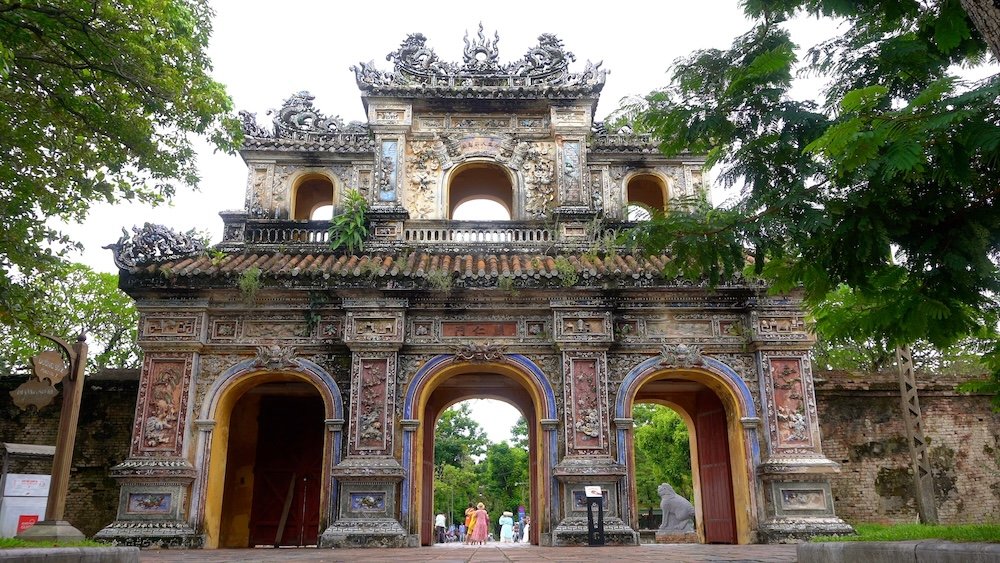
The dynasty’s last act took place at the main door. On the afternoon of August 30, 1945, before a crowd assembled at Ngo Mon, the Noon Gate, Emperor Bao Dai, 32, read out his abdication and handed over the imperial sword and a gold-plated seal weighing about 22 pounds. The statement for which he is remembered, that he would rather be a citizen of an independent country than rule an enslaved one, has been quoted ever since. Few monarchies have ended with such effective staging. The city’s most difficult period came later. In early 1968, during the Tet Offensive, Hue became the site of the war’s most intense urban battle, and a large part of the Forbidden Purple City, at the palace’s center, was left only as foundations.
The Imperial City should at least be seen in the morning; adult tickets are priced at 200,000 dong, which is about $8, and include access to Ngo Mon Gate, the Nine Dynastic Urns, the throne hall of the Thai Hoa Palace, and the Duyet Thi Duong Royal Theater, where short court music performances reenact the old rituals. A two-day ticket that also includes the three most well-known royal tombs costs 530,000 dong.
Restoration is an ongoing process in this area, and that is one reason it is so attractive. The Kien Trung Palace, built in the early 1920s for Khai Dinh and featuring Vietnamese roofs, ceramic mosaics, and French archway windows, reopened in 2024 after lying in ruins for decades; Bao Dai drew up the edict ending his reign here. Elsewhere, grass now covers the former buildings. Arrive at opening time, about 6.30 a.m. in summer, when the light is soft, and the tour buses are still having breakfast.
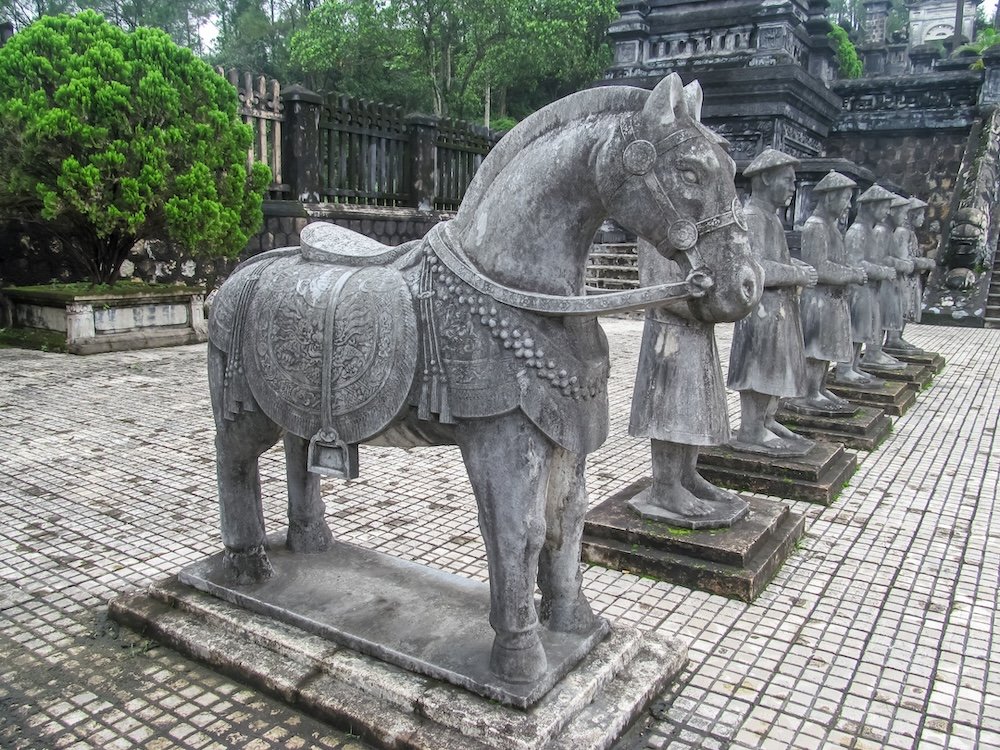
The Nguyen emperors did not overlook the afterlife. Their tombs sit among the hills covered with pines south of the city, and each shows surprisingly clearly the character of its owner.
Tu Duc, who reigned from 1848 to 1883, had the longest rule of any Nguyen dynasty member, had 104 wives, and had no heir. His tomb, completed in 1867, also served as a pleasure garden where he composed poetry in a pavilion by a lake. Since he had no son to write the usual tribute to his rule, he composed his own epitaph, which was then inscribed on a stone stele weighing approximately 20 tons. He regarded this as a bad omen. The cost of the project, together with the compulsory labor it involved, almost led to a coup, and his actual place of burial has never been confirmed.
By contrast, Minh Mang’s tomb arranges its courtyards, bridges and lotus ponds along a strict ceremonial axis in just the same orderly fashion as the Confucian-minded emperor it pays homage to. The tomb of Khai Dinh, constructed between 1920 and 1931, rises on a steep hillside in weathered concrete before opening onto an interior covered with mosaics of porcelain and colored glass; it is either the most beautiful room in Hue or the most exuberant, depending on your aesthetic.
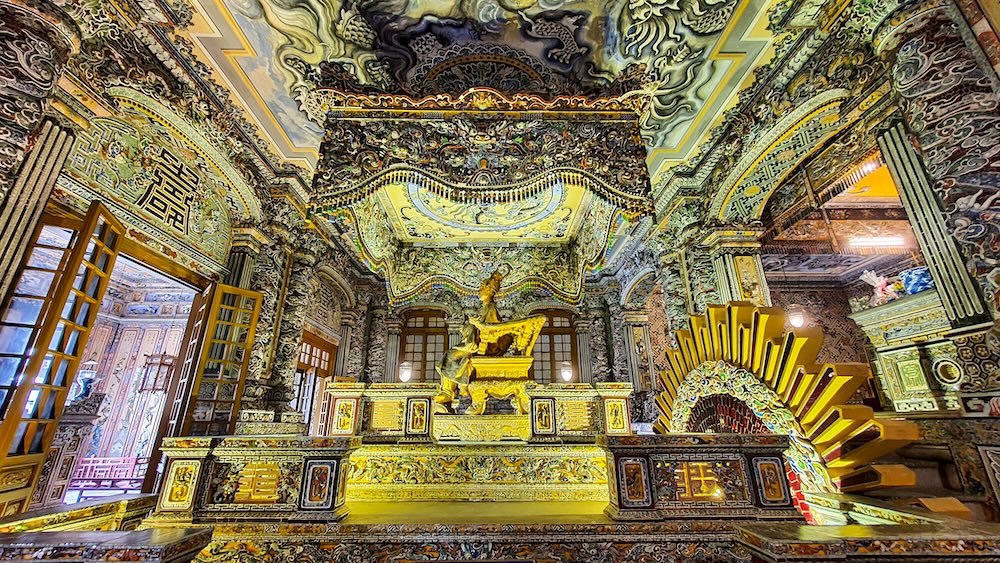
Nguyen Duc Huy – stock.adobe.com
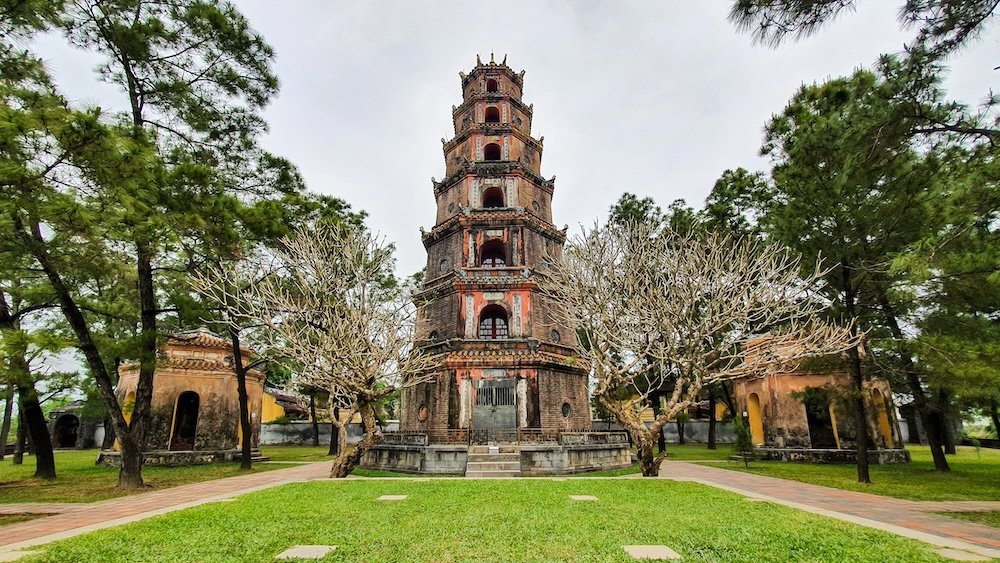
The city’s emblem, the pagoda, lies upstream. The seven-story Phuoc Duyen Tower at Thien Mu, ordered by Emperor Thieu Tri in 1844, stands approximately 69 feet above the Perfume River. Behind the main hall, in a plain garage, is a surprising relic: the pale blue Austin sedan that carried the monk Thich Quang Duc to his protest in Saigon in June 1963, where the world watched his act of self-immolation against the persecution of Buddhists.
A few miles west of the Citadel, at the far end of a residential lane, stand the brick walls of Ho Quyen, the Tiger Arena. For many generations, royal elephants and tigers have been fought for court entertainment, originally on an island in the river. In 1829, however, a tiger was said to have swum toward Emperor Minh Mang’s own dragon boat, and the emperor decided spectator safety needed a permanent solution. They completed the walled arena in 1830. The contests were fixed. Tigers frequently had their claws and teeth removed because the elephant stood for the throne, and the throne could not lose. The final match took place in 1904. Now the arena is quiet, a bit overgrown and one of the most surprising places in the country.
In Vietnam, Hue is described as gentle, quiet and a bit formal. It is the center of Vietnamese Buddhism, with pagoda bells still sounding at dawn and evenings devoted to ca Hue, melodic folk songs performed on dragon boats that drift down the Perfume River.
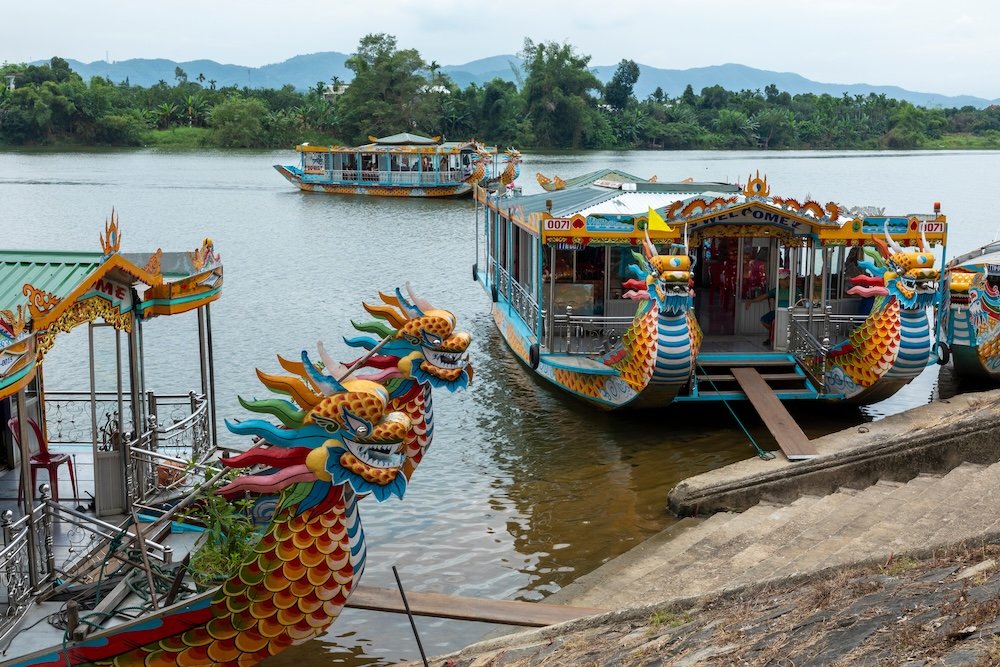
Visitors spend their days cycling to the tombs, taking boat trips to Thien Mu, taking cooking classes, and eating with real determination. The city’s specialty, Bun bo Hue, the beef noodle soup, is fragrant with lemongrass and is deliberately spicy. Com hen, rice with small river clams, is a breakfast favorite in the area, and banh beo, small steamed rice cakes topped with dried shrimp, is served in stacks in little saucers that somehow become more numerous than anyone can eat.
The Hue Festival, long held every two years, is now a year-round “four seasons” event, with the main international arts week taking place in mid-June.
DAY TRIPS WORTH THE DETOUR
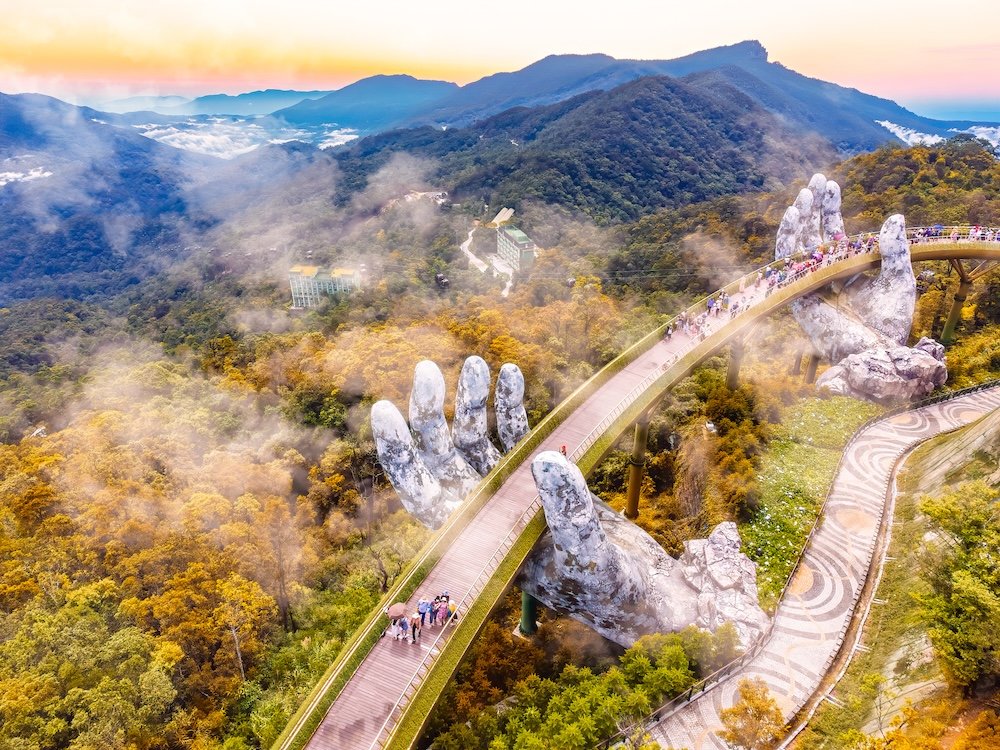
Cầu Vàng (known in English as the Golden Bridge) is a famous 150-meter-long (490 ft) pedestrian bridge located in the Bà Nà Hills resort near Da Nang. The bridge features two large, weathered stone-like hands. The drive typically takes 2.5 to 3 hours one way. The most popular route goes along the scenic central coast of Vietnam.
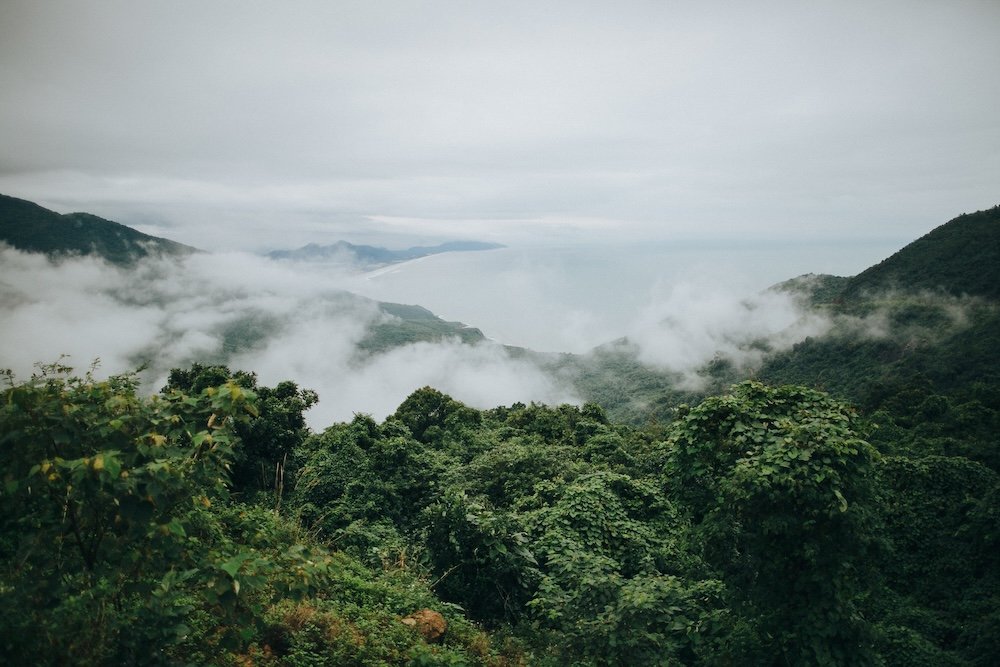
The Hai Van Pass, known as “ocean cloud,” stretches about 12 miles over the mountains between Lang Co and Da Nang and offers some of Southeast Asia’s best coastal views. Pair it with the lagoon villages of Lang Co; Hoi An, about three hours south, is ideal for an overnight stay.
Near the town, a bridge with tile roofs, built in 1776, crosses a canal surrounded by rice fields and is only a short bicycle ride from the town. The Tam Giang lagoon, one of the largest in Southeast Asia, has fish traps and magnificent sunsets, while Bach Ma National Park offers hikers wooded hills that rise above 3,000 feet.
Many tourists go north to the former Demilitarized Zone. The Vinh Moc tunnels, located about 60 miles from Hue, sheltered a whole village underground during the war, and the Hien Luong Bridge crosses the old border line at the 17th parallel.
ETIQUETTE
In the Imperial City, you must wear modest clothes, with shoulders and knees covered; this rule also applies in pagodas and tombs. Before entering pagoda halls and shrines, you must take off your shoes. Since Thien Mu is still in use, keep voices down, and anyone carrying a camera must ask for permission first. Avoid pointing your feet at altars or touching anyone on the head.
Hand items to someone and take them from them with two hands, especially when giving or receiving money and business cards. Haggling is normal at Dong Ba Market, and it should be friendly; a smile works better than a stiff attitude. While tipping isn’t traditional, guides and drivers do welcome it. Public displays of affection and anger both clash with Hue’s reserved customs. Finally, be aware that vaping is against the law in Vietnam, as the country enforces a comprehensive ban on the use, possession, trade, import, and production of e-cigarettes and heated tobacco products.
WHEN TO GO
The peak period runs from February to April, the driest and most pleasant time of year, with mild days, low humidity, and usually less than two inches of rain in March. During this time, crowds and prices increase, particularly during Tet, the Lunar New Year, when many domestic tourists visit the city.
The shoulder season runs from May to August and again from December to January. In summer, the weather is hot, with temperatures ranging from the lower to the mid-90s and occasional heat waves reaching 100°F; June sees more festival crowds, yet mornings and late afternoons are still entirely suitable for work. By December and January, it becomes cool and damp, with an average January temperature of about 69°F, and these months are enjoyable for tourists who prefer their tombs surrounded by mist.

The low season runs from September to November, the middle of the rainy season. Hue is one of the wettest cities on Vietnam’s coast, with about 110 inches of rain each year, and October alone can bring nearly 30 inches. You may experience typhoons and river flooding in October and November. Although visitor numbers drop and monuments can feel deserted, flexible plans and a good umbrella are still essential.