


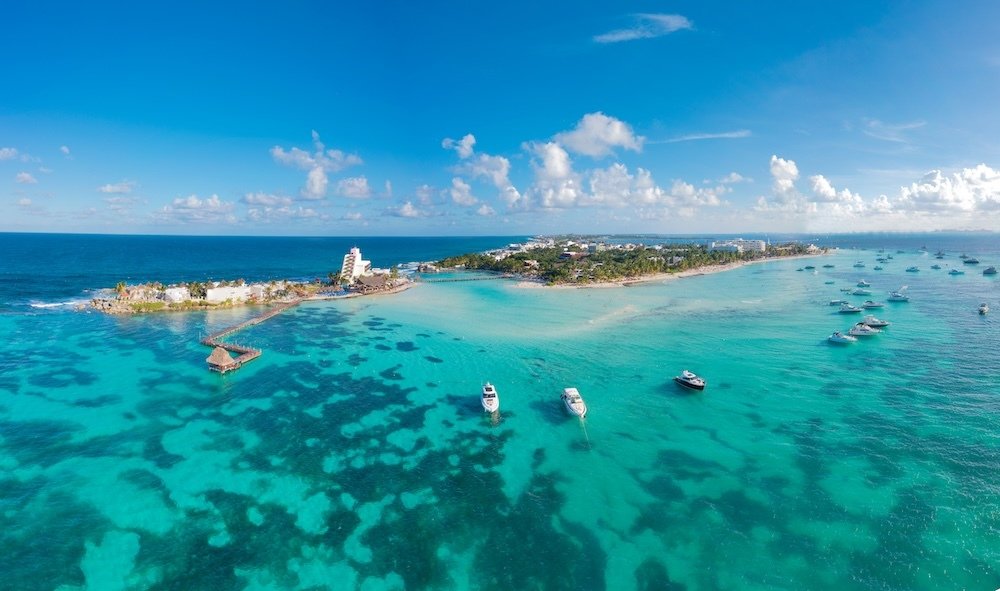
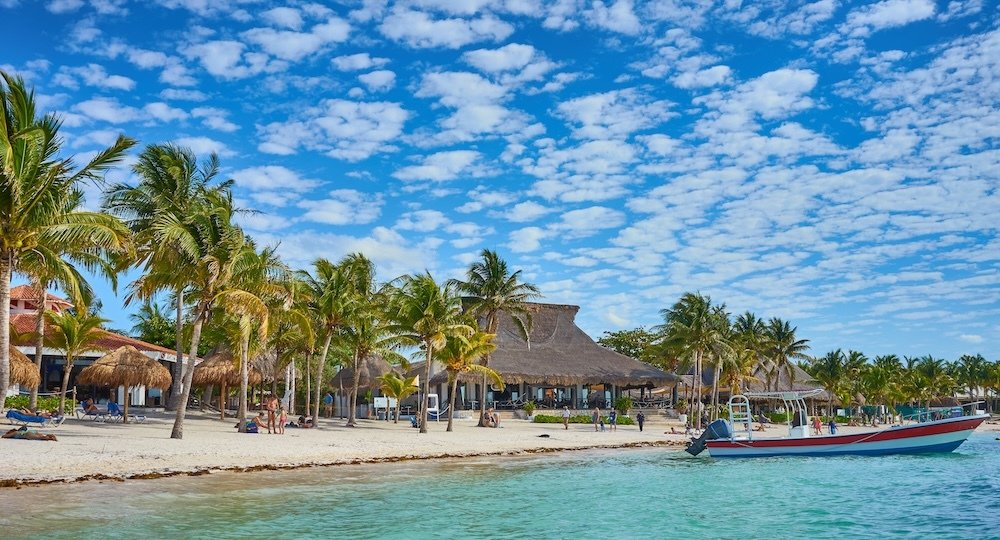
The ferry captain running the Isla Mujeres route makes the crossing roughly 14 times a day, and on each he continues to announce the dolphins, cutting through the wake with the kind of casual indifference only a wild animal that has seen fourteen ferries a day for years can manage. His passengers never fail to get a charge out of the water mammals. Twenty minutes after leaving the concrete high-rises of the Zona Hotelera behind, the boat lets down its ramp onto an island where golf carts outnumber cars, and the water at Playa Norte is so shallow and so still that you can wade out a hundred yards and still watch the foam form around your knees rather than your waist. It faces the wrong way for sargassum, which is to say the right way for everyone else, as if the Gulf Stream had consulted the tourism board before deciding which direction to blow.
Most roundups of Mexican beaches amount to the same beach in a different t-shirt: white sand, turquoise water, a drink with an umbrella in it. But Mexico has 5,800 miles of coastline touching two oceans and a sea, and reducing that to a color palette misses what actually separates one stretch of sand from another: the reef, the ruins, the mountains, the festivals, the guy selling something you’ve never heard of off a cooler strapped to his bike.
The Caribbean Side, Where the Ruins Have a View
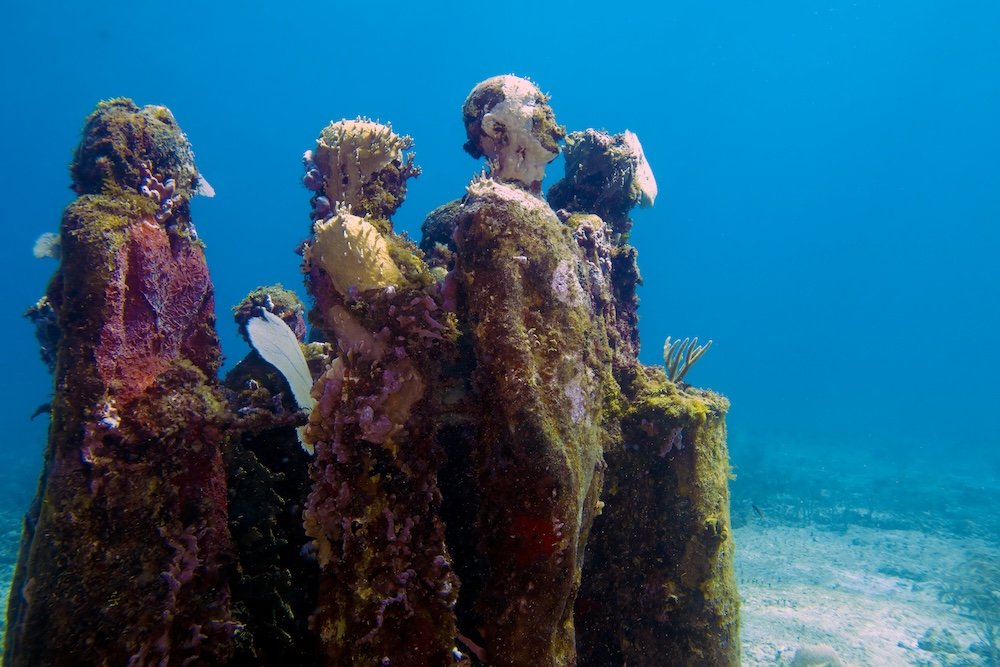
Isla Mujeres earns its reputation honestly, but the more interesting decision it forces on a visitor is what to do after the swimming. A short golf cart ride south, past hand-painted murals and a taco stand with a line that starts before eleven, sits Punta Sur, a windswept point where a Mayan goddess-of-fertility temple shares real estate with a modern sculpture garden. Offshore, near the reef that shelters both Isla Mujeres and Cancún, divers descend on MUSA, an underwater museum of several hundred cast-concrete human figures deliberately sunk to grow coral, a genuinely clever piece of reef restoration.
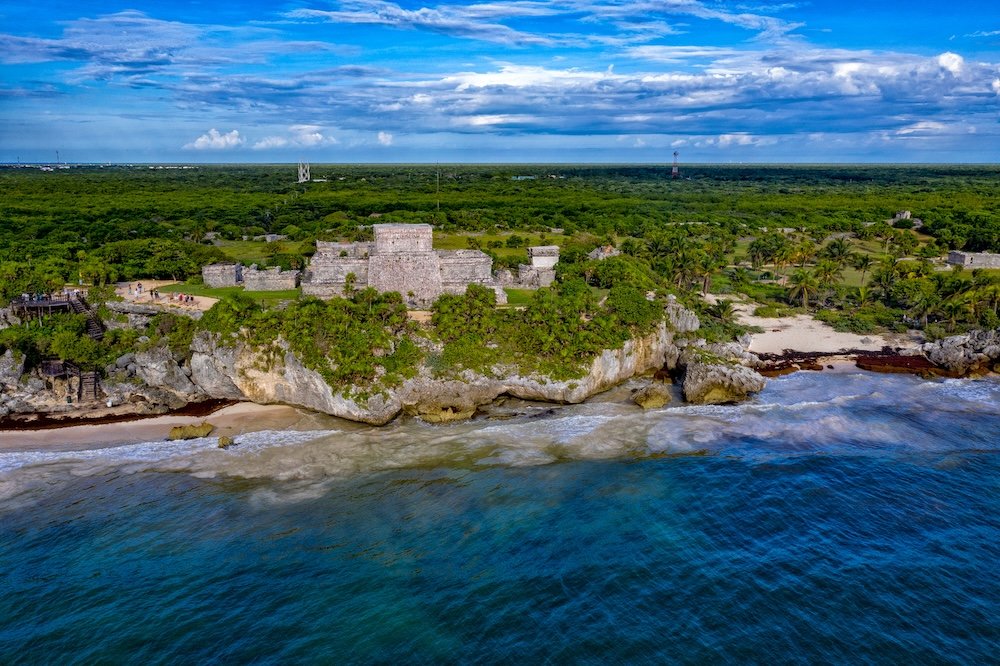
Down the coast at Tulum, the beach comes with an actual skyline: eleventh-century Maya watchtowers standing on a limestone bluff, the only Maya city built to face the sunrise over open water. New regulations now require the beach clubs that line the shore to keep a public corridor to the sand, a small but pointed correction after years of hotels effectively privatizing a public resource — the sort of quiet tug-of-war between tourism and access that tends to define a place more honestly than its brochure. Inland from the beach, the ground gives way in places to cenotes, limestone sinkholes flooded with water so clear it looks retouched, and a morning spent snorkeling one of them, roots hanging down through the ceiling like something out of a folk tale, does more to explain the Yucatán’s geology than any beach ever could.
Akumal, thirty minutes north, trades the ruins for a resident population of green sea turtles that graze the seagrass in a bay calm enough to feel engineered. A marine biologist stationed there most mornings will tell you, patiently and for the fourth time that day, to keep three feet of distance and your fins off the bottom, advice tourists follow with the enthusiasm of people who understand they are guests in someone else’s dining room.
Baja, Where the Desert Walks Into the Sea
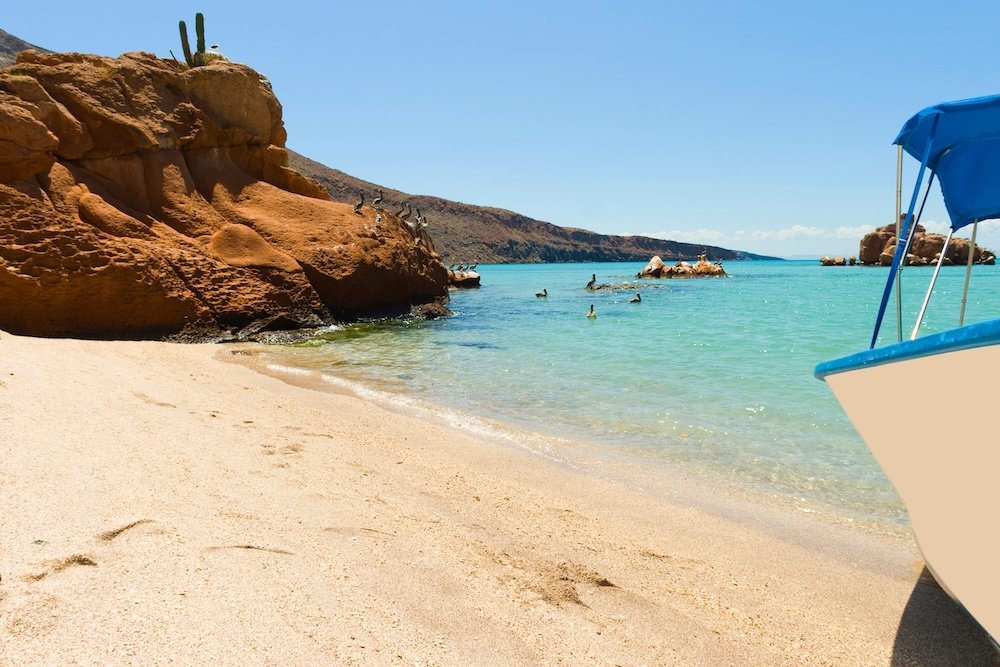
Fly to La Paz and the landscape changes character entirely. The Sierra de la Laguna mountains run dry and rust-colored straight down to a sea so blue it looks like a different chemical composition than the Caribbean, which, given the currents feeding the Sea of Cortez, it more or less is. Playa Balandra, a bay so shallow you can walk clear across it, now limits entry to four-hour windows and requires a prepaid digital bracelet, a level of bureaucracy that would be obnoxious anywhere else and here reads as the reason the place still looks the way it does. There are no vendors, no palapa bars, nothing to buy, just a rock formation shaped like a mushroom, some very patient herons, and the particular quiet of a beach that isn’t selling you anything.
The better story in La Paz happens offshore. Boats leave most mornings for Isla Espíritu Santo, where sea lion colonies haul out on volcanic rock and let snorkelers swim alongside their pups, who treat human visitors less like a threat and more like a slow-moving toy. Whale sharks, the largest fish in the ocean, filter-feeding and entirely uninterested in anyone paddling nearby, pass through the bay seasonally, and the boat captains who’ve spent decades reading the water can usually find one before breakfast.
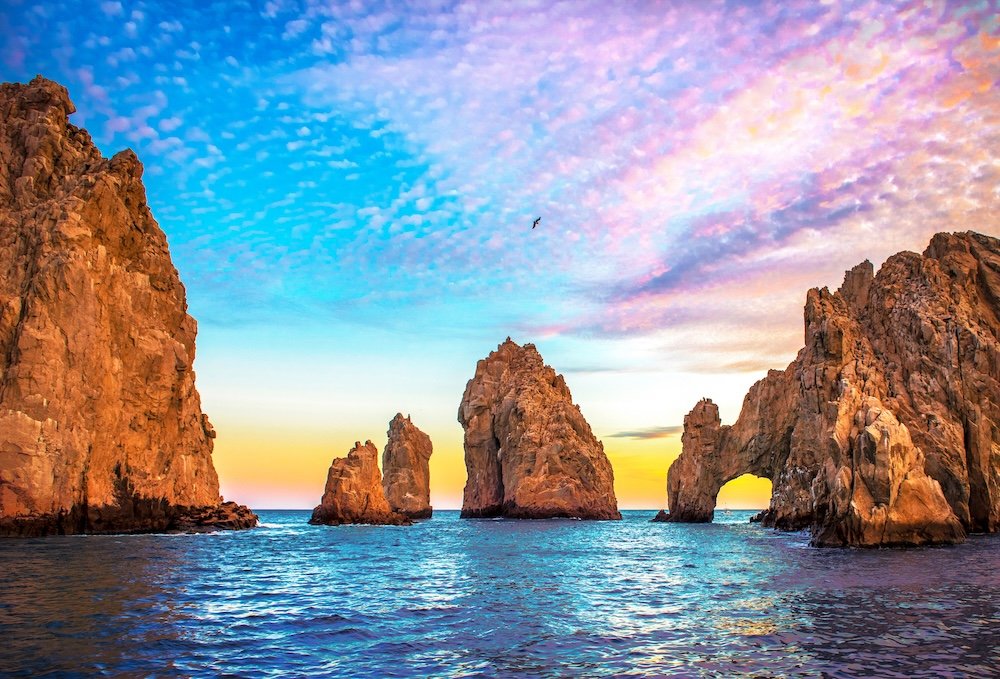
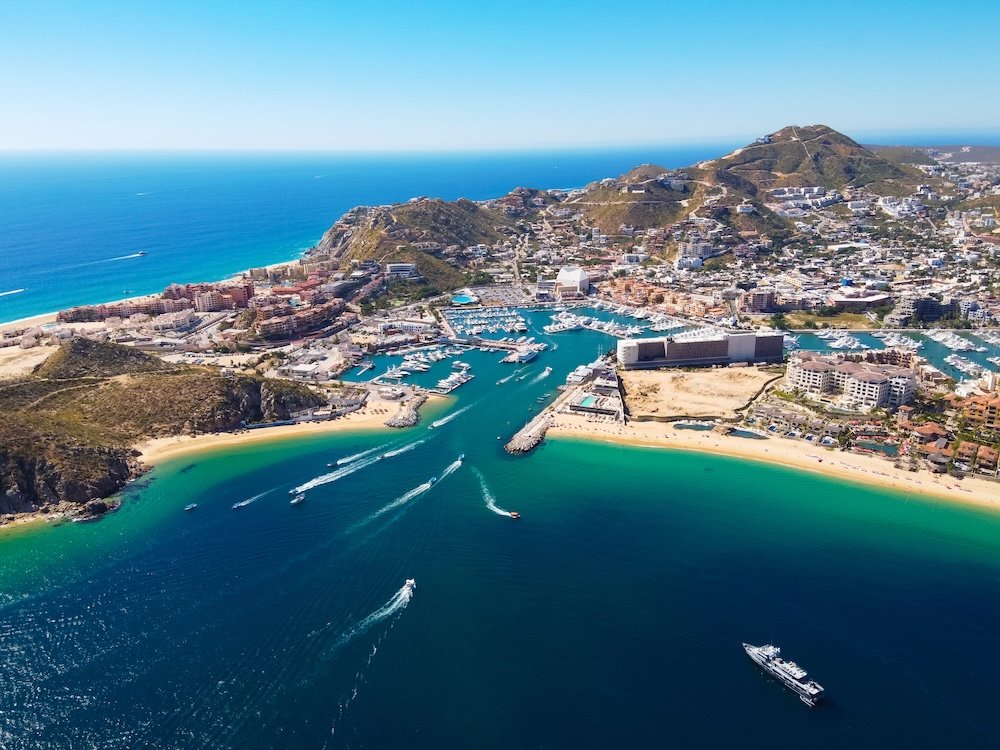
Cabo San Lucas, ninety minutes south, gets dismissed as spring-break shorthand, which undersells Playa del Amor, reachable only by water taxi from the marina, tucked against the striated rock arch where the Pacific and the Sea of Cortez meet in a visible seam of colliding currents. Snorkel the calm side and the fish practically queue up; walk to the open-ocean side, and the surf turns aggressive within twenty feet, a reminder that two oceans meeting is not a metaphor here so much as a fact you can watch happen.
The Pacific and Oaxaca, Where the Waves and the Culture Both Have Teeth
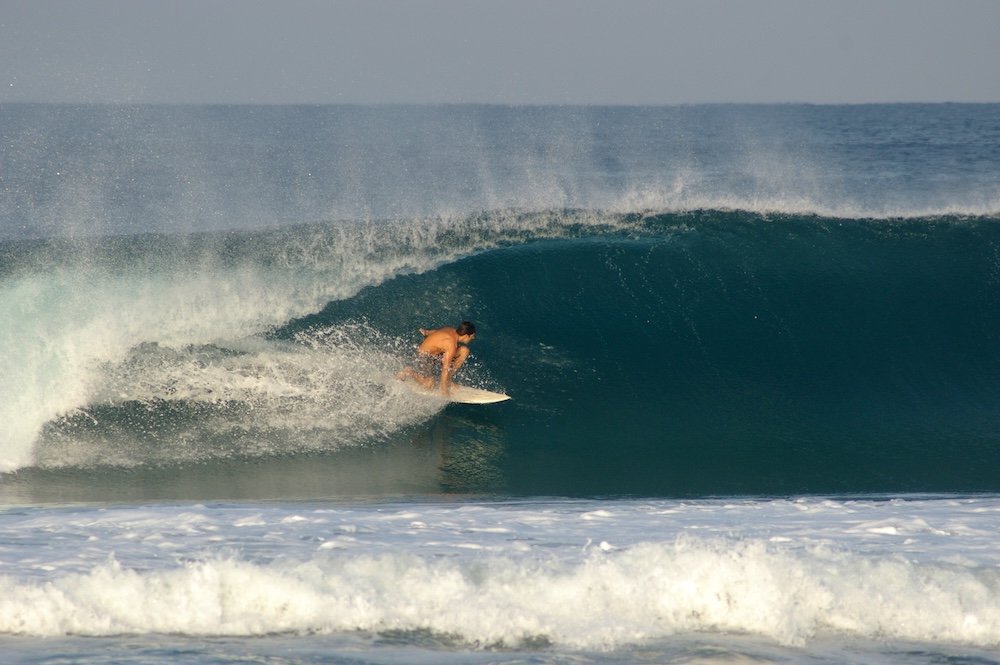
Puerto Escondido did not become a UNESCO-recognized World Surfing Reserve by accident. Zicatela Beach, nicknamed the Mexican Pipeline, throws up barrels serious enough that the international competitions held there draw the sport’s best and injure a fair number of them; this is not a beach for a first lesson. That happens instead at Playa Carrizalillo, down 150 stone steps into a cove small enough to feel private, sheltered enough that the swells arrive gentled and forgiving. Above the water, Puerto Escondido has built a reputation as a mezcal town as much as a surf town — palenques outside the city distill the stuff in small batches, and it is entirely possible to spend an evening comparing agave varietals with more seriousness than anyone brought to their surf lesson that morning.
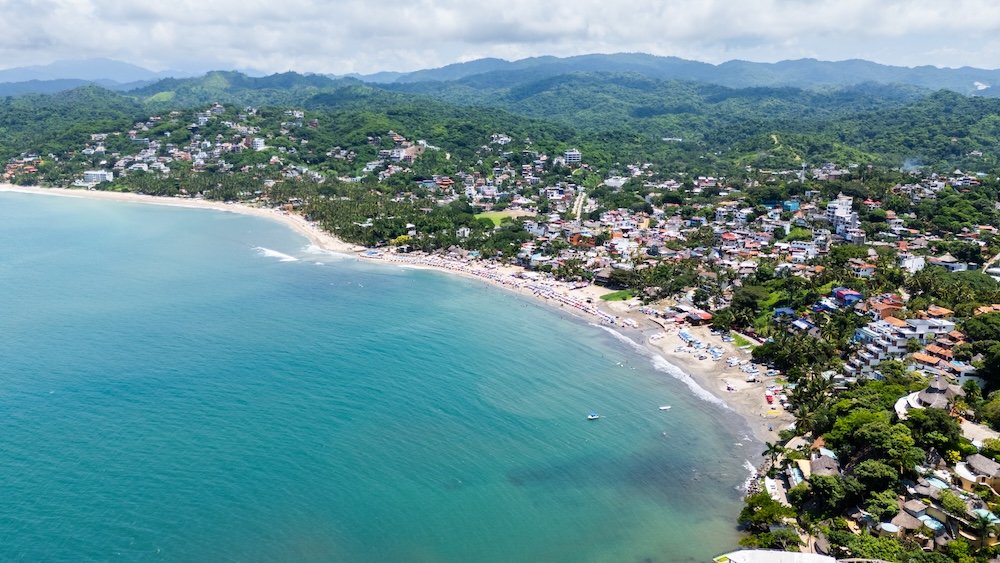
Sayulita, up in Nayarit, runs on a different frequency: cobblestone streets, Huichol yarn art sold from blankets in the plaza, and a surf break gentle enough for longboarders who seem to have all the time in the world, which, watching them, they apparently do. The town’s Día de los Muertos festival transforms the plaza into a procession of marigolds, painted faces, and altars built for the specific dead, a celebration that has nothing to do with the beach and everything to do with why people who came for a week end up staying for years.
None of this makes the water any different from the postcards. What it changes is what happens when you finally get out of it: the goddess temple at Punta Sur, the sea lion pups at Espíritu Santo, the marigold altars in a Sayulita plaza that has nothing to do with the tide at all.