


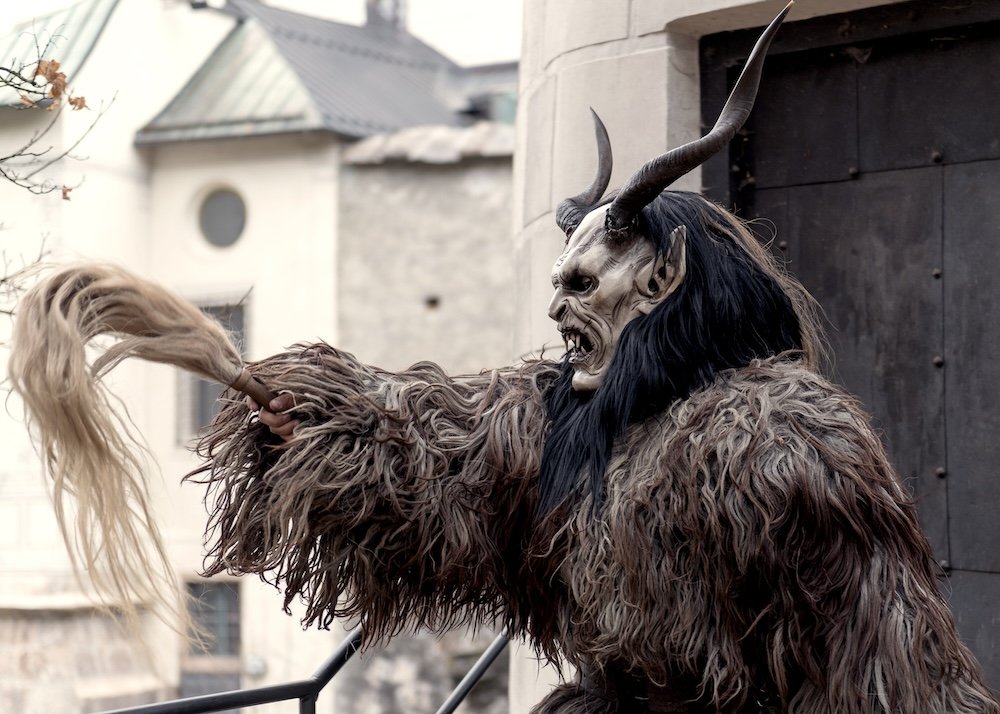
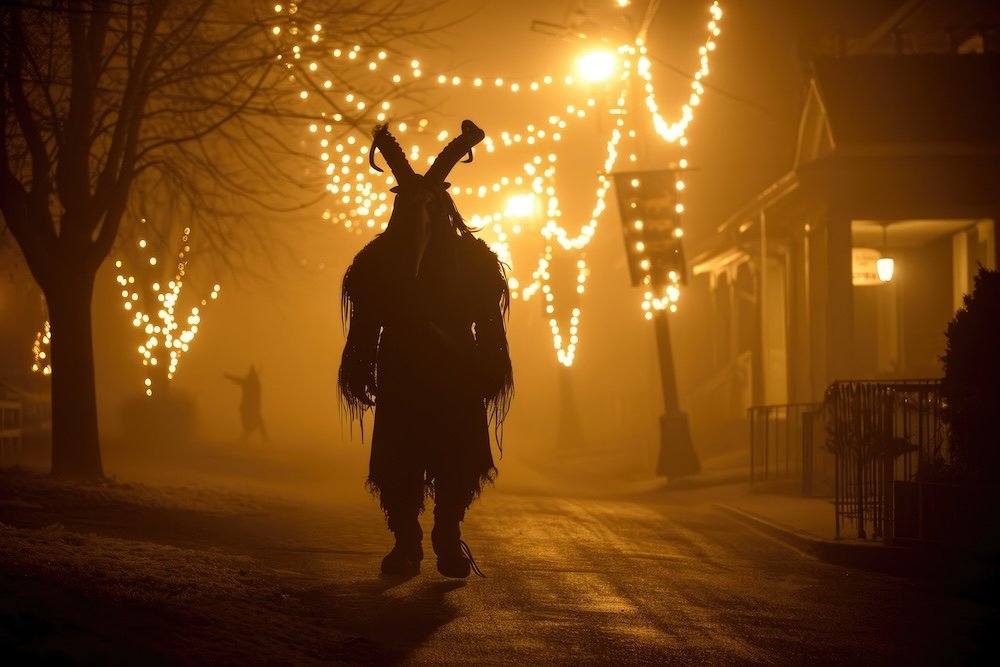
The first time I saw Krampus was on a side street in the Old Town of Salzburg, and I should make it clear that “saw” is an understatement. What in fact took place was that a creature about eight feet tall, dressed in a fur coat and equipped with a pair of ram’s horns as big as bicycle handlebars, swung a bunch of birch switches just within a foot of my shins while a cowbell the size of a dinner plate rang next to my ear. I laughed, mostly because I was so surprised, and I got a light tap on the leg as a result. A woman beside me told me the tap meant I had been forgiven. At that moment I made up my mind that I had to find out more about the being which had just, in the most friendly manner possible, threatened to eat me.
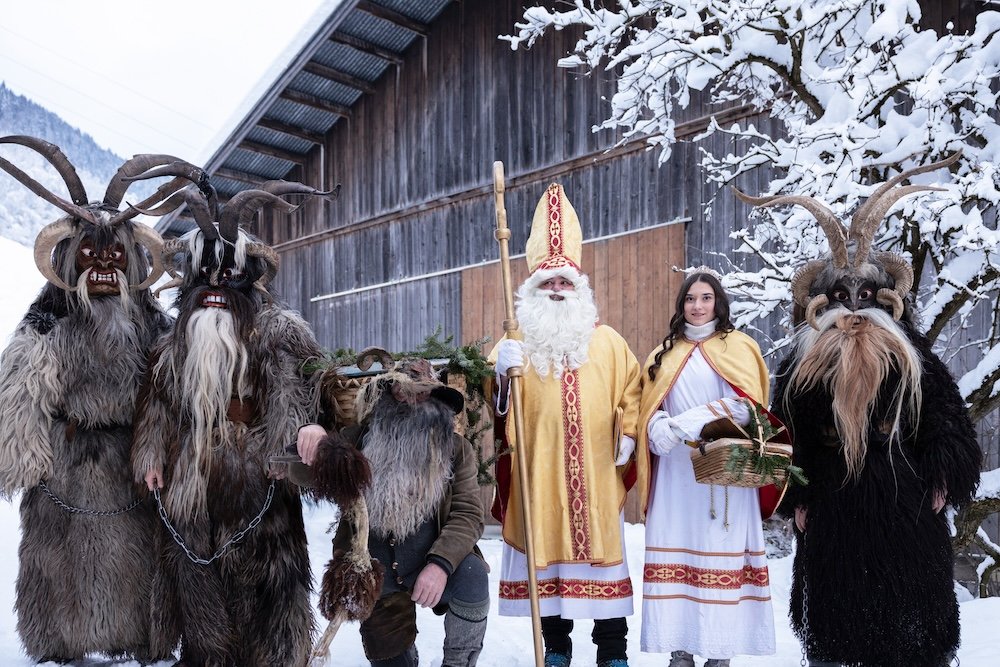
Krampus is a figure from Alpine folklore in Central Europe, with horns and a body half goat and half demon; he appears each December as the dark counterpart to St. Nicholas. While St. Nicholas rewards the well-behaved children in the Alps, Krampus takes on the other part of the task. Far from being just a myth that has remained in its own sphere, six hundred years on he is still appearing in the streets of Austrian towns, still swinging those switches, and still, according to all accounts, a great deal of fun to watch from a safe distance.
The word Krampus comes from an old German term, krampen, meaning claw, which suggests how the figure was conceived long before anyone drew him on a postcard. The difficult part is tracing his origins. Many popular versions of the story claim that Krampus first appeared in pre-Christian winter solstice rites, as a demon leftover from the pagan Alps, later put to use as a Christmas enforcer. For over a hundred years, folklorists and anthropologists have put forward that idea. Historians, on the other hand, are more careful, since the first references to a figure clearly named Krampus don’t show up until the sixteenth century. There is no disagreement, though, that by the 1600s Krampus had already been officially paired with St. Nicholas as his punishing counterpart, since it would have been a theological issue if a saint were handing out beatings with birch rods. A horned helper provided a neat solution.
The church’s relationship with this new situation was surely complicated, and the story becomes more detailed than a simple chronological account would suggest. Rome found the image of a creature with devil’s horns dancing around the streets in December a little too close to actual devil worship to be comfortable with, so it made periodic attempts over the centuries to stop it. However, these efforts never lasted long, since Alpine villages generally stick to what suits them, no matter what a bishop in another valley thinks.
You can see a small-scale version of that tug-of-war in the parish records of Bad Mitterndorf, a village in Styria which has been carrying out its own Krampus-adjacent Nikolospiel, or St. Nicholas Play, since at least the 1860s. In December 1862, the village council granted a formal permit for that year’s performance, on the condition that all performers report to the local parish priest beforehand. It is a minor bureaucratic point, just one line in a municipal record, and it shows clearly how uncomfortable the arrangement was: the village wanted its devils, and the church agreed to let them loose only after it knew which men would be wearing the horns. Twenty years later, in the early 1880s, the local gendarmerie officially objected because the man playing the priest in the pageant was, in their opinion, dressed a bit too realistically. Around 1870, meanwhile, the farmhouse in the village called the Schachnerhaus had become genuinely feared every December, not because anyone believed it was haunted, but because it was the place where all of the Krampus heads, fur coats and bells for the year were stored between performances, a wardrobe closet which the local children had apparently decided was worse than the devil himself. Authorities kept issuing both permits and objections, yet the village went on dressing up anyway.
In the twentieth century, the opposition gave up its pulpit for the printing press. When Austria’s government banned the Krampus celebrations altogether in the 1930s, this was under a nationalist regime which was uncomfortable about a folk custom that it could not fully control, and in the 1950s officials issued leaflets with a direct title of ‘Krampus Is an Evil Man’ as a final attempt to persuade the countryside to drop the tradition. This failed. Since a village council in 1862, a gendarme in 1882, and a government pamphleteer in the 1950s could not stop the practice, a bishop’s disapproval a few centuries earlier could not have done so either.
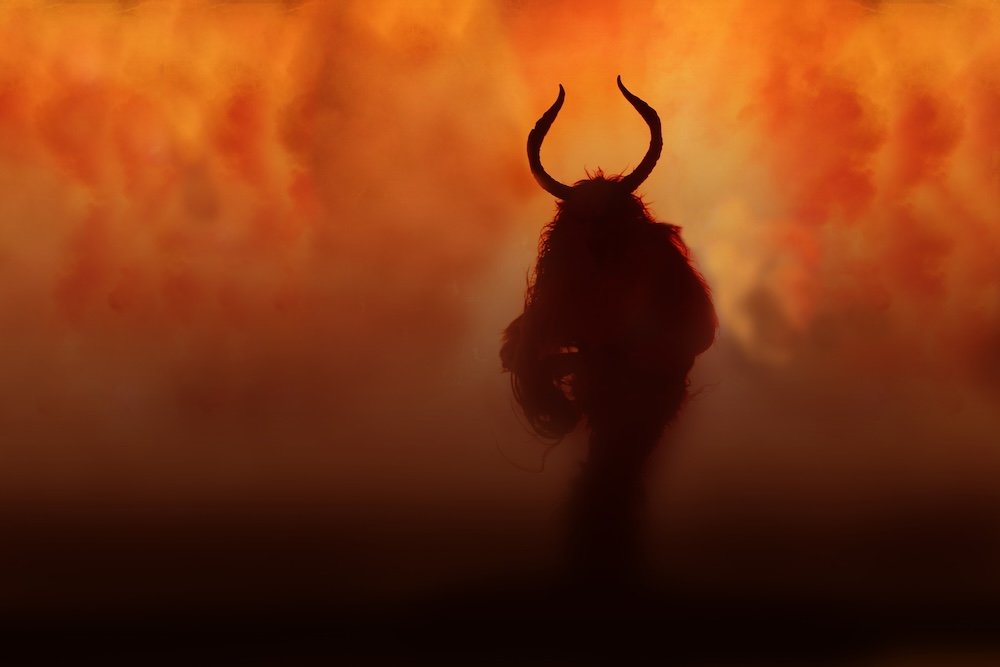
The custom revolves around Krampusnacht, the night of December 5th, the day before St. Nicholas Day. On this occasion, St. Nicholas visits the homes and leaves small gifts and sweets in the boots of children who have behaved well. Krampus makes his own visit at the same time, using the ruten, a bundle of birch sticks used to give a warning smack to children who have merely misbehaved. In the more dramatic versions of the story, those who are truly unrepentant are packed into the wicker basket on Krampus’s back and taken to his underground lair, or, in the more dramatic accounts, sent straight down to hell.
The biggest change since Krampus’s more sinister times has been in the audience. After the Austrian government relaxed its control over postcard production around 1890, manufacturers started to produce Krampuskarten, which were illustrated Krampus greeting cards, and this surge of cards quickly turned a local folk custom into a widely available character within a short time. Today, the tradition is most strongly expressed in the Krampuslauf, the Krampus Run, during which adults wear hand-carved wooden masks and thick fur suits and chase out good-natured mayhem through the streets. At the same time, spectators shout, laugh, and, on occasion, end up with a genuine bruise on their shin as a memento. Some of the masks circulating in villages such as Bad Mitterndorf are said to be more than two hundred years old and have been passed down from one generation to another like family heirlooms.
If you want to see Krampus for yourself, Salzburg is by far the best base in the Alps, not just because of the folklore. The city is a real pleasure to explore, with its numerous baroque domes, hilltop fortress, and a river that photographs much better than it ought to; it lies at the heart of one of Europe’s most densely populated groups of Krampus traditions. In the Old Town, the city holds its own Krampuslauf on the evening of December 5th, while smaller, less boisterous versions take place on pedestrian streets such as Linzer Gasse for those who want to experience the atmosphere without collecting many bruises.
Once you’ve reached this point, arranging day trips becomes straightforward. St. Johann im Pongau is only about an hour by train and features one of the area’s most renowned Krampus runs, so you can spend the afternoon enjoying the alpine landscape and then join in the evening when demons chase you. About ninety minutes east in the Salzkammergut region lies Bad Mitterndorf, home to the centuries-old Nikolospiel with the 1862 permit and the Schachnerhaus wardrobe, a UNESCO-recognized example of living heritage most people visiting Austria never come across. The nearby town and the lakeside village of Hallstatt complete a Salzkammergut circuit worth a full day, even if you don’t see any Krampus. Hallstatt’s pastel-colored houses, built against the mountainside, are worth the journey for the view alone, and pairing a visit with a Krampus run in the same area turns what would otherwise be a rather ordinary postcard destination into one with real appeal.
You don’t need to hire a car because the regional trains in Austria take you from Salzburg to the Salzkammergut area with little difficulty, the distances being small by American standards—more like a suburban commute than a road trip—and Bad Mitterndorf is about 55 miles from Salzburg, Hallstatt around 45 miles, and St. Johann im Pongau approximately 35 miles, all of which can easily be covered during a day trip with a return in the evening.
What made the strongest impression when I stood on that street in Salzburg, with my shins unharmed, was not the horns or the chains or the fact that the cowbell was still ringing in my ear; rather, it was the clear indication that everyone involved was having a great time. All the centuries of church opposition, the permit system that required villagers to report to the parish priest, the government ban in the 1930s, and the pamphlet campaign had been unable to dissuade the Alps from dressing up as devils in December, a cheerful aspect of history rather than a frightening one. Some customs persist because people are afraid to abandon them, but in this case the tradition has survived because it is simply too much fun to give up. I received one mild tap on the leg and then walked away, already planning to come back, which is most likely precisely what St. Nicholas’s horned companion had in mind all along.