


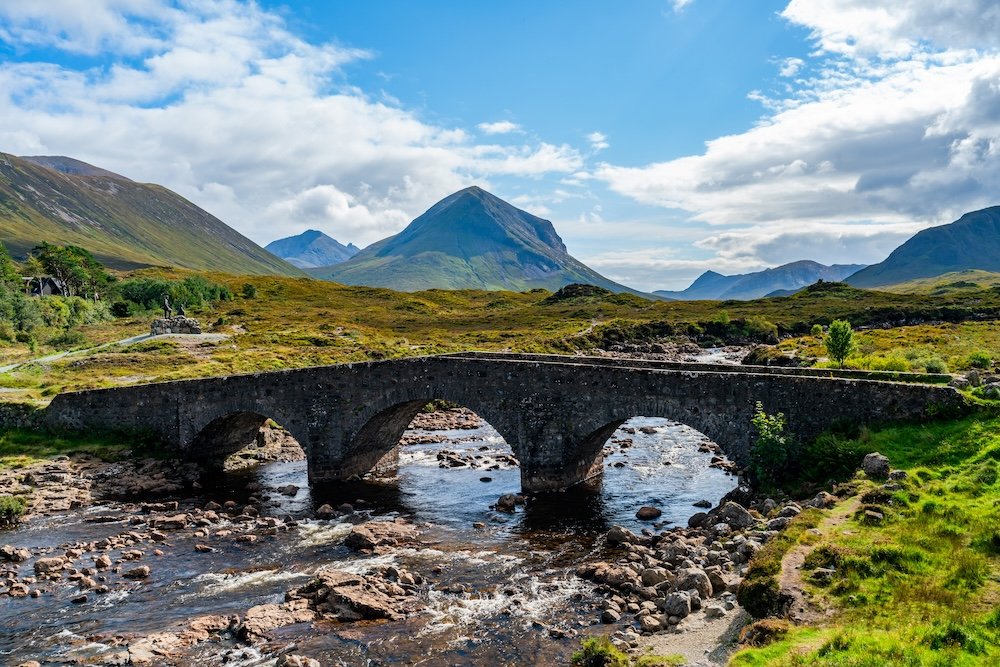
At Sligachan, under the Old Bridge, a woman in a rain jacket kneels on the rocks and dips her face into the river. Local legend says that if you keep your face in the water for seven seconds and then let it dry in the wind, you’ll gain timeless beauty. The water comes straight from the Cuillin, the steep black mountains above, and it’s so cold that seven seconds feels like a real challenge. The woman comes up, gasping and laughing. Nearby, the bar at the Sligachan Hotel fills with hikers fresh from the mountains, some of whom look especially timeless.
WHY THE ISLE OF SKYE
Skye is the biggest of the Inner Hebrides, a group of islands off Scotland’s west coast, and you can reach it by a free road bridge at Kyle of Lochalsh. Few places in Europe pack so much dramatic geology into a single day’s drive: volcanic spires, an active landslide, sea cliffs, and mountains that need ropes to climb. Gaelic culture is strong here, seen in bilingual road signs, crofting villages where families have farmed for generations, and a castle that’s been in one clan’s hands for around 800 years.
The main challenge is how popular Skye has become. The most famous spots now have paid parking, improved paths, and attendants, all funded by the many visitors who come in numbers the narrow roads weren’t built for. Skye is perfect for hikers, photographers, history fans, and couples who don’t mind the rain. Early risers get the best experiences.
THE ATTRACTIONS EVERYONE COMES FOR
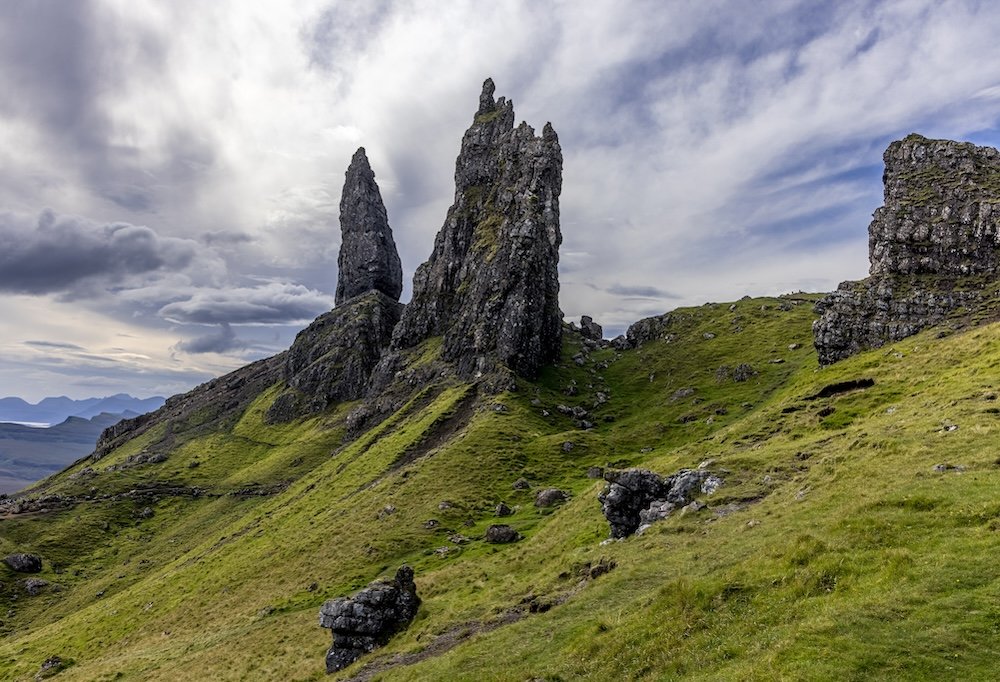
The Old Man of Storr is Skye’s most famous landmark—a chunky basalt pillar about 160 feet tall, sitting below the Storr cliffs, which rise to 2,359 feet and mark the highest point on the Trotternish peninsula. It’s about a 15-minute drive north of Portree. A steep but well-made path takes you to the Sanctuary, a grassy spot among the pinnacles, and the round trip takes between 1.5 and 3 hours. English mountaineer Don Whillans first climbed the Old Man in 1955 and said the crumbly rock was like porridge. Parking costs about £7 (around $9) for up to six hours. This spot is great for first-time visitors, photographers, and anyone after that classic, iconic view.
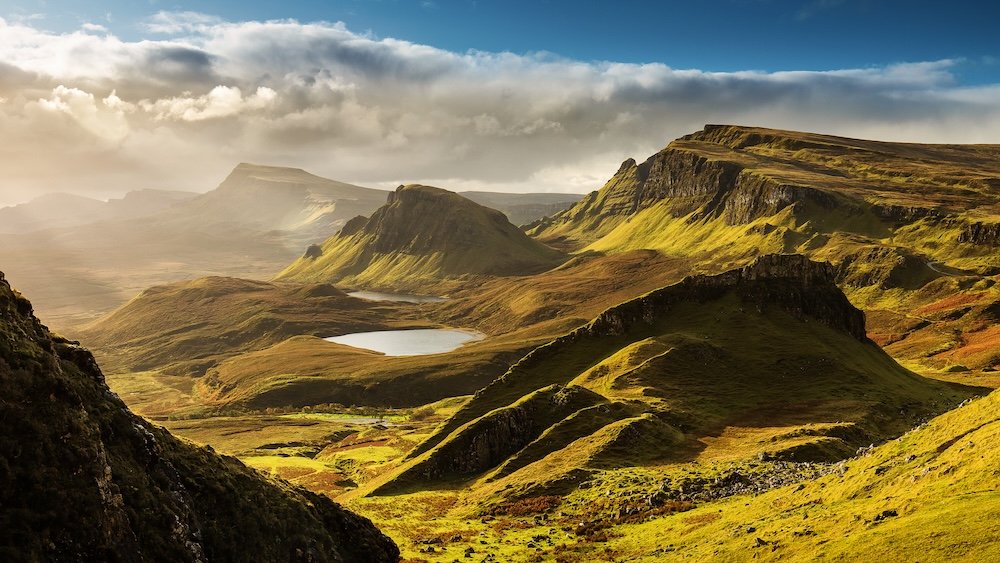
The Quiraing is about twenty minutes further north, near Staffin. It’s the part of the Trotternish landslip that’s still slowly sliding downhill, with dramatic cliffs and rock towers called the Needle, the Prison, and the Table. A four-mile loop walk starts at a car park on the single-track road between Staffin and Uig and takes two to three hours. The car park fills up early, so sunrise is a great time to visit. Hikers and landscape photographers will love it.
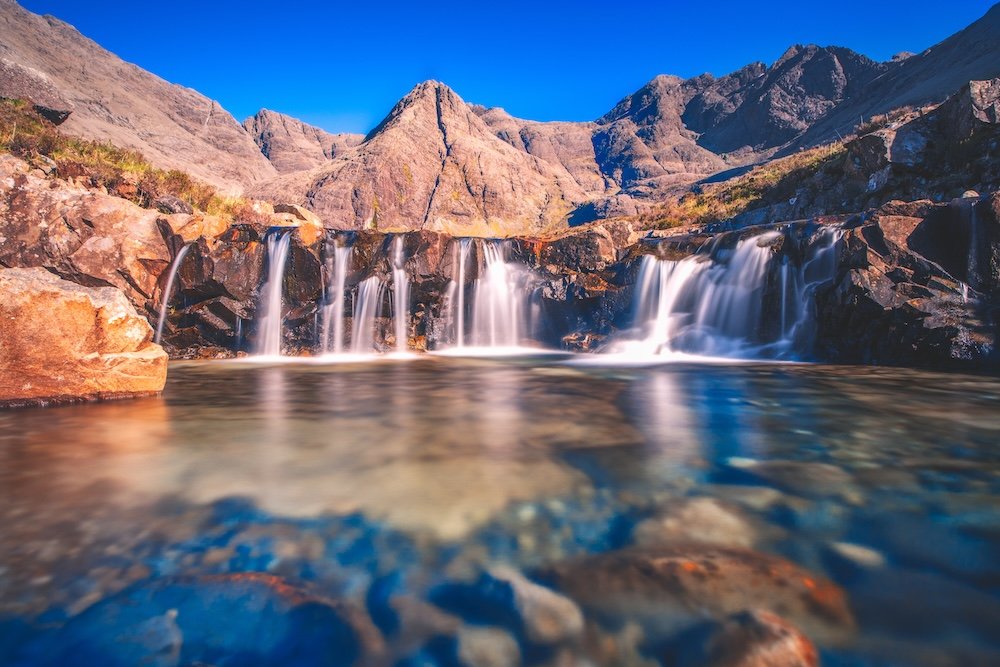
The Fairy Pools are in Glen Brittle, on the west side of the Cuillin. Here, a mountain stream tumbles through small waterfalls into bright turquoise pools. The first pools are about a 20-minute walk from a car park run by the Outdoor Access Trust for Scotland, which charges £8 per car (about $11) to help pay for paths and toilets. Some brave visitors swim, though the water stays cold all year. Families, wild swimmers, and anyone wanting beautiful views without a tough climb will enjoy it.
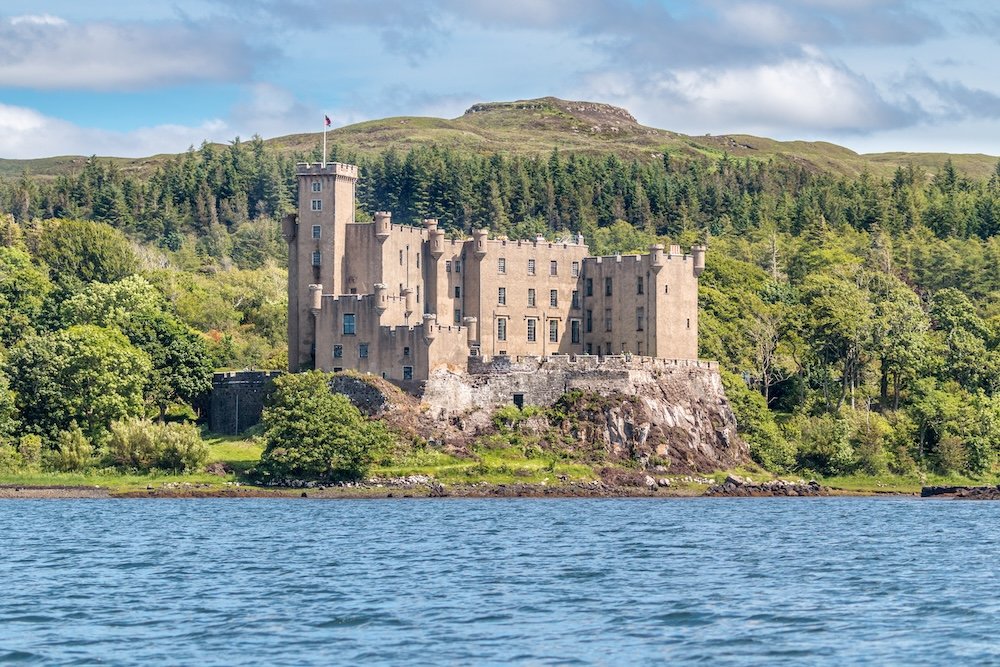
Dunvegan Castle and Gardens sit on a rock platform above a sea loch in the northwest. For nearly 800 years, it’s been home to the chiefs of Clan MacLeod and is often called Scotland’s oldest continuously inhabited castle. Visitors can explore rooms filled with portraits and clan relics, wander through five acres of gardens, and take a 25-minute boat trip to see a seal colony. The castle is open daily from April 1 to October 15. Entry is £17.50 (about $23), and the seal trip costs an extra £14 (about $19). History lovers, garden fans, and families will all enjoy it.
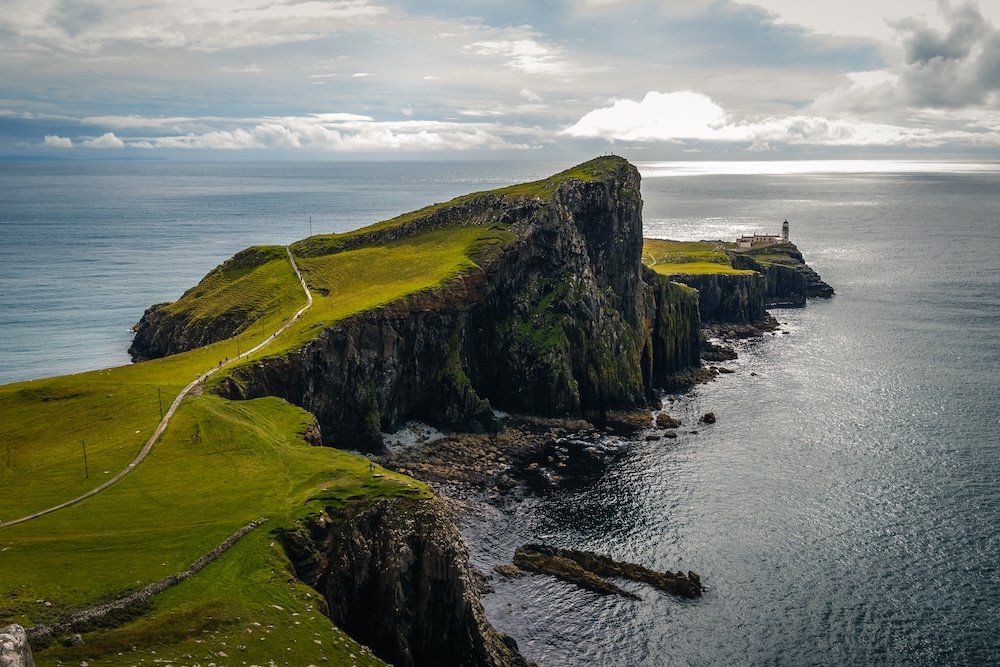
Neist Point sits at the island’s western tip. A concrete path, about three-quarters of a mile long, leads up and down cliffs to a white lighthouse designed by David Alan Stevenson, cousin of writer Robert Louis Stevenson. The lighthouse was first lit on November 1, 1909. On clear evenings, you can see the Outer Hebrides on the horizon, and sunset watchers gather in quiet, windblown groups. Visiting is free. Photographers, couples, and anyone chasing sunsets will love it.
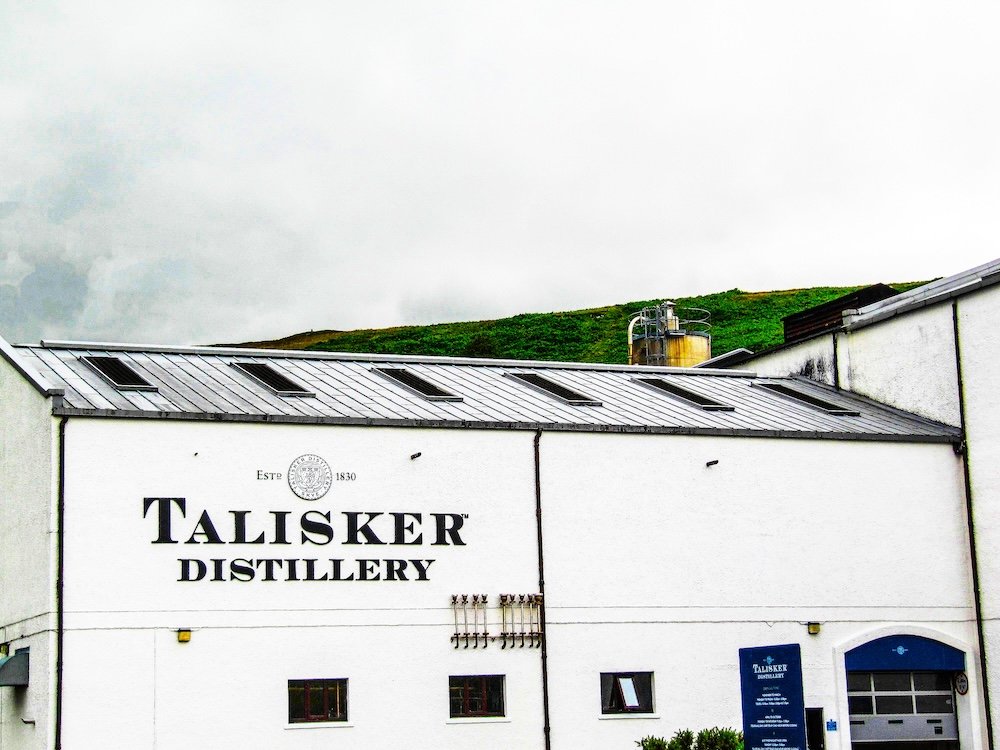
Talisker Distillery, in Carbost on Loch Harport, was founded in 1830 by the MacAskill brothers and is Skye’s oldest working distillery. It makes a single malt known for its peppery, sea-salted flavor. The one-hour Distillery Tour and Tasting starts at £22 (about $29). You’ll need to book ahead, leave children under eight at home, and note that the distillery closes for maintenance for a few weeks each autumn. Whisky fans and anyone wanting to escape the rain will enjoy it.
PORTREE AND WHERE TO EAT
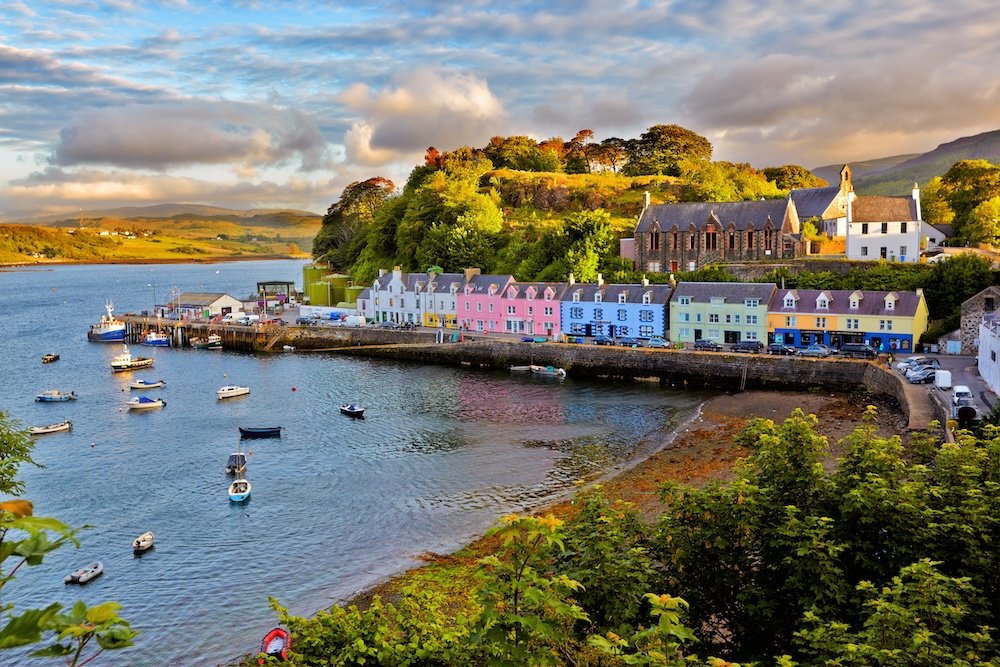
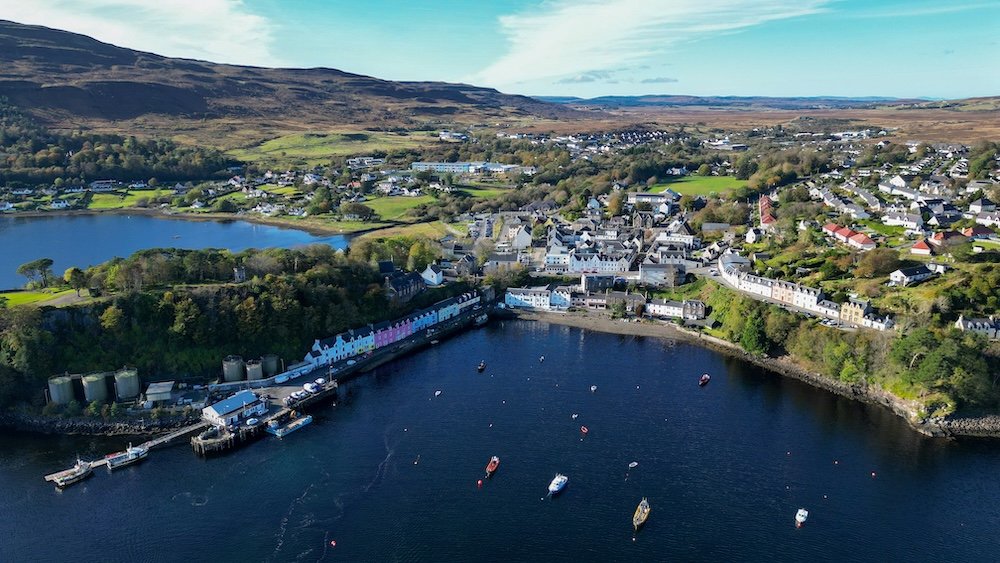
Portree, the main town, curves around a harbor lined with pink, blue, and yellow houses. The town square is the hub for buses, groceries, and fuel, making Portree the natural base for exploring the island’s north.
Good starting points are Scorrybreac, a cozy restaurant above the harbor run by Calum Munro, a Skye chef who forages one day a week and offers modern Scottish tasting menus; reservations are recommended. The Oyster Shed, along the lane from Talisker in Carbost, is a simple counter where Paul McGlynn, an oyster farmer who rebuilt after disease destroyed his beds in 2011, sells oysters, lobster, and smoked fish for outdoor consumption. For a special evening, the Three Chimneys in Colbost, near Dunvegan, has served local seafood in a whitewashed croft house since the mid-1980s; dinner menus cost well over £100 per person (about $134).
THE DAY THE WOMEN OF BRAES SENT THE POLICE PACKING
For most of the 19th century, people who did not live on the island determined Skye’s fate. The Highland Clearances, which removed tenant families to make way for large sheep farms, left townships across the island deserted. At Braes, a group of crofting*1 townships south of Portree, the issue in question was Ben Lee, a hill the crofters had used for grazing for many generations until the landowner leased it to a sheep farmer in 1865. When it came time to renew the lease, the landlord, Lord Macdonald, was abroad in Nice.
The crofters did not pay their rent. On April 7, 1882, a sheriff’s officer left Portree with eviction notices; the people of Braes surrounded him and made him burn the documents on the spot. Twelve days later, on a rainy morning, William Ivory, sheriff of Inverness-shire, arrived with about 50 police officers from Glasgow. Many men were away fishing for herring, so women led the resistance, and arrests were made despite a heavy shower of stones. Newspapers were delighted by the incident. After the Battle of the Braes, a royal commission was appointed, and in 1886 the Crofters’ Holdings Act passed, giving crofters security of tenure for the first time. Lord Macdonald then returned to Braes to collect his rent.
THE FLAG WITH ONE WISH LEFT
The most renowned item at Dunvegan Castle is a square piece of faded silk, about 18 inches, known as the Fairy Flag. According to clan legend, a fairy bestowed it upon a MacLeod chief and said that when it was waved in a time of great need, it would bring about three rescues. Traditionally, the flag has been used twice, and the family now has one wish left, along with great pressure to use it wisely. Textile experts have proposed that the silk originated in Syria or Rhodes, and the castle claims that it dates from between the 4th and 7th centuries. During the Second World War, members of the clan are said to have carried an image of the flag for good luck. Today it is displayed in the drawing room, beneath glass, and is waiting.
THE AN CORRAN BEACH THREE-TOED FOOTPRINTS
At An Corran Beach, next to the slipway in Staffin, you can see three-toed footprints, some about 20 inches long, on the exposed sandstone ledge at low tide. A large meat-eating dinosaur related to Megalosaurus made them around 165 million years ago, and Catherine Booth, a resident, discovered them in 2002. Sand and seaweed often cover the prints in summer, so check a tide table and be patient. The Staffin Museum: Dugald Ross, the son of a crofter from Staffin, inspired Skye to search for such finds. As a teenager in the early 1970s, he heard his father mention a circle of stones called the Money Stone as he came home from cutting peat. The next day, he returned and found six Neolithic arrowheads. At nineteen, he opened a museum. In the early 1990s, he built the current Staffin Museum by hand from a ruined schoolhouse and filled it with dinosaur bones, footprints, and crofting tools—almost all of which he found himself. Self-taught, he won the Mary Anning Award from the Palaeontological Association in 2016 and received an honorary doctorate from the University of Edinburgh in 2024. He died in 2025. The museum has limited seasonal hours, so check locally before visiting. Families with dinosaur-loving kids, fossil hunters, and solo project fans will enjoy it.
PRECAUTIONS WORTH TAKING
American visitors need to get an Electronic Travel Authorization before flying to the UK. It costs £20 (about $27) if you use the official GOV.UK website or app—other sites charge more for the same thing. On Skye, the most common mistake is driving. Many roads are single-track with passing places; pull into one on your left to let oncoming or faster cars go by, and never park there, even for a photo. Wild camping is allowed in small numbers if you leave no trace, but you can’t stay overnight in car parks at major attractions.
Weather is the main risk, since conditions on the Cuillin and Trotternish ridge can change quickly. The Old Man of Storr sits below cliffs where rock falls can happen. Bring waterproof clothing in any season. From late spring to summer, the Highland midge, a tiny, hungry biting insect, comes out on still, damp evenings, so a head net is useful. After walking through bracken, check yourself for ticks.
WHEN TO GO
In May and June, days are long, lambs graze the hillsides, and dry weather is fairly likely, with temperatures in the low to mid-50s °F. July and August are the warmest months, with temperatures near 59°F, but they’re also the busiest—car parks fill by mid-morning, and rooms book up months ahead. In September and early October, the light softens and crowds thin out, while most attractions stay open, though it gets wetter. From November to March, daylight is short, many seasonal businesses close, and temperatures hover around the mid-40s. Famous viewpoints are almost empty, and snow on the Cuillin gives the island a carved look.
At Sligachan in the late afternoon, another visitor leans down by the river. Clouds now hide the Cuillin mountains, and the water is just as cold as before, while someone nearby counts to seven out loud.
1* Crofting is the Scottish Highlands and Islands’ particular way of holding land. It is part farm and part tenancy agreement, and it amounts to its own economics and a whole way of life. A croft is a small agricultural holding, often just a few acres of “in-bye” land near the house for hay, potatoes or a few cattle. With it comes a share of the common grazings, the open hill land that a township’s crofters work together for their sheep. Crofts were rarely meant to support a family on their own, so crofters long fished, wove tweed, cut peat, kept lighthouses, or carried the post alongside the land. After the Highland Clearances, crofters had no secure claim to their homes. That changed in 1886, when protests like the Battle of the Braes on Skye pushed Parliament to pass the Crofters’ Holdings Act and give them security of tenure. The system survives today under its own regulator, the Crofting Commission, with more than 21,000 crofts on its register. Most are still tenanted, many by families who have worked the same ground for generations. As the old Highland joke has it, a croft is a small piece of land entirely surrounded by regulations.