


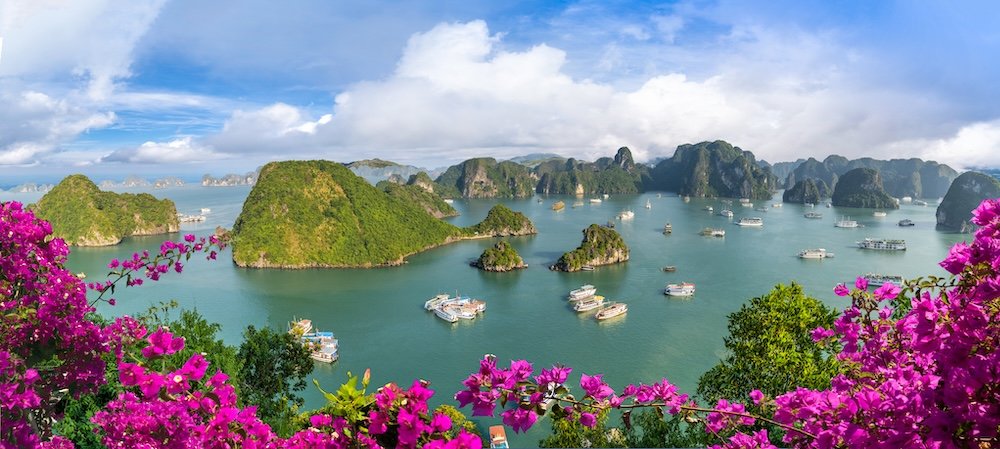
In the Gulf of Tonkin off Vietnam’s northeastern coast, more than 1,600 limestone islands rise straight from the water. This is Ha Long Bay, a UNESCO World Heritage Site and one of Southeast Asia’s most visually arresting landscapes.
The name translates to “Descending Dragon,” drawn from legend: a celestial dragon, sent to defend Vietnam from invaders, entered the sea and left its body behind as the karst islands scattered across the bay. Whether myth or metaphor, it fits.
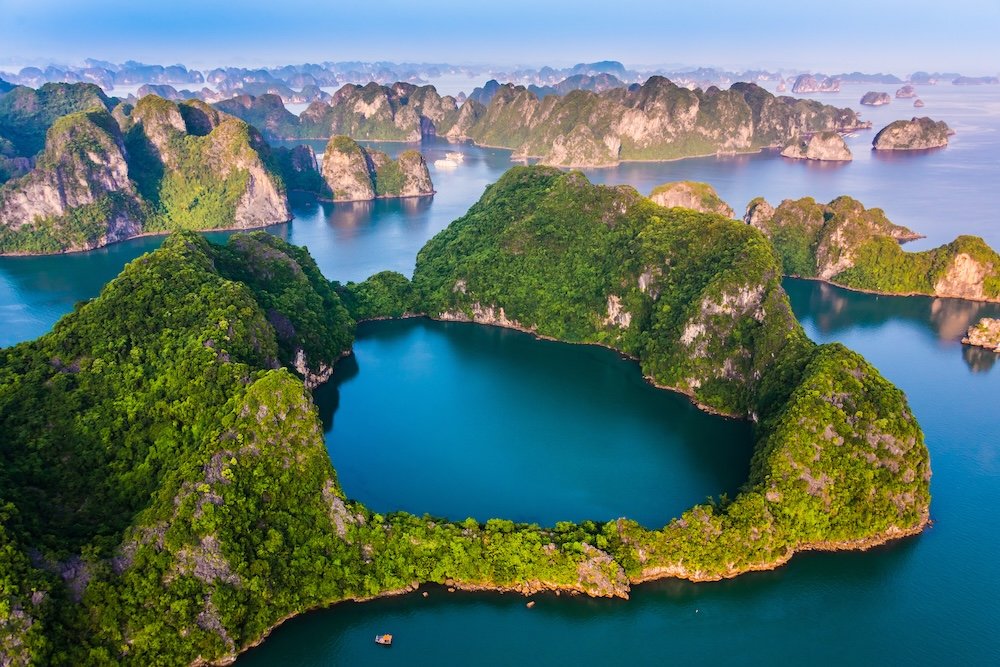
The Karst Islands define the bay’s identity. Formed over 500 million years of geological pressure and erosion, the limestone formations cluster in dense groupings, their sheer faces colonized by jungle vegetation and hollowed by wind and tide. Some bear names given by fishermen like Incense Burner Island, Fighting Cock Island, for silhouettes that reward a second look from the water.
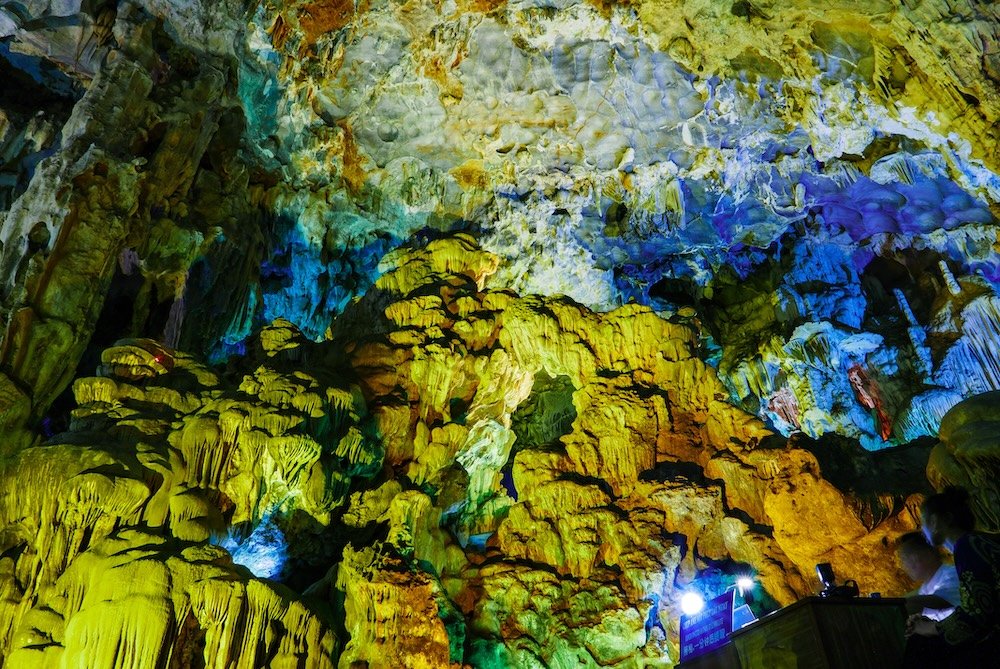
Hang S?ng S?t (Surprise Cave) is the bay’s most visited interior. Three successive chambers open into each other, the largest large enough to hold thousands of visitors and lit in ways that are theatrical without apology.
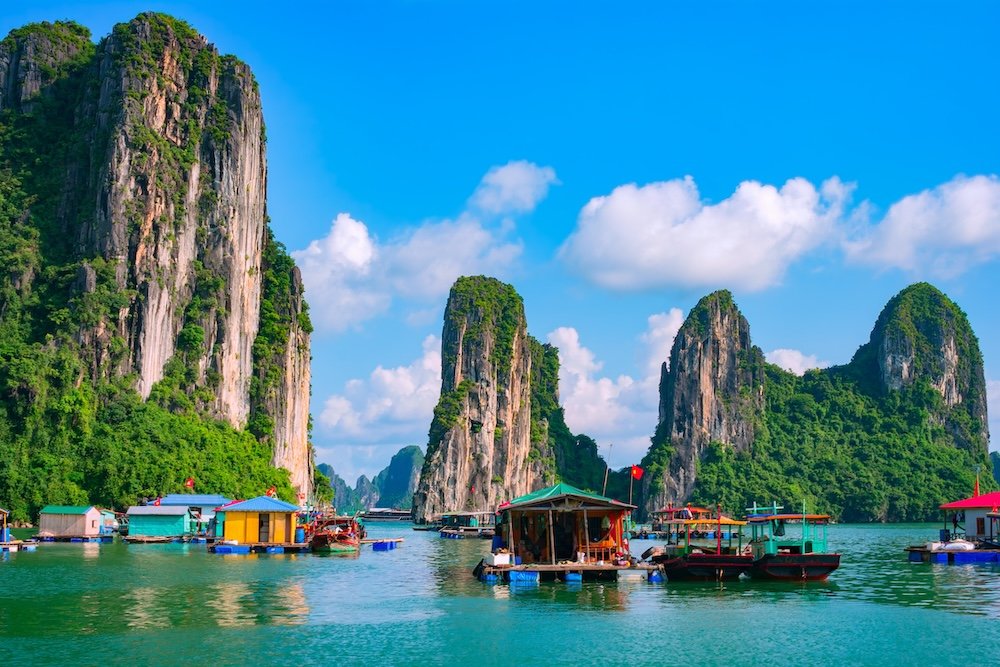
The Floating Villages represent a way of life that has existed in the bay for generations. Families built homes on the water, raised fish in bamboo cages below their floors, and organized entire communities around the rhythms of the sea. Vietnamese government resettlement programs have reduced these populations significantly in recent decades, but villages like C?a V?n remain quieter now and more reflective because of it.
The Junk Boat Cruise – The overnight format gives the bay room to shift moods: hazy mornings, golden late afternoons, the silence of the water after other boats have gone. Vessels now range from basic to genuinely luxurious, with the upper tier offering private balconies, onboard spas, and itineraries designed around the bay’s quieter corners rather than its most photographed ones.
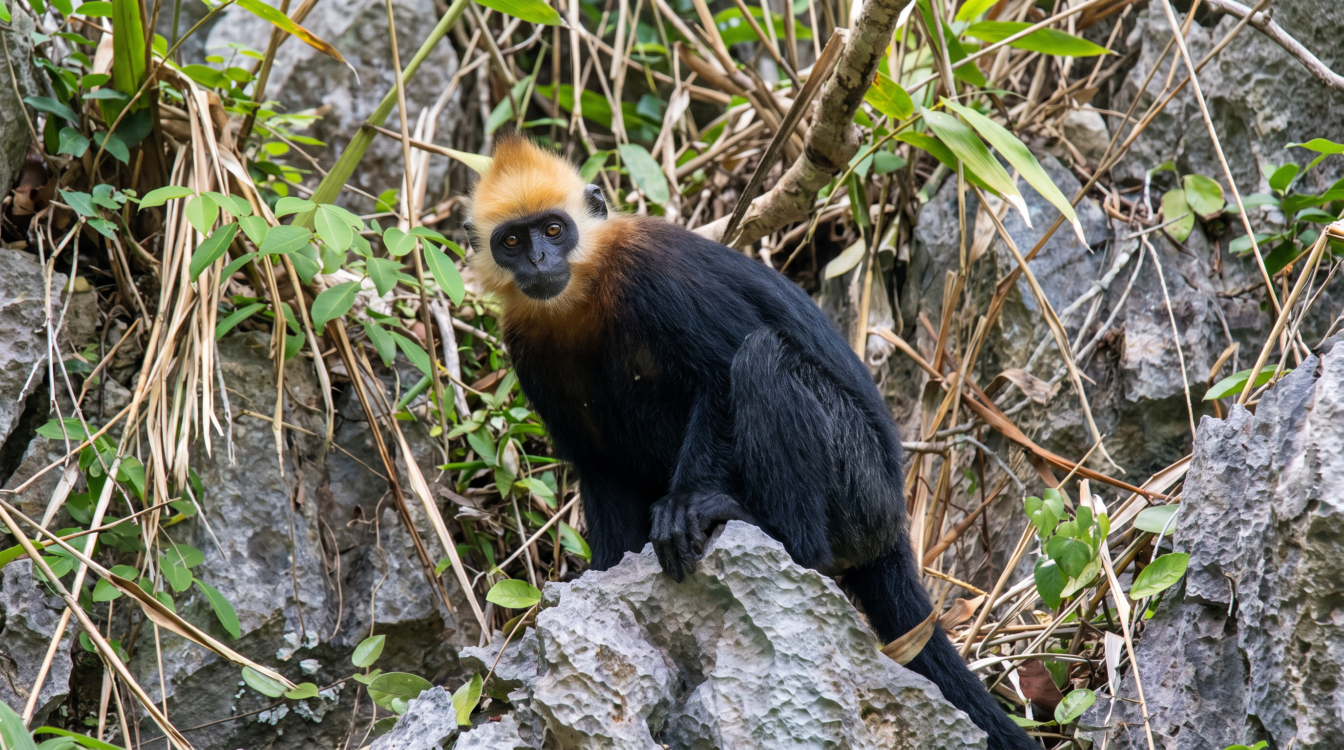
Fewer visitors ever hear about the bay’s other holdout, and it is not in the water. Cat Ba Island, at the bay’s edge, is the only place on earth the Cat Ba langur exists, a black bodied primate with a head and shoulders the color of egg yolk and a tail nearly three feet long, longer than its own body. Poachers hunted it hard enough in the 1970s and ’80s, largely for traditional medicine, that the population had fallen to around forty animals by 2003. A conservation project launched at the turn of the millennium put an end to the hunting and expanded the national park to cover the langurs’ remaining cliffside territory, terrain too sheer for most predators, including, eventually, people. The population has crept back up past eighty since
The bay’s more recent history is smaller in scale and harder to romanticize. Families lived afloat here for generations, in fishing villages built entirely on the water, and Cua Van was among the largest of them until June of 2014, when the provincial government relocated 123 households, more than 500 people across seven villages altogether, into new housing nearly twenty miles away on the mainland.
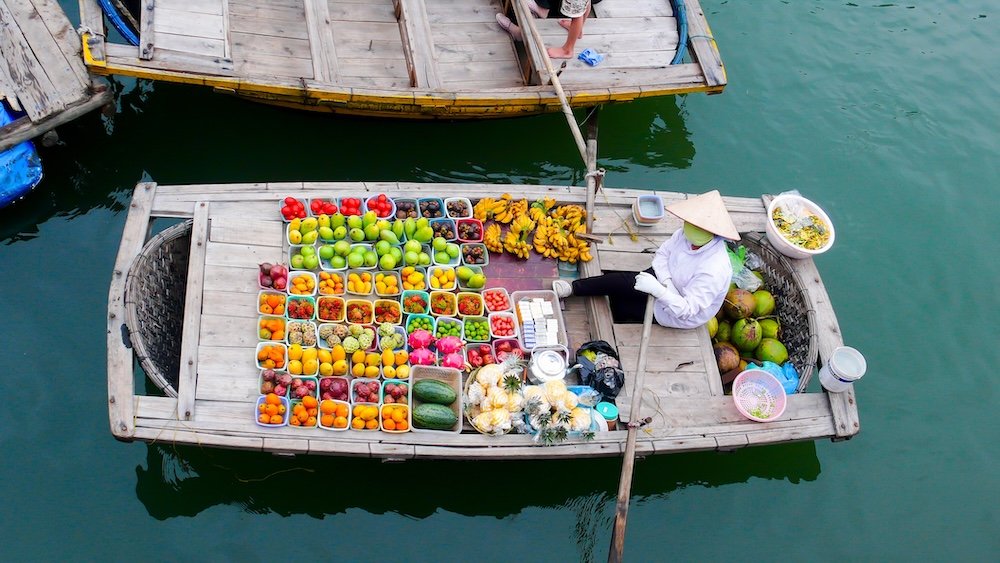
The official reasoning was environmental protection and better access to schools and clinics, and there is truth in both, since floating communities without sewage systems were, by any honest account, wearing on a UNESCO site. What remains today is closer to a museum, with a rotating shift of tourism workers who spend stretches of twenty-five days living out on the water so Cua Van’s floating culture center has someone to row the sampans, and the boats are genuinely lovely to watch glide between the towers.