


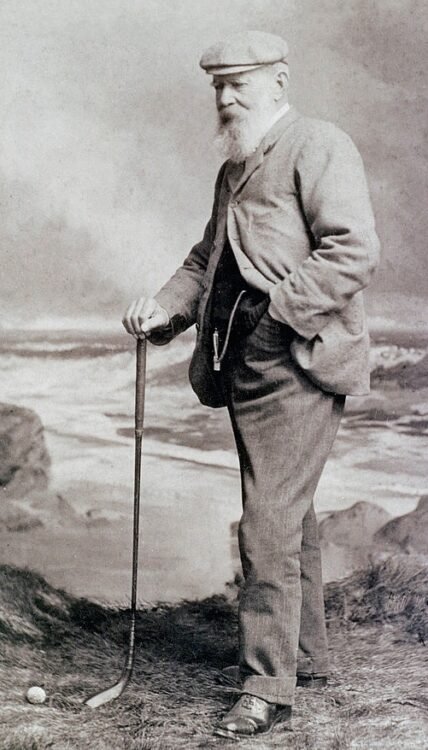
The wind off the North Sea does not consult anyone before it changes direction, and at Cruden Bay it can shift three times over a single approach shot. A caddie there once told me, without much ceremony, that the course had been designed by Old Tom Morris and was being finished by the weather, and that the weather was still not done with its work. You learn to play around it, or you don’t play golf in Scotland for very long. That is the country’s real pitch to North American golfers, more than any museum plaque or “Home of Golf” tourism slogan: the weather and the ground itself are the opponents, and have been for roughly six hundred years.
Golf was already being played at St Andrews by the early 1400s, close enough to the town that in 1457 King James II banned it outright, worried that young Scotsmen were skipping archery practice to chase a feathery ball around instead. The ban held for forty-five years, until King James IV, who apparently liked golf more than he liked enforcing his own laws, lifted it in 1502 and started playing himself. By 1744, a group calling itself the Honourable Company of Edinburgh Golfers had written the first known rules of golf, thirteen articles covering everything from lost balls to whose turn it was to tee off, a full decade before St Andrews got around to writing its own version. Scotland did not invent the idea of hitting a ball toward a hole. It invented the idea of writing down what happens when you do it wrong.
The game’s most consequential afternoon came in 1860, at Prestwick, on the Ayrshire coast. Eight professional golfers played thirty-six holes for a red Morocco leather belt, and Willie Park of Musselburgh beat Old Tom Morris by two strokes to win the first Open Championship. Prestwick went on to host the Open twenty-four times, more than any course except St Andrews, before the crowds outgrew the layout. The final one, in 1925, drew an estimated fifteen thousand spectators to watch Jim Barnes, a Cornishman who had emigrated to the United States, take the title. That is a lot of people to fit around a course barely wider than a country lane, and Prestwick has never hosted the Open since. Some venues get retired for lacking history. Prestwick got retired for having too much of it, and not enough room to hold the audience it created.
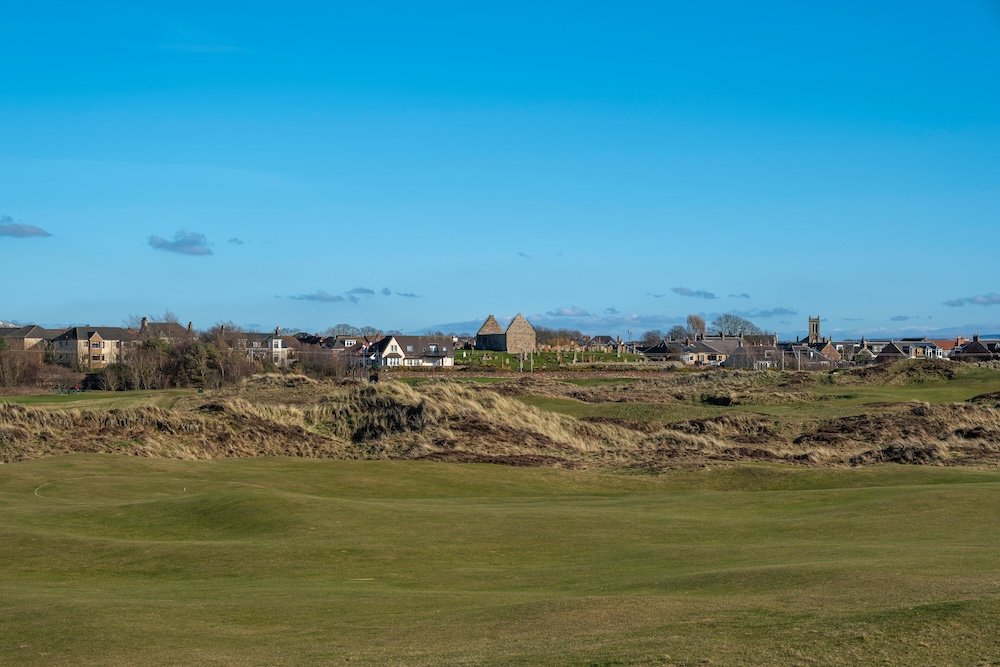
Americans have been showing up ever since, in numbers that would surprise a country of Scotland’s size. The United States is by far Scotland’s largest overseas visitor market for golf, accounting for roughly a quarter of all overnight golf visitors, who spend, on average, well over three hundred pounds a day doing it. Part of the draw is the game’s origin story, but part of it is quieter than that: an architect named Donald Ross grew up in Dornoch, apprenticed under Old Tom Morris at St Andrews, and worked as Royal Dornoch’s first golf professional before sailing to America in 1899 with two dollars in his pocket. He went on to design Pinehurst No. 2 and hundreds of other American courses. A large share of the golf holes played every weekend in the United States trace their lineage back to a man who learned the game on a strip of Highland linksland most Americans have still never heard of.
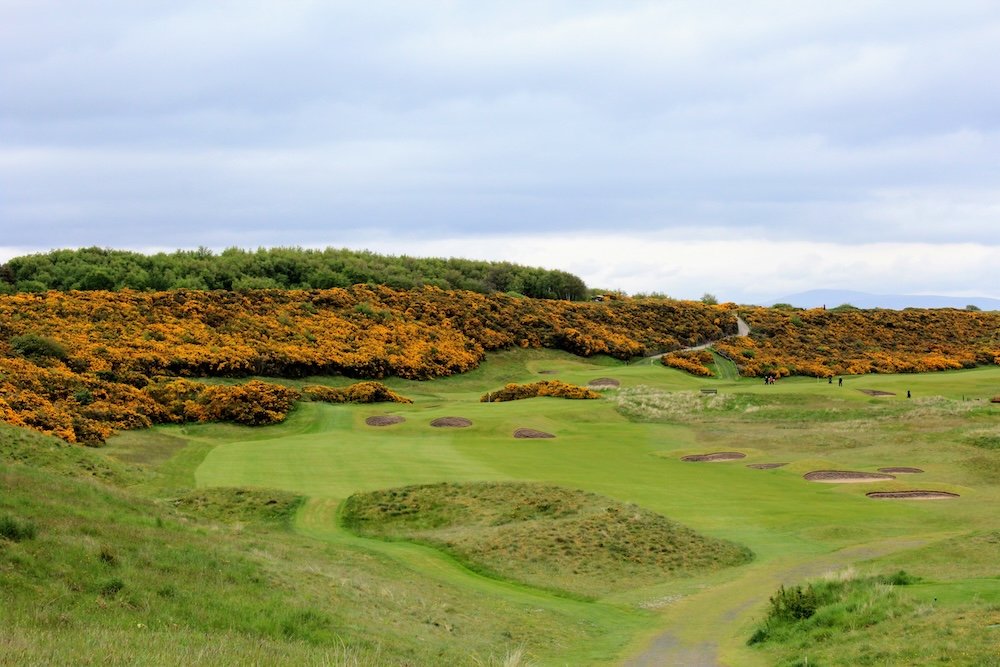
They should hear of it. Royal Dornoch, founded in 1877 and granted royal status in 1906, sits far enough north that it has never needed a rope line or a marshal to keep its character intact. Its remoteness is the whole point.
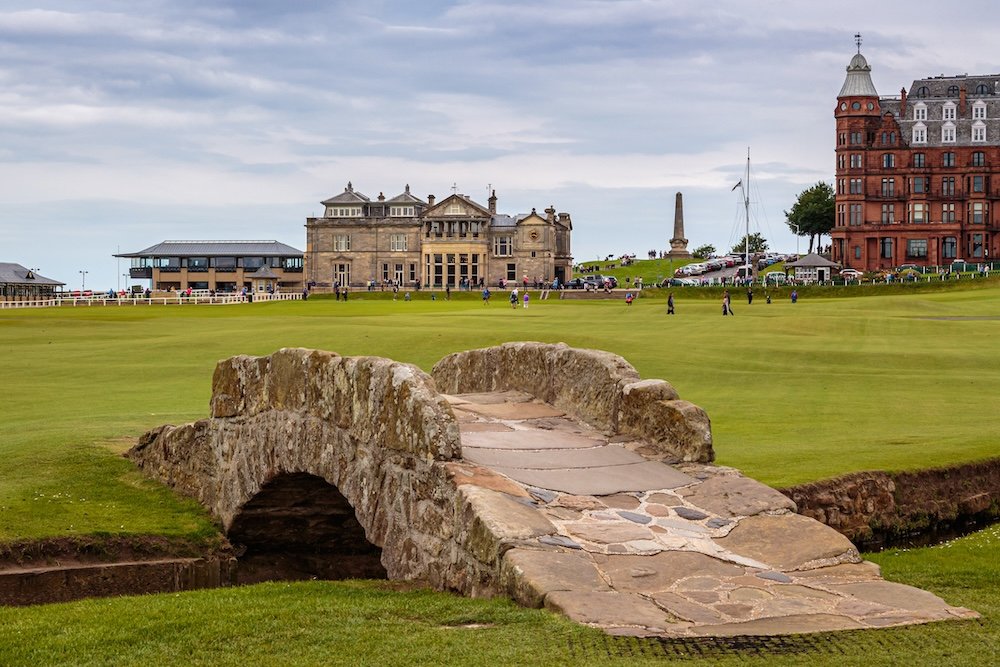
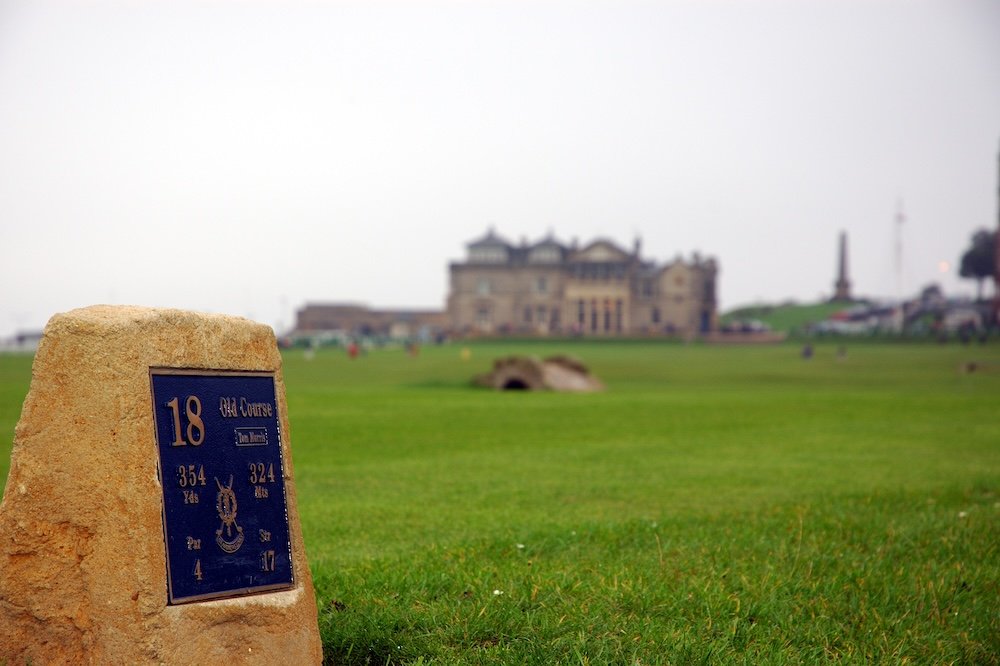
St Andrews remains the obvious starting point, and rightly so. The Old Course has hosted the Open thirty times, more than any other course on the rotation, and it comes with the Swilcan Bridge, originally built centuries ago for shepherds moving livestock rather than for golfers posing for photographs, and the Hell Bunker, which has ended more good rounds than bad weather has. Seven courses share the linksland at St Andrews, so a golfer who cannot get a tee time on the Old Course still has six other legitimate rounds to play rather than a consolation prize.
Muirfield, home to the Honourable Company since 1891, has hosted sixteen Open Championships and only opened its membership to women in 2017, ending a 273-year restriction. Visitor access remains limited but real. Gleneagles, in Perthshire, offers something closer to a resort experience: the King’s and Queen’s Courses, both designed by James Braid, the King’s opening in 1919, alongside the Jack Nicklaus-designed PGA Centenary Course, which hosted the Ryder Cup in 2014. West Links in North Berwick, opened in 1832 and still publicly accessible, gave the world the Redan, a blind par-3 template so influential that architects have been copying it, in Japan and everywhere else, for over a century.

Loch Lomond breaks the pattern entirely: a 1993 Tom Weiskopf and Jay Morrish design on the grounds of Rossdhu House, a Georgian manor where Mary, Queen of Scots once stayed, membership largely by invitation, visitor access rare enough to feel earned when it happens. Cruden Bay, north of Aberdeen, opened in 1899 with an exhibition match won by Harry Vardon and remains open to any visitor willing to let the North Sea wind rearrange their swing.
The caddie at Cruden Bay was right, in the end. The weather is still not done with its work, and Scotland is not done with its golf.