


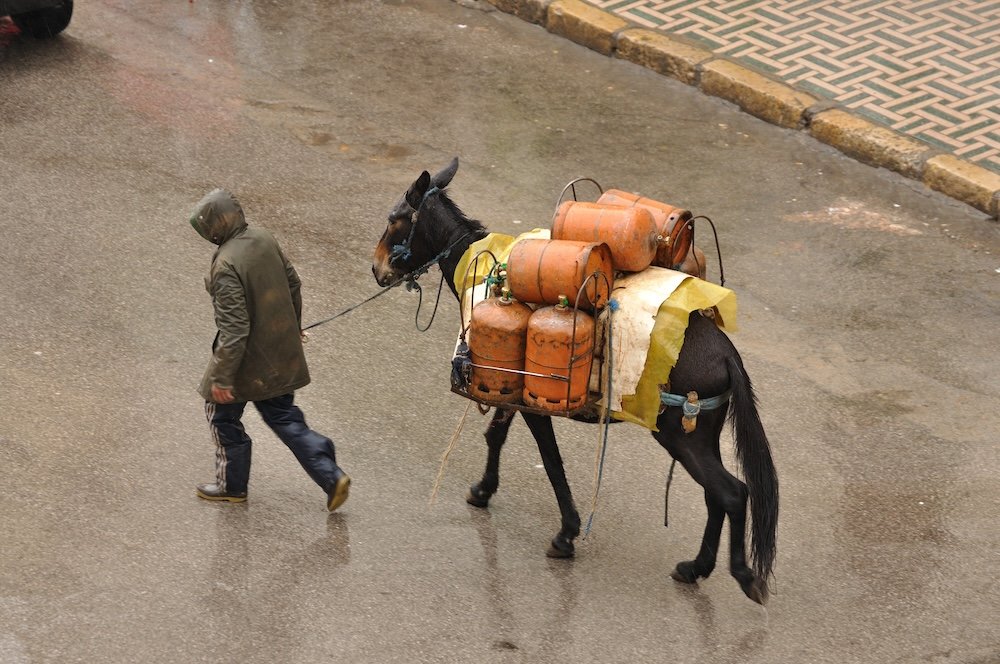
The first word visitors to Fez pick up is not “hello” or “thank you,” but rather “balak,” meaning “watch out” or “make way.” When a mule with propane cylinders passes, its driver apologizes, and the lane closes up again behind him as if it were water. Even though Fez has been granting travelers space for twelve centuries, it still expects them to give way to the donkey. Marrakech is louder and Chefchaouen bluer, but Fez is where Morocco’s medieval way of life never stopped long enough to turn into a museum. It is a living city, not one that has been restored.
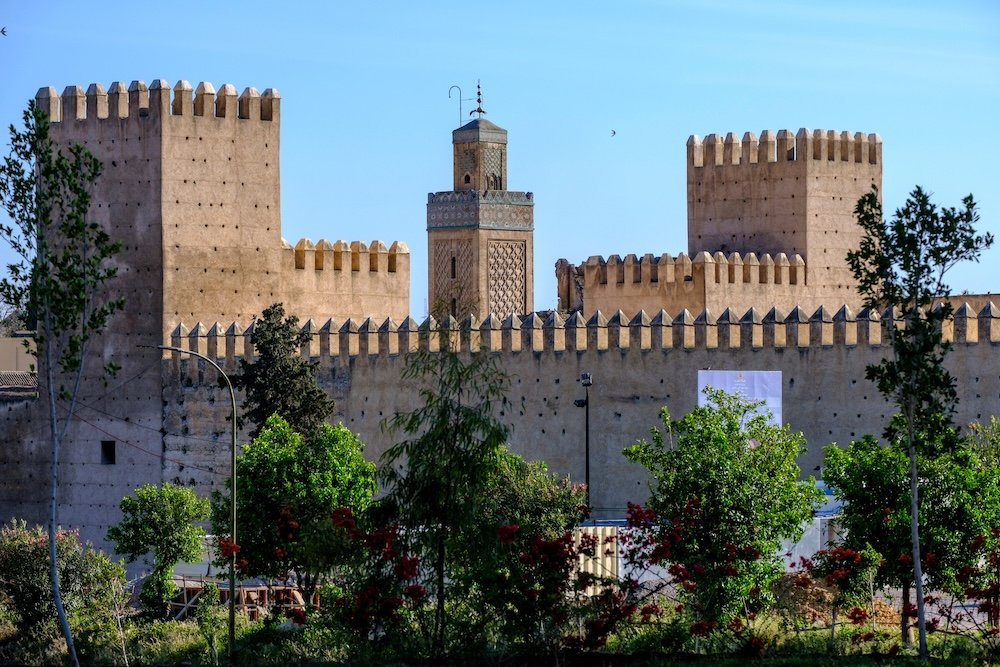
Fez was founded as the result of a family feud. Idris I established a settlement on one side of the river in 789, and his son, Idris II, founded another town on the opposite side around 809; the two walled areas then lived as difficult neighbors, often battling each other until they eventually merged in 1070. The Medina of Fez was listed as a UNESCO World Heritage Site in 1981 and became Morocco’s first site to receive this designation; it is one of the world’s largest and best-preserved medieval walled cities and is often cited as one of the largest car-free urban areas on the planet. “Medina” is the Arabic word for “city” (madīna). In North Africa, it has come to mean a city’s old, walled historic quarter, as opposed to the modern districts built around it. So “the Medina of Fez” means “the old city of Fez.”
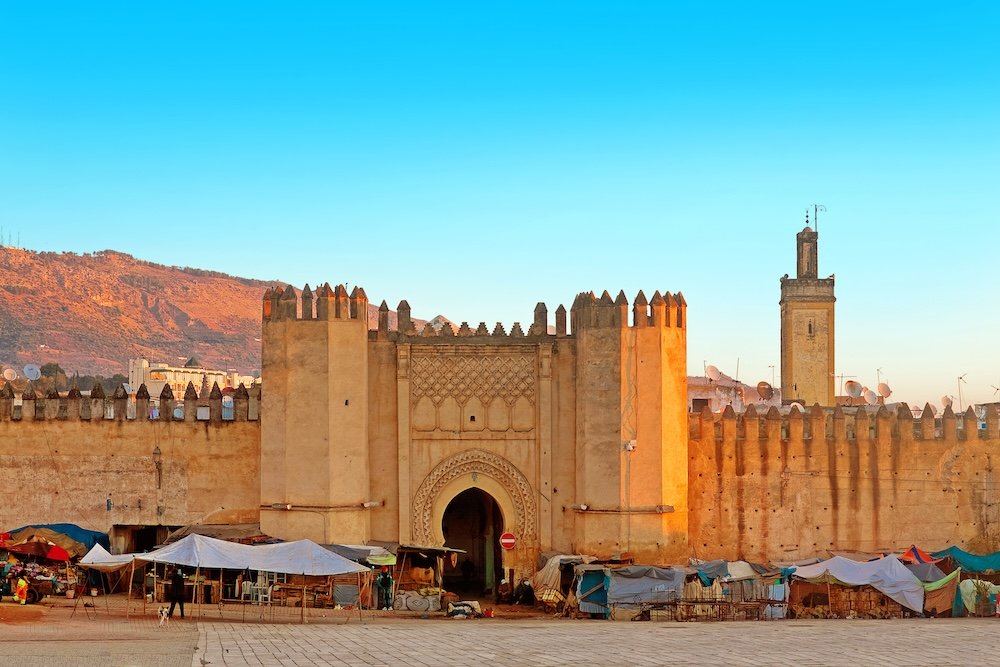
The distinction became sharper under French rule, from 1912 to 1956. Instead of rebuilding the old quarters of Moroccan cities, the French built new European-style districts next to them, called Villes Nouvelles (“new towns”). Fez today has three parts:
- Fes el-Bali (“Old Fez”) is the original walled city, founded in the late 8th and early 9th centuries. It is what most people mean by “the medina,” with its maze of alleys, tanneries, madrasas, and the Qarawiyyin.
- The Marinid dynasty built Fes el-Jdid (“New Fez”) in the 1270s next to the old city. It holds the Royal Palace and the Mellah, the historic Jewish quarter. It is “new” only by Fez standards: it is about 750 years old.
- The Ville Nouvelle is the French-built district of wide boulevards, cafés, the train station, and most modern hotels.
Although its most important founder never became a ruler, Fatima al-Fihri, who was the daughter of a merchant from Kairouan in what is now Tunisia, invested her inheritance in a mosque that was founded in 859 according to the medieval chronicle Rawd al-Qirtas; this mosque later developed into al-Qarawiyyin, a university that has been recognized by both UNESCO and Guinness World Records as the world’s oldest existing and continuously operating university. So the world’s oldest university began when one woman decided how to spend the money her father left her. During the Marinid sultans in the 13th and 14th centuries, Fez reached its height as a center of scholarship and trade, and most of the excellent buildings tourists see today date from those two prosperous centuries.
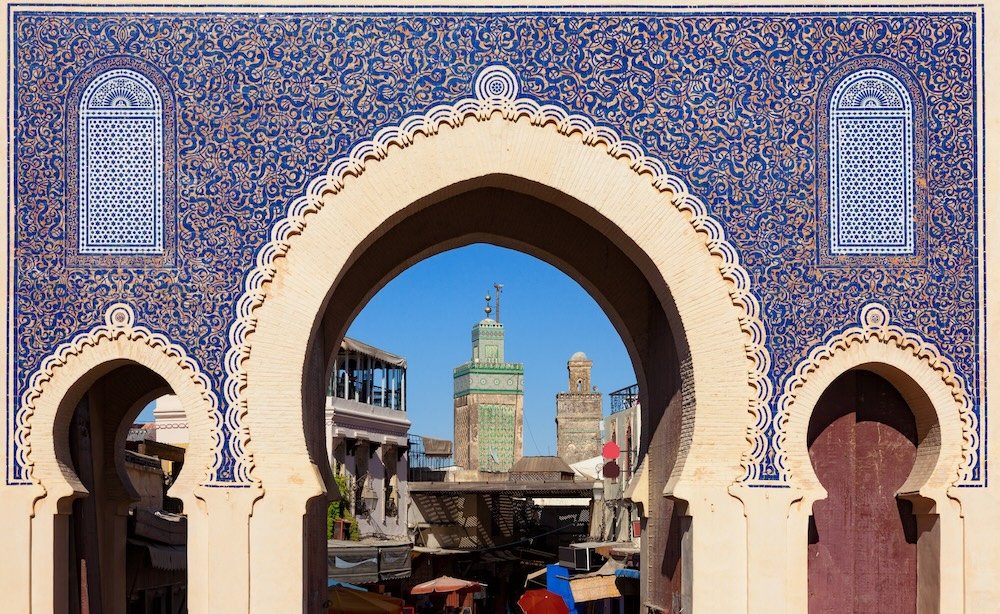
Most initial visits start at Bab Boujloud, with the outward-facing side tiled in blue and the inward-facing side in green. The building looks old but, in fact, it isn’t; the French authorities, under protectorate rule, constructed it in 1913, and rather strangely, its doors seem to lock from the outside.
A little way along Tala’a Kebira, the main road of the medina, the Bou Inania Madrasa (1350 to 1355) is one of the rare religious buildings in the city which non-Muslims are allowed to enter; its courtyard features zellij tilework together with carved cedar and stucco and illustrates the medina at its most refined. Opposite the lane hangs the city’s most mysterious relic. The Dar al-Magana was a water clock presented on May 6, 1357, for Sultan Abu Inan Faris; every hour a small door would open, and a metal ball would drop into a brass bowl. The device has been silent for centuries, and no one is completely certain how it functioned. Its thirteen wooden beams still stick out above the shoppers, making it a timepiece that has outlasted its own instruction manual.
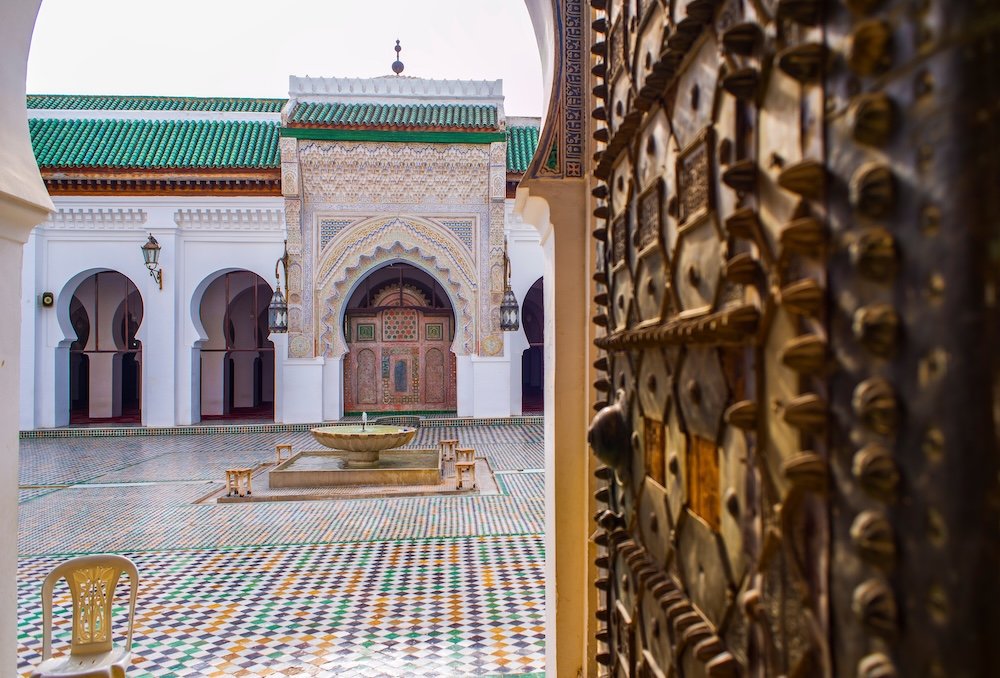
At the far end of the street, the Al-Attarine Madrasa (1323 to 1325) is smaller and, in the opinion of a great many visitors, even more exquisite. Although the Qarawiyyin is closed to non-Muslims, its open doorways offer views into the courtyard.
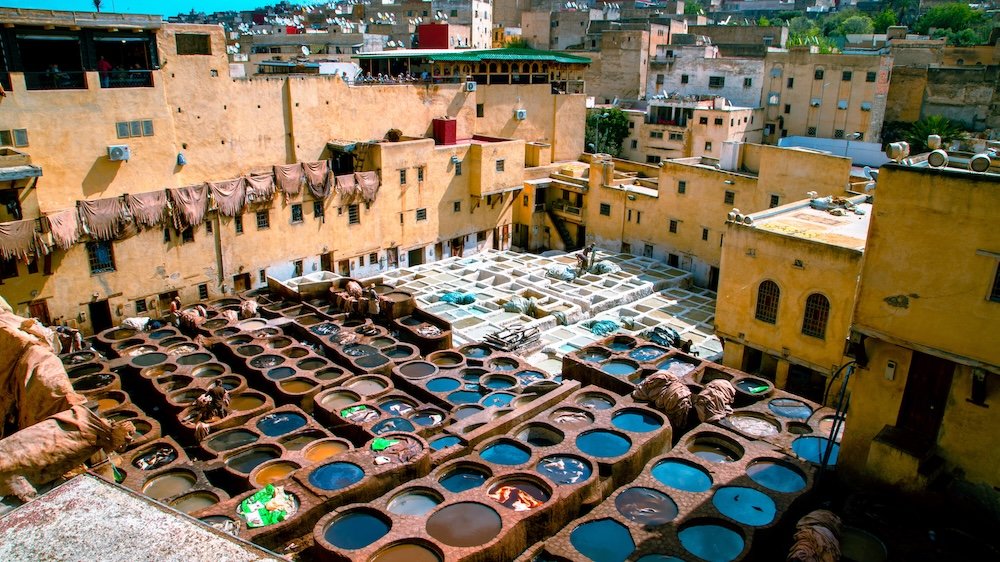
Chouara, the largest tannery, has operated since at least the 16th century and was renovated in 2016. The hides are soaked in stone vats containing quicklime and pigeon droppings before being transferred to pits of color, and visitors view the process from the terraces of the neighboring leather shops. At the entrance, a person will give you a sprig of fresh mint. Take it; it is not simply a garnish but a way to counter the strong odor of the tanneries.
Next to the shrine of Moulay Idris II, in a square that is shaded by trees, is the site of the Maristan of Sidi Frej. The Marinids established it in the late 13th century and cared for the sick and the mentally ill until 1944; in the 15th century, an Andalusian doctor began using music as therapy there. Because of numerous generations of charitable gifts, the maristan also tended injured storks and cranes until they recovered. It is rare for any city to have a medical tradition so generous as to include the birds on the rooftops.
Past the old walls lies Fes el-Jdid, which contains the Royal Palace, although this is closed to the public and is well known for its shiny brass gates, and the Mellah as well. In the historic Jewish district, the 17th-century Ibn Danan Synagogue has been carefully restored. At sunset, the hillside Marinid Tombs offer a traditional view over a wide expanse of roofs and minarets.
Fez is often called Morocco’s religious and traditional capital, and this description holds. The medina is still arranged by trade: at Place Seffarine, coppersmiths beat out trays and lanterns; slipper makers are a few lanes away; and the call to prayer echoes through the area five times a day. During their stay, visitors often take guided tours, attend cooking classes, experience the steam from a local hammam, and carefully consider which pair of leather babouches they actually want.
The table is there for a good reason. Fez is regarded as the heartland of pastilla, a pastry made with pigeon or chicken, eggs, and almonds, finished with powdered sugar and cinnamon. The city’s name was also, as most sources say, given to the red felt fez hat, though debate remains about the hat’s exact origins.
The cultural program reaches its climax with the Fes Festival of World Sacred Music, established in 1994 and held in late spring or early June, featuring Sufi chanting, gospel music, and devotional music in venues including Bab Makina and the Jnan Sbil gardens.
Fez is a conservative city, and in this environment a small amount of courtesy is very valuable. Everyone should cover their shoulders and knees with loose clothing. Mosques and the shrine of Moulay Idris II are not open to non-Muslims; it is all right to look quietly through an open door, but taking photographs of the worshippers is not permitted. Ask permission before photographing anyone, even artisans.
Unofficial guides are ready at the gates and very enthusiastic. It is best to book a licensed guide through a riad or a reputable operator, with the price agreed in advance. At the tanneries, it is customary to leave a tip of between 10 and 20 dirhams if you enjoy looking at the terrace without purchasing anything. Bargaining is expected and should be good-humored; a smile with a gracious “no, thank you” will neatly conclude any negotiation. Food and other items should be eaten and passed with the right hand, and when someone shouts “balak”, go against the wall without discussing it. The donkey has the right of way.
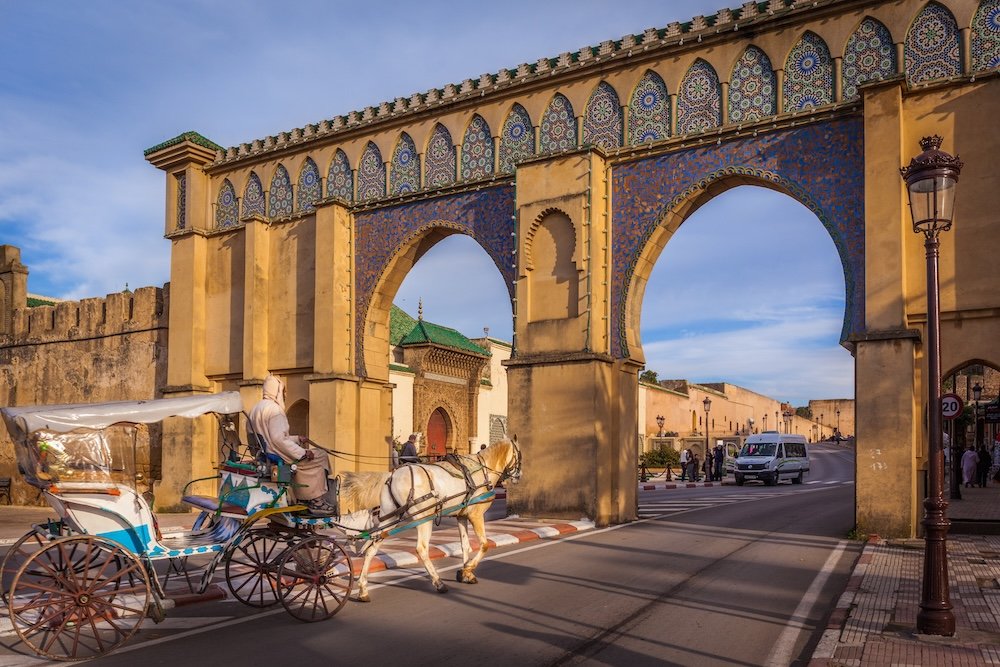
Meknes, another imperial city, is reached by train, which runs hourly; the journey takes about 40 minutes and features the monumental Bab Mansour gate as well as the large royal granaries of Heri es-Souani; it has the atmosphere of Fez but with the volume reduced. The usual full-day itinerary includes a visit to Volubilis, a Roman city of triumphal arches and floor mosaics listed by UNESCO and situated among wheat fields, and to Moulay Idriss Zerhoun, the whitewashed holy town on the hilltop built around the tomb of Idris I, the founder of Fez. On the way down to the ruins, you pass through olive groves.
The busy period runs from spring (March to May) and again from September to October; temperatures range from the upper 60s to the lower 80s, the light turns golden on the roofs, and the streets are busiest. You’ll need to book well in advance, especially during the music festival.
The shoulder season occurs in June and November; in June, temperatures rise to 90°F but evenings remain pleasant, and in November, temperatures drop to highs of about 70°F, making it the wettest month with roughly 2.7 inches of rain; visitors decrease noticeably in both months.
The low season occurs in two forms: from July to August, the average maximum temperatures are between 95 and 97°F, with heat waves sometimes exceeding 100°F, which is why visitors should do their sightseeing before noon; from December through February, it is cool and generally damp, with daytime highs hovering at 60°F and night temperatures in the low 40s. Prices drop, and the lanes get less busy, but courtyard riads may feel cold, so ask about heating before you book.