


The first ray of sunlight reaches the Temple of Hera before it touches any other building on the Paestum plain. In front, six columns stand, and fourteen line each side, all the color of honey. For about ten minutes the travertine, a kind of local porous limestone, seems to glow from within, after which the sun has risen high enough for the stone to once again appear as ordinary stone. In the eighteenth century, people believed the most important temple was dedicated to Poseidon and, because of this, that name continued to be used even though archaeologists later found evidence that the Greeks, who predated the Romans in the region, had actually built the temple for Hera.
WHY THE CILENTO
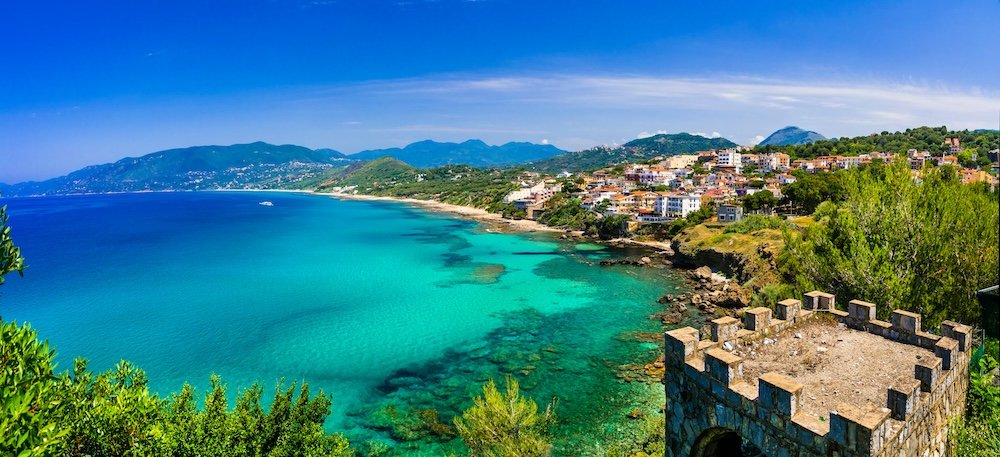
The part of the province of Salerno in the region of Campania starts where traffic on the Amalfi Coast stops; a distance of approximately 60 miles stretches from the Gulf of Salerno to the Gulf of Policastro and includes cliffs, sea caves, pebble beaches and sandy bays, behind all of which olive orchards and chestnut forests go up the slopes. In 1998, UNESCO declared the Cilento and Vallo di Diano National Park, together with the ancient Greek towns of Paestum and Velia and the monastery at Padula, a World Heritage cultural landscape; the park has since also been designated a UNESCO Biosphere Reserve and Global Geopark.
Here, you can visit Greek temples older than the Parthenon, swim in coves along one of Italy’s most picturesque bays, take a boat trip into a sea cave, and eat buffalo mozzarella just a few hundred yards from the buffalo. Prices are lower than in Amalfi, and there are fewer buses.
THE ATTRACTIONS EVERYONE COMES FOR
Paestum. One of Cilento’s main highlights is the city founded by Greek settlers around 600 BC, who named it Poseidonia and later, under the Romans, Paestum. The three Doric temples are in very good condition. The Temple of Athena, dating to about 500 BC, and the Temple of Neptune, misnamed as indicated above, are among the world’s best-preserved Greek temples. Visitors can stroll easily among the columns, the Roman forum, and the amphitheater. The terrain is flat and accessible, with a road crossing to the National Archaeological Museum. From March to November, a ticket priced at €15, equivalent to around $17 (€10 during the winter), grants entry to the site, the museum, and Velia over three consecutive days; people under 18 enter for free, good news for families, and the park is open every day from 8:30 a.m. to 7:30 p.m.
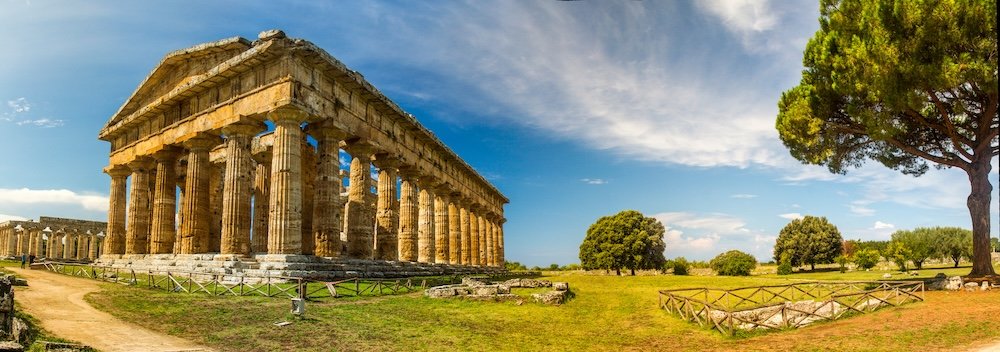
The ruins of the Greek city of Elea are located on a hill covered with olive trees, about 25 miles from the coast, above Ascea Marina. A road climbs past the Roman baths to the Porta Rosa, a fourth-century BC gateway the park considers Italy’s oldest known round arch, then continues to an acropolis crowned by a medieval tower. Entry to Paestum covers access to this site.
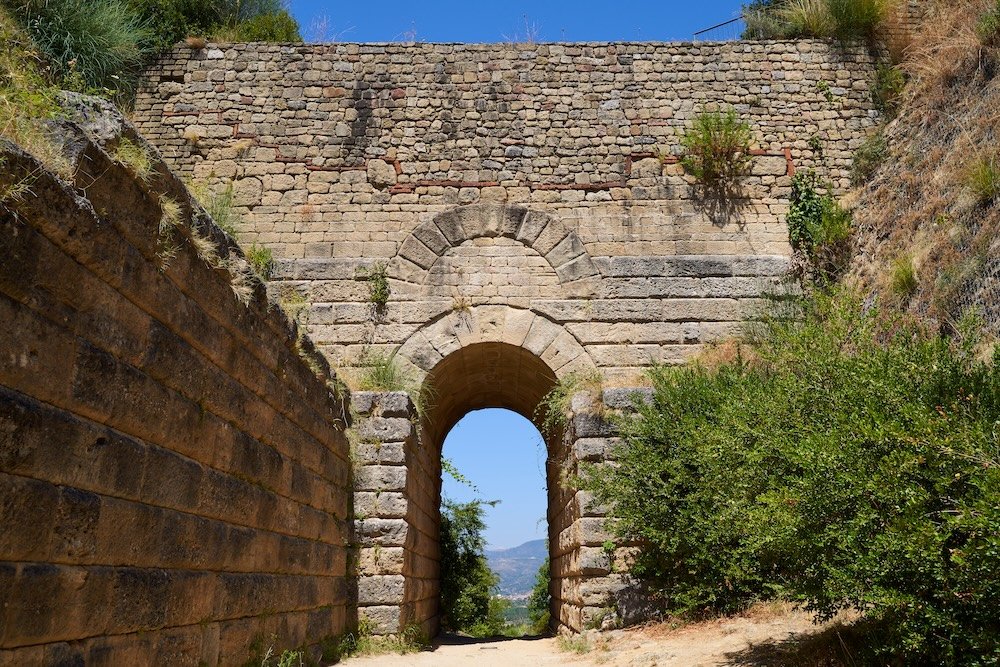
Capo Palinuro, a rocky cape that juts into the sea beside the village, is the Cilento region’s most prominent feature. It is named after Palinurus, the helmsman of the Trojan hero Aeneas, as depicted in Virgil’s Latin epic, the Aeneid, who fell overboard and died on this coast while dozing off during the ship’s navigation.
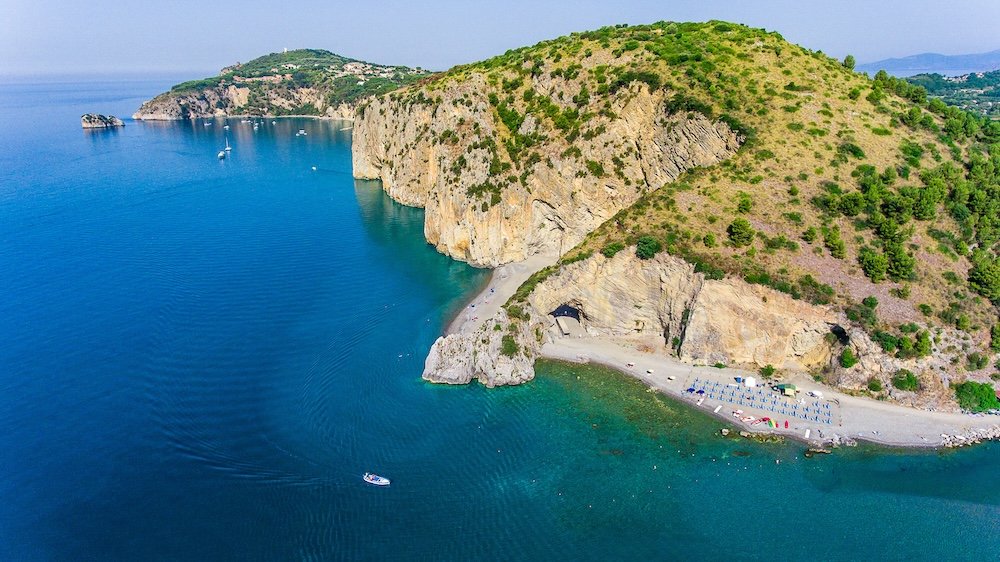
Along its cliffs, there are more than thirty sea caves. Boat trips of two hours’ duration that start from the port and Ficocella beach usually cost between €20 and €30, equivalent to about $22 and $34, and lead visitors to the Grotta Azzurra, the Blue Grotto, where the light passing through the water causes the grotto to appear bright blue.
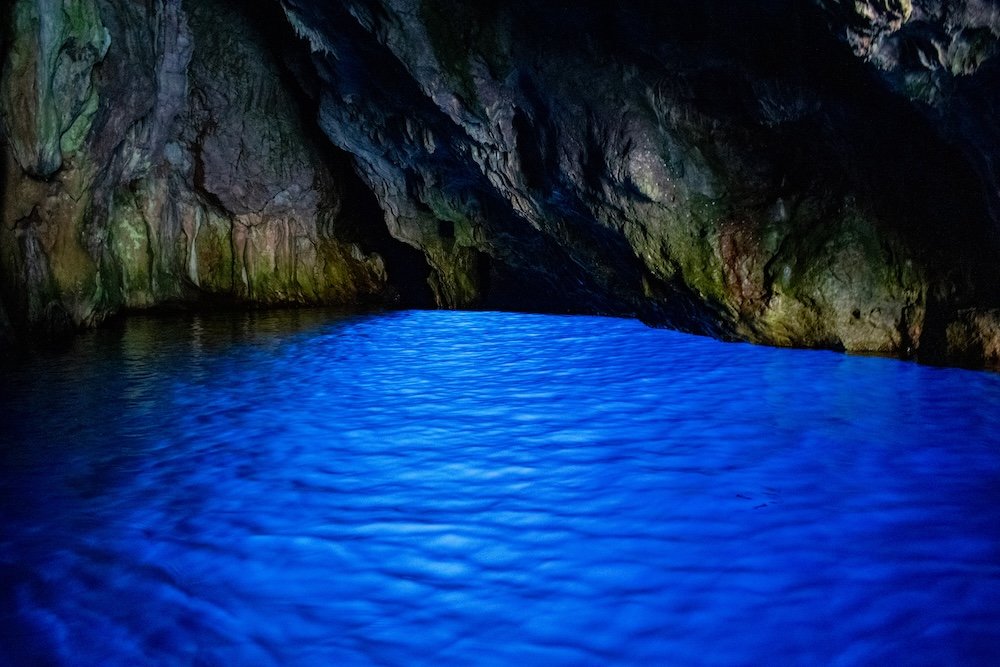
On foot, the Sentiero della Primula, or Primrose Trail, follows a route of about nine miles around the cliffs, built around sixteenth-century watchtowers, a Napoleonic-era fort, and a number of calm beaches. The trail is named after the Primula palinuri, a rare yellow primrose that grows on these cliffs, blooms in late winter, and symbolizes the national park.
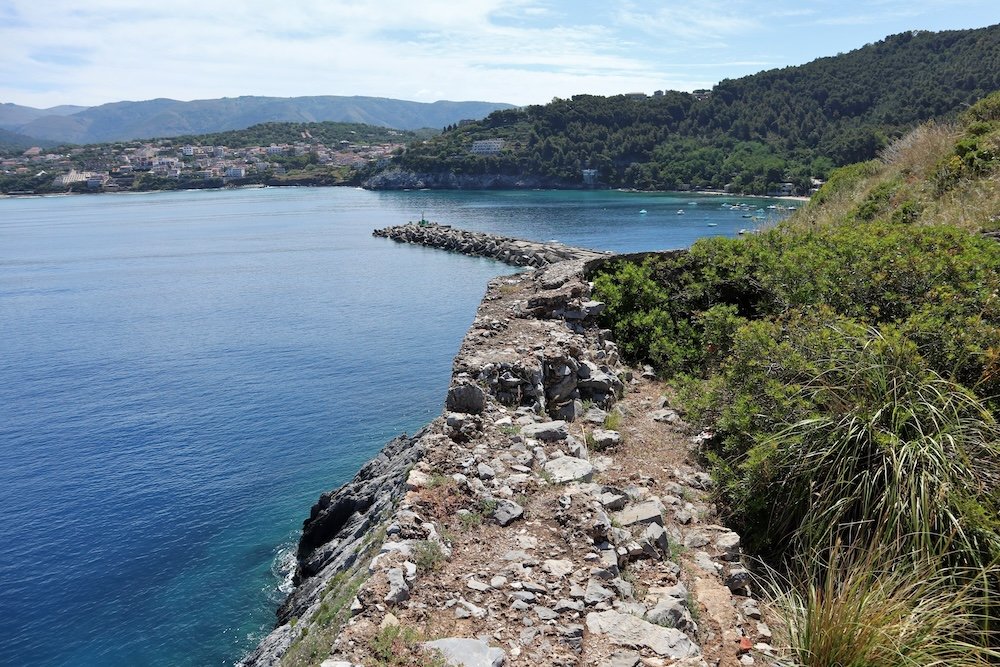
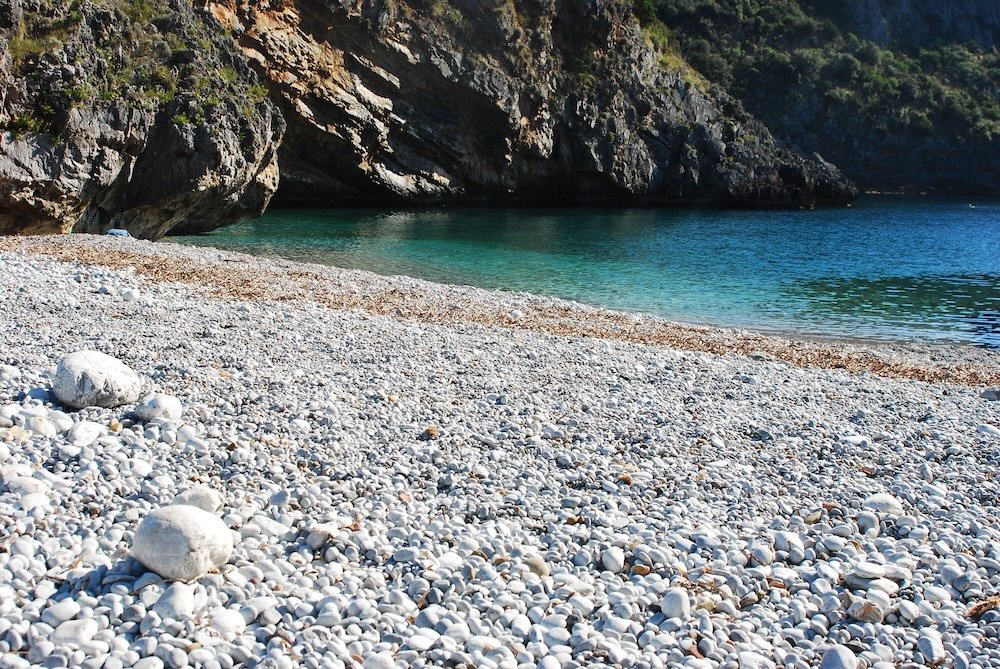
The coves in Marina di Camerota. According to local legend, the town of Camerota is named after Kamaraton, a nymph who rejected the advances of a poor man called Palinurus. The town has since become a busy summer harbor and lies south, with several coves, some accessible only on foot or by boat. In 2013, Legambiente, Italy’s principal environmental organization, named Cala Bianca, a cove made up of white pebbles and glassy water, the most beautiful beach in the country and gave the same title to Baia degli Infreschi, a protected bay, in 2014. You can tie up boats at the harbor, and the Infreschi trail starts near Lentiscelle beach. Both coves are open to the public. You can swim, snorkel, and go to the beach, provided you are willing to make the effort to reach the sand.
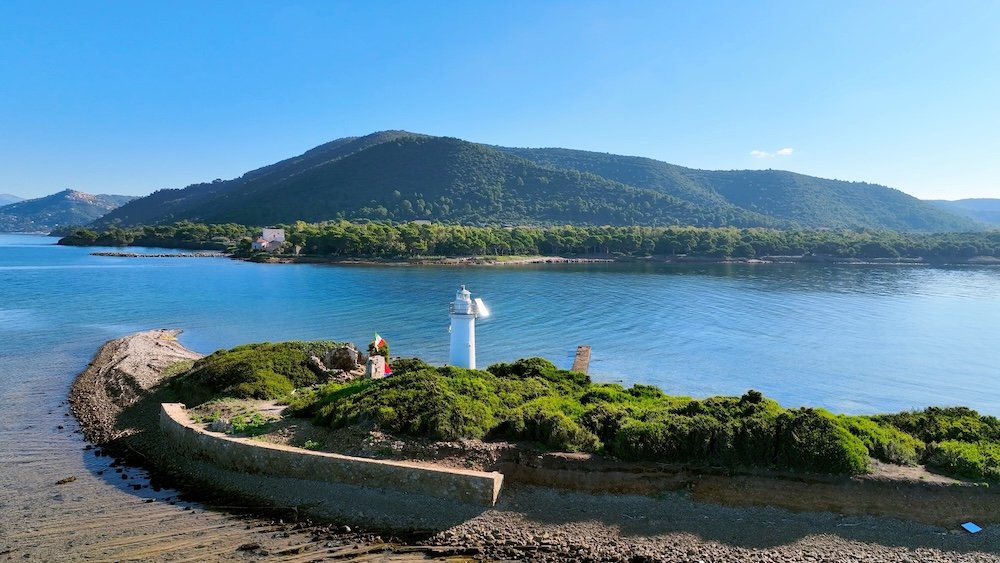
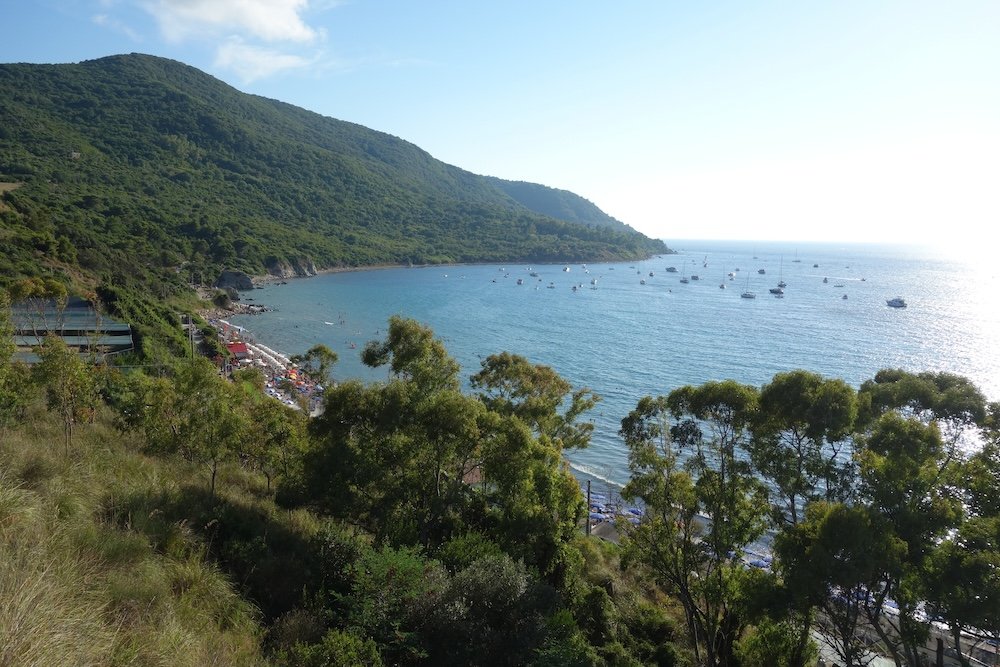
To reach Punta Licosa from the small harbor of San Marco di Castellabate, you have to walk along the shore under the pines for about two hours to the headland facing a small island with a lighthouse. The Greek geographer Strabo, who lived during the time of Aeneas, said the island got its name from Leucosia, one of the sirens, and later it is said to have leaped into the sea, unable to lure Odysseus onto the rocks. It is a favorite location for snorkelers. The area lies in the marine protected area called Santa Maria di Castellabate, where a Roman villa sits low in the water near the island.
Agropoli and the Bay of Trentova. A stone staircase called the Scaloni leads up to the old town gate, and a series of narrow lanes leads upward to the Angevin-Aragonese castle, a triangular fortress with round towers at the end of the promontory.
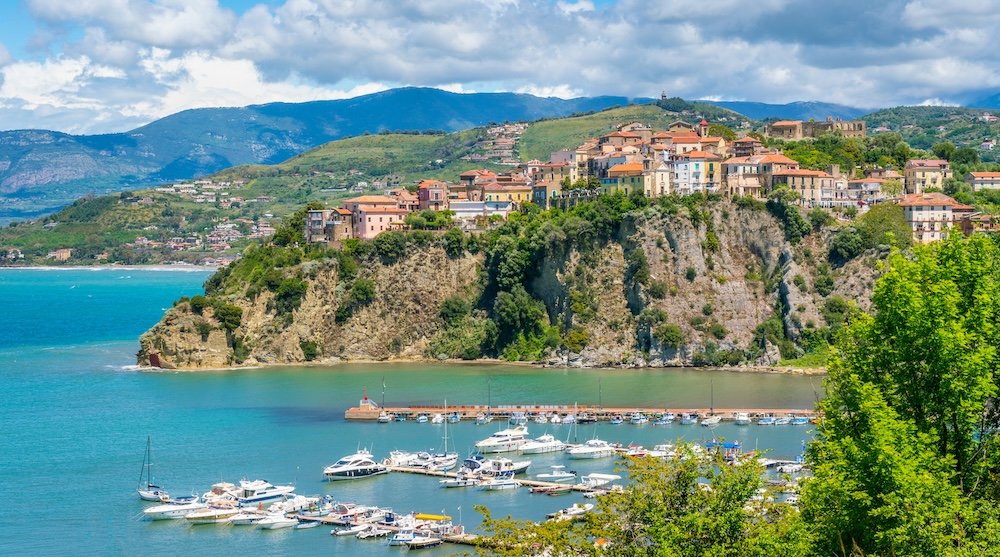
Directly to the south is the Bay of Trentova, a small cove of sand and rock with clear waters and clubs. The name is believed to come from the thirty eggs, trenta uova, once found in a nearby cave, though it is never certain whether gulls or sea turtles laid them. A six-mile trail runs from Punta Tresino to Santa Maria di Castellabate.
VILLAGES AND WHERE TO EAT
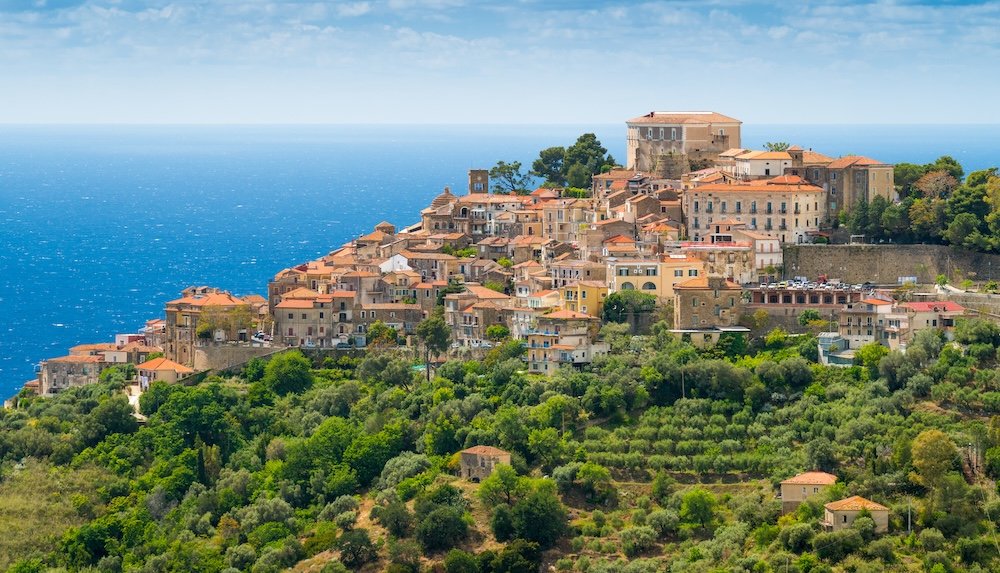
Castellabate, a hilltop village centered around a twelfth-century abbey castle, overlooks the beach town of Santa Maria di Castellabate.
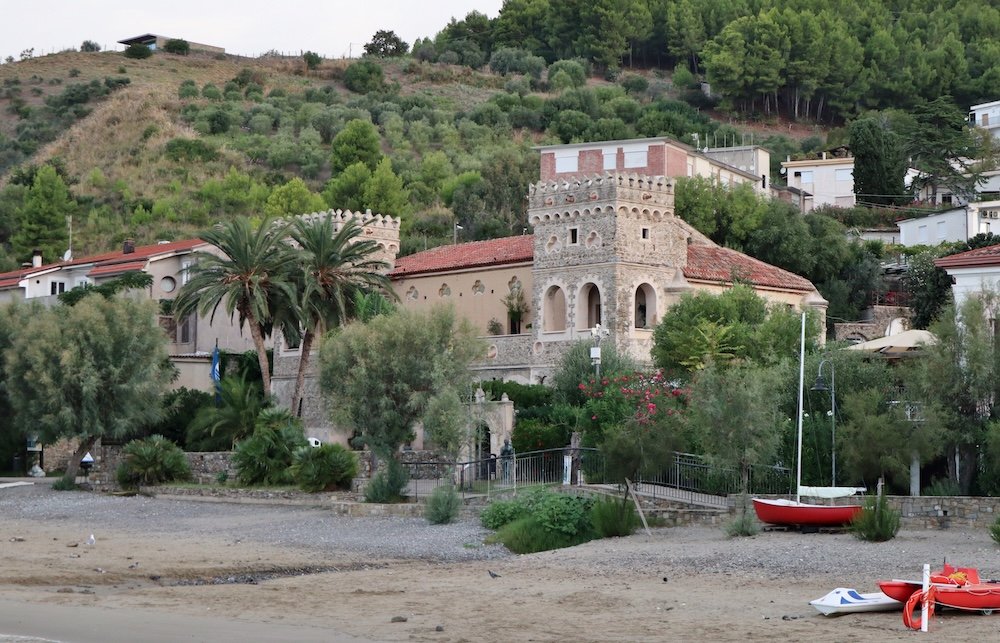
Further south, the fishing village of Pioppi hosts the Living Museum of the Mediterranean Diet in the seventeenth-century Palazzo Vinciprova on the waterfront, the entrance to which costs about €4; the museum honors Ancel Keys, the physiologist from the University of Minnesota who resided in the area from 1963 to 1998 while investigating why the local people suffered so little from heart disease. He named his house in the hills Minnelea, a blend of Minnesota and Elea, and his personal library is situated in the museum.
Three places are a good place to start when it comes to the food that keeps people staying so long. At Tenuta Vannulanic buffalo farm, near Paestum, they make mozzarella with morning milk, offer yogurt made from their own herd, and offer 50-minute guided tours that include the stables, where the buffalo shower, are brushed, and listen to music. Le Gatte, in a harbor building off Santa Maria di Castellabate, serves fried fish and seafood with the castle in view and is mentioned in Benvenuti al Sud. In Marina di Pisciotta, Angiolina, which in 2023 became the only trattoria in the province to obtain the Gambero Rosso guide’s highest rating, is the place to go for alici di menaica, that is, anchovies caught with a traditional net between April and July and cured in salt in terracotta pots, a Slow Food Presidium. The menus at the other places also include cavatieddi, which are short hand-rolled pasta with a meat sauce, and lagane e ceci, broad fresh noodles cooked with chickpeas. In the inland village of Felitto, women still hand-roll fusilli, eight-inch strands of egg pasta, around a thin iron rod, and sun-dry the Fico Bianco del Cilento, a protected white fig, then stuff it with almonds or walnuts.
INTO THE INTERIOR
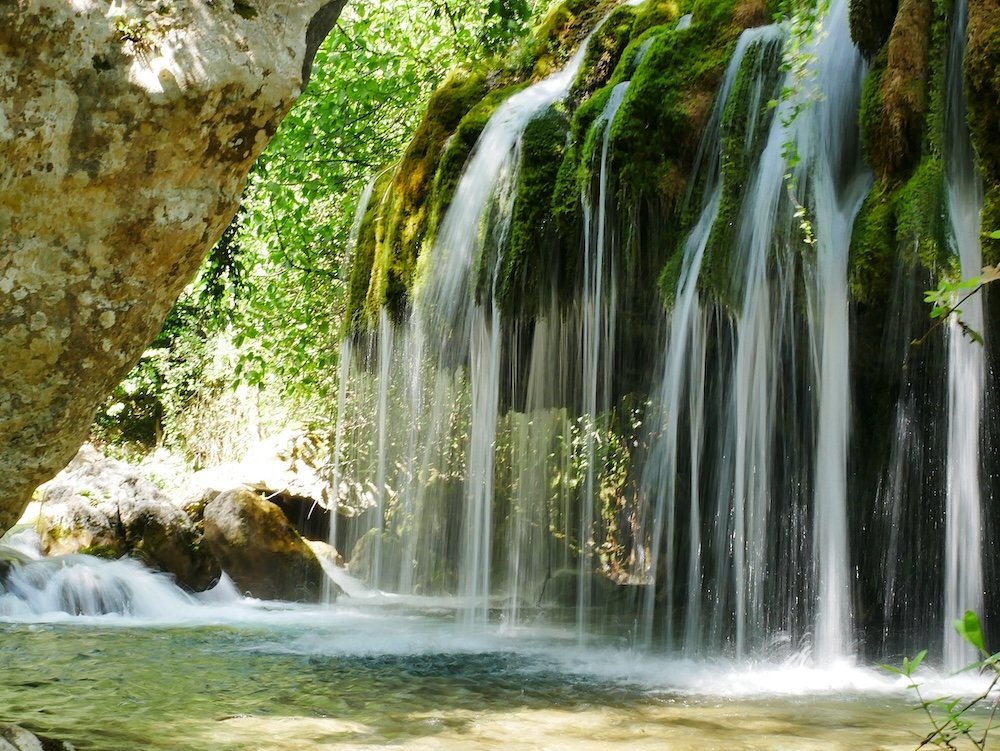
The cave system, Grotte di Castelcivita, stretches about three miles and is one of the longest in southern Italy. The standard guided tour covers three-quarters of the stalactites and stalagmites and costs €12 (about $14), with the air temperature staying 65°F year-round. Further south, near Casaletto Spartano, the Capelli di Venere waterfall flows in fine strands over a rock face covered with maidenhair fern, known as capelli di Venere or Venus’s hair, alongside an old water mill and a Norman stone bridge; entry to the area costs a few euros. Experienced hikers can climb Monte Cervati, the park’s highest peak at 6,230 feet.
Around 540 BC, refugees from Phocaea—a Greek city recently conquered by the Persians and then located in western Turkey—landed on this coast and founded Elea. This idea later gave rise to Parmenides, a philosopher who argued that change is an illusion and that reality consists of an immovable entity.
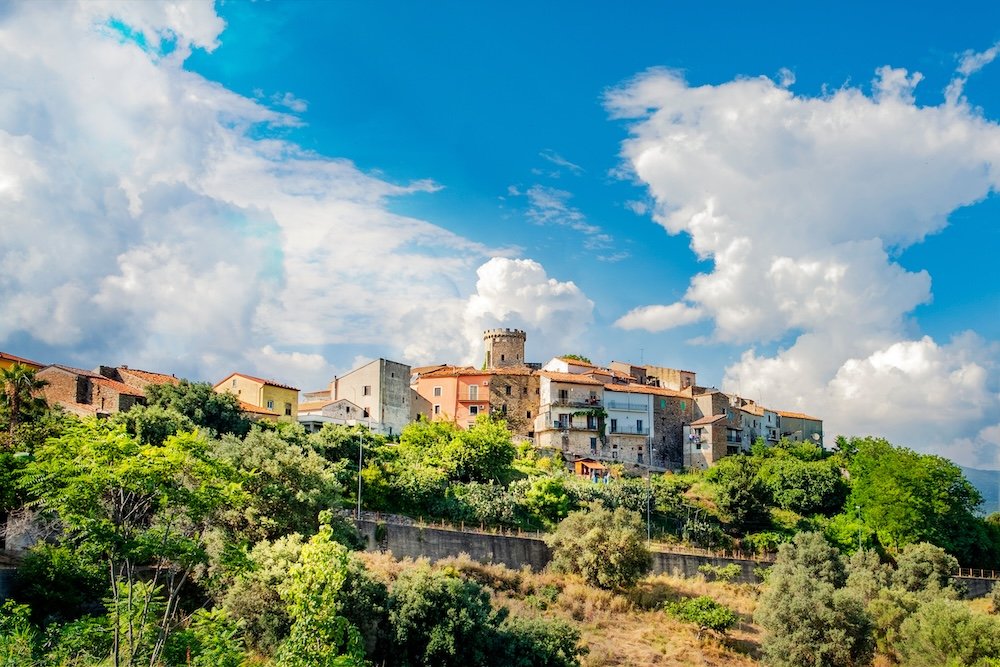
Castelnuovo Cilento, a village on a hill above the Alento valley with a population of about 3,000, has a castle with a tower door well above ground level. Its most distinctive feature is its use of pebbles. Guerino Galzerano (1922–2002) was a farmer and laborer who had no artistic training. In 1970, he shot and killed one of his wife’s friends because she was suspected of being unfaithful, and it was only while he was in the psychiatric asylum at Aversa that his desire to create things first came to light. At home, he spent many years covering his house on Via Roma, as well as a garden beneath the castle, with arches, tables, and chairs made from stones taken from the sea and river and carried up by donkey or on his own back. The inscription on his tomb in the village cemetery reads “Remember: where I was, you are; where I am, you will be.” These works blend folk art and confession and are open to the public at no cost.
PRECAUTIONS WORTH TAKING
People must have a passport valid for at least three months beyond the date they intend to leave the Schengen area, allowing them to stay in the region for up to 90 days without a visa. The EU’s Entry/Exit System, which collects fingerprints and a facial photograph at the border, has been fully operational since April 2026, so early entries may take a long time. ETIAS, an online travel authorization that involves a fee, has experienced repeated delays and is now expected to launch in late 2026 or 2027, so it is advisable to check the official EU website before booking. Regional train tickets in paper form must be validated in the machine on the platform, or you will be fined. Drivers should note the ZTL signs, which indicate areas with limited traffic in the historic centers, since cameras in those areas impose fines on them by post many months later.
In the most strictly protected areas near Santa Maria di Castellabate and on the Costa degli Infreschi, swimming is prohibited, and anchoring and fishing are restricted. At Castelcivita, visitors must come in groups, so individual travelers must phone in advance. The summer sun is strong; there is little shade at the ruins and the coastal roads are narrow and curved.
GETTING THERE
International tourists usually fly into Naples and then travel south by train or by hiring a car. The Naples Capodichino Airport will be closed for runway work from 1st to 30th November 2026, so some flights are being diverted to Salerno Costa d’Amalfi and Cilento Airport, located about 13 miles southeast of Salerno and closer to the Cilento no matter the season. Regional trains run all year from both Naples and Salerno to Paestum, Agropoli-Castellabate, Ascea (for Velia), Pisciotta-Palinuro and Sapri, and in the summer Frecciarossa and Italo high-speed trains operate directly from Rome and Milan. Local buses go to the seaside towns, but it is better to take a car if you wish to visit the inland areas.
WHEN TO GO
In July and August, temperatures reach the mid-80s°F, rainfall is low, and the sea is near 80°F; at the same time, Italian families arrive, particularly around Ferragosto, the national holiday on August 15, when beaches fill up, and rooms are booked months in advance. May, June, September, and early October are the best times, since temperatures are in the 70s, hiking is good, and the water stays warm until September, although the summer ferries stop running that month. November is generally the wettest month; as a result, many beach hotels close for winter, but the ruins are wonderfully deserted, and late-winter hikers can see primrose in bloom.