


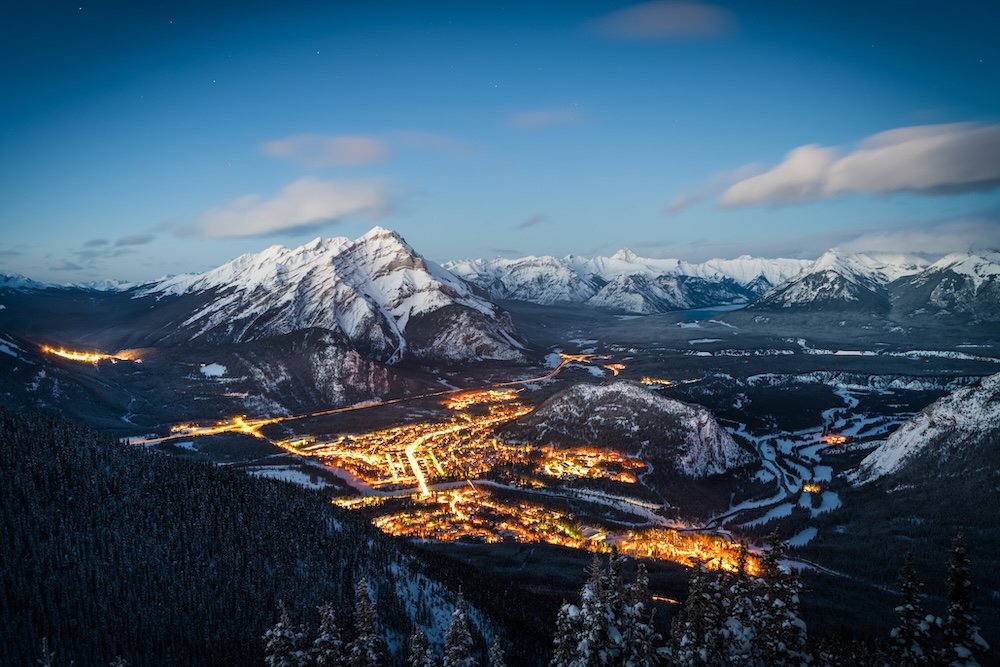
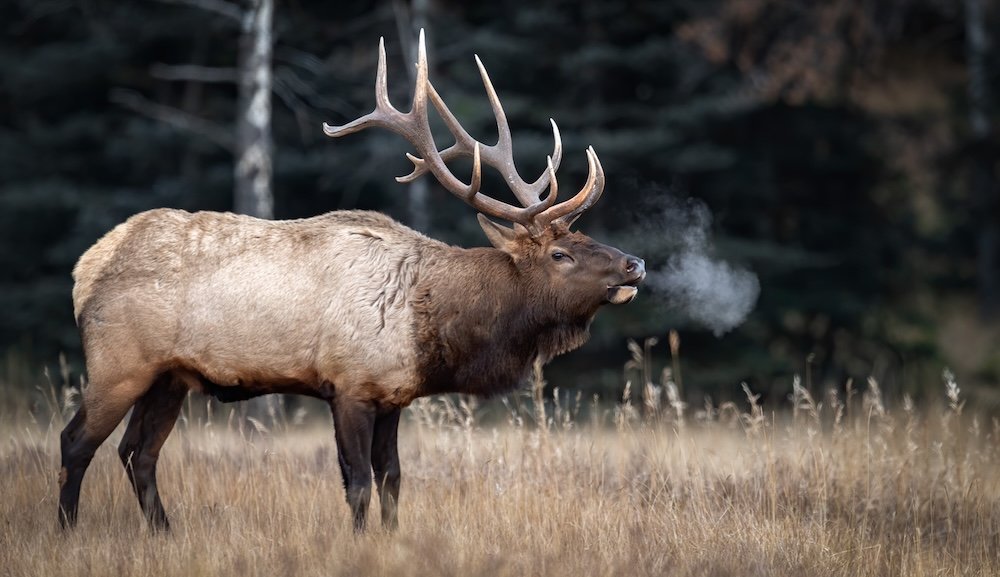
On a cold September morning, the loudest sound on Banff Avenue could be a tour guide, or a bull elk near the Bow River lifting its head and letting out a low groan that ends in a squeal. During this season, elks mate, and the Town of Banff has already taken the swings off its playgrounds so male elks with new antlers won’t get caught in them. Cascade Mountain sits at the far end of the avenue, and the boutiques, outfitters, and souvenir shops along the sidewalk are just starting to turn on their lights. Although the town is open for business, the elk were there first, and everyone has quietly agreed to work with them.
Why Banff
Banff is a rare resort town built inside a national park, and nearly all of its features stem from this circumstance. The town sits at about 4,537 feet, making it Canada’s highest town, and federal law defines its boundaries at about 2.5 square miles, leaving no room for expansion. About 8,300 people live there, and to reside in the town, one must show a ‘need to reside,’ which in practice means working in the town or being supported by someone who is. Banff National Park surrounds the town; it covers about 2,564 square miles and consists of peaks, glaciers, forest, and a river valley, about 96 percent of which is wilderness. Two mountains frame the town: Mount Rundle, a limestone slab rising to 9,672 feet on the southeast side, and Cascade Mountain, 9,836 feet high, at the northern end of Banff Avenue.
How remarkable it is that the wild and the civilized areas are so near to each other; in one day a tourist can soak in a hot spring pool built in the 1930s, go by gondola to a ridge-top, see elk feeding alongside a baseball field, and at the same time still have a dinner reservation in town. The park suits first-time visitors, families, hikers, wildlife watchers, and couples looking for a mountain location with good restaurants. More than four million people visit it every year, and on good summer days the town’s parking spaces are generally full by 10 a.m.
Getting there is straightforward. Most tourists fly into Calgary International Airport, then drive about 90 miles west on the Trans-Canada Highway (about 90 minutes), or take a shuttle from the airport to hotels in Banff. Everyone who wishes to stop anywhere inside the park has to have a Parks Canada pass; adults pay C$12.25 each day (roughly US$9), entrance for young people aged 17 and under is free, or they can buy the annual Discovery Pass for C$83.50 (about US$58), which gives access to all the national parks in Canada.
The Attractions Everyone Comes For
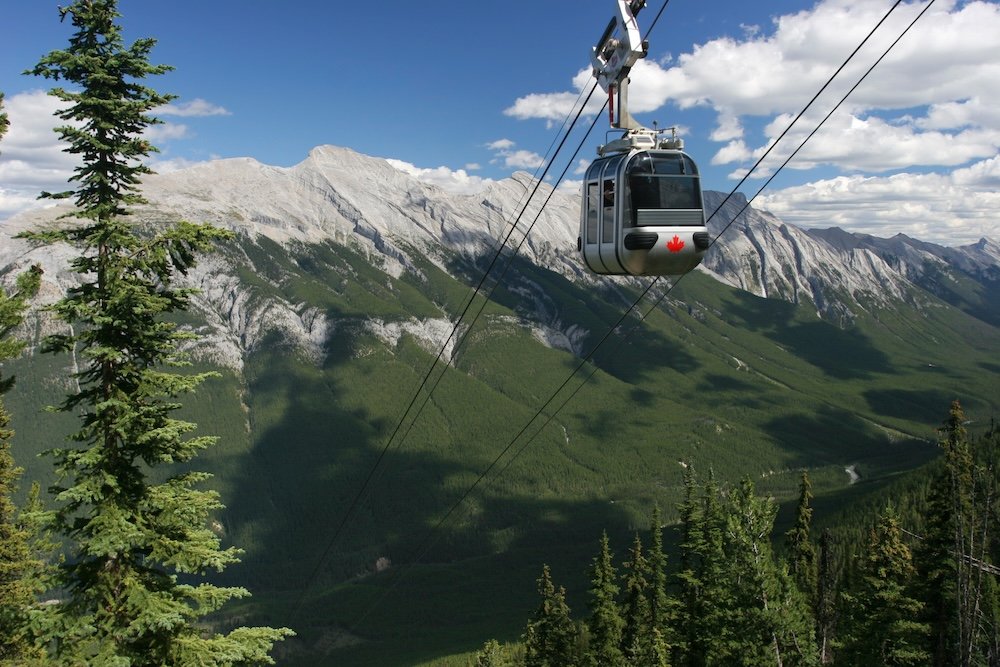
The gondola service on the eight-minute Sulphur Mountain ride carries you about 7,486 feet to the upper edge. There are about 100 people, together with the Sky Bistro, a rooftop viewing area, and a boardwalk that is just over half a mile in length and runs along the ridge as far as Sanson’s Peak and a small stone weather observatory constructed in 1903 (more details regarding the man who built it will be given below). On clear days, the view shows six mountain ranges and the town below. Ticket prices vary by date and time, with adult tickets at about C$76 (approximately US$53) in peak season and lower during the quieter months. It is an excellent choice for first-time visitors, photographers, and anyone whose knees don’t want to hike up.
The Banff Upper Hot Springs are a short walk up the mountain and sit in a stone bathhouse restored in 1932; the pool sits at about 5,200 feet, making it Canada’s highest hot springs. The water temperature is kept between 98 and 104°F, and the pool overlooks the valley and Mount Rundle. It reopened in April 2026 following a seven-month renovation. Adults can enter the pool on a first-come, first-served basis by paying C$19.75 (about US$14) from 10 a.m. to 10 p.m. daily, and the front desk provides 1920s-style bathing suits for anyone who wants to soak in period clothing. The hot springs will interest couples, winter visitors, and hikers sore after a long hike.
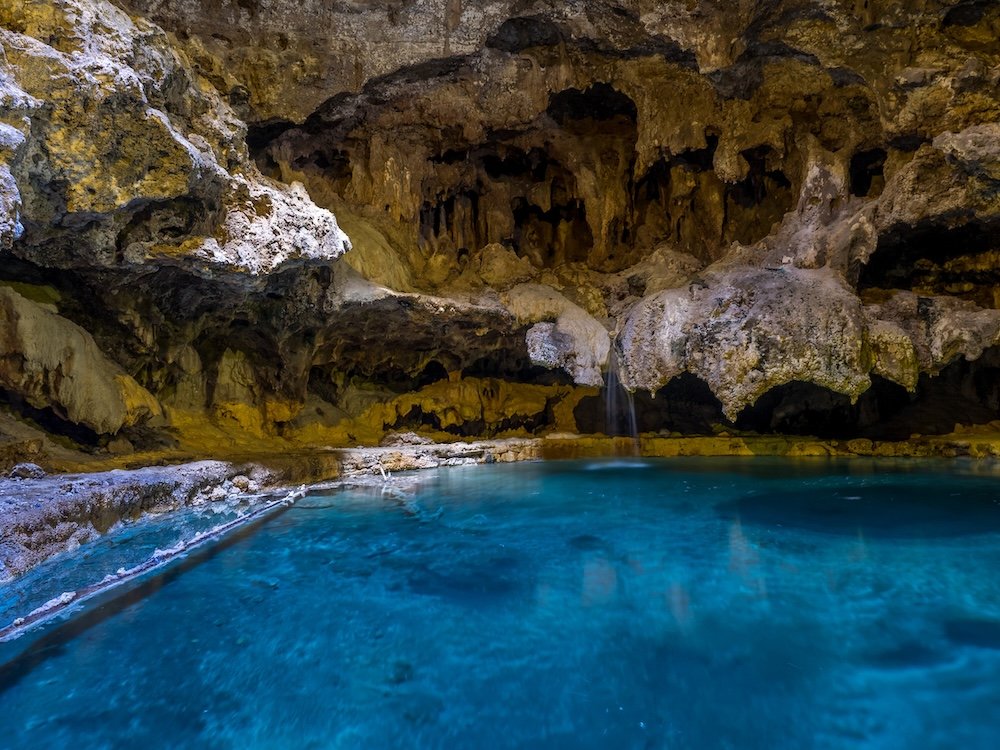
In 1883, the railway reached the area as a section of track known simply by a number, Siding 29. It received the name Banff on 25 November of that year because George Stephen, who was president of the Canadian Pacific Railway, had been born in the Scottish county of Banff. In the same month, three railway men, Frank McCabe and the brothers William and Tom McCardell, noticed steam issuing from a hole in the mountainside. Because someone needed to go down and take a look, William McCardell descended into the dark using a felled tree trunk and found a warm pool glowing beneath the stalactites. This sight could have served as the opening scene of a horror film and, in reality, became the starting point for a national park. Swimming is no longer permitted at the site because the warm outflow supports the Banff Springs snail, a popcorn-kernel-sized creature found in only a few springs on Sulfur Mountain and nowhere else on Earth.
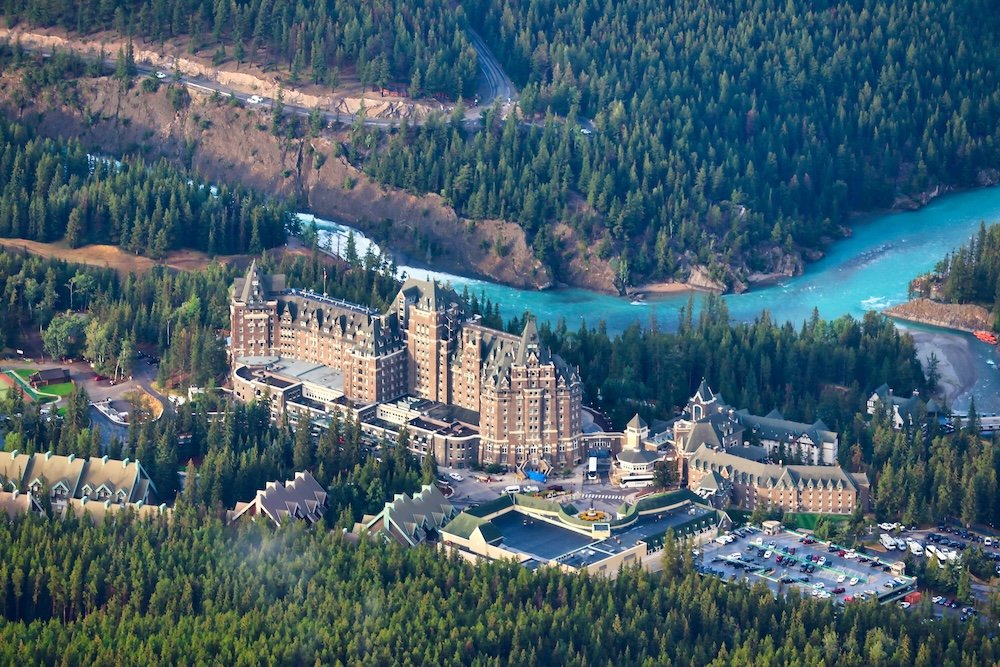
The Fairmont Banff Springs. This monumental stone hotel, located where the Bow and Spray rivers meet, is Banff’s château and a National Historic Site. Non-guests can walk through the grand halls, book afternoon tea or a meal, and take the short path down to Bow Falls, a wide, low cascade on the Bow River just below the hotel.
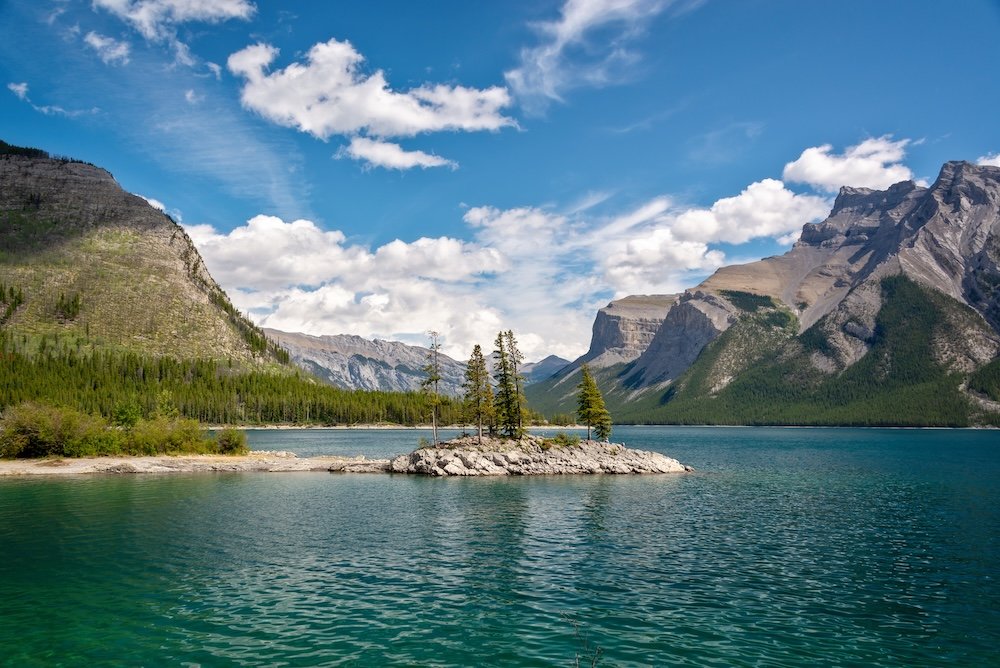
Lake Minnewanka is about a 10-minute drive north of town and stretches about 13 miles between the two mountain ranges; the Stoney Nakoda named it the Lake of the Spirits. A one-hour cruise, running from spring until mid-October and costing about C$75 for adults (roughly US$53), goes to Devil’s Gap, a part of the mountains near the lake’s more remote end. Bighorn sheep are frequently seen along the road that surrounds the lake, and the shore trail is a simple walk.
Most people on the Lake Minnewanka cruise don’t realize they are sailing over a resort village. The area known as Minnewanka Landing began as a small lakeshore settlement in the late 1880s, with a log hotel, summer cottages, and streets; in 1912, they built a dam that flooded part of the lake. In 1912, they built a dam that flooded part of the village. Then, in 1941, because wartime demand for electricity was higher, they built another, larger dam, raising the lake level by about 98 feet and submerging the rest of the village. The cold water has kept much of the village intact, and Parks Canada has made a guide available for scuba divers to explore house foundations, bridge pilings, the remnants of the 1912 dam, and a fireplace that fell into its own basement. Non-divers can stand on the shore near the boat dock and look out over the spot where the town once was. Certified divers, history buffs, and anyone who enjoys finding out what lies beneath a postcard photograph will enjoy this.
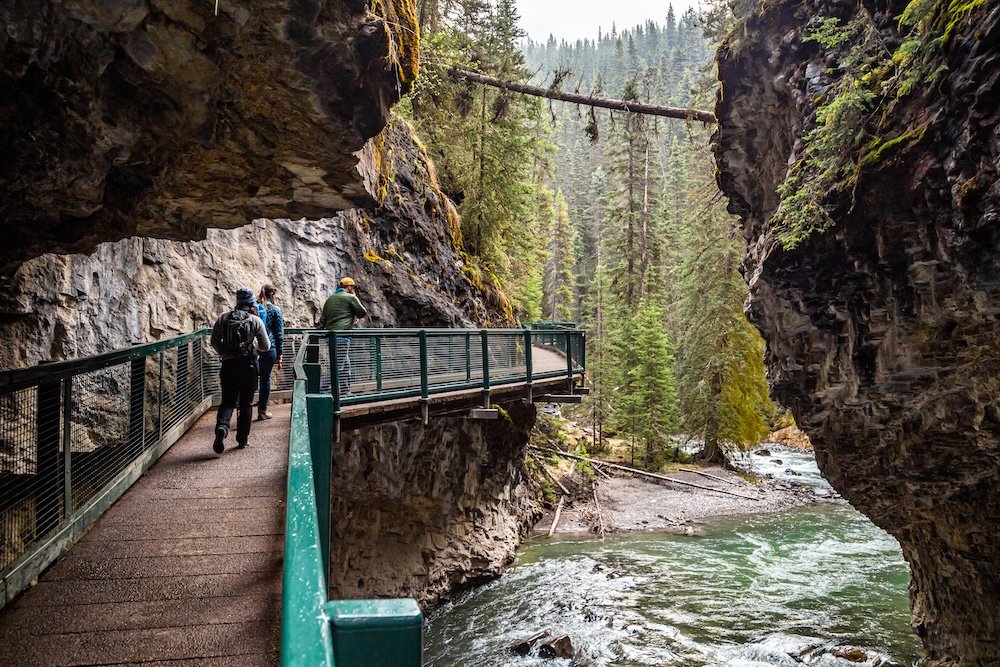
Johnston Canyon is located 15 miles west of the town on the Bow Valley Parkway, a more relaxed way to get to Lake Louise; a trail with steel catwalks fastened to the canyon wall runs alongside Johnston Creek through a narrow limestone gorge. The Lower Falls are three-quarters of a mile from the trail’s starting point, and the Upper Falls are 1.7 miles away. In winter, the falls become pale blue columns, and ice-walking tours are offered. The parking area fills up early in the summer, so arrive before 9 a.m. or take Roam, the regional public bus.
Banff Avenue, Bear Street and Where to Eat
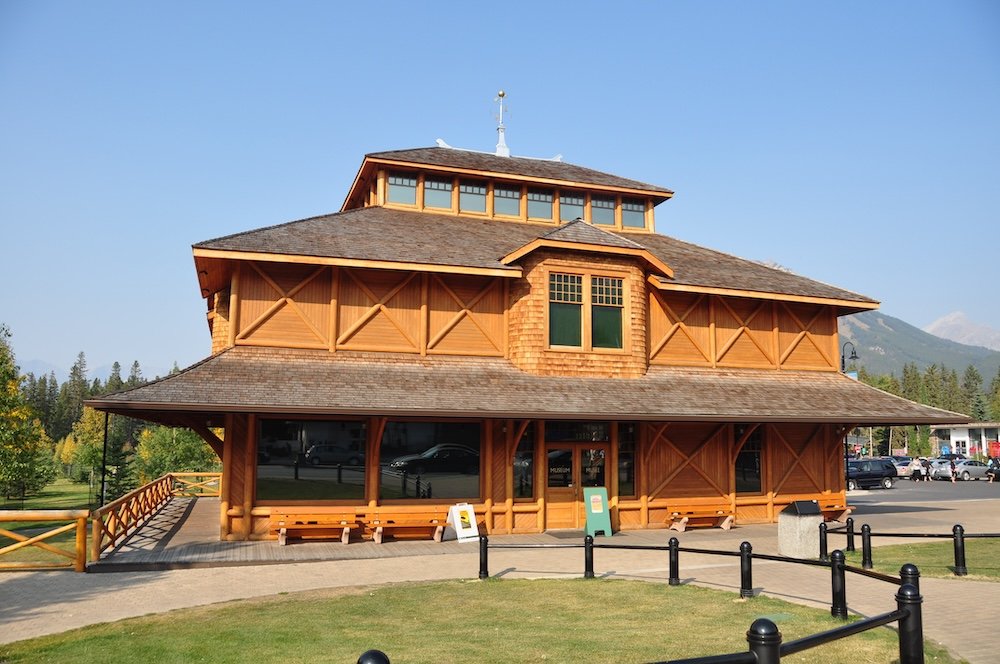
Banff Avenue is the main street, running straight through the area and lined with outfitters, galleries, fudge shops, and restaurants, with Cascade Mountain visible at one end and the bridge over the Bow River at the other. The Banff Park Museum, a 1903 log-and-timber building, is the oldest natural history museum in western Canada. Its Victorian wooden cases, filled with mounted grizzlies, bighorn sheep, and birds, sit close to the bridge.
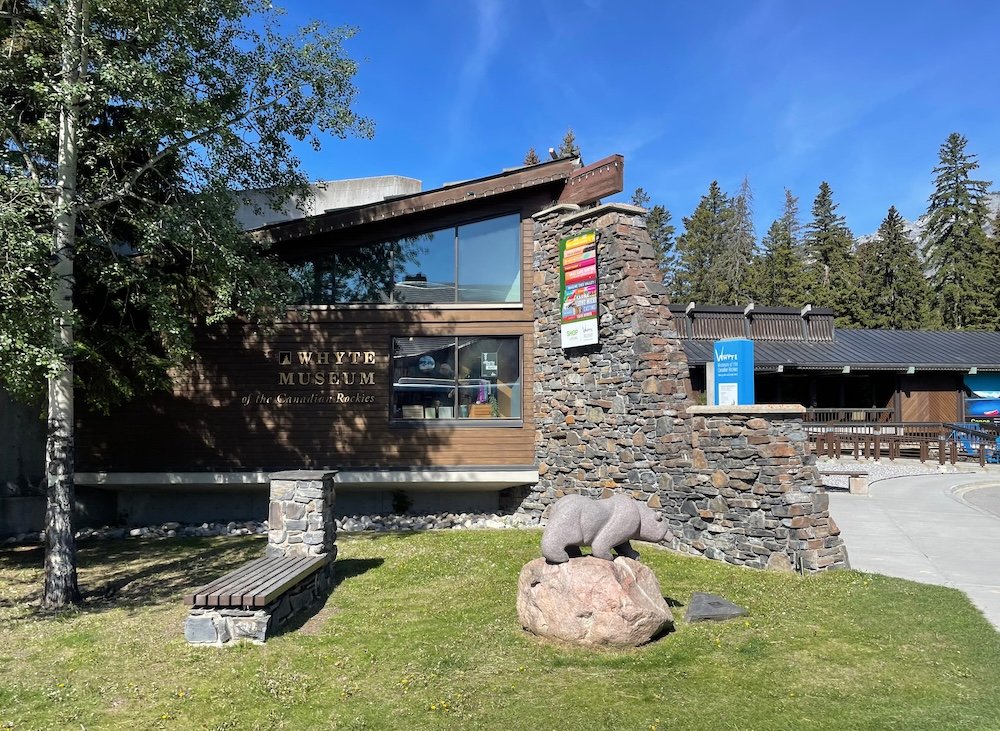
Bear Street, a quieter, more local street, is home to the Whyte Museum of the Canadian Rockies; the museum was established by the Banff painter Peter and Catharine Whyte and opened in 1968.
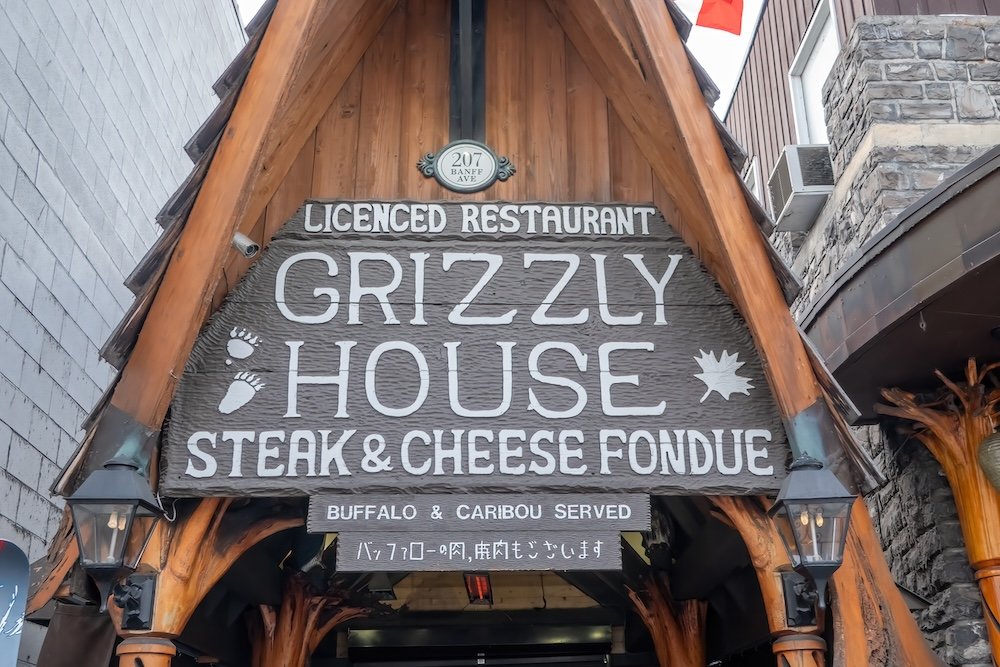
A good place to start is with three restaurants. The Grizzly House, opened in 1967 by Peter and Barbara Steiner, initially functioned as what it terms the first disco in Western Canada and only later changed to serving fondue to comply with liquor licensing rules; it still provides cheese fondue and hot-rock platters made from bison, elk, and wild boar and retains telephones at the tables so that customers can call one another across the room. Park Distillery, at 219 Banff Avenue, makes its own small-batch spirits on the premises and cooks its food over a wood fire and on a rotisserie, calling this method campfire cuisine. On Bear Street, the Bear Street Tavern is famous for its pizza, and Wild Flour, a bakery café, is the place for morning coffee and fresh focaccia before a hike.
The Man Who Climbed Sulphur Mountain a Thousand Times
Although the weather station at the top of the gondola was not officially assigned to him in writing, Norman Sanson considered it his in spirit. He had been curator of the Banff Park Museum for thirty-five years and also served as the federal government’s official weather observer at Banff. Since the early 1900s, Sanson had climbed Sulphur Mountain on foot in the summer and on snowshoes in the winter, taking barometers and thermometers to read. The locals said that after so many difficult winter climbs, he promised never to do another, but he did the following year. On July 1, 1931, about sixty of his friends joined him in the dark to celebrate his thousandth ascent, and the next morning at breakfast, as the sun rose, they presented him with a bronze medal bound with a purple ribbon: the “Freedom of Sulphur Mountain”. He made his last climb in 1945, in his eighties. The peak is now named after him.
Neighbors With Antlers
Wildlife isn’t a minor part of the area; it makes up half the population. Elk feed on the town’s lawns and ball fields, and Parks Canada asks visitors to stay at least 100 feet away from them at all times, especially during the fall rut, which takes place from late August to mid-October, and during the spring calving period, from mid-May to early July, when the cows use the sharp tips of their front hooves to defend their young. Bears, wolves, and cougars require at least 330 feet.
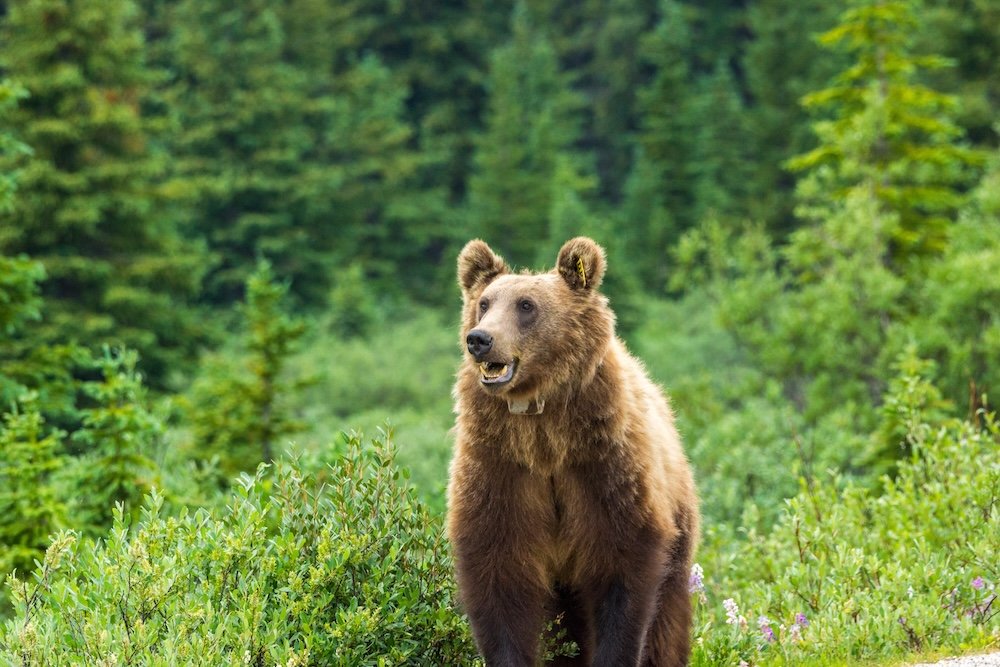
The grizzly bear that is best known in the park goes by the name Bear 122 and is locally referred to as The Boss; it is reported to have weighed over 600 pounds, and it is thought to have survived an accident involving a train hitting it near the Vermilion Lakes, a group of marshy lakes situated just west of town. In the fall of 2023, the bear was seen in residential backyards feeding on crab apples, prompting the town to ask homeowners again to replace their fruit trees.
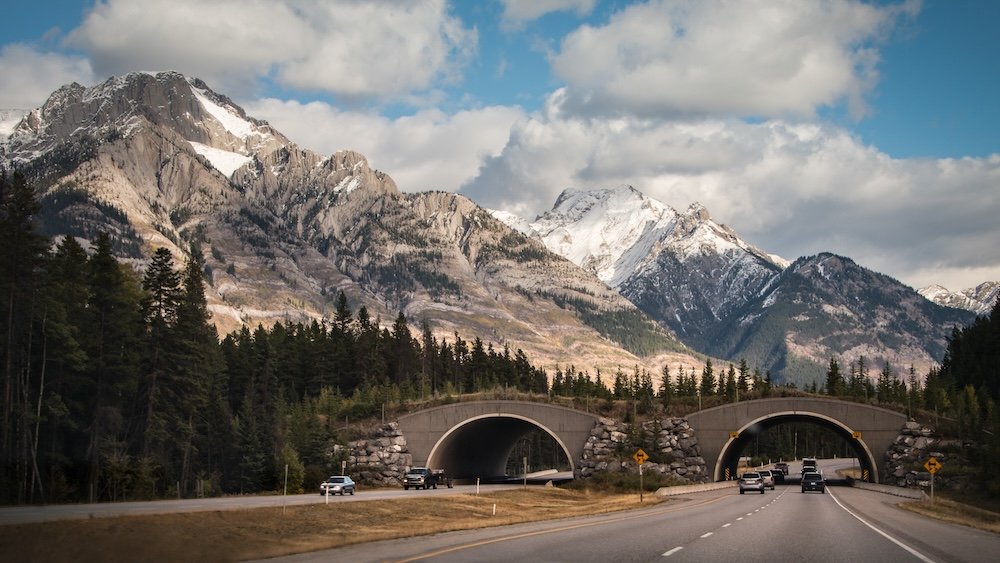
People who use the Trans-Canada Highway pass beneath the park’s most esteemed engineering structure without necessarily realizing it. The part of the highway within the park is fenced over a distance of about 51 miles and contains six wildlife overpasses and 38 underpasses, the largest number of wildlife crossing structures in the world. From the road, the overpass looks like a normal bridge; on top, it is a strip of forest and meadow. Vehicle-wildlife collision incidents have fallen by about 80 percent, and by 96 percent for elk and deer; researchers also note that grizzly and black bears use the crossings to meet mates on the other side.
Precautions Worth Taking
To enter Canada, Americans must hold a valid U.S. passport; they do not need a visa or an electronic travel authorization. One rule may shock Americans. A conviction for driving under the influence even an old one, can lead to a visitor being refused entry into Canada. Convictions secured after December 2018 are regarded as serious criminal offenses, so anyone with a DUI on their record should look into Canada’s rehabilitation program well in advance of making their booking. Even though cannabis is legal in Canada, it may not be taken across the border in either direction.
In the park, the rules have real penalties attached to them: people can be fined as much as C$25,000 for feeding, attracting, or disturbing wildlife, and the same fine applies to flying a drone, since drones are banned throughout the park for recreational use, even if they are launched from outside the park. Keep any food, coolers, garbage, and scented items in a vehicle, a hard-sided trailer, or a campground locker, and never leave them on a picnic table. Hikers should carry bear spray, know how to use it, and hike in groups, making noise as they go.
Mountain weather can change rapidly; snow can fall at higher elevations at any time of year, summer nights often turn freezing, and along the Icefields Parkway north of Lake Louise, there is no cell phone signal and only a few services available. Before heading out in winter, pack several layers, fill the fuel tank, and check the road reports.
When to Go
In July and August, the summer months, average high temperatures are in the low 70s°F, days are long, and all trails and lakes are open. This period is also the busiest of the year because parking spaces fill up early and shuttle tickets to the lakes sell out well in advance.
Many visitors prefer the fall season, between September and mid-October. After Labor Day, fewer people go; in the higher valleys, larch trees, a kind of conifer that turns gold before losing its needles, become very noticeable in mid-to-late September. During the elk rut, you can hear bugling all over the valley. By mid-October, around Canadian Thanksgiving, seasonal services such as the cruise on Lake Minnewanka and the shuttle service to Moraine Lake usually end.
From December through March, January’s high temperatures reach the mid-20s°F, and three ski areas are open: Mt. Norquay, a small slope just above town; Sunshine Village, known for its deep snow; and the Lake Louise Ski Resort. Johnston Canyon freezes, and the main attraction then becomes taking a hot spring bath in the evening with snow on the railings.
From April through June, spring is indeed a true shoulder season, featuring lower prices and fewer tourists. The bears leave hibernation and feed in the valley bottoms, but snow remains on many higher trails; the road to Moraine Lake doesn’t open until June, and some lakes remain frozen through early summer.
By evening, the tour buses will have gone, and the lights in the shop windows and hotel lobbies will illuminate Banff Avenue. Beyond a certain point past the last streetlamp, the bull elk is still bugling to anyone who will listen. The swings at the playground will again be up in a few weeks.