


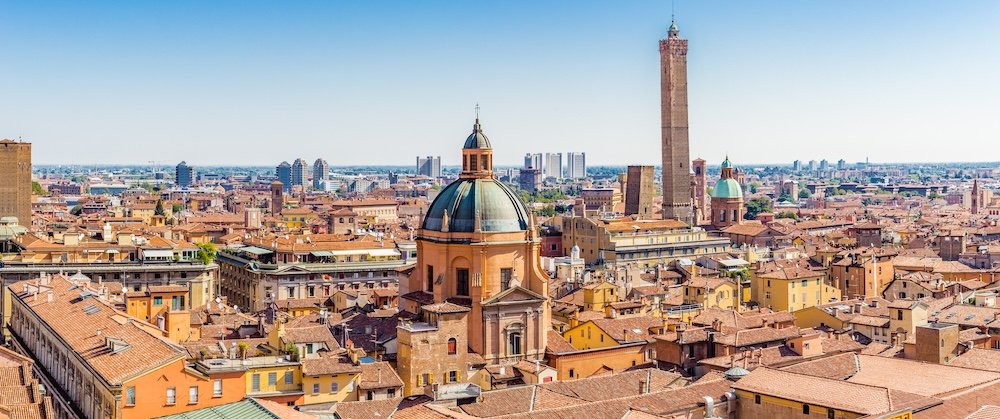
At the base of Bologna’s two famous towers, the morning air smells of espresso and wet brick, and bicycles pass through Piazza di Porta Ravegnana. The Torre degli Asinelli rises above them, built of 12th-century masonry, and stands 319 feet tall. Next to it stands the Garisenda, shorter and leaning at about four degrees. The city recently installed a protective fence around the Garisenda and used steel supports from the Leaning Tower of Pisa to help keep it stable. The taller tower, once climbed by visitors, has been closed since late 2023 while engineers look after its smaller neighbor.
WHY BOLOGNA
Bologna has long been known by three nicknames: la Dotta, la Grassa, and la Rossa, which translate as the learned, the fat, and the red. The “learned” nickname comes from the university established there in 1088. It is called Fat because a city kitchen invented tortellini, mortadella, and what is generally known as Bolognese meat sauce. The red nickname comes from the use of brick and roof tiles, and, as many locals will say, from its politics.
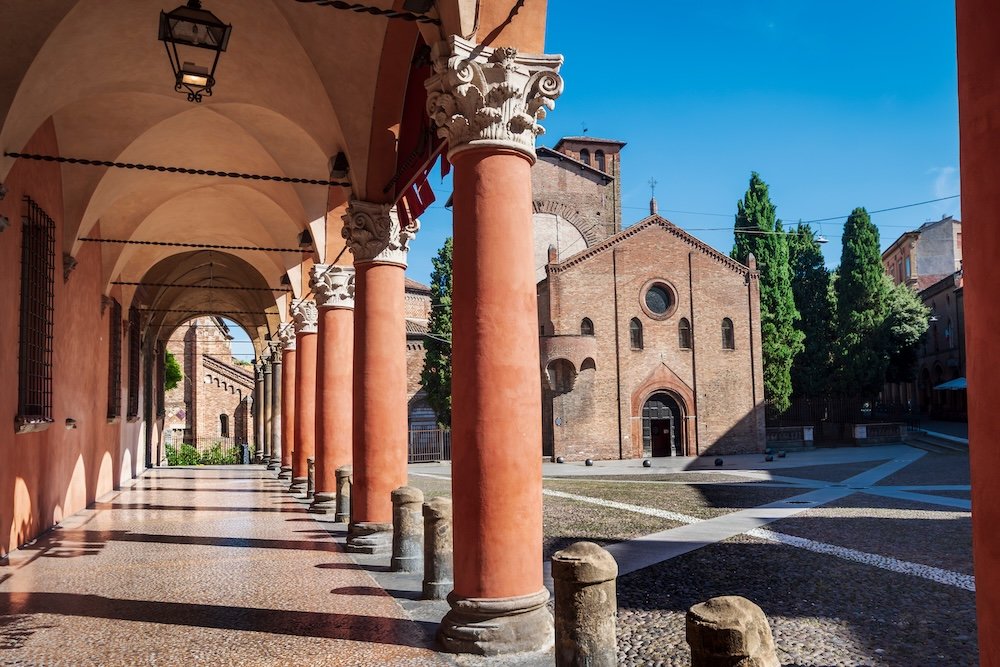
There are good reasons to visit the city: it has a well-organized, walkable medieval center, one of Europe’s largest, bordered by porticoes, a feature UNESCO added to its World Heritage List in 2021. With fast trains taking about 37 minutes to reach Florence, Bologna makes a convenient starting point and a great destination. It is perfect for food lovers, history buffs, walkers, and tourists who have already been to Rome, Florence, and Venice. The only honest thing to say is that the city is well known: in 2025, it had about 5.2 million tourist overnight stays, and the traditional market streets can resemble a food court during the day.
THE ATTRACTIONS EVERYONE COMES FOR
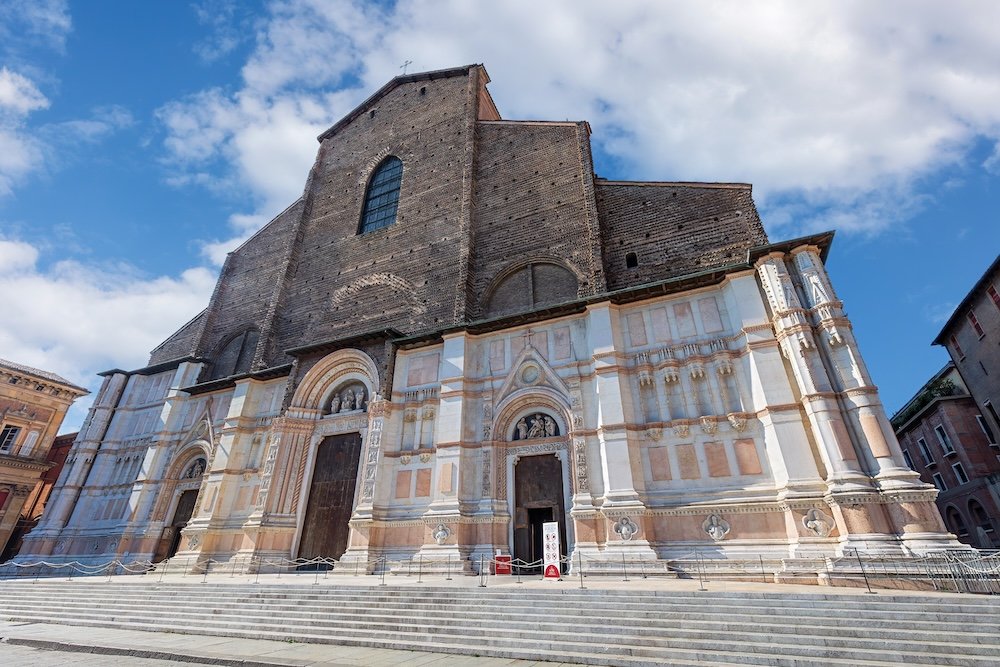
The Basilica of San Petronio, a Gothic basilica begun in 1390 and built by the municipal government rather than the bishops, dominates the main square. The building is 433 feet long, and only half of its façade remains covered in marble. Many believe Bologna intended to outdo St. Peter’s in Rome, but the pope thwarted the plan. Inside, a brass line stretches about 219 feet across the floor; Giovanni Domenico Cassini, then the university astronomer, laid out this meridian in 1655. In 1530, Pope Clement VII crowned Charles V, Holy Roman Emperor, here. Although entry is free, visitors are asked to cover their shoulders and knees. It’s an excellent spot for first-time visitors, architecture lovers, and anyone who wants a science lesson in a church.
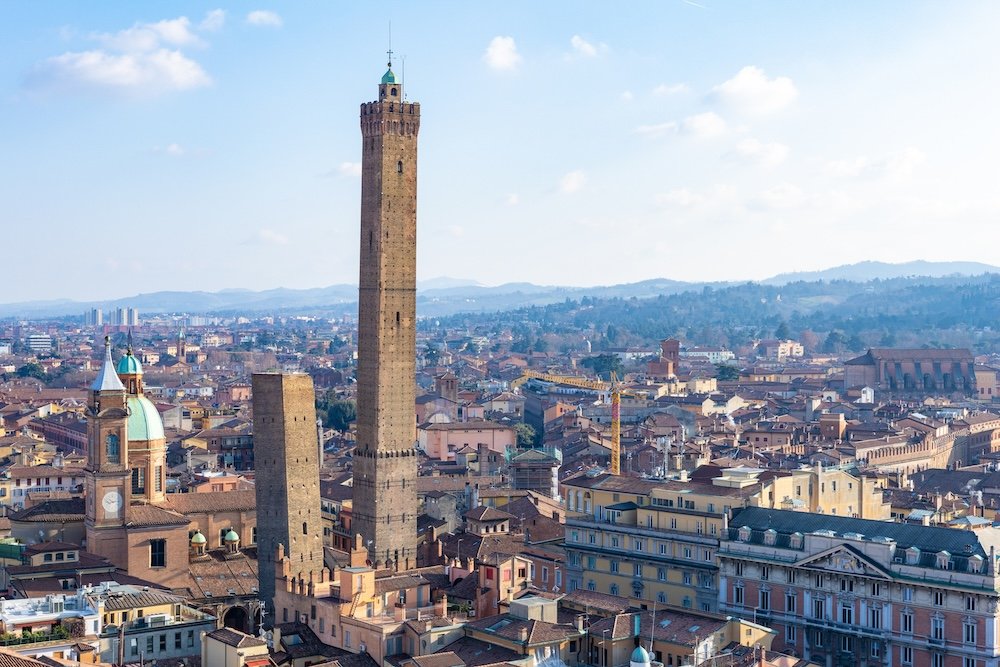
The Towers. When Bologna was at its peak, more than a hundred towers stood, each built by different families to display their status; about twenty remain, and the towers of Asinelli and Garisenda, built in the early 1100s, appear on all the postcards. The Garisenda tower, 158 feet tall, leans so much that Dante featured it in the Inferno. At present, you can’t climb the 498 wooden steps of the Asinelli Tower because no reopening date has been announced, and local authorities have set 2028 as a hopeful target. You can see the tower from the street for free.
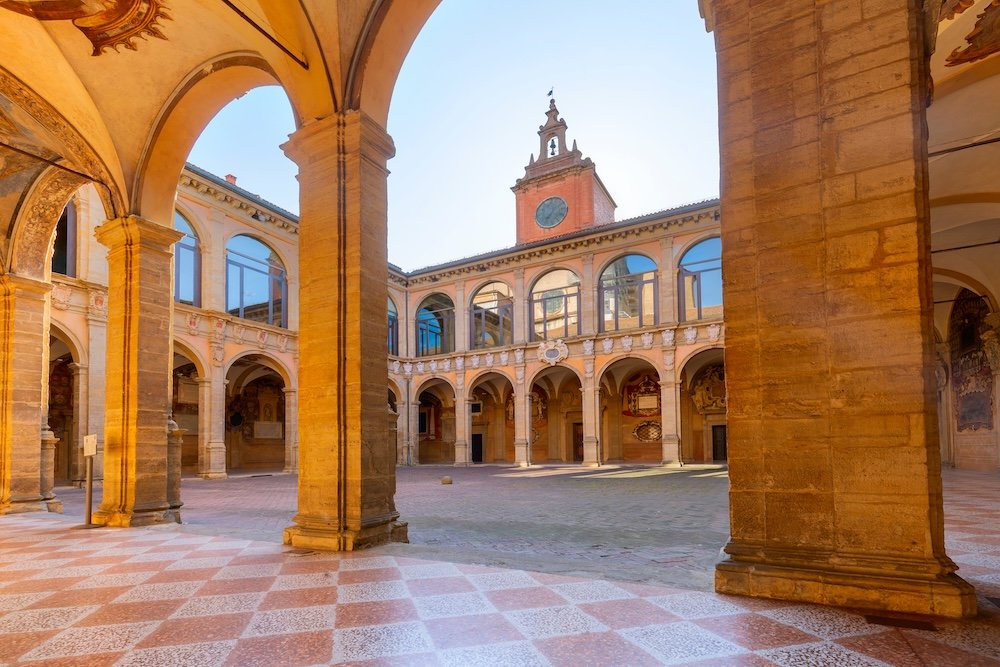
The Archiginnasio and the Anatomical Theatre. Built in 1562 and 1563 as the university’s first single building, the Archiginnasio is a palace whose arcades and staircases are decorated with thousands of painted coats of arms left by students and professors. The building’s upper section contains the Teatro Anatomico, a wooden lecture hall carved in 1637 where medical students watched dissections from tiered benches. Two wooden “Spellati”, sculpted in the 18th century by Ercole Lelli, support the canopy over the lecturer’s platform. The room was destroyed by bombs in 1944 and was then carefully reconstructed using a great deal of the original carving. Access is by timed ticket: €12 ($14) with a guide and €10 ($12) with an audio guide.
The place is known locally as the Seven Churches and consists of a series of interconnected sanctuaries that were first established as early as the fifth century; it is based on the holy sites of Jerusalem, with four of the churches still being present and linked together by a courtyard and a tranquil Benedictine cloister, the earliest stones of which date from the late antiquity period. Entry is free, and the site will interest tourists who prefer a peaceful environment, those who admire Romanesque architecture, and couples looking for a place to sit.
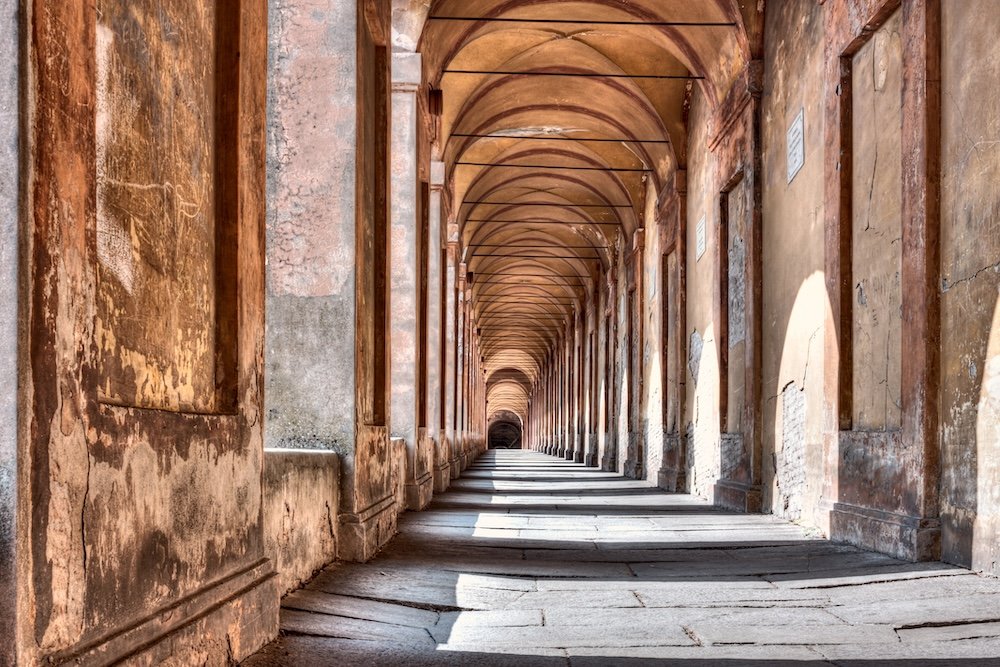
The Portico di San Luca, the world’s longest portico, runs from the city gate called Porta Saragozza to the Sanctuary of the Madonna di San Luca on a hilltop about 980 feet above sea level. It covers a distance of almost 2.4 miles under the span of 666 arches and was started in 1674 in order to provide shelter for pilgrims who were carrying a highly respected Byzantine image of the Virgin; the number 666 is no accident since it is traditional to say that the arches form a serpent which the Madonna crushes at the top.
NEIGHBORHOODS AND WHERE TO EAT
The Quadrilatero, the medieval market area just east of Piazza Maggiore, is made up of narrow streets lined with prosciutto and wheels of Parmigiano stacked on them. Nearby to the northeast, the area around the university near Via Zamboni is noisy, covered with flyers, and its atmosphere comes from the availability of cheap spritz.
The most excellent meal in Bologna might in fact be one that the restaurant does not itself provide. Osteria del Sole, which opened in 1465 on the one-block Vicolo Ranocchi, offers only wine and beer and asks guests to bring their own food. So it is best to buy some mortadella and bread at a shop in the Quadrilatero, for instance at Salumeria Simoni, and take them with you.
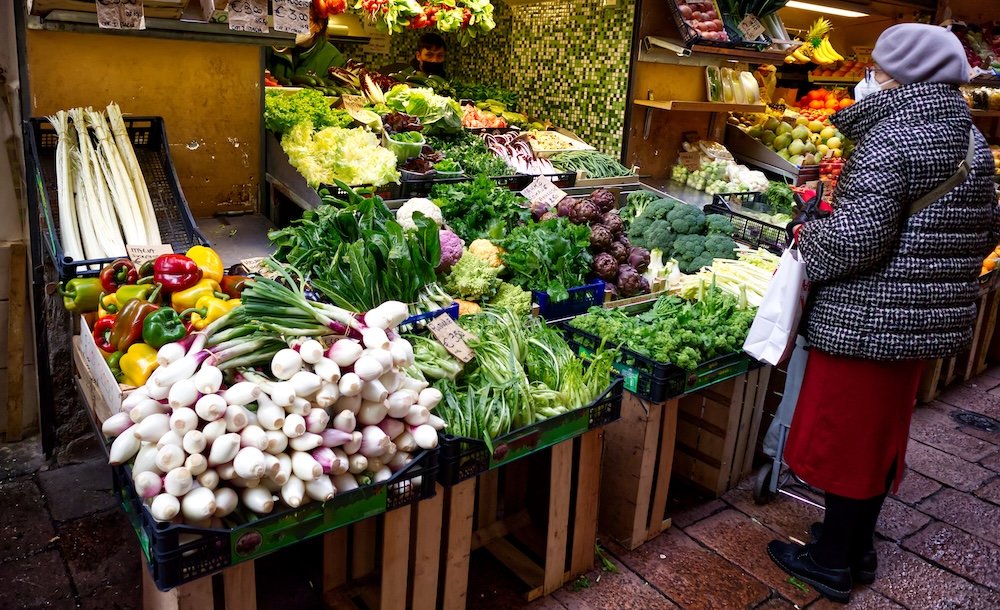
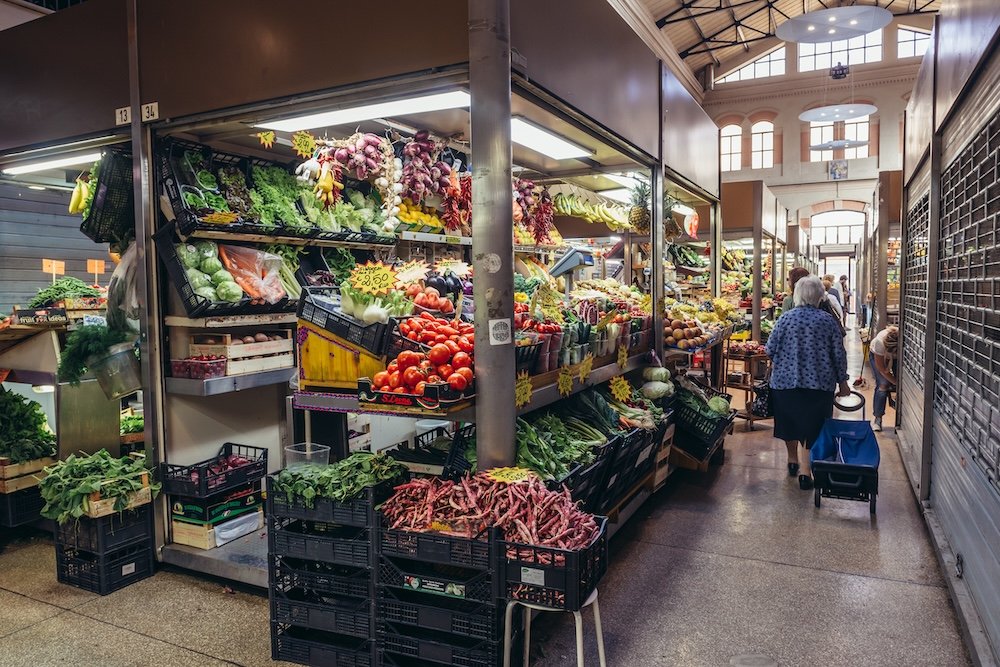
The Mercato delle Erbe on Via Ugo Bassi, the area’s largest covered market and central market since 1910, has stalls selling fruit and vegetables in the morning, along with lunch counters and aperitivo bars. As for tortellini in broth, the small meat-filled pasta served floating in broth, Sfoglia Rina on Via Castiglione works behind glass with its dough, and the queue outside the door tells its own story. Request tagliatelle al ragù, not spaghetti. In 1982 the Italian Academy of Cuisine went so far as to deposit the classic ragù recipe with the Bologna Chamber of Commerce, including the milk, and a former mayor has maintained on national radio that spaghetti Bolognese does not exist.
The precise date Bologna was founded is partly a committee decision. Later, a committee led by the poet Giosuè Carducci selected 1088 as the university’s founding year, linking it to Irnerius, a scholar who revived the study of Roman law. What actually took place was rather unusual in that students from all over Europe established guilds known as “nations”, and it was these guilds and not the teaching staff who took charge of the university; they hired the professors, set their salaries, and imposed fines whenever the professors were late or failed to complete the syllabus by the end of each semester.
In 1563, Pope Pius IV, whose territories extended to Bologna, had a fountain built in the square adjacent to Piazza Maggiore. The sculptor Giambologna, born in Flanders and still recovering from losing a similar competition in Florence, received the commission and, by 1566, had positioned his bronze Neptune, which stood about 11 feet tall. Locals call him al Żigànt, meaning the Giant. Church officials asked the sculptor to simplify the god’s anatomical features, and Giambologna responded by applying geometric principles. One of the paving stones behind the statue aligns with Neptune’s outstretched thumb and groin, prompting first-time visitors to pause, then laugh. Neptune’s trident later inspired the badge of Maserati, the car manufacturer established in Bologna.
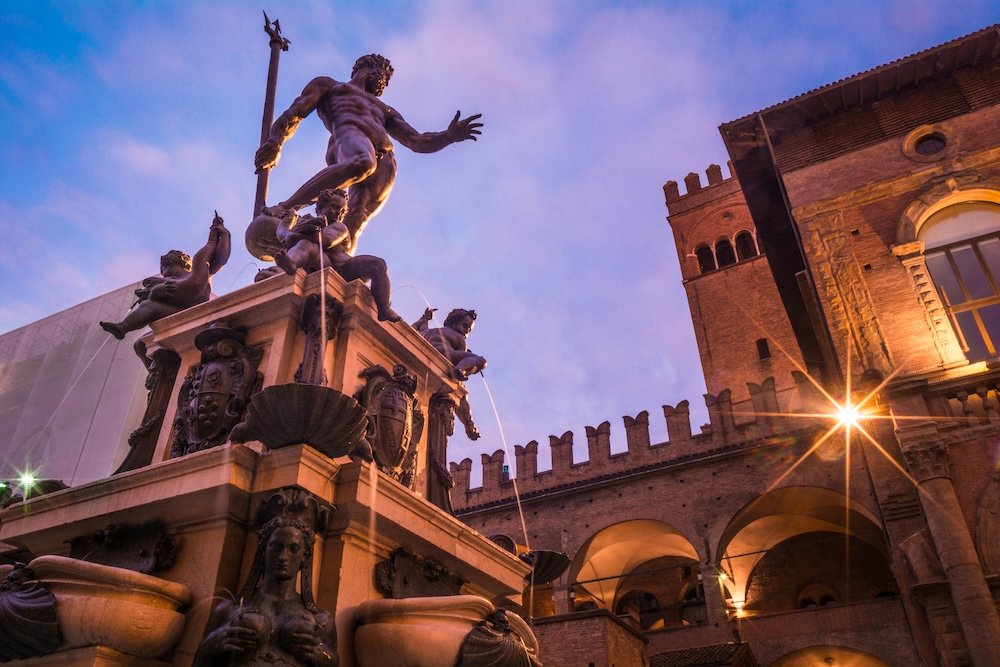
For centuries Bologna was a city built around water. Since the 12th century, a 37-mile canal system, fed by the Reno and Savena rivers, has powered silk mills and let barges travel all the way up to the Po. Most of the canals were covered between the 1930s and the 1950s. On Via Piella, a small window in the wall provides access to one section that remains: the Canale delle Moline, lying between the back walls of some of the old houses. Locals call it Little Venice, a pleasant and charming name. Below ground, the Renaissance cistern known as Valverde, long incorrectly called the Bagni di Mario, was built to supply water to Neptune’s fountain and is now open to the public for occasional guided tours.
PRECAUTIONS WORTH TAKING
As Italy is a member of the Schengen Area, American citizens may stay up to 90 days in any 180-day period, provided their passport is valid for at least three months beyond their departure date. A camera-monitored traffic zone operates daily from 7 a.m. to 8 p.m., and each offense results in a fine of about €83 ($95), plus rental company charges that arrive several months later. The city also at times bans the sale of drinks in glass in nightlife areas and near major events. Summers are hot and humid, and winter fog can cause poor air quality for several days.
WHEN TO GO
Spring is at its finest, with average daytime temperatures rising from the mid-60s in April to the mid-70s by May, and café tables once again set under the arcades. In June, the weather warms, and in July and August average daily temperatures reach the upper 80s with high humidity. By September, temperatures drop to the upper 70s, and in October, when temperatures are in the upper 60s, the wettest weeks of the year occur; the porticoes prove their worth. From November through February, daily highs stay between the mid-40s and mid-50s, nights near freezing, and fog covers the plain, but the museums are quiet, and every trattoria has a pot of broth boiling.