


A man selling roasted sweet potatoes wheeled his cart directly into six lanes of moving traffic, set up between two idling buses, and kept working as though he were standing in a quiet kitchen. Around him, cars braided past each other with no visible signaling system beyond the horn, which in Cairo functions less as a warning than as conversation. I asked my hotel doorman how anyone crosses that road on foot. He shrugged and said, “You just go. Walk like you know where you’re going, and the cars will go around you.”
That’s Cairo in microcosm: a place that appears like chaos to outsiders but, with enough understanding, operates with true order. The concept applies to practically anything else in this city, from navigating intersections to purchasing rugs. Commit to a pace and understanding, and the chaos accommodates you.
Navigating Cairo
Cairo’s metro system, the oldest in Africa, is the most efficient way to cover real distance, is cheap, and is insulated from the craziness of street traffic. For everything else, Uber and Careem both work here and are worth sampling and comparing prices before you commit, as they’ll both ask for 10-15 percent over whatever agreed-upon price you name. Street taxis exist and are perfectly serviceable, though most do not use meters and will name a price before you close the doors. Walking is also an option, but will expose you to the aforementioned street taxis and the aforementioned baksheesh culture, which will ask for 20 to 50 Egyptian pounds for services that would be considered menial back home, from opening doors to watching.
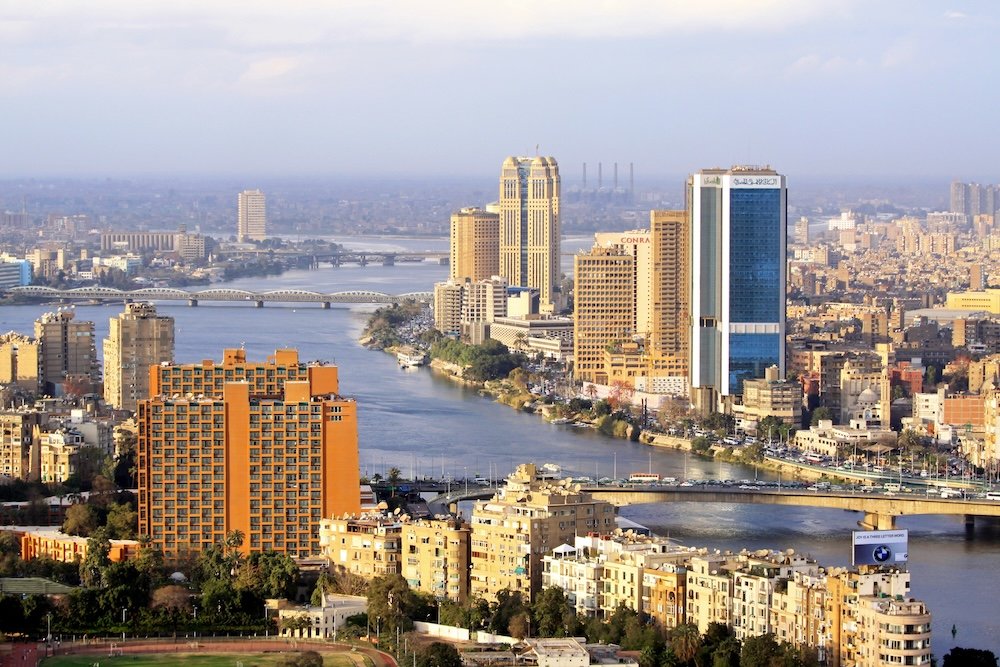
Where you stay influences your trip more than almost any other factor. Zamalek is an island connected to the mainland by bridges. It offers tree-lined streets, the Cairo Opera House, and a genuinely relaxing change of scenery without being far from anything. Downtown Cairo and adjacent Garden City put you in the city’s beating heart, which is a bit noisier and less walkable but close enough to Tahrir Square that you’ll spend less time in vehicles and more where you want to be. Giza will let you wake up with the pyramids as backdrops to your windows, though you’ll be isolated from downtown life once the sun sets. Maadi is a leafy suburb to the south and trades proximity for relaxation, which is a fair trade if this isn’t your first time visiting Cairo.
Cairo’s heat is heaviest in the middle of the day, so save museums and other indoor stops for those hours and push outdoor sightseeing to the morning or early evening.
Pick up a handful of Arabic phrases before you go. Most people working in tourist areas speak English, but “shukran” (thank you) and “min fadlak” (please) cost nothing to learn and go a long way toward showing you’re paying attention to where you are.
Bargaining isn’t optional in the markets or with taxi drivers; it’s simply how prices get set. Counter with roughly half the first number you’re quoted, hold your ground politely but firmly, and be ready to walk away if you can’t land somewhere fair. Fair cuts both ways, though; the goal is a good price, not squeezing someone down to nothing.
Your travel advisor can connect you with a tour operator that offers tours to the pyramids and other major sites. A good one earns their fee quickly, filling in historical context, walking you through local customs you might not think to ask about, and keeping tourist scams from ever getting started.
The food, the customs, the money changing hands
Begin your days with ful medames, fava beans slow-cooked to death and a Cairo staple. Find koshari for lunch, a towering pile of rice, lentils, pasta, and caramelized onions topped with tomato sauce. Street food stands are generally safe to eat from; Cairenes follow the rule of finding the stall with the longest line of Egyptians, not tourists. Drink bottled or filtered water at all times, and avoid ice unless you know its source. Avoid raw produce washed in tap water. Dress modestly, particularly around mosques, as the call to prayer five times a day will reconfigure your neighborhood’s rhythm without anyone seeing it as an inconvenience.
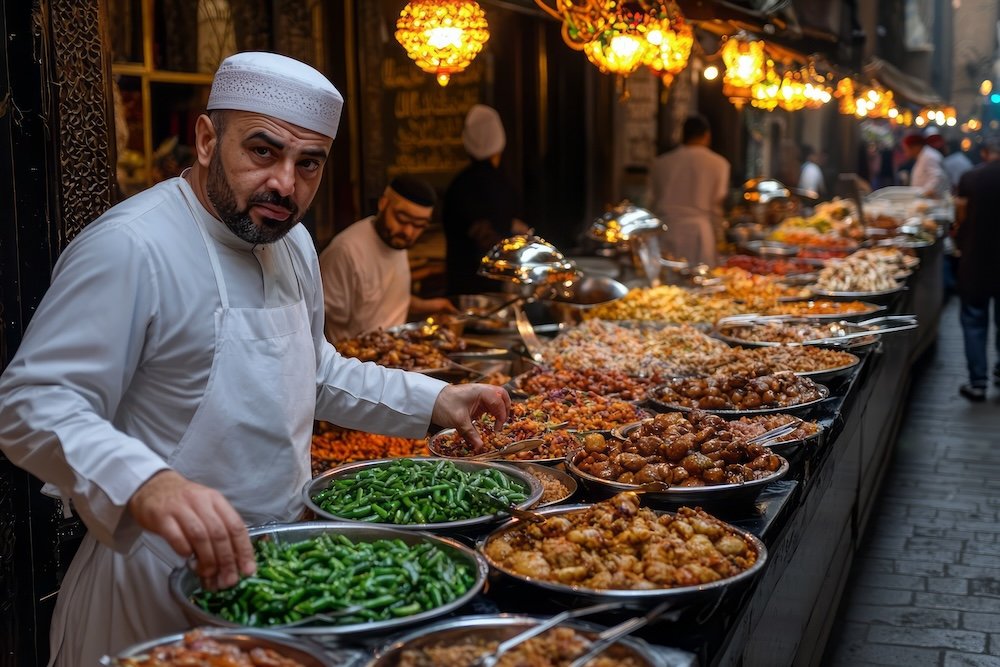
Baksheesh, the culture that drips down and under nearly every service transaction, functions less as a tip in the American sense and more as an acknowledgment of where service workers operate on payment, and a person opening a door for you or guarding your shoes at a mosque is performing a small service and expecting a small note in your hand in return, generally 10 to 50 Egyptian pounds. Restaurants will often tack on a service charge of about 12 percent and still anticipate another 10 to 15 percent on top of that. Carry small bills for tips, as nobody will have change for your scam-sized tip, and that’s exactly the point.
Giza – What to watch out for on the plateau
The pyramids photograph as if they preexist, separate from everything else, hovering beyond the edge of the world. They do not. Cairo’s western sprawl has essentially absorbed Giza, and the plateau is the only part of Cairo where the hassling is genuinely incessant. Purchase your tickets only at the official booth, never at someone stationed in the parking lot.

A well-dressed stranger who walks alongside you and begins reciting history is not your new friend; he’s a self-appointed guide there to demand money once you pass the gates. Camel and horse handlers will quote an initial price and then claim it was per person or one-way, so agree on a total for your group, round trip, before anyone climbs aboard.
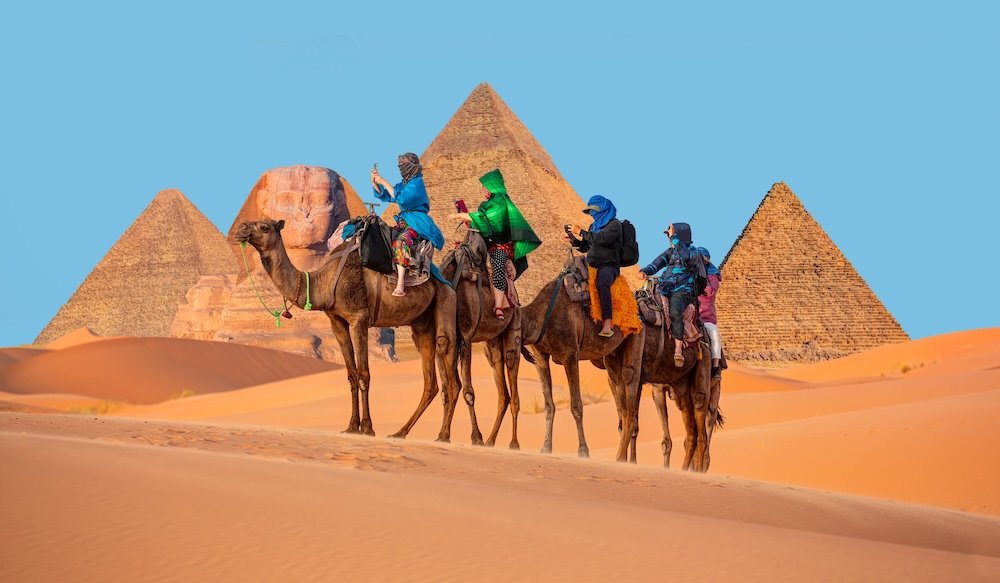
Camel rides at the Giza Pyramids are widely considered unethical because the animals often suffer from severe abuse, exhaustion, and a lack of water or shade. Do not accept anything pressed into your hand as a “free gift” because it most definitely is not. It is not dangerous, merely constant, and will dissolve into the wind within moments of your refusal. Bring more water than you think you’ll need and wear shoes you don’t mind getting sandy, as the landscape is lighter and more inclined than photographs suggest. The payoff for wading through that barrage is standing alongside something genuinely too large to photograph well, and now there’s a second payoff next door.
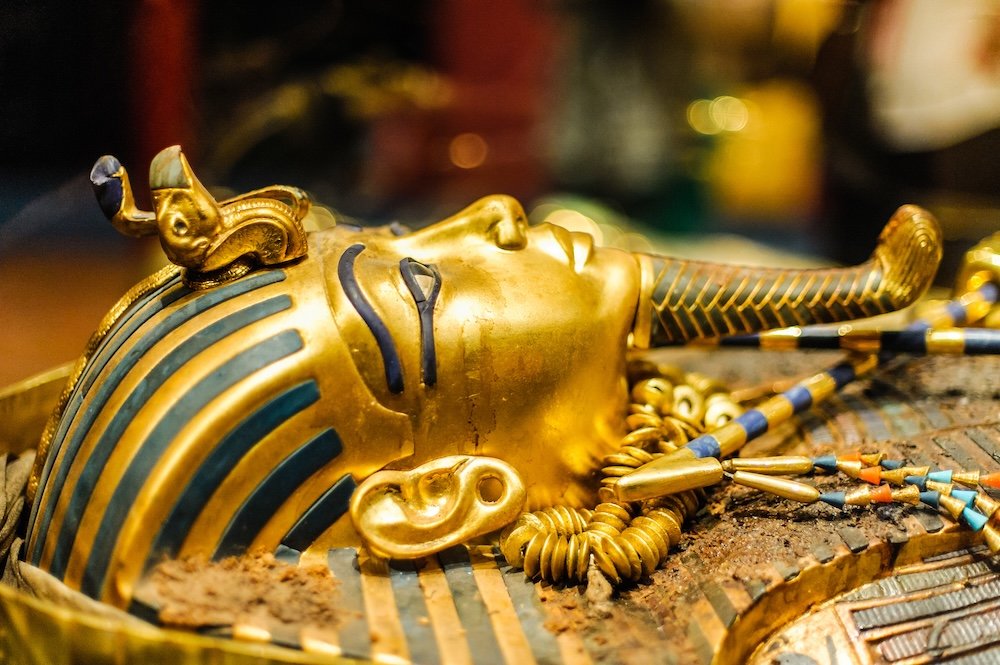
The Grand Egyptian Museum opened in November 2025 after nearly two decades of construction, connected to the plateau by a bridge, and holds two halls dedicated to all 5,000 pieces of Tutankhamun’s collection, on display together for the first time since Howard Carter opened his way into the tomb in 1922.
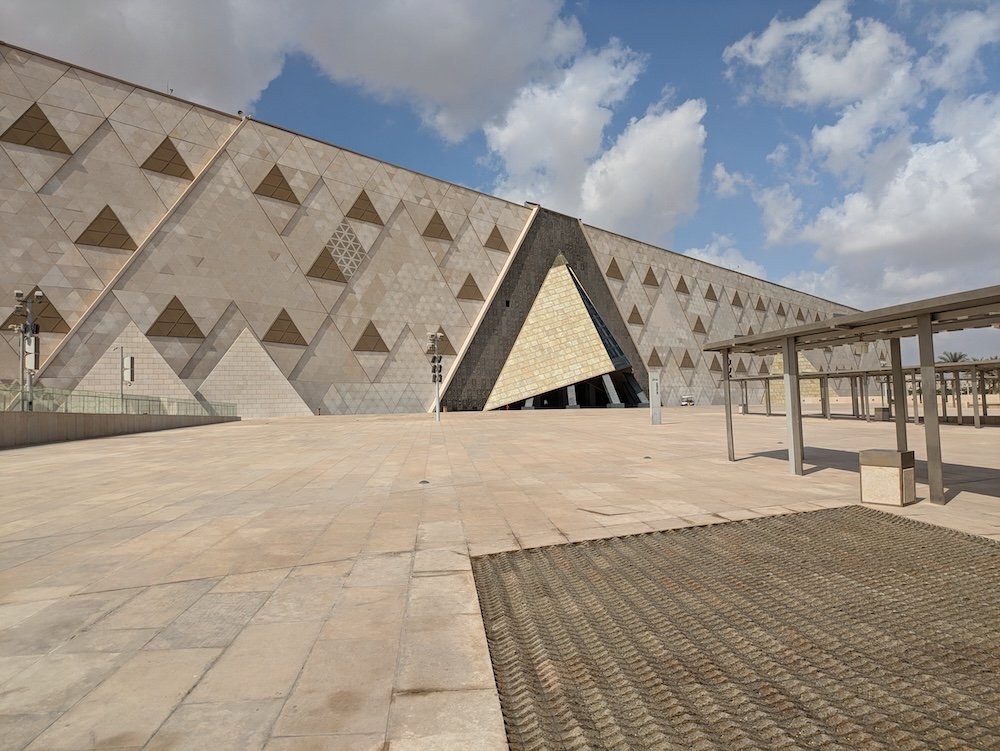
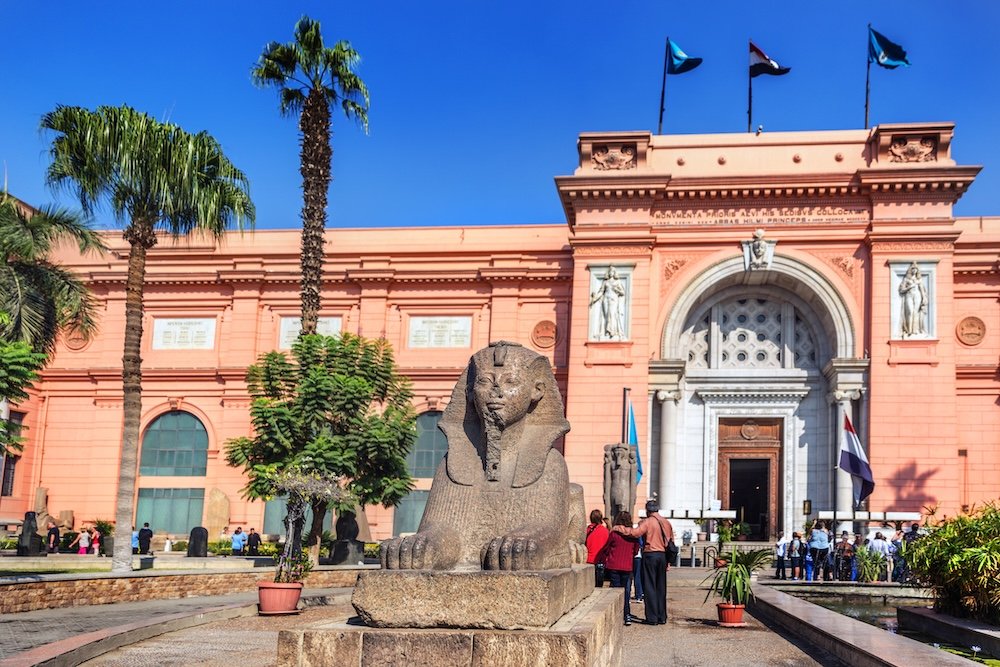
The Egyptian History Museum in downtown Cairo, Tahrir Square, and the pink building with creaking wooden cases, has not closed. The government left it open as a research and exhibition center, still housing thousands of Middle Kingdom, Late Period, and Greco-Roman pieces that did not make the move to the new hall. Seeing both in a single trip, the empty expanse of the grand new hall and the packed confines of the crowded old one, tells you more about how Egypt deals with itself than either building alone.
Khan el-Khalili
Khan el-Khalili is a historic bazaar and open-air market in Cairo, established in 1382 and situated in the heart of Islamic Cairo, close to major landmarks like the Al-Azhar and Al-Hussein mosques. The maze-like alleys feature shops selling spices, gold jewelry, perfumes, handmade crafts, and colorful lanterns.
Khan el-Khalili lives up to its reputation, but Cairenes shop at Wekalet el-Balah, a market for fabrics and clothing wedged into the Boulaq district just off the Nile. On Tentmakers’ Street south of Bab Zuweila.
Renting a Felucca
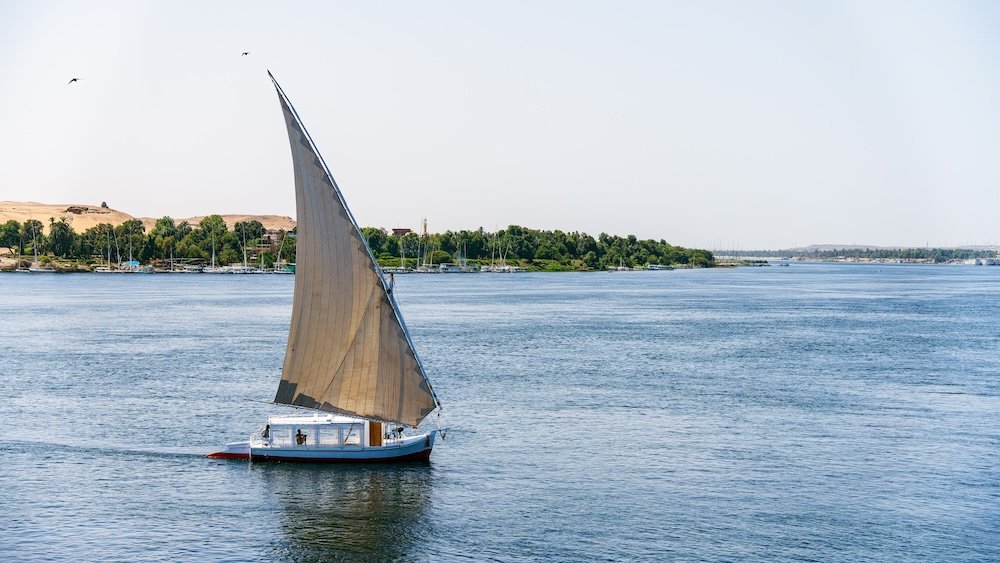
Feluccas, Egypt’s traditional single-sail wooden boats, still work Cairo’s stretch of the Nile the old-fashioned way: no motor, no schedule, no ticket counter. You should consider a short ride. Captains cluster along the corniche in Garden City and around the hotels on Gezira Island, including the Four Seasons, the Hyatt, and the Sofitel. Rates are set by the boat rather than the person, and a captain’s quote is always the opening bid rather than the final one. Settle on a total and a length of time before anyone unties a rope, and treat sunset as worth paying a little more for; the light off the water that hour, with the city’s traffic noise finally dropping away, is an experience.
A ?city ?built on the dead
Al-Qarafa, better known to the Cairenes as the City of the Dead, is a necropolis more than seven hundred years old, and to the people who live here, “living among the tombs” is so normal that it doesn’t provoke much of a curiosity. The City of the Dead is first and foremost a slum, and since before anyone had the bright idea of affixing a blue UNESCO plaque, it has also been a historical site. How many people live here? No one can agree, which is part of the point. The census of 1898 recorded thirty-five; in 1947 the figure was sixty-nine thousand; the 1986 census estimated that residents of the district of the cemetery were around a hundred and eighty thousand, and the 1992 earthquake hastened the upward trend by heaving enough of Cairo’s venerable apartment blocks to dislodge newly homeless searchers of a free place to live, any place to live.
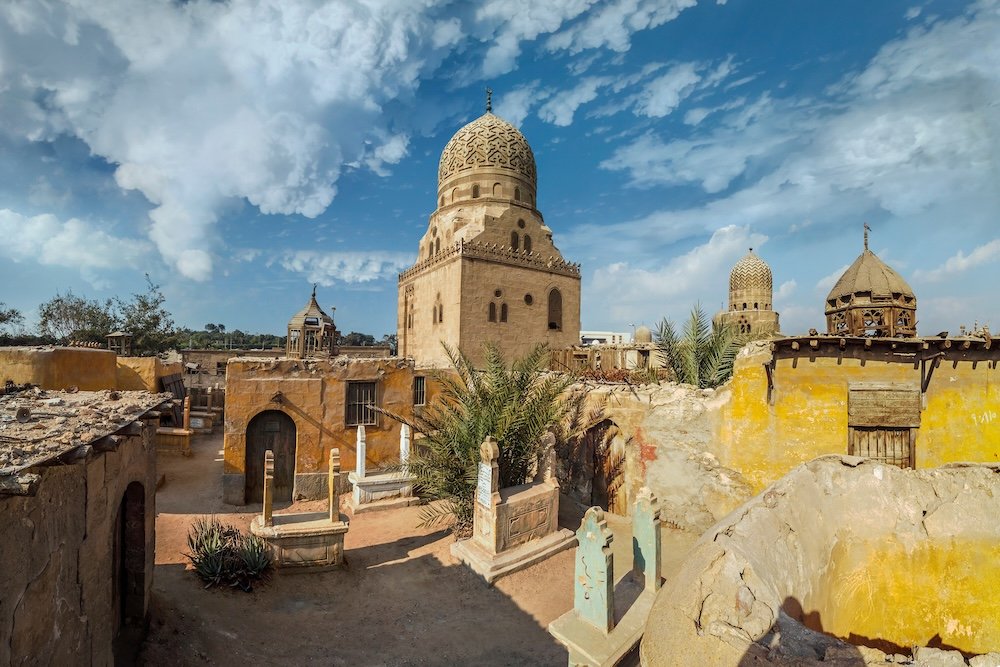
Guides and newspapers speak of a million today. Researchers who have access to actual census figures would put the figure for the actual necropolis in the tens of thousands, subsumed within a wider administrative district of some three hundred and seventy-five thousand people who inhabit an area well beyond the actual tombs. The residents are different too. Some are members of families that continue to tend their plots, generation after generation, long after the deceased had moved on. A man from one such family told a reporter his family had lived in the Qarafa for 350 years. Day laborers, with no relation whatsoever, are paid not in cash but in free lodging, a practice that predates Cairo’s housing crisis, which has since incorporated it. “This isn’t my family mausoleum,” declared one long-term resident of the tomb she tended. “I just look after it for someone else.” The older, more established neighborhoods have evolved into proper neighborhoods, with a school, a post office, a medical facility, corner stores, and tea houses where residents buy the same rice, bread, and vegetables that other Cairo residents are cooking with tonight. By any honest assessment, one of the poorer neighborhoods in Cairo, it is also, without a doubt, a neighborhood. It has a grim sound until you’re actually there, with kids kicking a soccer ball between gravestones while a grandmother air-dries laundry on her family crypt.
A day trip to Alexandria
Alexandria is a bit under four hours by desert road from Cairo and close enough for a full, ungrueling day. The quickest way to get between Cairo and Alexandria is the newer Talgo train service, which makes the run in about two and a half hours. Scan the timetable, though, and you’ll notice some departures take considerably longer, occasionally by more than an hour. Those are the trains that stop in town after town along the line, and the extra time buys you something the express skips entirely: vendors climbing aboard at each stop to sell snacks, sweets, and toys down the aisle. It’s a genuinely fun way to see more of the route if you’re not in a hurry; just don’t expect to make good time.
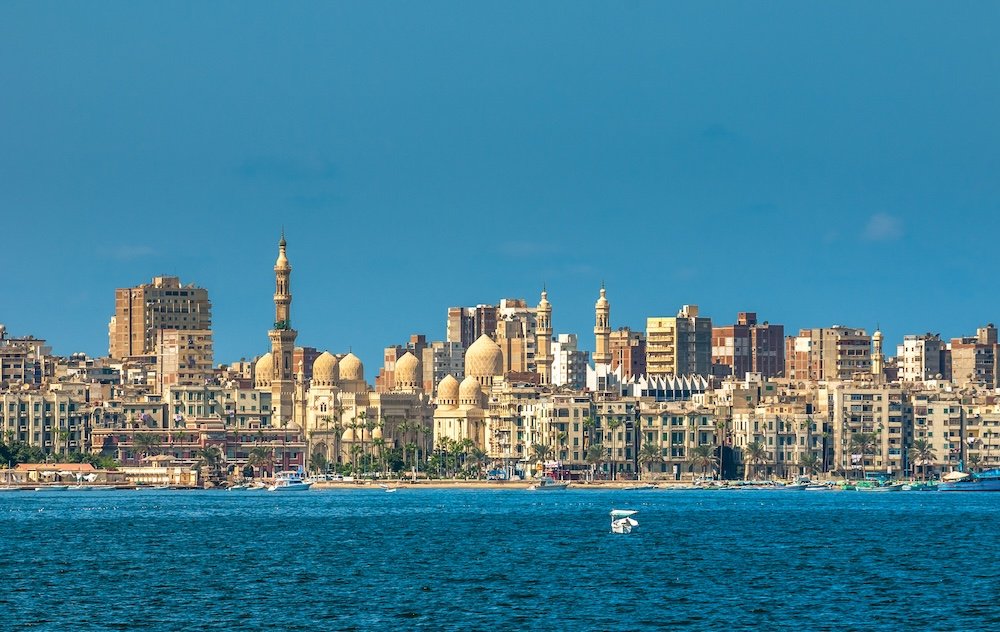
Whereas Cairo centers around the Nile, Alexandria centers around the Mediterranean, and the change in air alone is worth the drive. The Bibliotheca Alexandrina, a massive tilted disc of a building designed to resemble a rising sun, honors the library that burned here and now holds millions of books alongside a planetarium. The Citadel of Qaitbay, a 15th-century fortification built from the stones of the ancient Lighthouse of Alexandria after it finally tumbled, rises at the edge of the harbor with views back across the water. Pompey’s Pillar, a nearly 90-foot-tall column of red granite with absolutely no connection to the Roman general whose name it mistakenly bears, ascends from the site of the ancient Serapeum. The Catacombs of Kom el Shoqafa run three stories underground, their carvings mixing Egyptian, Greek, and Roman styles in a way that shouldn’t work but does. End on the Corniche with grilled fish, and the sea breeze Cairo does not have.