


Animal tourism’s worst offenses don’t come with an abuse sign per se. They come with an opportunity sign. Ride an elephant. Cuddle a tiger cub. Swim with a dolphin. Drink the world’s most expensive coffee. Such operations often use the word “sanctuary,” which in most countries literally means nothing and could apply to both a legitimate rescue center and a roadside pen with a gift shop. If you truly love animals, and as difficult as it can be to contemplate, seeing the pattern across different species and continents is the first step toward not supporting it as you travel.
The Elephant You’re Riding Learned to Carry You the Hard Way
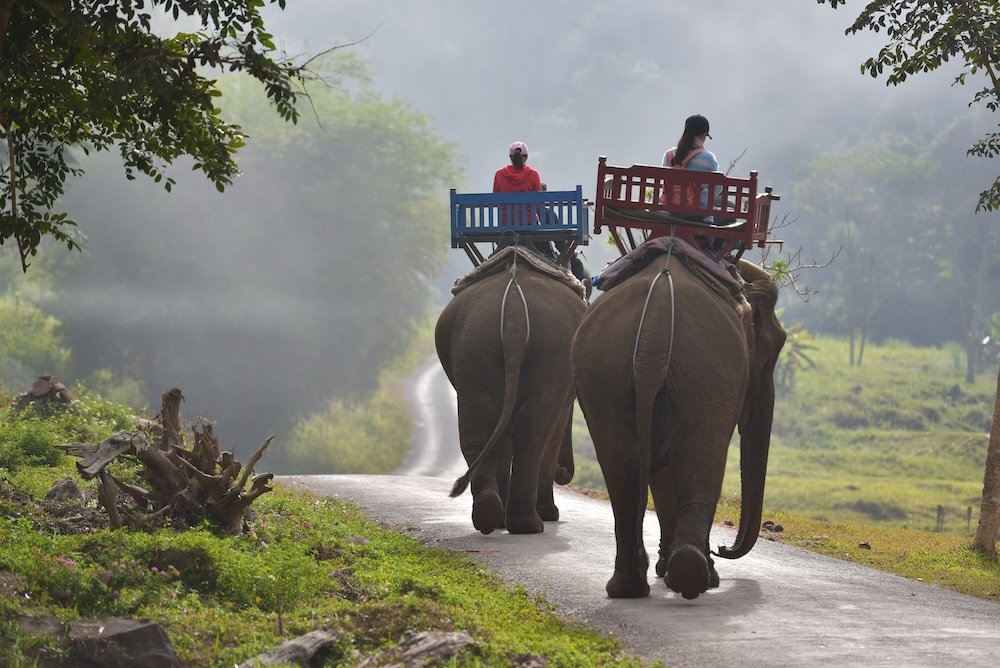
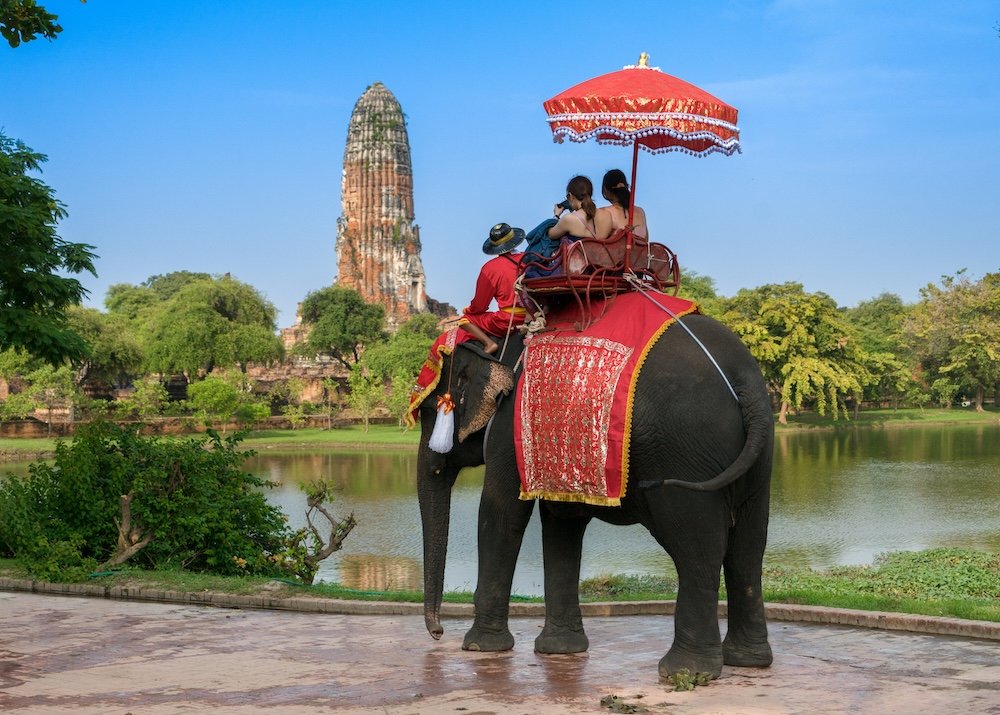
Elephant riding is one of the most photographed tourist activities in Southeast Asia and one of the most quietly harmful. A wild or captive-bred elephant won’t normally allow a bench to be strapped to its back and a hook near its ear without first undergoing a training regimen called phajaan, or “the crush,” as a calf, which involves days to weeks of shackling and pain conditioning to break its spirit. Riding itself causes permanent spinal damage in an animal not designed to carry a saddle. Even camps that feature elephant bathing rather than elephant riding aren’t necessarily ethical. Commanding an elephant to scrub itself several times a day for a paying audience is still an animal performing, not living like an elephant. The only difference worth noting is whether it can leave and, better yet, whether it does.
Cubs Bred to Be Touched
In ?June 2016, ?Thai wildlife officials visited Kanchanaburi’s Tiger Temple to relocate some of its famed tigers. Instead, officials found dead tiger cubs, preserved body parts, and illegal wildlife skins hidden on the property, linking the site to trafficking. The temple had charged tourists about $17 per person to take photos with so-called tamed, temple-raised tigers that were supposedly docile enough to be walked on a leash. Officials said the temple had been breeding the cubs for the wildlife trade and killing any that couldn’t be sold or displayed. The temple closed within days.
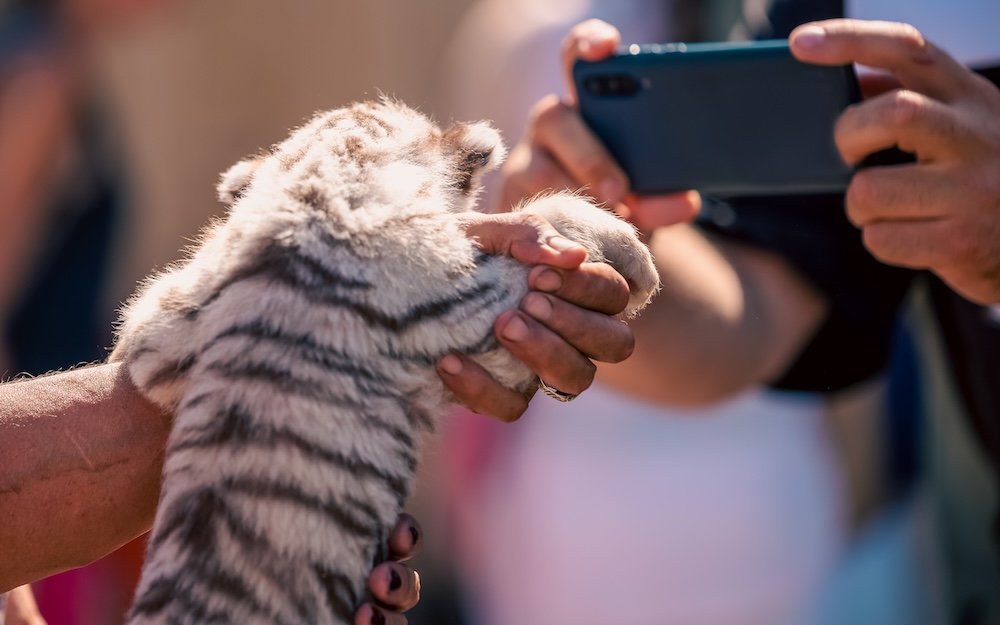
Tiger Temple was neither the first nor the last of its kind. It was just one part of a supply chain that also includes South Africa’s captive lion industry, which breeds cubs for petting and photo opportunities that are too big to handle after a few months, then funnels them into canned trophy hunting or the bone trade instead of restarting the cycle with the next batch. Animal welfare organizations estimate some 8,000 lions across roughly 350 facilities nationwide, with a promised but unsigned prohibition notice five years later. Taking a photo with a cub, however innocuous it may feel at the time, is often Step One of a business plan that ends somewhere much darker.
In the United States, Congress signed the Big Cat Public Safety Act into law in December 2022. This federal law makes direct public contact with big cats, including petting, feeding, and photo ops with tiger cubs, illegal. The law applies to lions, tigers, leopards, jaguars, cheetahs, cougars, and any hybrids.
Tanks Too Small for What Lives In Them.
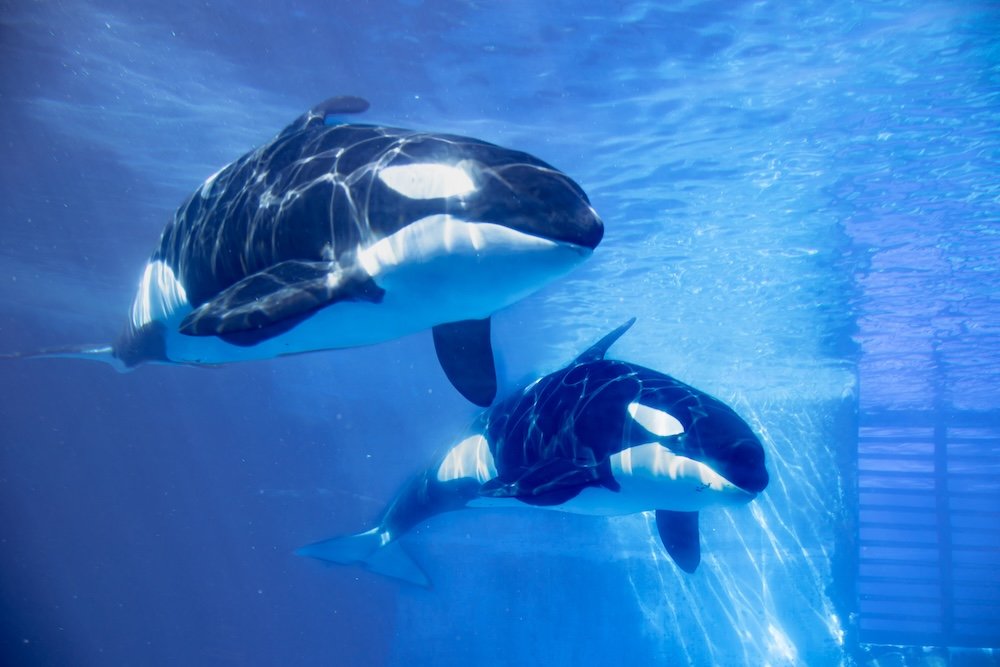
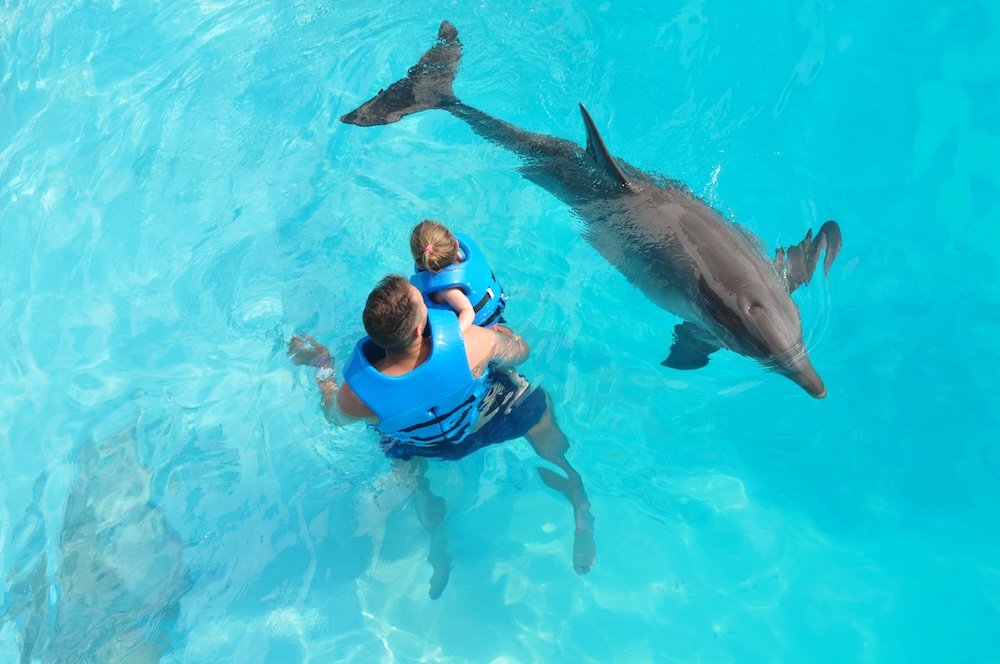
The math isn’t on marine mammals’ side. A wild orca swims around 40 miles a day on average, diving repeatedly to forage and maintain fitness. Its captive counterpart is limited to swimming around a tank that might be 150 feet long. The result? Stressed and under-stimulated orcas are known to grind their teeth against their tanks’ walls and barriers so frequently that a 2017 study found severe tooth damage in a quarter of captive orcas in U.S. facilities and at least some wear in most of the others. SeaWorld announced the end of its orca breeding program in 2016 amid sustained public pressure, a real milestone except that the orcas born earlier still have their entire lives to live out in SeaWorld parks. Smaller, dolphinarium-style or swim-with-dolphins operations around the world made no such commitment, and captive breeding and forced performance remain a standard part of their practices.
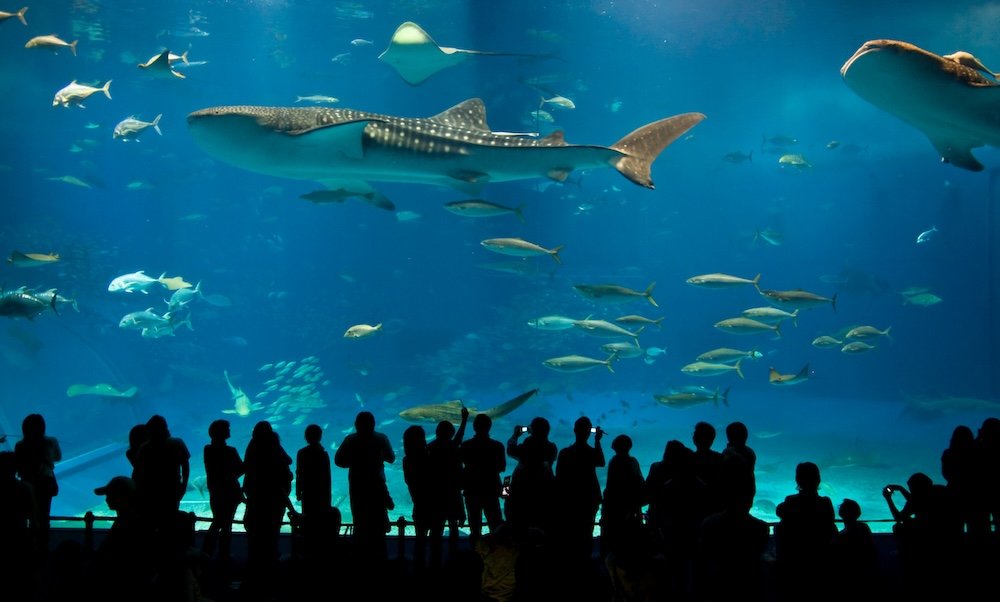
Whale sharks are even more math-unfriendly given that they’re the largest fish in the ocean, growing to over 40 feet and traveling entire ocean basins in their lifetimes. These animals are inherently migratory. The only Western aquarium still displaying them does so in a 6.3-million-gallon tank claimed to be one of the largest in the world, which is still, for an animal built to cross oceans, just a swimming pool. The Georgia Aquarium was forced to euthanize Taroko, a whale shark it rescued from a Taiwanese seafood market and displayed for nearly two decades, in August 2025, leaving only one whale shark, Yushan, swimming alone in a tank meant for companionship. Large marine animals raised in captivity have an average lifespan of five years.
Animal products, skins and medicines
You’ll never physically set foot inside a bear bile farm, which is exactly how bear bile farming works. Moon bears are housed in cages only slightly larger than themselves, and their bile is extracted through a catheter or open wound repeatedly throughout their lives, in a product still sold in some traditional medicine markets despite synthetic and herbal alternatives rendering the practice medically obsolete. Rhino and elephant poachers illegally kill their prey to sell for the ivory and dubious “medicinal” potions in China and elsewhere.
Smaller Stages, Same Script
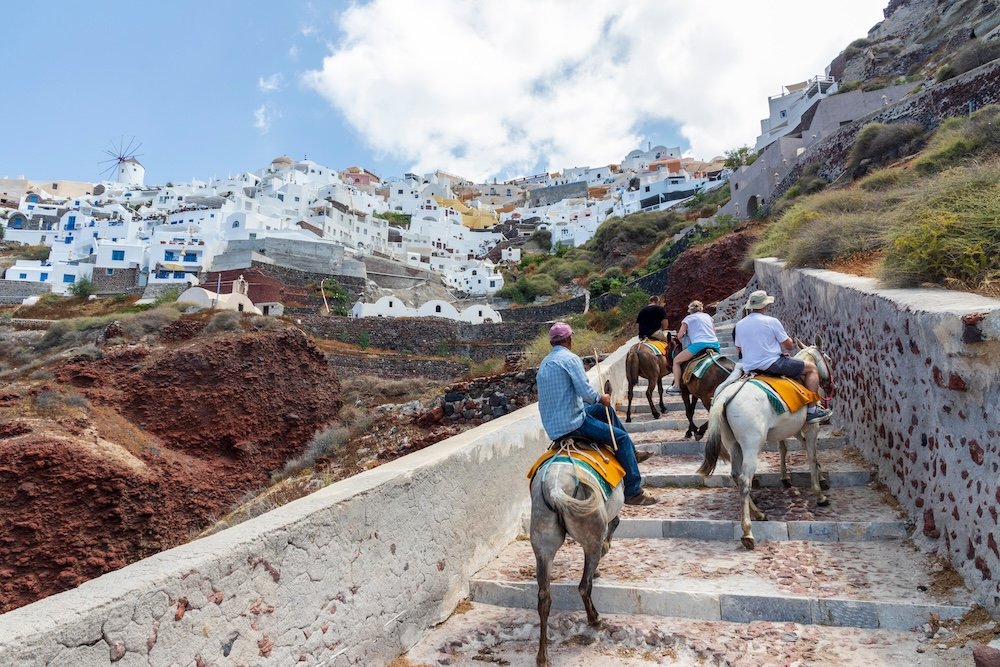
Donkeys hauling tourists up Santorini’s switchbacks through the summer sun, camels posing for photos at Giza at midday, horses pulling tourist carriages through cobblestone streets: these animals don’t make headlines, but veterinary groups have been documenting overwork and dehydration among Santorini’s donkeys for years, enough to prompt a partnership between a local campaign and a cruise line to ask visitors to walk instead simply.
Owl and otter cafes popular in Japan keep nocturnal animals awake and handled during the day in conditions welfare researchers liken to a person being held constant inside a crowded, noisy theme park, with some staff members at facilities noting stress behaviors such as feather plucking and pacing as a result. Traveling circuses that still feature big cats, bears, or elephants continue to exist in some areas, even though more than 70 countries and territories have banned or restricted such animal use in circus acts. None of these operations receive a raid or a headline. They get a paying audience.
Then there’s the tourism you drink or wear home. Kopi luwak, marketed as the world’s most expensive coffee due to its travel through the digestive tract of an Asian palm civet, was initially just a byproduct of wild civets performing their natural functions. Demand has turned this into a caged industry, with civets in parts of Bali and Sumatra confined and force-fed coffee cherries. Coral jewelry. Tortoiseshell combs—taxidermied wildlife sold at beachside markets. Sea turtle attractions like the Cayman Turtle Center that raises endangered green sea turtles for both tourist interaction and consumption blur the line between conservation messaging and farming close enough to National Geographic’s reporting that even the outlet has trouble determining which side of that line the facility actually operates on.
This isn’t to say you need to stop visiting animals on your travels, and you shouldn’t. However, you can watch for a short list of telltales. A legitimate sanctuary won’t allow you to ride, hug, or handle any wild animal and will let you know before you ask, usually with more than a mere apology. It won’t be breeding animals, since a real rescue operation doesn’t need more of them, just the ones already in trouble. It can tell you specifically where an individual animal came from and why it can’t be set free rather than offering vague rescue talk. It won’t stage shows or tricks, and its enclosures will look designed for the animal rather than the camera’s angle.
In the United States, certification by the Global Federation of Animal Sanctuaries is one of the only standards that matter in practice, as its requirements include avoiding breeding, buying, selling, and public handling entirely and requalifying every three years. Outside of the scope of any accrediting organization, the same questions serve as a gut check: can you touch it, is it performing, and does anyone on staff seem the least bit uncomfortable when you ask where it came from?
Learn More: