


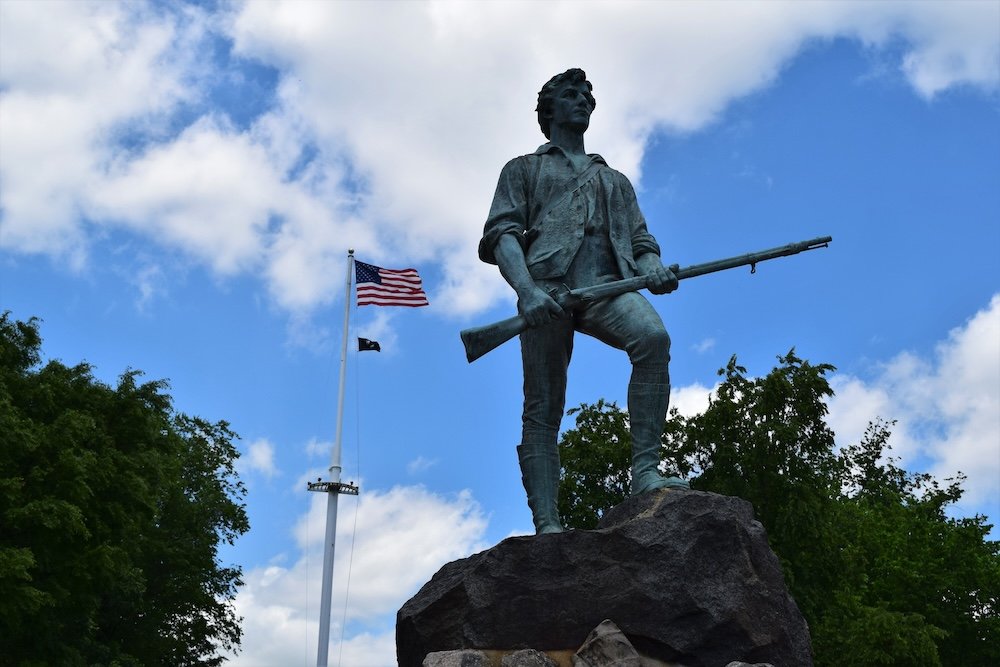
A jogger breezes across Lexington Green on a Saturday morning, and a woman walks her dog past Captain John Parker’s statue, the colonial farmer and tradesman who ordered his 77 fellow colonials to stand and not fire unless fired upon. The Revolutionary War battlefields are mostly quiet now, tucked back into their small-town New England settings or down in the Southern countryside. Seven such places let you stand where it happened, and the National Park Service, along with a few state park systems, have given visitors the ability to see and walk where a nation was born.
It all began in Lexington, at daybreak on April 19, 1775, when British regulars were on their way to seize a colonial arms depot. John Parker and his militia were already gathered on the green. No one ever did figure out who fired the first shot, only that eight militiamen were dead before the British column left Lexington Green and headed on to Concord. Ralph Waldo Emerson called that shot the “shot heard round the world” 62 years later in a hymn he wrote for the dedication of a monument to the Concord battle. Minute Man National Historical Park preserves the five miles of road between the two towns, complete with the original North Bridge, so you can cover the same ground the British column ran under fire.
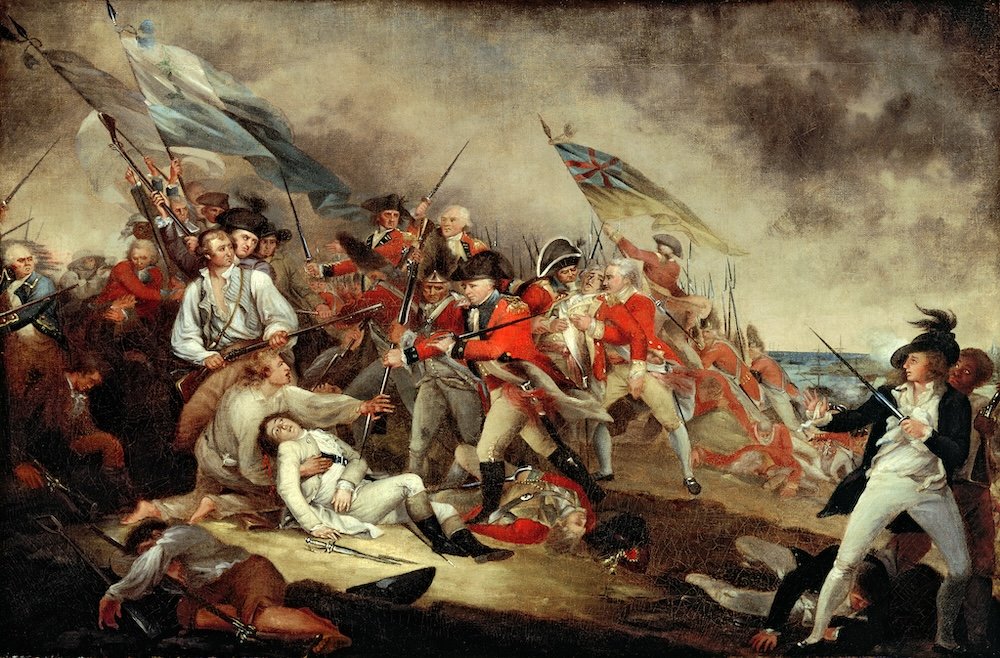
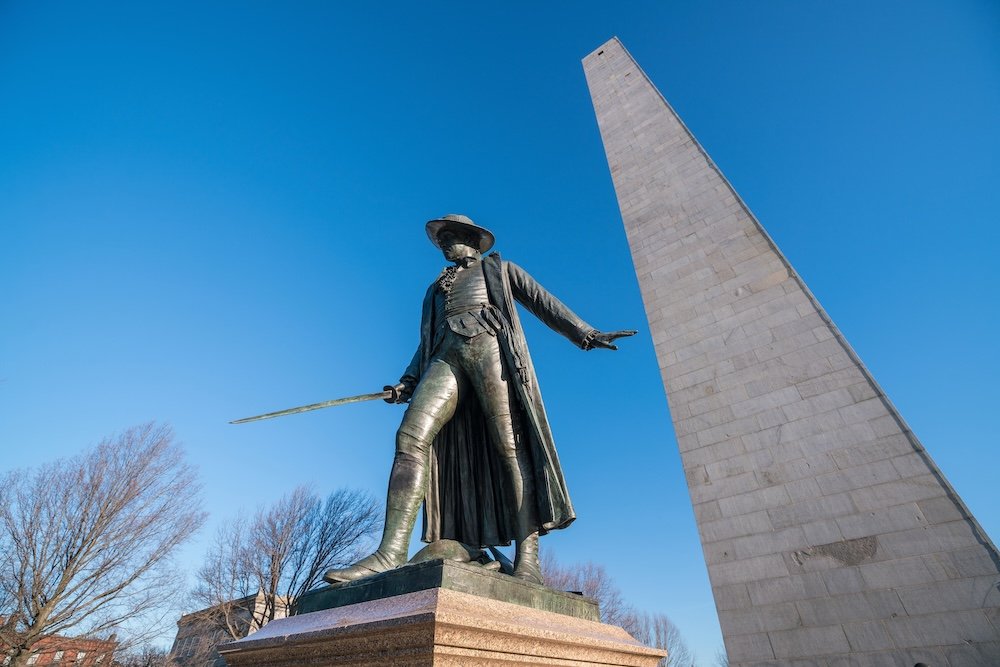
A much more demanding lesson awaited the colonies just two months later in Boston. Colonial militia dug in on Charlestown’s high ground had been ordered to fortify Bunker Hill, but instead built their defenses on the lower Breed’s Hill, close enough to the harbor to bring fire from British warships. By the time British General William Howe’s men took the position on their third attempt, they had lost more than a thousand soldiers for fewer than five hundred colonial casualties. Every schoolchild is taught the line supposedly said there, “Don’t fire until you see the whites of their eyes.” Untrained colonial farmers had made a professional army bleed for a hill, and the British garrison abandoned Boston within the year. The 221-foot granite obelisk that rises here now demands visitors earn the view: 294 spiral stairs, no elevator, no shortcuts. The top features an observation deck.
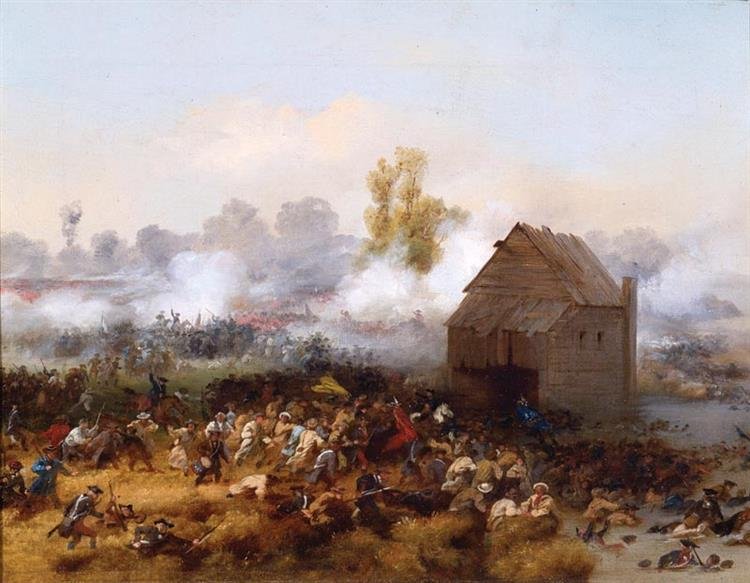
By August of 1776, the war had moved down to New York, and the new country came within an afternoon of losing its army. The Battle of Brooklyn was the largest battle of the American Revolutionary War. At Brooklyn, British soldiers slipped in before dawn undetected and attacked the American line from behind, driving Washington’s ten thousand men back across the East River with nowhere left to run. What saved the war wasn’t a victory but an escape: under cover of night and fog, Washington ferried his entire army across to Manhattan, none of them lost in the crossing, while a detachment of four hundred Marylanders bought the time by driving the British line again and again near where Brooklyn’s Green-Wood Cemetery now stands. A defeat, technically, but Washington kept the army alive. Brooklyn has since built a city on top of much of that battlefield, so all that remains of the battle today are a few fragments: a plaque at the Old Stone House where the action was heaviest, the high ground of Green-Wood Cemetery that served as an artillery position, and a slope in Prospect Park still called Battle Pass.
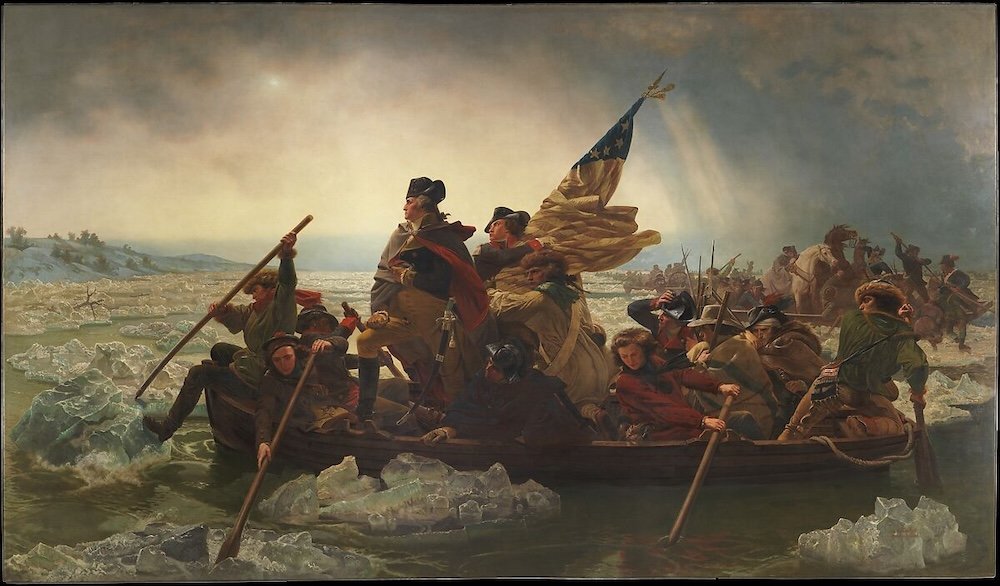
That patience was rewarded on Christmas night when Washington risked everything on a crossing of the Delaware River in the midst of a nor’easter. The Hessian garrison at Trenton, worn down by weeks of militia harassment and unprepared for an attack on a holiday, nearly surrendered before organizing a defense and were almost captured altogether when Colonel Johann Rall, the Hessian commander, was mortally wounded in the fighting and lived only long enough to offer up his sword. Nine hundred Hessians were captured, compared to five American dead; a small battle by the standards of the war that followed. Still, it came at a time when enlistments were expiring, and morale was cratering, and it got enough soldiers determined to stay around for one more winter. Trenton has since grown into a state capital, and the Old Barracks Museum, built decades before the battle to house British troops, now stands a short walk from the marble column that marks the spot where Washington’s cannon dominated the two main streets of town. The exact location where George Washington crossed the Delaware River is preserved in two state parks across from each other on the Delaware River. Washington Crossing Historic Park is located in Bucks County, Pennsylvania. This is where Washington and his troops launched their boats on Christmas night in 1776. The park features historical buildings, a visitor center, and the Thompson-Neely House. Washington Crossing State Park is located in Titusville, New Jersey, where the Continental Army landed at Johnson’s Ferry. It includes walking trails, the Johnson Ferry House, and a collection of Revolutionary War artifacts.
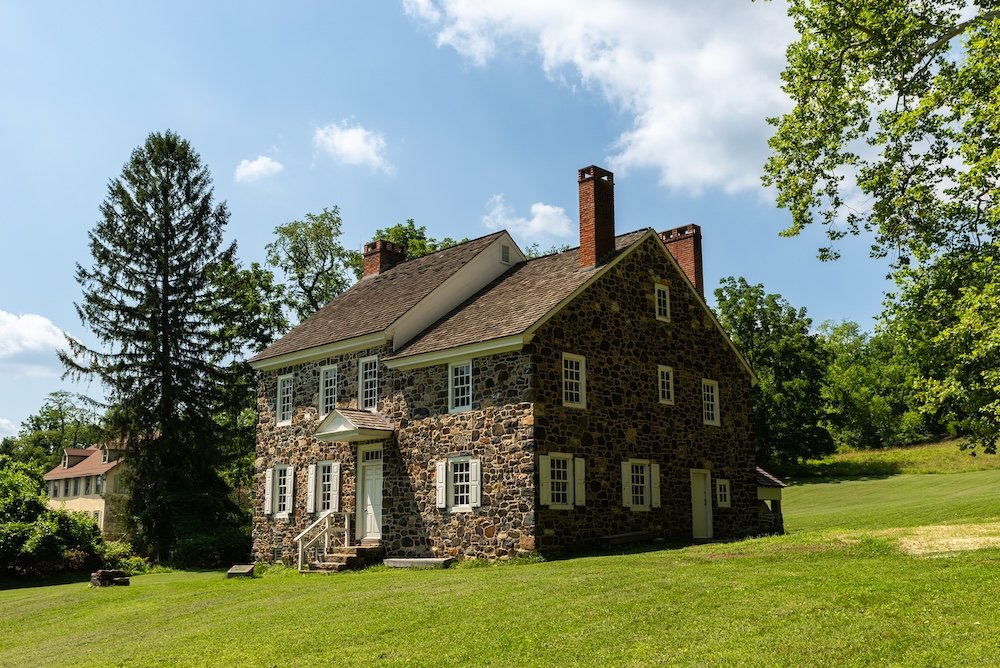
The colonies paid a steep price the next autumn in Philadelphia. At Brandywine Creek, General Howe outflanked Washington with a wide march that caught the Americans looking in the wrong direction, and a young French volunteer named the Marquis de Lafayette took a musket ball in his leg while trying to rally a retreating line and wouldn’t leave the field of battle until the withdrawal had been organized. The British walked into Philadelphia two weeks later. Washington’s army might have been beaten, but it marched away intact, and by 1777 that became its own kind of victory. Brandywine Battlefield Park preserves the farmland where the battle was fought, including headquarters buildings.
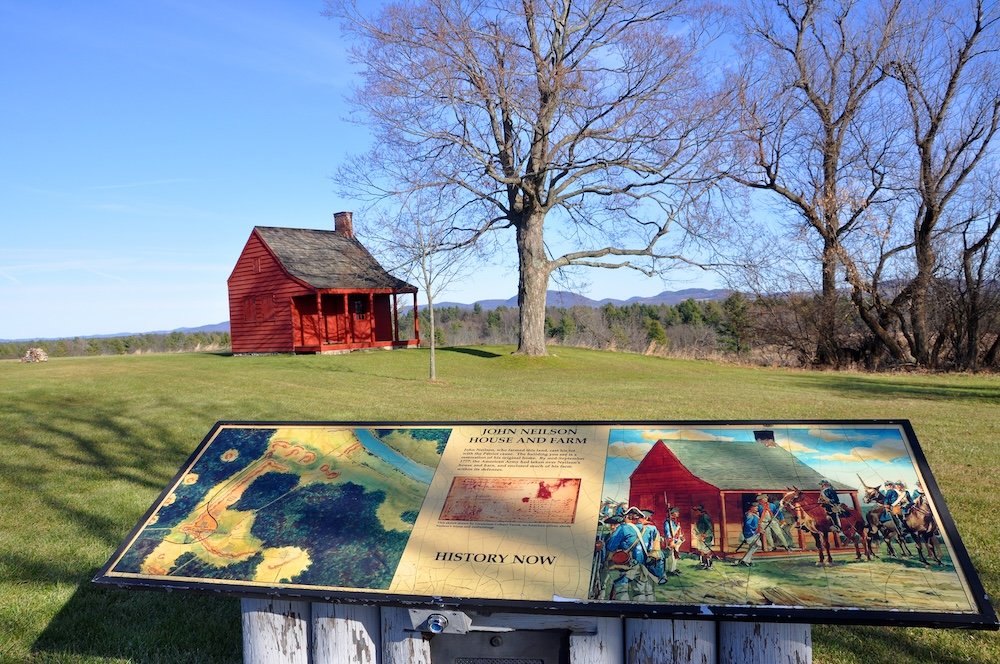
The victory at Saratoga brought the French into the war. British General John Burgoyne’s marched down from Canada to cut the rebellious colonies in half on the Hudson River. Instead, American forces under General Horatio Gates, with Benedict Arnold leading a mad, unauthorized charge that probably did just enough to break the British line, closed off Burgoyne near Saratoga and forced his entire army, close to six thousand men, to surrender. News of that surrender reached Paris by December, and the balance in the court of Louis XVI shifted overnight. The court decided the American Revolution was a rebellion worth openly backing. French money, French ships, and French soldiers arrived, and soon the war became less a conflict between Britain and its colonies than a Continental war. Saratoga National Historical Park lays out the whole campaign on a ten-mile, one-way tour road with ten numbered stops.
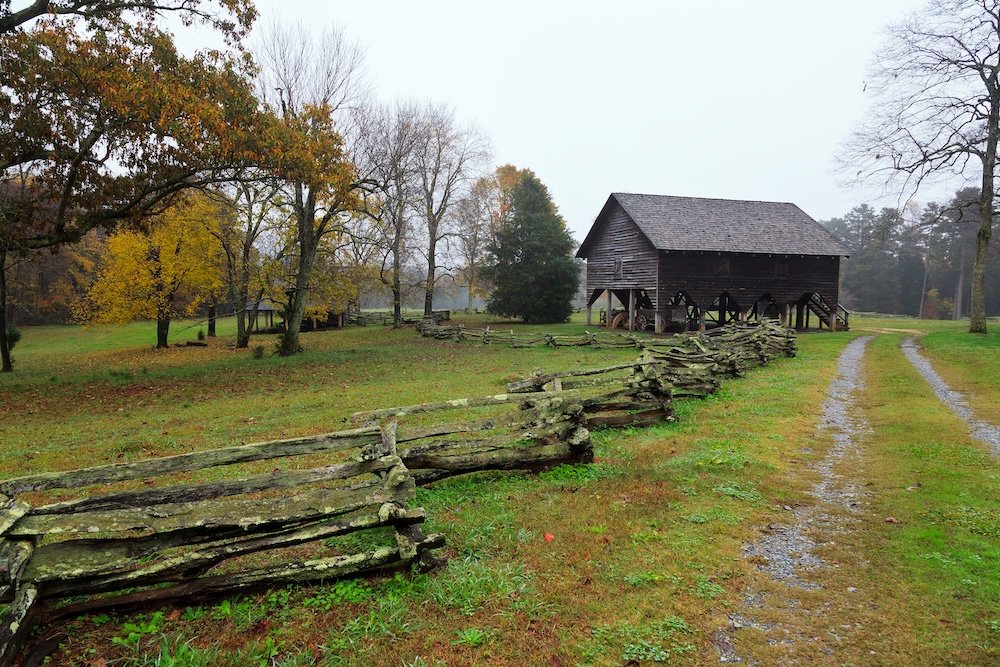
The battle far south of Boston on a wooded ridge in South Carolina resembled none of the earlier battles. At Kings Mountain in October of 1780, a force of frontier militiamen, many of them from the mountains of Tennessee and Virginia, outflanked and destroyed a Loyalist force commanded by Major Patrick Ferguson, the only British-born soldier on that ridge that day. Everyone else on both sides had been born here in America, which made Kings Mountain less a battle against an empire than a battle between neighbors for the flag they would call home. Ferguson wore a checkered hunting shirt so his own men could see him through the smoke and carried a silver whistle to call them, both of which made him just as easy for the other side to locate. He died in the saddle trying to punch his way through the encirclement, and his Loyalists surrendered within the hour. Thomas Jefferson called it the turn of the tide, and Cornwallis, watching his southern campaign fall apart from a safe distance, had reason to agree with him. The park service has since threaded a mile-and-a-half paved loop through the woods that climbs to the ridge Ferguson died defending, an hour’s hike for a battle that took barely more than that to finish.
The war effectively ended a year later on the Virginia coast, at Yorktown, where Cornwallis walked into a trap. From September 28 to October 19, 1781, nearly 19,000 American and French troops under Washington and the Comte de Rochambeau pinned Cornwallis’s 9,000 men against the York River, while a French fleet under the Comte de Grasse beat back the Royal Navy at the Battle of the Capes and sealed off any rescue by sea. On the night of October 14, Alexander Hamilton led an American column against British Redoubt 10 with fixed bayonets, taking the position in about ten minutes while French troops seized the neighboring Redoubt 9, and five days later Cornwallis asked for terms. He did not attend his own surrender, pleading illness and sending General Charles O’Hara to hand over his sword instead. Yorktown Battlefield, now part of Colonial National Historical Park, still lets visitors drive the siege lines and walk up to Redoubt 10 itself, a low grassy mound that gave up an empire in under a quarter of an hour.
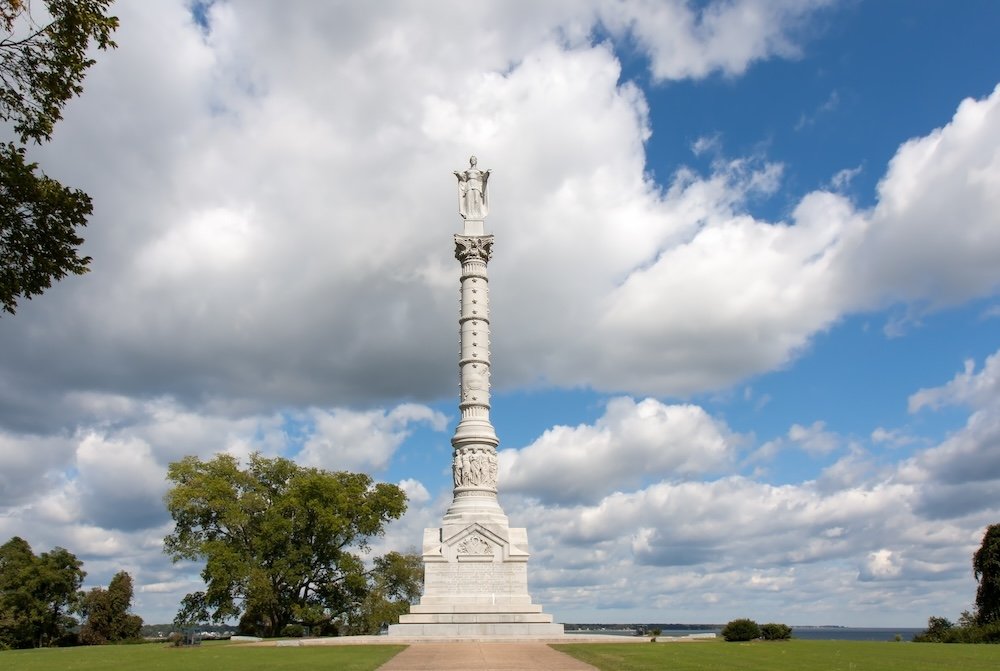
These ?battlefields ?don’t much look like battlefields anymore. Dogwalkers hang out on Lexington Green, Brooklyn’s fighting ground is now brownstones and a cemetery, and Kings Mountain has reclaimed the tranquil Carolina forest it was before the fighting over it was imagined. What they still offer to the visitor who can hold still for a minute is the freak scale of it: farmers, tradespeople, a French volunteer with a bullet in his leg, a Massachusetts poet who hadn’t even been born yet, somehow deciding – each in his own hour – that the country they hadn’t quite made was worth making.