


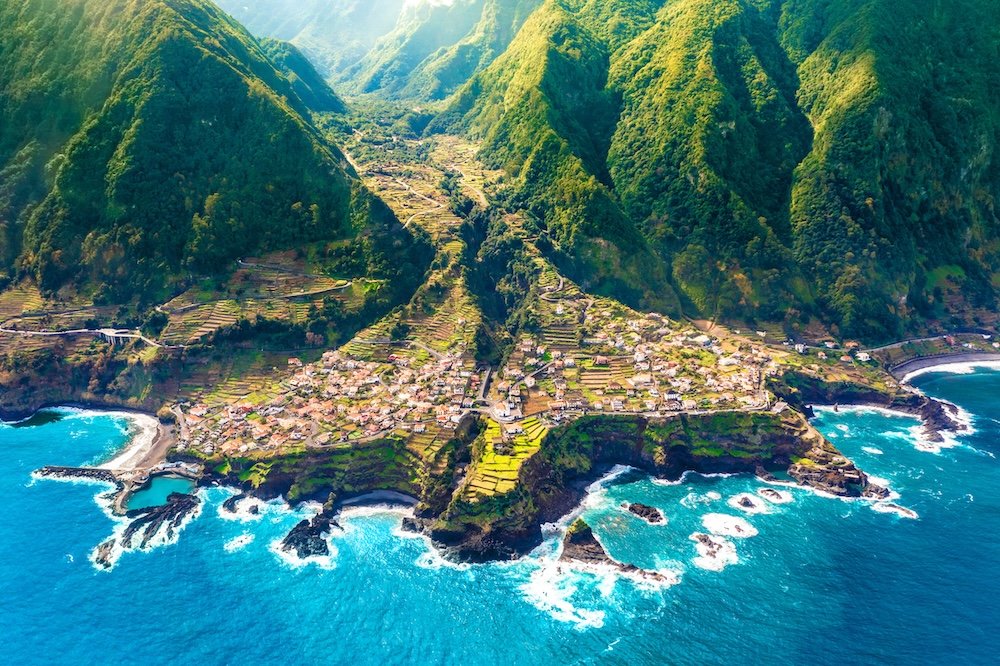
The island of Madeira is about 500 miles southwest of mainland Portugal, and 320 miles west of Morocco, closer in latitude to Casablanca than to Lisbon’s cafe tables. One of only two inhabited islands in the archipelago also includes the smaller Porto Santo; the other islands, the uninhabited Desertas and Selvagens, are reserved as nature reserves rather than resort destinations. Funchal, the capital, sits on the south coast of the island, behind a natural amphitheater of hills that shield the harbor from the worst of the Atlantic wind.
Madeira holds the distinction of being the largest of Portugal’s islands by population. Its reputation rests heavily on Madeira wine and on the richness of its native flora and fauna, anchored by an ancient laurel forest old enough to have earned UNESCO World Heritage status. Funchal’s harbor, meanwhile, has handled more cruise ship traffic for years than any other port in Portugal, serving as a key waypoint on Atlantic routes connecting Europe, the Caribbean, and North Africa.
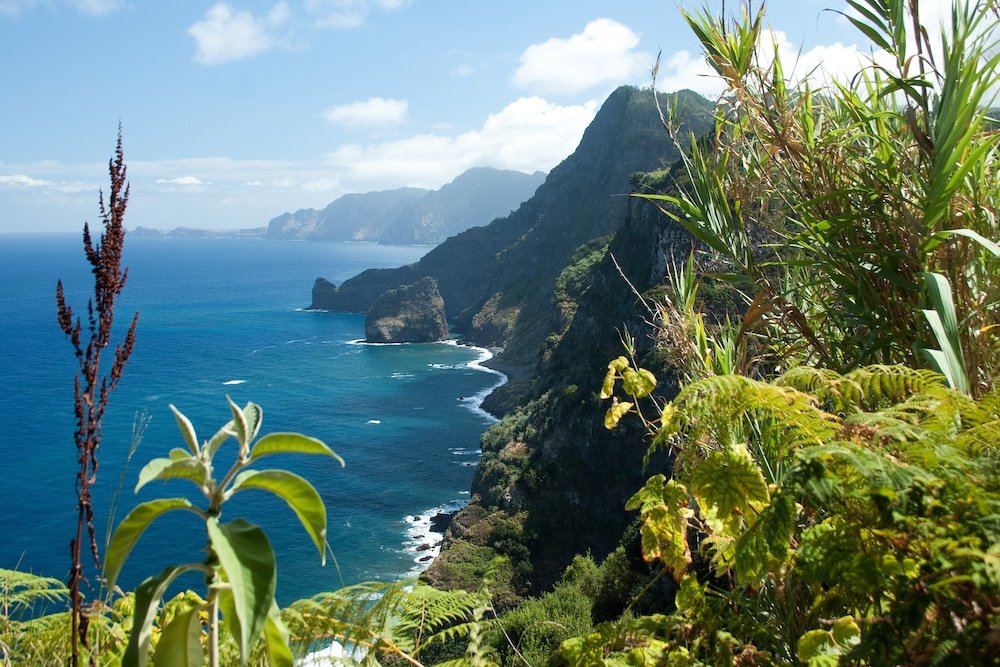
Madeira is not a beach island and doesn’t pretend to be: a strange, working amity between volcanic rock and foliage. Cliffs are tempered by hydrangeas and banana trees and the subtropical temperatures that don’t vary much between January and July. People describe it less as a place to visit than as a mood, unhurried, a little wet in the hills and a little dry on the shore, the kind of place that is both a garden and a mountain range.
The archipelago appears in the records in 1420, when the navigator João Gonçalves Zarco, working for Prince Henry the Navigator, came upon its shores just thick with laurel forest, and Zarco, the first captain of the island, was granted half for his labors; the settlers who followed him needed land more than they needed trees, and according to island tradition set fires that burned for seven years before they were clear to plant. Whether or not the fire burned for seven years, the name stuck: Ilha da Madeira (island of wood) appears on a map in 1433, an appropriately ironic name for a place its own settlers had spent years burning. One of Zarco’s other captains, Bartolomeu Perestrelo, settled on the neighboring island of Porto Santo, and it was there his daughter Filipa Moniz Perestrelo, a noblewoman with a proper court title, married a Genoese wool weaver’s son nobody particularly took seriously yet was about to: Christopher Columbus. According to more than one historian, Columbus’s maps and notes on western routes to the Indies, which he studied in his father-in-law’s house on that little island, helped send him looking for such a route a few years later.
In August 1815, the British warship Northumberland anchored off Madeira with Napoleon in exile on St. Helena, and Henry Veitch, the British consul in Funchal and a wine merchant himself, was the only local granted permission to come aboard. He brought the down-and-out emperor fruit, gifts, and a full pipe, six hundred bottles of Madeira wine. Napoleon didn’t even open it. It sailed on to St. Helena, came back unopened after his death, and was eventually bottled into some barely two hundred surviving bottles so rare that one was poured for Winston Churchill in 1950. Churchill had come to Madeira to rest, work on his war memoirs, and paint, and most memorably set his easel in the fishing village of Câmara de Lobos.
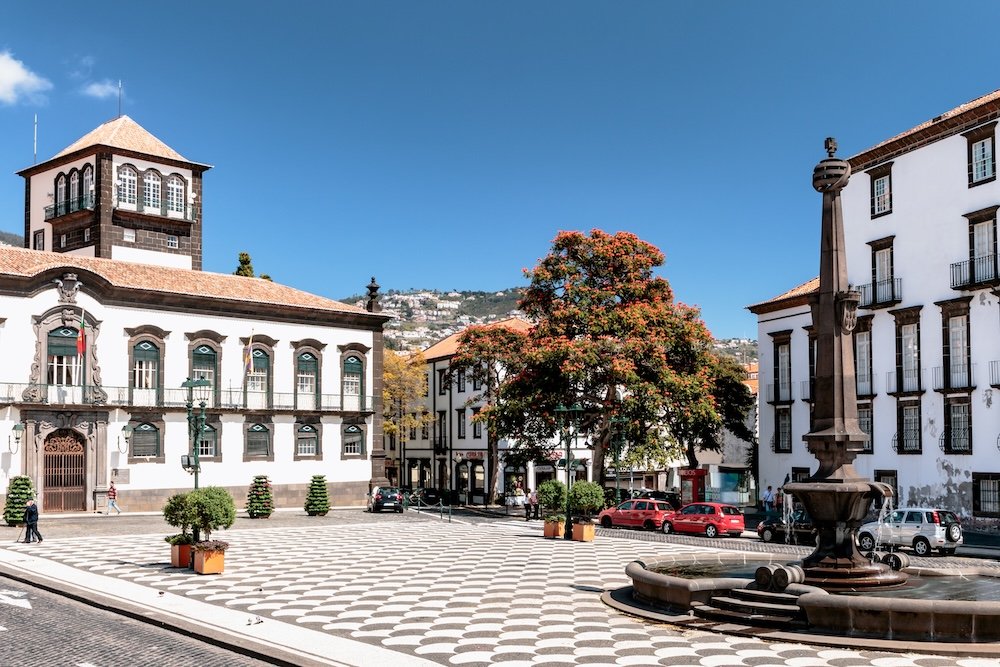
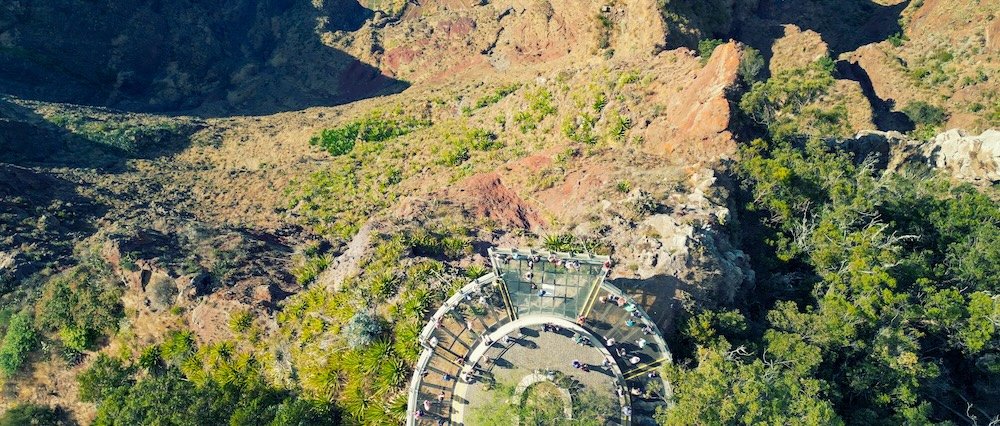
Funchal itself is worth a slow morning of exploration, especially the Mercado dos Lavradores, a three-story Art Deco market that opened in 1940 and still stocks tropical fruit, fresh fish, and flower vendors beneath walls of hand-painted tiles. Most itineraries from there head uphill to Monte, either for the toboggan or simply for the botanical gardens and harbor-view; west along the coast Câmara de Lobos balances its active fishing boats with its Churchill connection, and just beyond it Cabo Girão juts close to 1,930 feet straight out of the Atlantic, one of the tallest sea cliffs in Europe, with a glass-floored skywalk built out over the drop for those who want the view without quite trusting their knees to enjoy it.
The Monte Toboggan Ride starts near the Monte Church staircase, making it easy to find. It began in 1850 as a real commute, a way for Monte residents to get down to the harbor town. Years later, tourists line up for a ride. Monte ?looms over the hillside above Funchal, and most people come to it by cable car, a 10-minute swoop past rooftops and terraced gardens that drops you a short walk from the twin spires of the Nossa Senhora do Monte church.
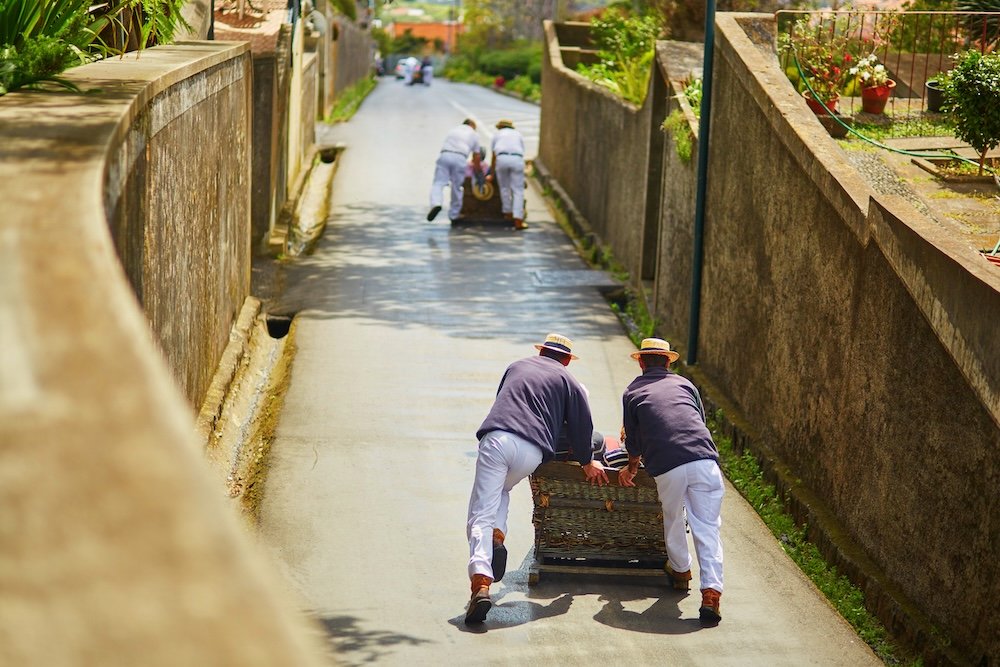
From the square in front of that church, a row of wicker baskets on wooden runners waits at the top of a street that drops for nearly a mile to the Livramento neighborhood below. Two carreiros in white linen suits and straw boater hats push each basket off and ride the back runners the whole way down, using only the rubber soles of their shoes dragged along the cobbles to steer, leaning into each hairpin turn the way a skier leans into a carve. It takes just a couple of minutes, but it builds speed on the straightaways, and passengers grip the wicker handles and laugh through the hairpin turns. It has, indeed, become, according to almost everyone, the single most photographed minutes on the island. Everyone emerges at the bottom windblown, slightly shaken, and grinning.
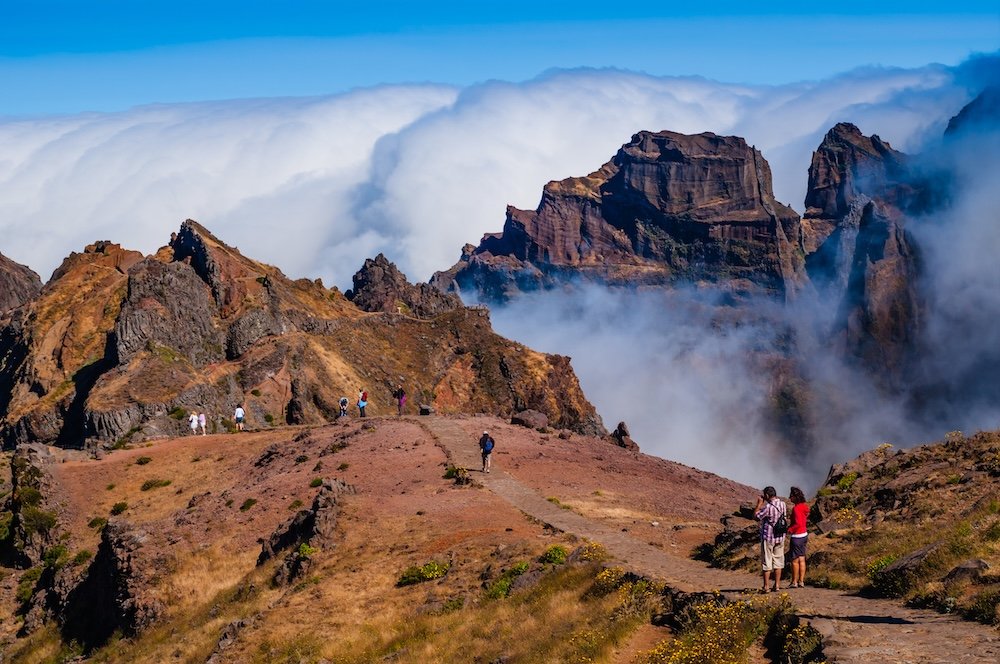
Inland and up, Curral das Freiras sits inside what appears to be the collapse of a volcanic bowl, a village hidden by mountains on every side. Further along the island’s backbone, the ridge trail linking Pico do Arieiro, reachable by car, to Pico Ruivo, the island’s highest point at just over 6,100 feet and reachable only on foot, spends many minutes above the clouds rather than beneath them. On the north shore, Porto Moniz has turned its ancient lava flows into natural saltwater pools, refilled by the tide and noticeably warmer than the open ocean just beyond the rocks.
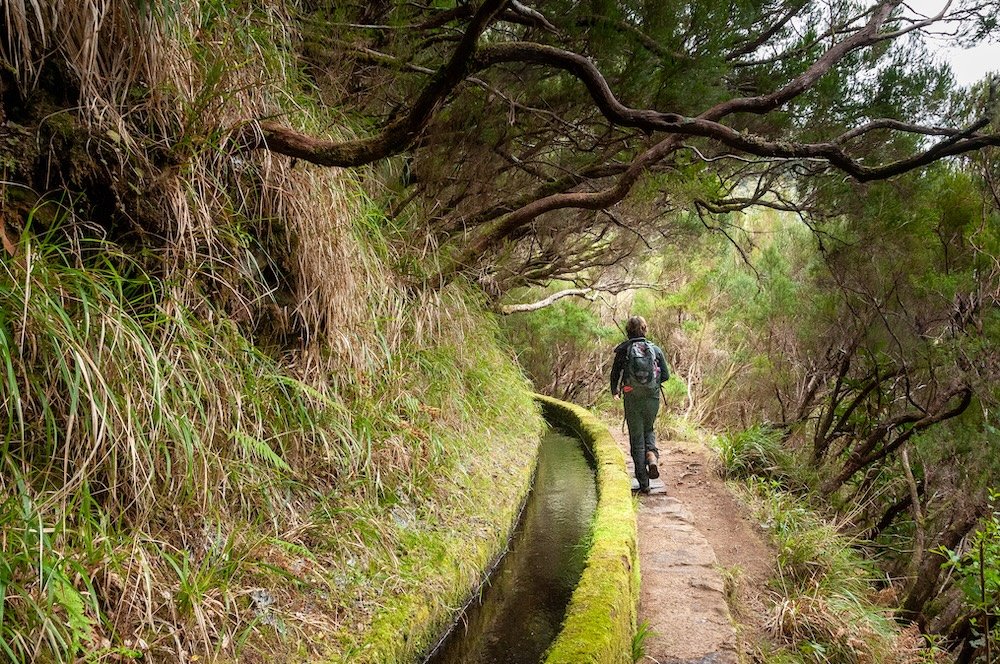
Threading through it all are the levadas, a network of more than 1,350 miles of irrigation channels first chiseled into the cliffsides in the 16th century, much of it carved by enslaved laborers brought from the Canary Islands and West Africa for Madeira’s sugar trade. Today those footpaths wind through the UNESCO-listed Laurisilva forest, believed to be the largest remnant of the ancient laurel forest that once blanketed much of southern Europe.
Food, wine, and beef skewered on laurel branches and grilled over an open fire show up on nearly every menu, usually beside bolo do caco, a flatbread baked on a hot basalt rock and split to spread with garlic butter, and milho frito, cubes of fried cornmeal. Nothing about it is fussy, and everything about it works.
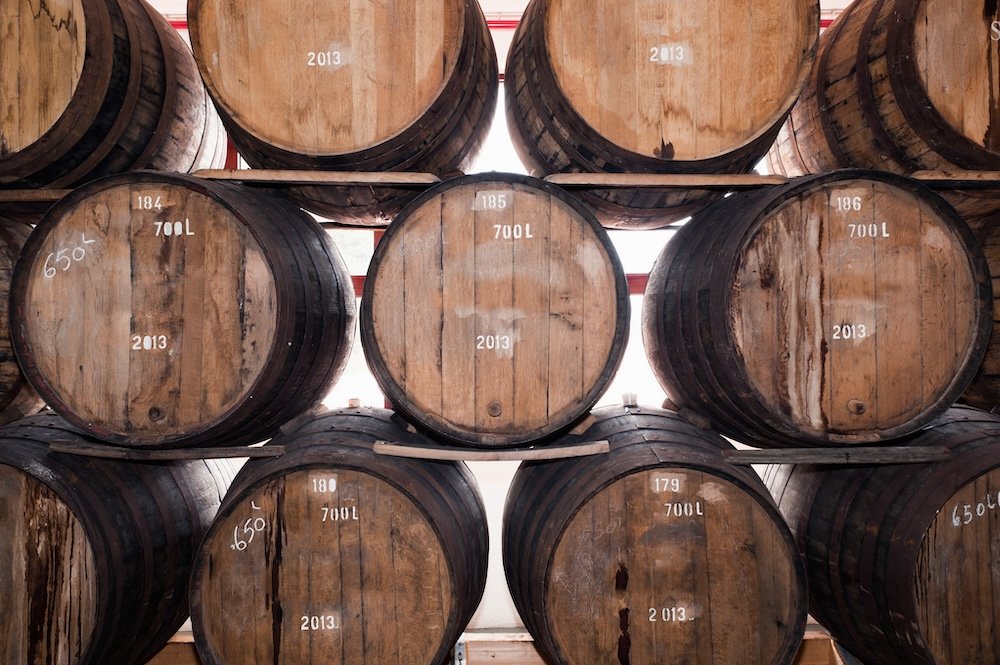
Madeiran wine has the better backstory. Designed to last long ocean crossings, it was discovered (almost by accident) that it actually got better after months of rocking in a ship’s hold under the tropical sun, and they began fortifying the wine to take advantage of that…defect, and that method is still in use today. John Blandy arrived on the island in 1808 chasing a healthy climate, went into the wine business with his brothers three years later, and founded one of the island’s great wine houses, still family-run seven generations later and pouring tastings from the same lodge in central Funchal.
Madeira asks for a lighter footprint than its scenery might suggest. The 2024 wildfires burned through roughly 14 percent of the island’s forest in eleven days, a reminder that the same laurel forest visitors come to walk through took centuries to grow and can lose ground fast, so staying on marked levada paths, packing out trash, and never lighting so much as a cigarette on the trail is just what the island needs from anyone passing through. The culture rewards a similarly unhurried approach: a “bom dia” or “boa tarde” before getting to business goes a long way, and a five- or ten-minute delay to a dinner invitation is read as good manners rather than an insult. Swimwear stays at the pool rather than in a restaurant or church, where shoulders and knees stay covered, and hats come off indoors. Tipping isn’t obligatory, but rounding up a café bill or adding five to ten percent at a sit-down meal is appreciated, not expected. Madeira has simply never been in a hurry, and visitors who match that pace tend to get more out of the island.
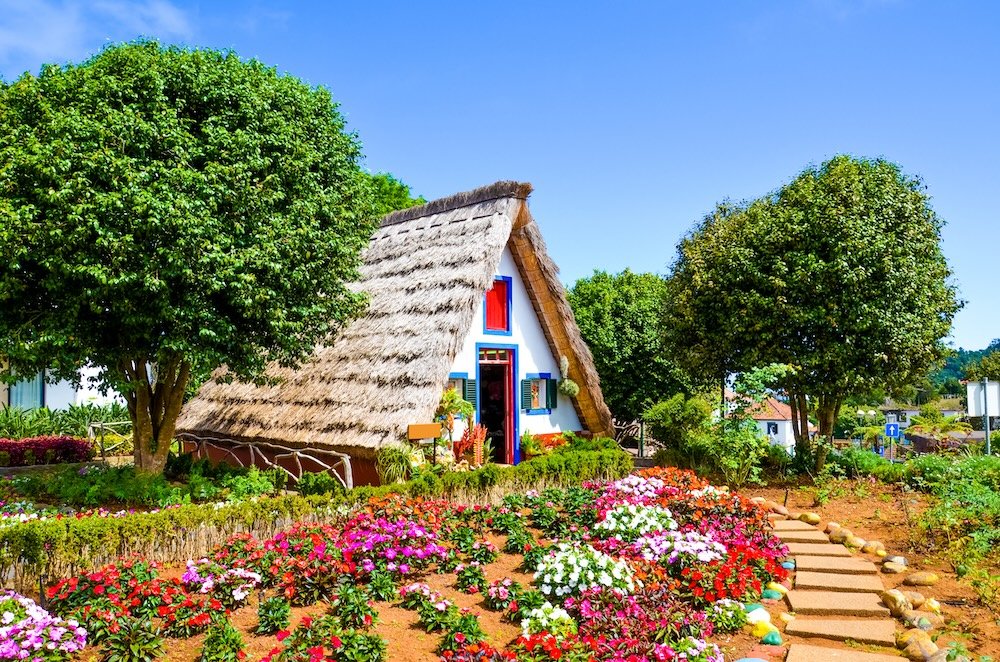
You can usually see all of Madeira in a day or two, making it ideal for a day trip from Funchal. A good way to spend a full day is to drive around the north coast, from Sao Vicente to Porto Moniz, and include a visit to Santana to view the triangular, A-shaped houses.
A second day allows you to see both Cabo Girao and Curral das Freiras, as they are close enough to each other to combine a view of a cliff (Girao) with a view of a volcanic crater (Curral das Freiras). The hike up the Arieiro-Ruivo ridge deserves a whole day and a morning’s effort. In contrast, hikers after a starker vista can continue in the opposite direction to Ponta de Sao Lourenco, a windy, treeless “finger” of land at the eastern end of the island, where a four-mile round-trip trail replaces Madeira’s usual lush green with bare basalt and sky. A good alternative is a ferry to Porto Santo, a 2 1/2-hour ride each way, which offers more than five miles of the dull, off-white sandy beach that Madeira somehow lacked, an island that spent centuries creating cliffs, forests and one self-confident wine, but never quite found the time to produce a beach of its own. Which, of course, it didn’t need.