


Chiang Mai has a charm that feels like Bangkok yet unlike it. The inhabitants of both cities share the same warm, mild disposition characteristic of Thai people, the same reflexive smile visitors often misread as shyness, and locals will tell you is closer to patience. Chiang Mai is small enough to notice your surroundings rather than overwhelm you as Bangkok tends to do. Bangkok is the country’s engine room. Chiang Mai is where that same national temperament slows down enough to introduce itself properly.
Chiang Mai is 700 kilometers north of Bangkok, in a mountain valley beside the Ping River. You can fly there in about an hour and fifteen minutes for roughly $55 one-way. There’s also an overnight train that takes eleven to thirteen hours in a second-class sleeper berth, one of the more enjoyable ways to spend a night. The bus takes nine to ten hours and is for the few, the proud, and those who actually enjoy buses.
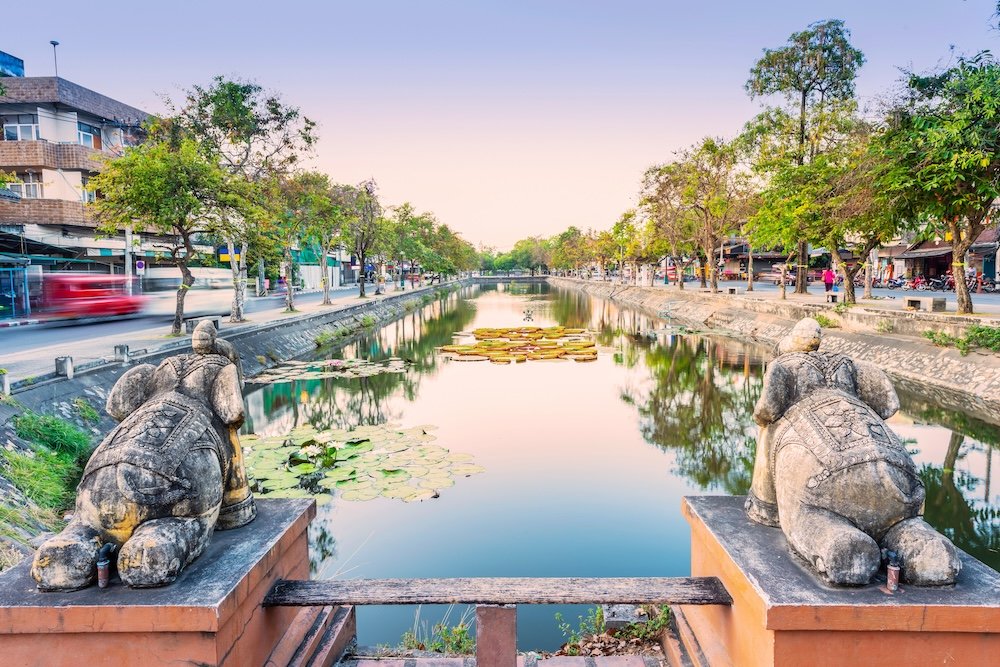
A square moat and crumbling brick walls mark the boundaries of Chiang Mai’s walled Old City, within which more than 30 temples (called “Wats”) sit shoulder to shoulder with guesthouses, cafe-lined streets, and the constant hum of a modern university town. Chiang Mai has long drawn a different kind of traveler than the beach destinations farther south: hill tribe trekkers, digital nomads drawn by Chiang Mai’s low cost of living and cafe culture, meditation students, and foodies seeking Chiang Mai’s uniquely herbaceous cuisine. It is a slower, cooler, more contemplative alternative to Bangkok, surrounded by mountains that hold some of Southeast Asia’s richest hill tribe culture, national parks, and a burgeoning movement of ethical elephant sanctuaries that have challenged wildlife tourism norms in the region.
Visitors come for the temples, but stay for the ambiance: watching the morning markets come to life, monks receive their alms in the early hours, slow food bowls of khao soi make their way down midday bellies, and night markets dotted with lanterns that turn the old streets into a moving river of people and light after dark.
The Most Important Points of Interest
Wat Phra That Doi Suthep is Chiang Mai’s most sacred temple and, indeed, the temple most visitors in Chiang Mai climb at some point during their visit: legend has it that in 1383 King Kue Na mounted a Buddha relic on the back of a white elephant and let it roam free, vowing to construct a temple wherever it stopped, and the elephant is said to have climbed this mountain, trumpeted three times, and then died on the spot, which the king took as divine instruction.
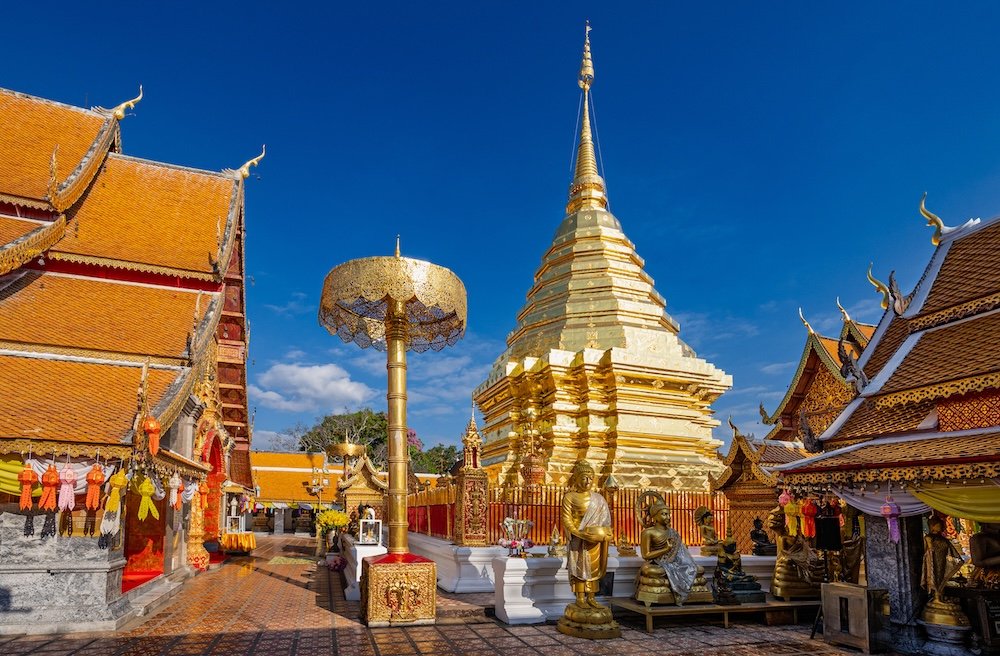
A stairway of 306 steps flanked by two enormous naga serpents leads to the temple’s golden chedi (a funicular tram is now also available for those who’d prefer to save their legs for the view). On a clear day, the terrace offers one of the best views of Chiang Mai and the Ping River valley below in northern Thailand.

Within the square bounded by Chiang Mai’s moated walls, Wat Chedi Luang preserves the crumbling remains of what was once (at about 85 meters tall) the tallest structure in 15th-century Lanna, a massive brick chedi begun in 1391 and left half-fallen by an earthquake in 1545; it briefly housed the country’s most sacred image, the Emerald Buddha, before that statue was carried off to Laos and eventually Bangkok, and the wat also contains Chiang Mai’s guardian pillar shrine and a soaring 1928 assembly hall. Wat Phra Singh is widely regarded as Chiang Mai’s most beautiful temple in the Old City; its intricately carved Lai Kham chapel and sweeping, gilded Lanna-style temple roof shelter the Phra Singh Buddha image, the temple’s namesake, and the temple complex also contains the city’s most venerated Buddha image.
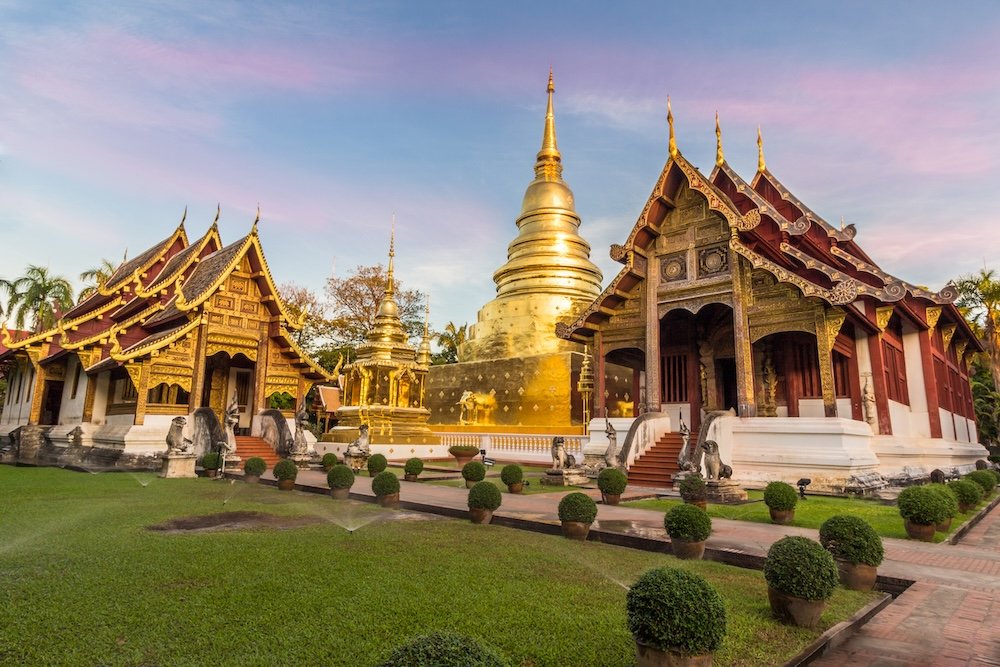
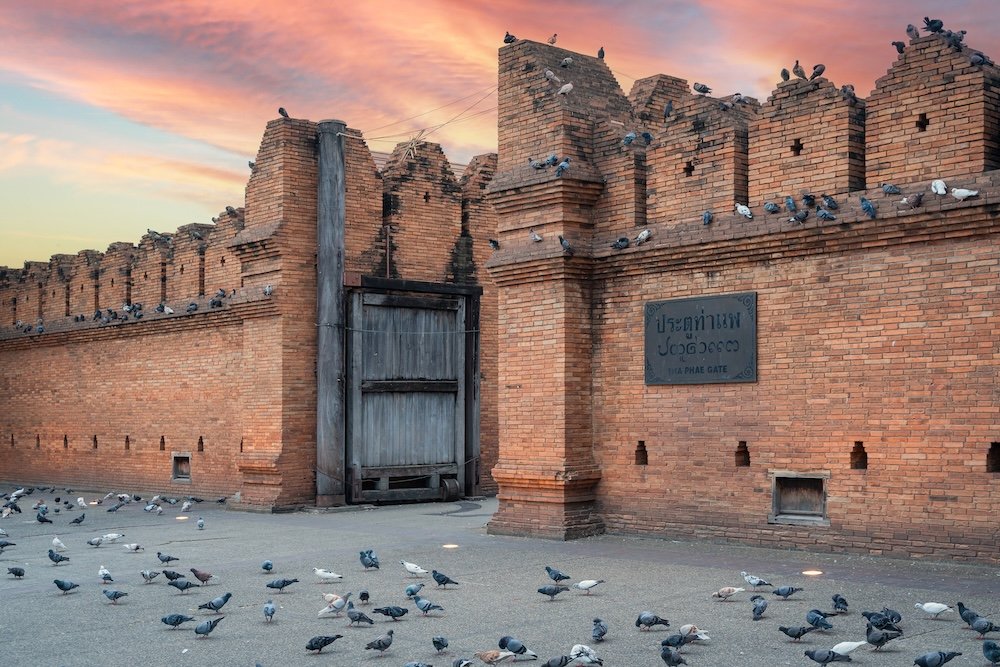
The Old City itself, just over a square mile in area, surrounded by a still water moat and the eroded remains of red-brick fortress walls first built by King Mangrai, is a destination best explored simply on foot: Tha Phae Gate is the best preserved and most photographed of the five original city gates, opening onto a large public square that serves as the launch point for the Sunday Walking Street market and the meeting place for street performers and locals in the evening.
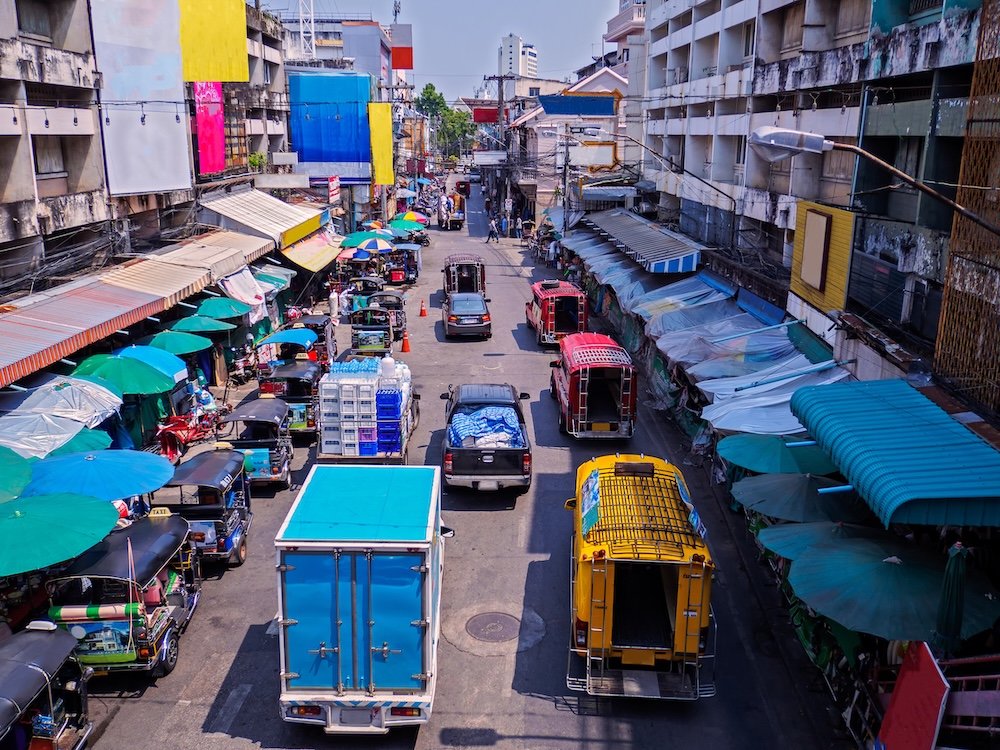
Just outside the Old City to the east is Chiang Mai’s Warorot Market, a daily market that offers a much less tourist-oriented look at Chiang Mai’s shopping and dining habits, along with adjacent flower and produce markets along the Ping River. Meanwhile, the Three Kings Monument in the heart of old Chiang Mai commemorates Mangrai and his two royal allies, traditionally believed to have chosen Chiang Mai’s site together.

Chiang Mai rewards visitors who take their time. Chiang Mai’s best single evening out is Sunday Walking Street, when the city closes Ratchadamnoen Road and the surrounding lanes to traffic every week, bringing a mile-long procession of handicrafts, local art, street food stalls, and temple courtyards turned into impromptu food courts and massage areas; the Saturday Walking Street that runs along Wua Lai Road offers a smaller, less crowded version of the same, while Chiang Mai’s long-running night bazaar, the Chiang Mai Night Bazaar on Chang Klan Road, is an option for travelers who can’t wait until the weekend.

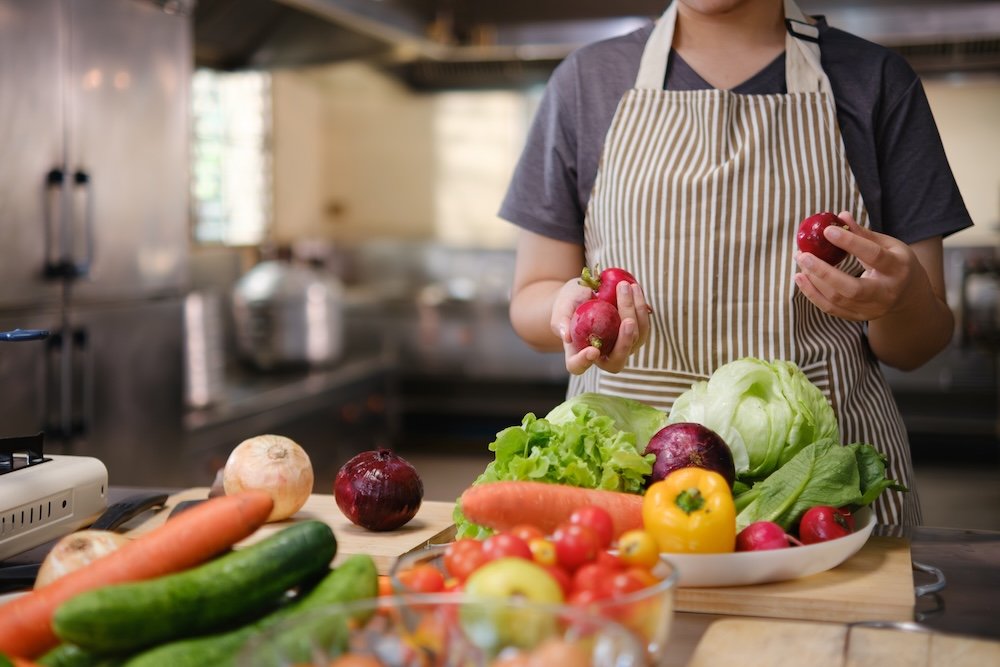
Cooking classes are an institution in Chiang Mai, usually starting with a morning tour of a local market, followed by an afternoon of learning to cook several northern and central Thai dishes from scratch. Chiang Mai has become one of Southeast Asia’s most respected destinations for learning traditional Thai massage, with schools like the Old Medicine Hospital and those affiliated with Wat Pho offering everything from single-day workshops to multi-week certification courses.
Doi Suthep-Pui National Park, which surrounds the hill that hosts the famous temple, offers hiking trails, waterfalls, and access to the Bhubing Palace gardens, the winter retreat of the Thai royal family that is open to visitors when the royal family is not in residence; just outside the park are Chiang Mai Zoo and aquarium, a popular day out for families. The city’s university district around Nimman Road has become Chiang Mai’s trendiest neighborhood, a dense network of boutique shops, art spaces, and the cafe culture that has made Chiang Mai a destination for long-term travelers and digital nomads, while the countryside around Chiang Mai has made hot air ballooning around the city at sunrise and half-day cycling tours through rice paddies popular day trips to see the Chiang Mai valley outside Chiang Mai’s city walls.
What ?to Eat
Thai cuisine – known as “Lanna Cuisine” – differs from the more well-known Thai food of Bangkok and the south in its emphasis on herbs, fermented flavors, and less use of coconut milk, with Chiang Mai being the undisputed center. Khao soi is the dish most closely associated with Chiang Mai – egg noodles in a thick, mildly spicy curry-coconut milk broth, on top of a mound of crispy fried noodles, with pickled mustard greens, shallots, and a slice of lime on the side, usually served with chicken or beef – and there are nearly as many neighborhood favorites as there are restaurants in the city, with testing them being something of a local sport.
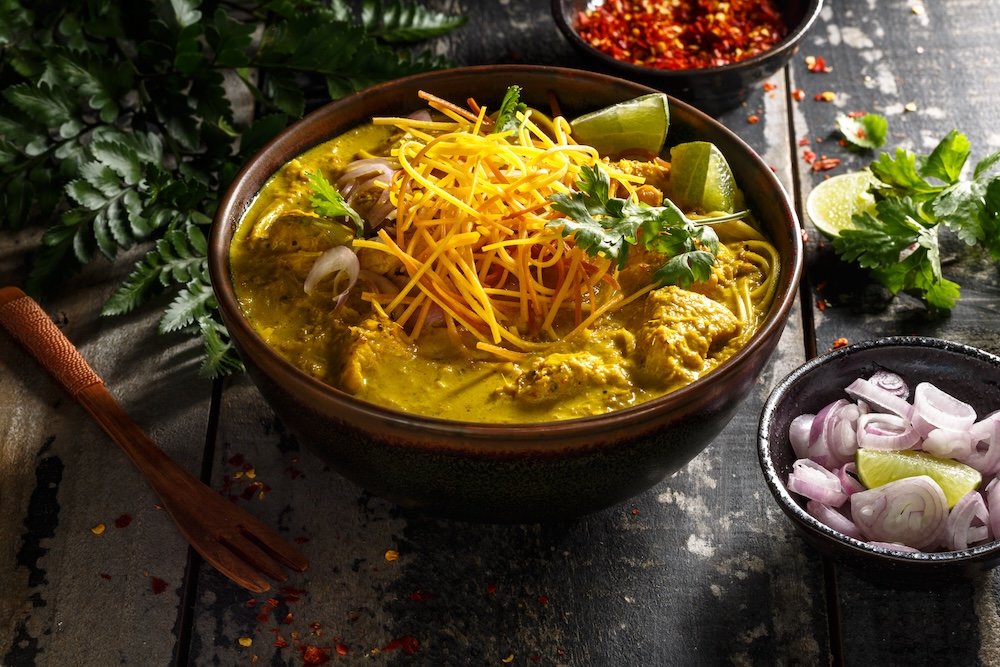
The best place to try these northern Thai specialties is in the city’s markets, particularly Warorot in the morning and evening, and on Sunday Walking Street, where food stalls offer dishes and drinks in small quantities at very low prices.
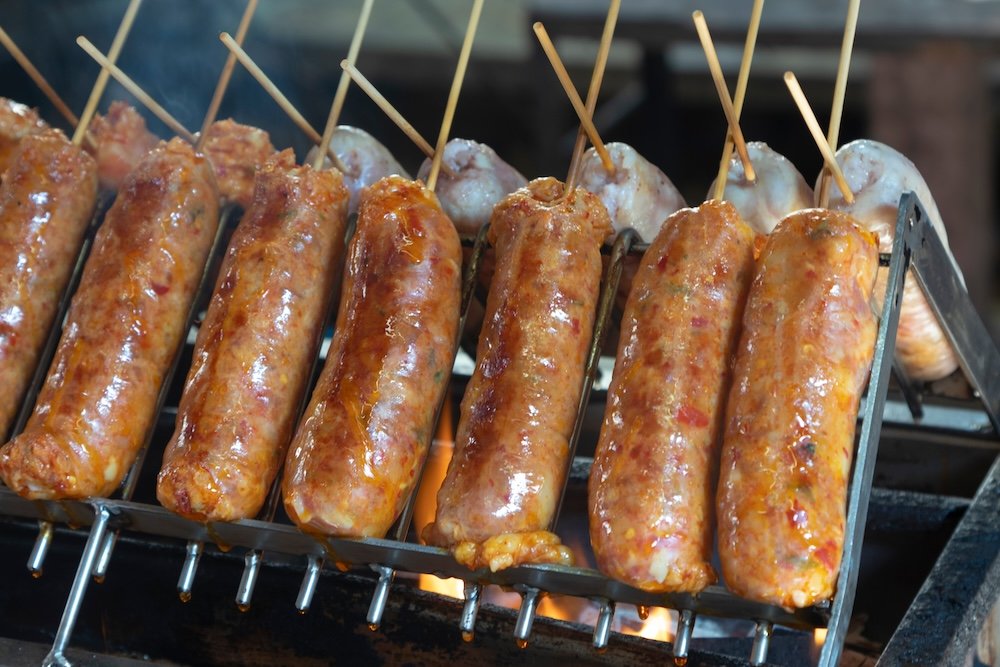
Other dishes commonly found on the food stalls of the markets and restaurants that specialize in northern Thai cuisine include the coiled, herb-stuffed minced pork sausage sai ua, heavily flavored with lemongrass, kaffir lime leaf, and galangal and grilled over coconut husks, and the tangy fermented pork sausage naem, which can be eaten raw or grilled, with fresh ginger and chilies, and both appear nearly everywhere.
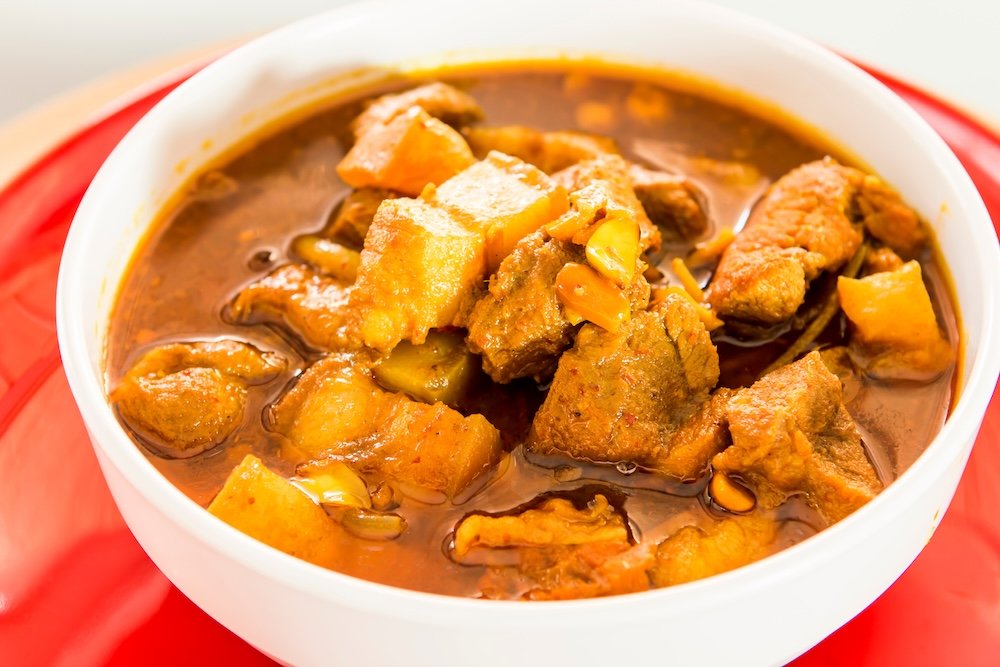
Gaeng hang lay is a rich, thick, slow-cooked pork curry with Burmese influences, flavored with ginger, tamarind, and pickled garlic rather than fresh chilies, reflecting the long cultural interaction between Lanna and Burma (Myanmar).
Sticky rice – rice that is kneaded with the hands and eaten with the fingers – is the starch of the region, rather than steamed rice, and northerners traditionally eat their meals on a low tray made of woven reeds called a khantoke, with several small dishes that everyone shares; dinners from these can be a popular, if somewhat touristy, way for visitors to try many different dishes at once, often accompanied by traditional dance performances.
Great Day Trips
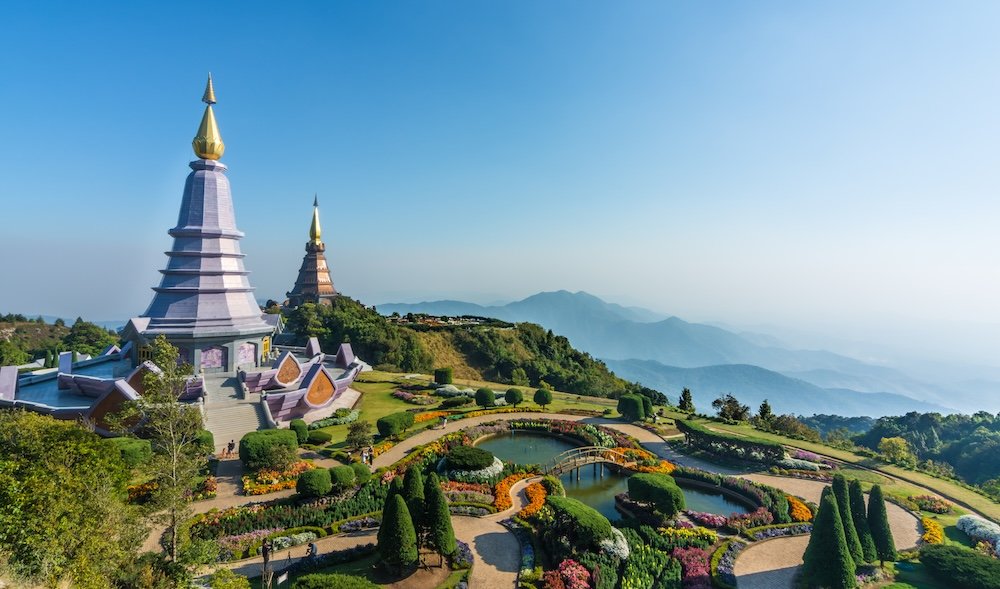
Doi Inthanon National Park is about an hour and a half southwest of the city and features Thailand’s highest mountain, Doi Inthanon at 8,500 feet, with a surprising amount to see in one day, from the twin royal pagodas built to celebrate the king and queen’s jubilees near the top of the mountain to the short Kiew Mae Pan nature trail with views of the surrounding valleys to a string of waterfalls, including the roadside Wachirathan and Sirithan falls, making the drive up the mountain worthwhile even if you don’t make it to the top.
The Mae Rim and Mae Sa valley to the north of the city is now the region’s center for ethical elephant interactions, with orchid farms, butterfly enclosures and the Mae Sa waterfall, and is an easy half or full day trip for those wanting to see elephants but not the riding camps that were common in the area a generation ago.

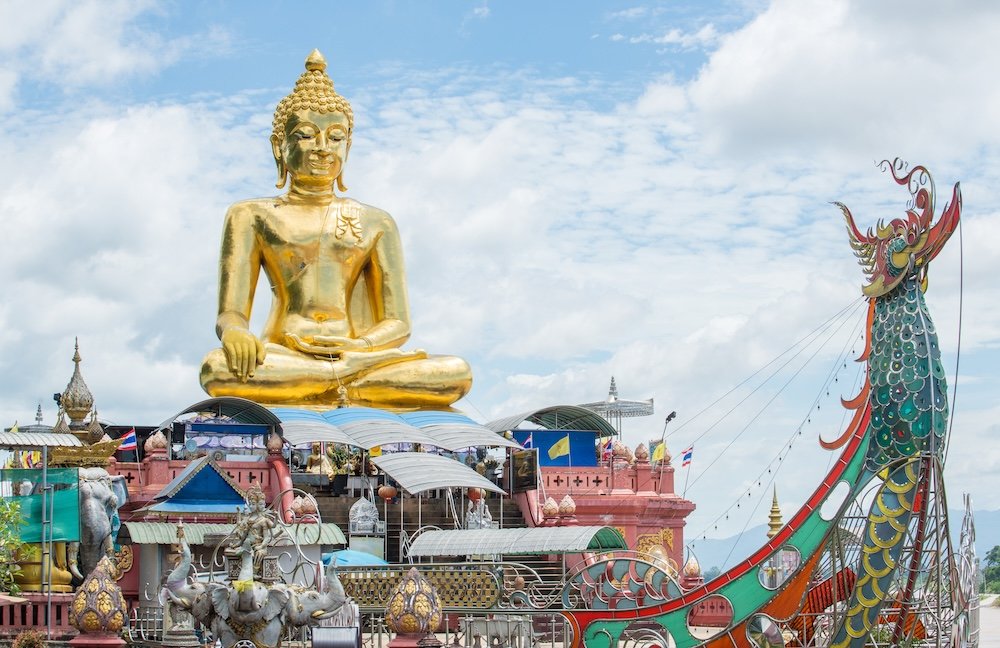
Chiang Rai, home to the stunning all-white contemporary Wat Rong Khun and the deep blue Wat Rong Suea Ten, is a long but worthwhile day trip at around three hours each way by road, and is often combined with a visit to the Golden Triangle, where Thailand, Laos and Myanmar meet at the Mekong River.
Wat Ram Poeng is a temple complex in a tranquil area on the outskirts of Chiang Mai, well-known for its meditation center. Wat Ram Poeng runs meditation retreats year-round for visitors, lasting seven to 26 days.

Pai, a relaxed mountain town three hours north over a notoriously twisty road with more than 700 curves, is popular enough for an overnight trip that many visitors choose to spend two or three days there instead of making it a day trip. Still, you can book day trips that make the return journey in a day for those short on time. Wiang Kum Kam, Chiang Mai’s short-lived previous capital, which was abandoned in the 13th century due to flooding, is an easily explored half-day alternative to the more crowded temples of the Old City that can be seen in an hour or two on a horse-drawn cart or bicycle and is home to several lesser-known but beautiful temple ruins.
Social Etiquette
Thai social customs center on three principles: honoring the body’s most and least sacred points, dressing appropriately at religious and royal sites, and showing deference to the monarchy.
Greetings and Interactions
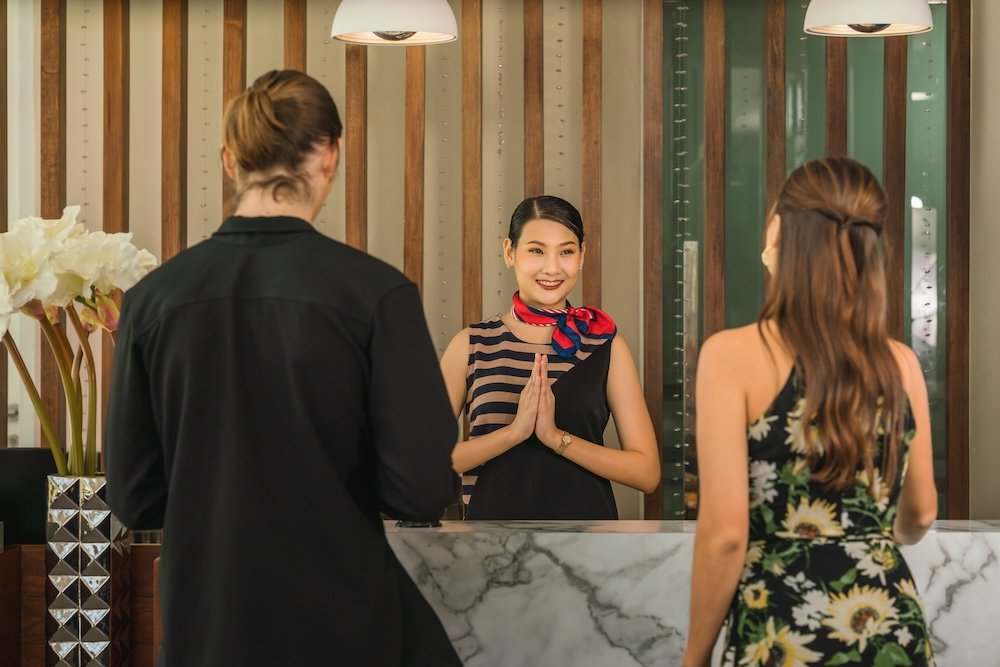
- The Wai: Offer a “wai” as a greeting by pressing your palms together at chest level and bowing your head slight y. If someone wais you first, return the gesture, though children and certain junior-to-senior situations are exceptions.
- Right Hand Use: Handle objects, money, and food with your right hand, since the left is traditionally considered impure.
- Head and Feet: The head is regarded as the body’s most sacred point, so avoid touching anyone’s head, even in a friendly gestu e. Feet, by contrast, are considered the lowest and least clean part of the body, so keep them away from other people, monks, and Buddha images, and never point them in that direction.
Temples and Modest Dress
- Dress Code: Keyour ep shoulders and knees covered when entering temples or the royal palace, aavoid of skimpy or form-fitting clothing like tank tops and short shorts.
- Remove Shoes: Slip off your shoes before stepping into a temple, a private home, or certain shops, and avoid stepping directly on a doorway’s raised threshold.
Social Conduct
- Respect the Monarchy: Treat the King, royal portraits, and Thai banknotes and coins (which bear his image) with care, and never disparage them. Note that criminal penalties may apply for disparaging the King.Stay calmalAvoid of visible frustration, raised voices, or outbursts of temper, since Thai culture places high value on composure and politeness.
Ethical Considerations
Elephant tourism has changed considerably in northern Thailand over the last two decades, and Chiang Mai now has one of the largest concentrations of camps in the region that market themselves as “sanctuaries,” with varying quality and no regulation of the te m. Genuine sanctuaries do not offer elephant riding, shows, or tricks, as training elephants to carry howdahs or perform tricks involves methods that cause lasting physical and psychological harm.
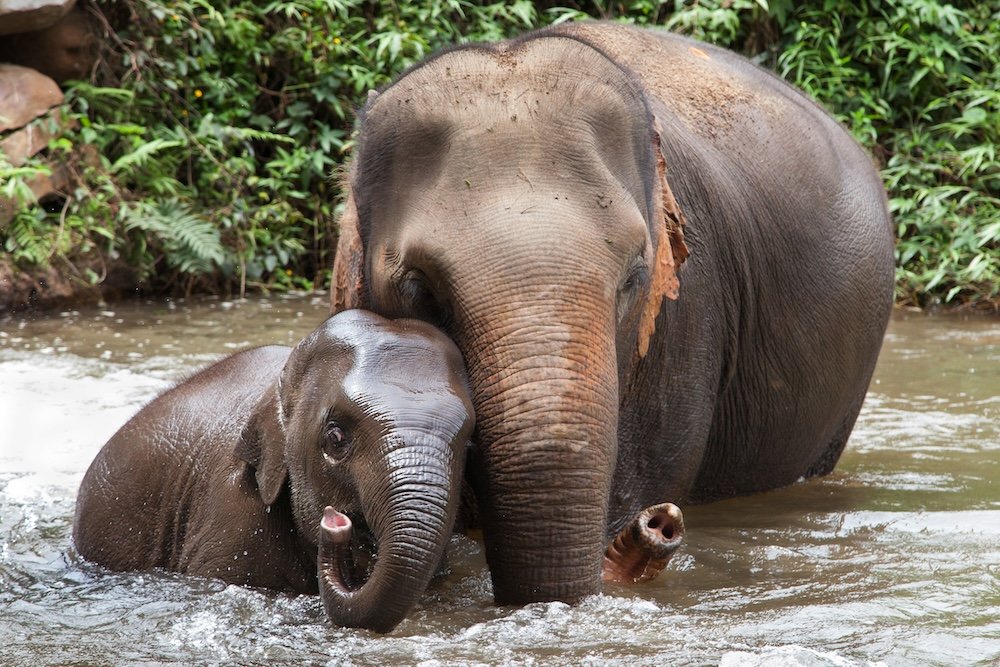
The most ethical sanctuaries increasingly discourage even popular activities like bathing and scrubbing, which replaced elephant riding in many camps a decade ago, because they still require the animal to enter the river for visitors rather than doing so natural y. Visitors looking to see elephants should seek out operations where elephants are free to roam, forage, and socialize with minimal human interaction, visitor numbers are kept low and at a respectful distance, who have visibly retired their bullhooks and chains, and who are transparent about how their elephants came to be there and why, and it is worth avoiding any sanctuary that is not able to explain an elephant’s history or still allows any physical performance, regardless of the marketing language us d. Take the same caution with tiger “selfie” spots and other captive wildlife photo opportunities common around northern Thailand, where animals are often drugged or otherwise controlled to pose for photos and kept in subpar conditions.
Temple Culture
Historically and culturally, most Thai Buddhist men spend a short period serving as mon s. Chiang Mai’s temples are places of active worship rather than history museums, and visitors should dress modestly (avoiding exposed shoulders and knees), remove their shoes when entering buildings that contain a Buddha image, lower their voices, and turn their phones to silent mode inside prayer hal s. Women should not touch monks or hand them objects directly; instead, they should place items on the ground for them to pick up, and should not sit or stand higher than a seated monk or Buddha image when taking photographs to avoid coming across as disrespectful.

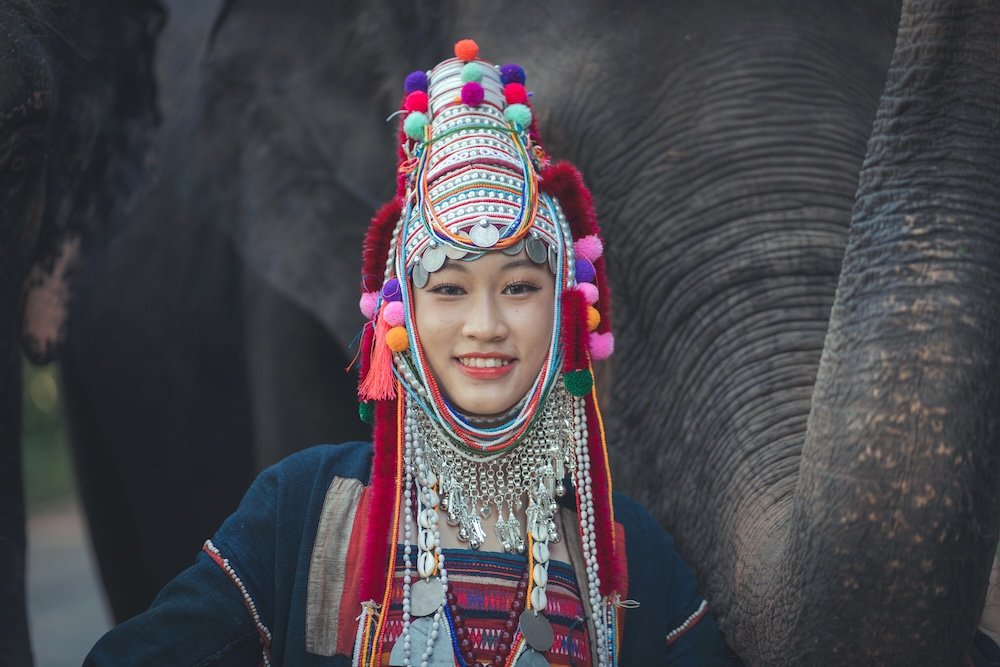
The Karen, Hmong, Lisu and Akha hill tribes call the city and surrounding hills home, and visits to hill tribe villages, whether independently or as part of a trekking tour, are much more respectful and rewarding when booked through operators who pay the communities directly and ask permission before taking photographs of individuals, rather than the “human zoo” style day trips that treat villages as nothing more than photo spots.
Weather ?for High, ?Shoulder and Low Season
Chiang Mai has three seasons rather than four and is much cooler at night than other places in coastal Thailand because of its inland location and higher elevation.
Its high or warm season is from November to February, which is also Chiang Mai’s peak tourist season and overall most pleasant weather with daytime highs in the high 80s°F (around 29–31°C) and cooler nights (dipping into the upper 50s°F (14–16°C) in December and January) and also the driest and clearest period of the year with the least amount of rainfall; also, it sees the most Thai festivals and events during this time, such as Loy Krathong in November and Yi Peng’s lantern float release in December.
The hot or mid season is from March to May, which is also the hottest time of year for Chiang Mai with daytime highs in the mid-90s°F (35–36°C) and occasional hot days over 100°F (38°C) in April, and also features, in the earlier months of this time of year, regional agricultural burning which can blanket Chiang Mai and the surrounding valley with a haze of smoke and unhealthy air quality present from about February to April, which is a factor to consider when planning a visit during this time window as well; this generally clears up by Songkran, the mid-April Thai New Year’s water festival which brings some crowds despite the agricultural smoke concern.
The rainy season runs from approximately May to October, when Chiang Mai sees the most rainfall of the year. Still, most rain during this time comes as short but heavy afternoon or evening downpours rather than all-day rain, and mornings are generally clear, with the hills looking their greenest.