


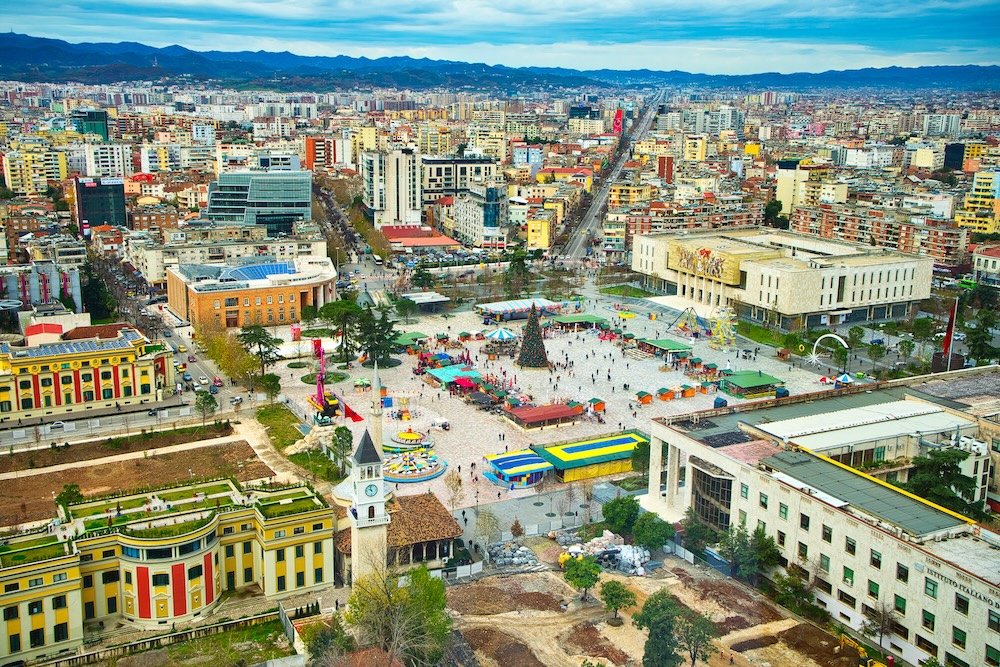
At ?the rental car counter inside Tirana’s airport, the clerk asked if I was heading straight to the coast like most of her other customers. Albania’s beaches are two to four hours south, cheaper and much less crowded than Croatia’s or Greece’s, and enough people who land here treat Tirana as an airport-to-highway stop, change some money, pick up a coffee, and keep going. I told her I was spending three nights here. She thought for a moment and named a restaurant near Skanderbeg Square for dinner. That’s Tirana in miniature. It’s not a city you’d plan a couple of weeks around the way you would Rome or Istanbul, but it’s a city that rewards a couple of days and then hands you the keys to explore the rest of the country.
Albania has spent the last decade shedding its “undiscovered” status, and Tirana is where you see it in action. Wizz Air and Ryanair have turned Tirana’s airport into a veritable European hub with nonstop flights to around 110 destinations in 34 countries, most of them under 50 euros and a couple of hours from Italy, Germany, or the UK. There isn’t yet a nonstop from the United States, so Americans transit a European hub one way or another, which matters when you’re planning your itinerary. What that buys you, once you’re here, is a city where even now a hotel room or a dinner for two at a restaurant still feels like a real bargain: Eurostat statistics rank Albania the second cheapest restaurant destination in Europe, second only to North Macedonia with a three-course lunch for two averaging just 30 euros. The sidewalks are wide and pleasant to walk on, and the crowds that make the other Adriatic destinations feel like theme parks in the summer haven’t yet touched this one. Tirana has the energy of a city that knows it’s being looked at and hasn’t yet decided to put on a show.

Tirana was formally established in 1614 by the Ottoman general Sylejman Pasha Bargjini, who built a mosque, bakery, and bathhouse here and lured merchants to settle around it. It remained a modest bazaar town for the next three centuries until it became Albania’s capital in 1920, when the newly independent nation needed a capital city not controlled by a rival faction. Italy under fascist Mussolini occupied Albania in 1939 and left behind the broad boulevards and rationalist government buildings that frame Skanderbeg Square.

Then came Enver Hoxha and his Stalinist country, ruling Albania in isolation from 1944 until he died in 1985, first cut off from the Soviet Union, then from China, then from everyone else. Hoxha’s obsessive but paranoid commitment to rigid, Stalinist Marxism caused Albania to repeatedly sever ties with its powerful global allies, ultimately leaving the country completely alone on the world stage. Believing an invasion could come at any moment, his government constructed more than 750,000 concrete bunkers across the country between 1967 and 1986, one for every four citizens. The collapse of communism in 1991 was followed by a hard decade of economic collapse, a nationwide pyramid scheme investment scam that wiped out a large portion of Albanians’ household savings in 1997, and the unrest that followed. Since then, it’s been a turnaround, starting in earnest after the election of the new mayor in 2000, who began painting the grey Soviet-era government apartment buildings bright colors and geometric patterns. It’s a small, inexpensive change, but it has changed how Tirana looks in photographs and how Tiranians talk about their own city.

Skanderbeg Square is the obvious place to start: a broad plaza dominated by an 11-meter bronze statue of Skanderbeg, the medieval nobleman who resisted Ottoman conquest for 25 years. The nearby Et’hem Bey Mosque, completed in 1821 with painted frescoes inside its dome, survived the atheist communist years because it was designated a cultural monument, and its interior is some of the most delicate in the country. The National History Museum closed in March 2024 for a four-year restoration that won’t be complete until 2028 and won’t reopen until then, so plan accordingly, though you can still see its massive facade mosaic from outside.

Head a few blocks to Blloku, once a gated residential neighborhood of villas for Communist Party bigwigs that wasn’t allowed to be inhabited by regular people until 1991 and now the city’s trendiest cafe and bar district. A couple of blocks further is the House of Leaves. This 1931 villa served as the headquarters of the wiretap division of Albania’s communist secret police, and in 2017 opened as the Museum of Secret Surveillance; it won the Council of Europe’s Museum of the Year award in 2020, a small and unsettlingly dark counterbalance to the cafe district. For something lighter, the Dajti Ekspres cable car, the longest in the Balkans, zips you up to the ridge of Mount Dajti in just 15 minutes for a view of the whole valley.
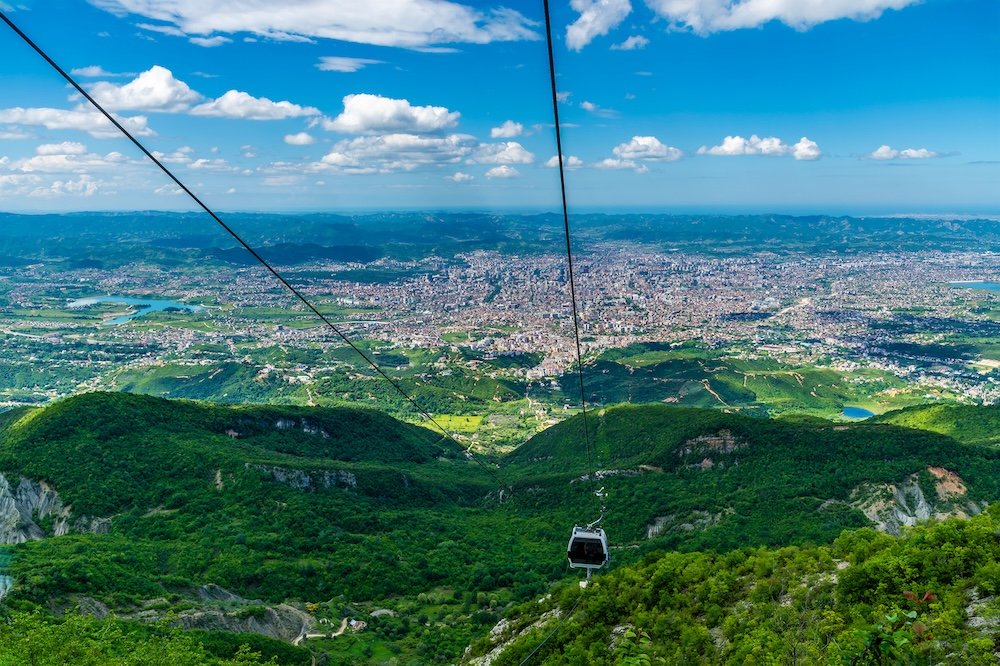
Next comes the part most itineraries severely underuse. Rather than packing and unpacking in a different town each night, Tirana’s location puts an unusual range of Albania within a single day’s reach, which makes it one of the more efficient bases in the Balkans.
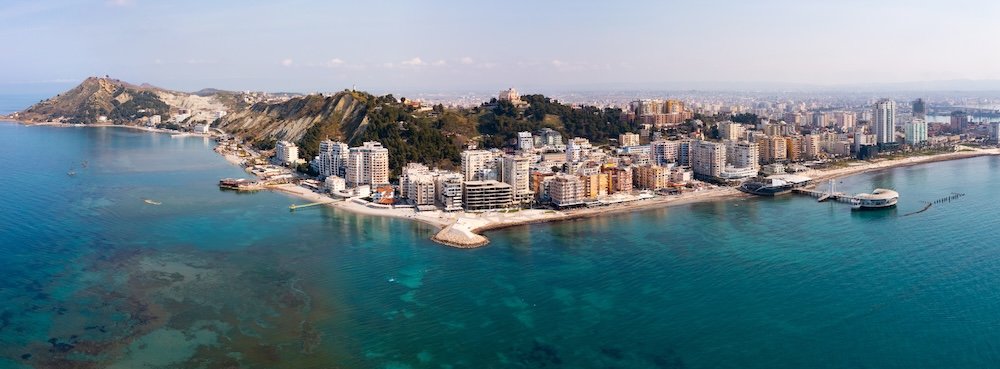
Durres, half an hour west of Tirana, has the biggest Roman amphitheater in the Balkans, a 15,000- to 20,000-seat ruin that was rediscovered by accident in 1966, a beach that’s in working order, and ferry connections to Italy.
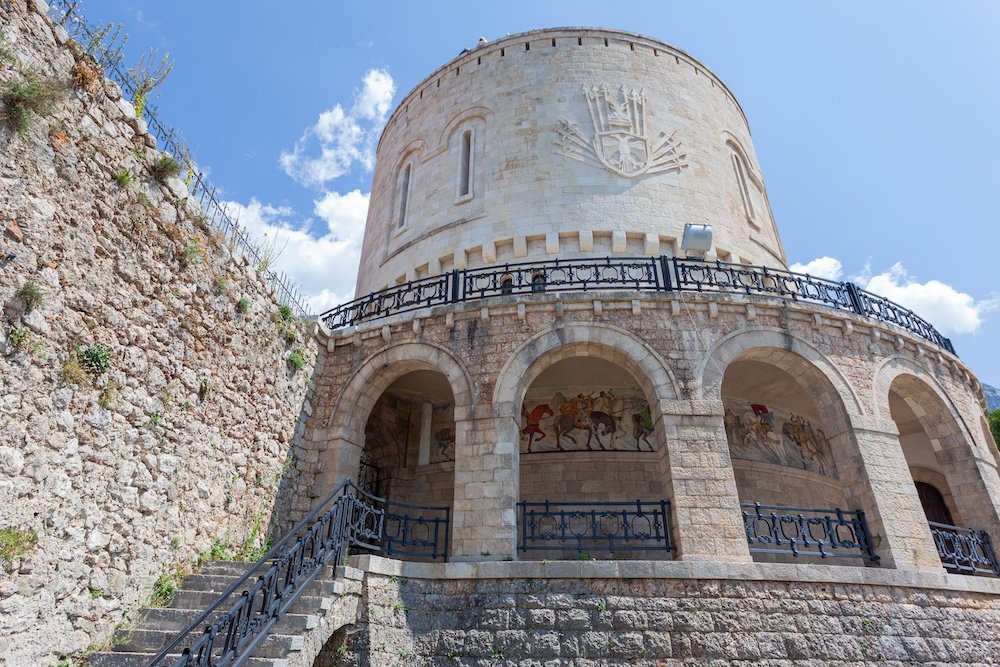
Krujë, 12 miles north, is the fortress city where Skanderbeg resisted three Ottoman sieges, with its museum and old bazaar built into the hillside behind the castle walls, an easy round trip of no more than an hour’s drive time.
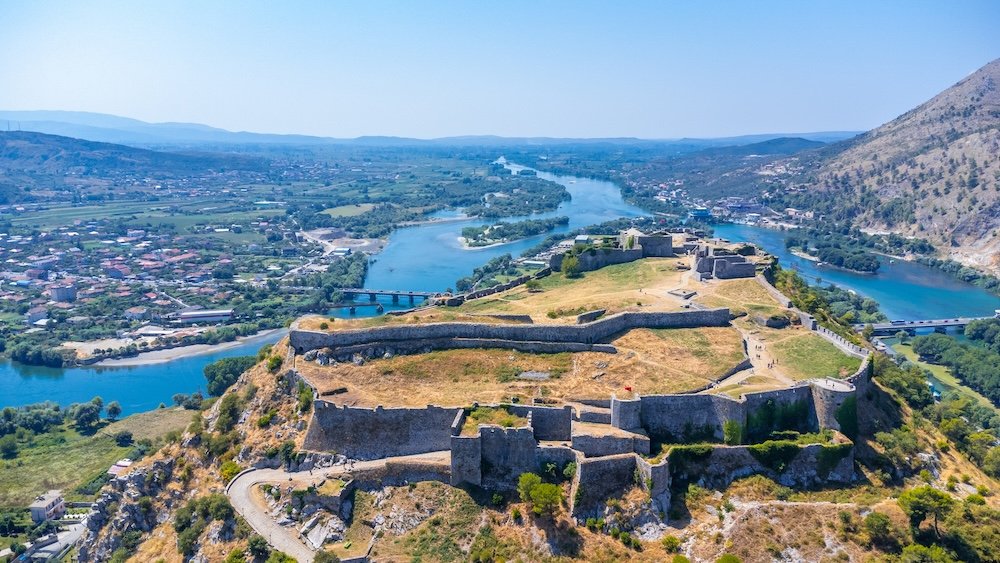
Shkodër, 65 miles, or one and a half hours, north, balances the Rozafa Castle ruins on a hill with a truly different kind of city experience in the town itself, centered around Lake Shkodra.
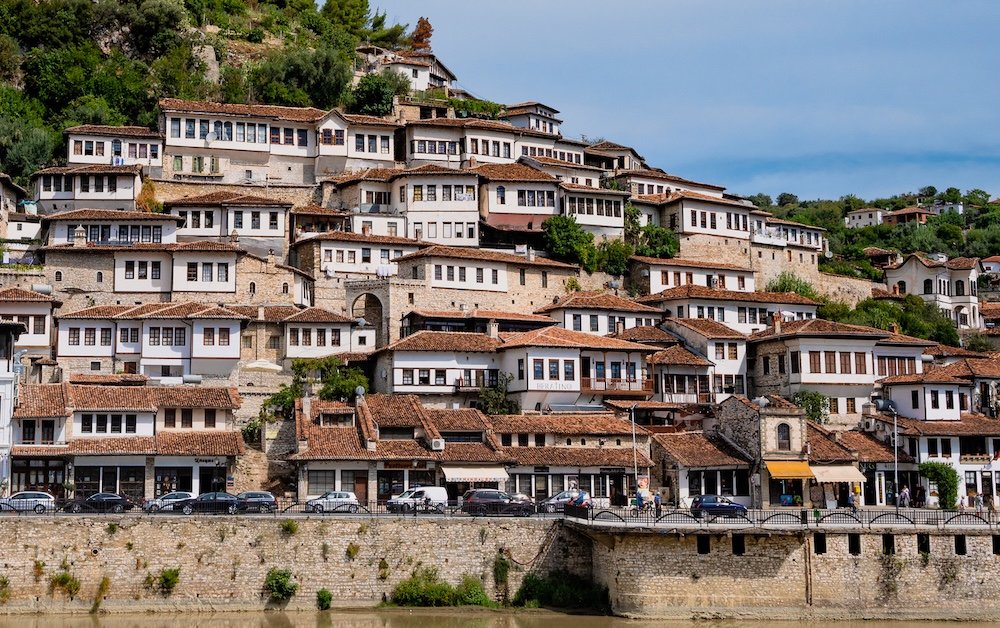
Berat, two hours south, is the one that’s worth spending a night in if your schedule allows: the old town of Ottoman houses perched on opposite hillsides above the Osum River, known as the town of a thousand windows for reasons that are hard to miss when you look up.
Four very different faces of Albania: a bunker-filled capital city, a Roman port, a medieval fortress city, a mountain lake city, a museum town, none of them more than two hours from the same hotel room.
Albania has some of the highest cafe density in the world per capita, and nobody seems in any particular hurry in any of them. Try tavë kosi, lamb and rice baked in a tangy yogurt custard, and fërgesë, a pepper, tomato, and cheese stew that shows up on at least some menus in one form or another.

Byrek is a flaky phyllo pastry filled with spinach, cheese, or meat that serves as both breakfast and late-night food.

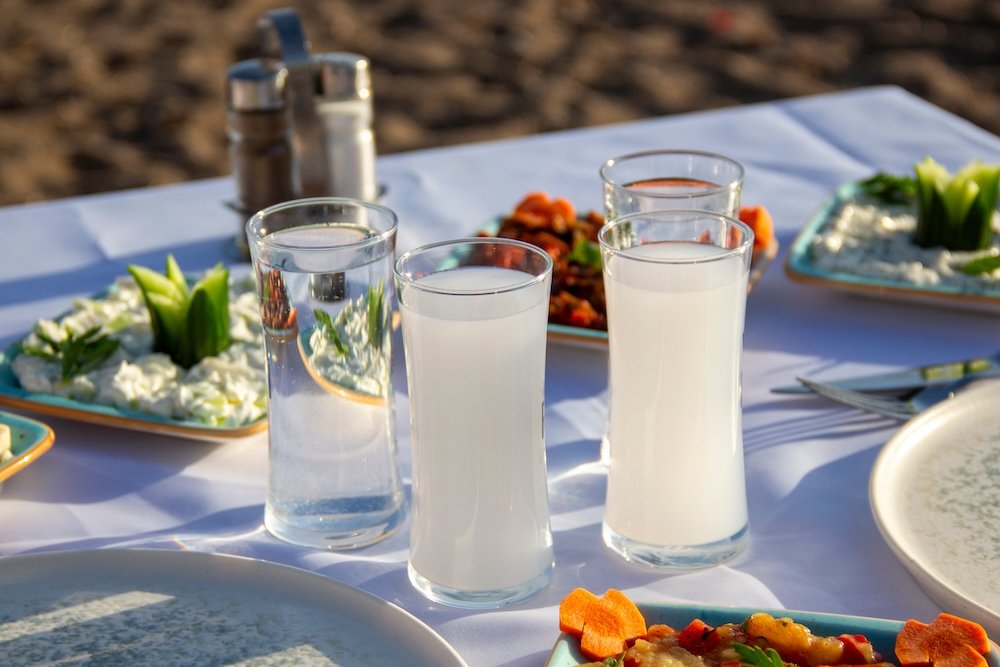
Raki is a homemade grape or fruit brandy served before the meal rather than after, and refusing a glass is practically a minor social faux pas.
The best times to visit are spring and fall, with average summer highs in the low 90s Fahrenheit and mild, wet winters, January averaging just 45 degrees.