


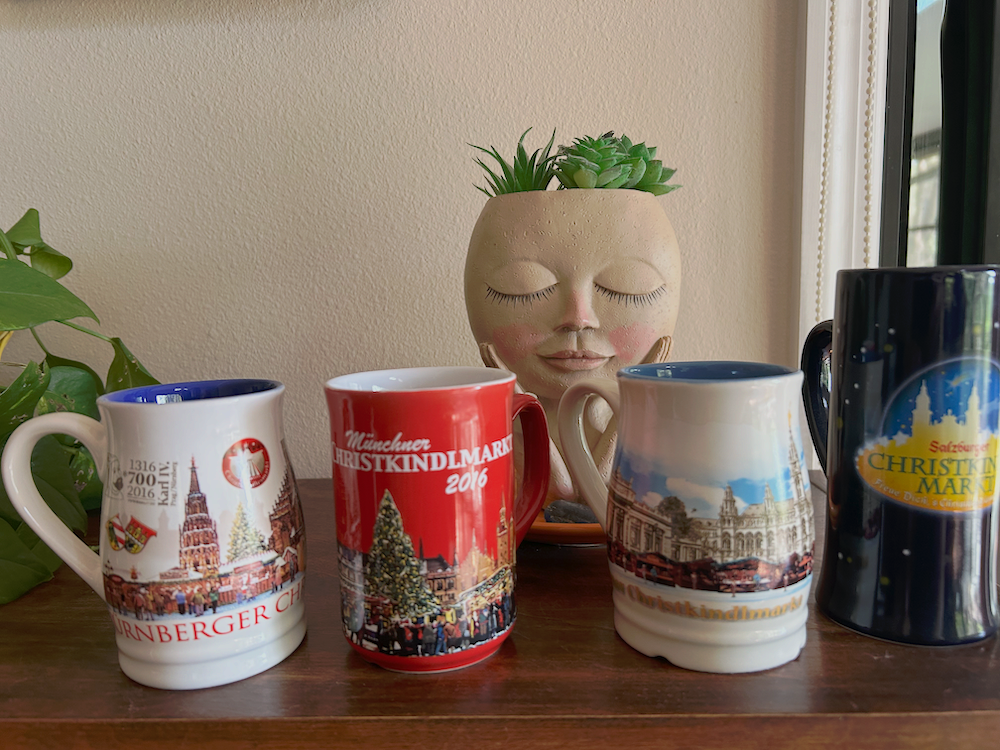
The woman at the Glühwein stall took my five euros. She pulled a mug from a rack of a hundred identical mugs, filled it from a pot that had been simmering since noon, and slid it across the counter with a smile. She already knew I wasn’t bringing the mug back. Nobody does. That’s the whole point of the two-euro Pfand built into the price. You can return the mug at the end of the night and get your coins back, and maybe a few disciplined people do, but most walk off into the cold holding a ceramic souvenir shaped like a boot, a bell, a half-timbered house, stamped with the year and the town. I have eleven of them on a shelf in my kitchen now, no two alike, and I couldn’t tell you which market gave me which without checking the bottom.
That shelf is the real argument for Christmas markets, more than the lights or the gingerbread. It’s a physical timeline of a season that some people go out of their way to avoid.
I hear the objections often enough to take them seriously. The markets are too crowded, people say, picturing shoulder-to-shoulder foot traffic under strings of bulbs. It’s too cold, they say, and they mean it as a complete sentence, the kind that ends a conversation. Others argue the timing never works, because December belongs to family, to flights already booked to somewhere warm, to obligations that don’t leave room for a long weekend in Strasbourg.
None of these objections are wrong, exactly. They’re just incomplete.
Crowds are real, especially on weekend evenings in the second half of November when the markets first open and everyone within driving distance shows up at once. The fix isn’t complicated: go on a weekday, go before 4pm or after 9, or go to the market’s second and third squares instead of the postcard one everyone photographs. Basel spreads itself across three squares specifically so the overflow from Barfüsserplatz has somewhere to go. Manchester does the same across seven. Crowds concentrate where the cameras are. Walk two streets over and the crowd thins to something closer to a neighborhood gathering.
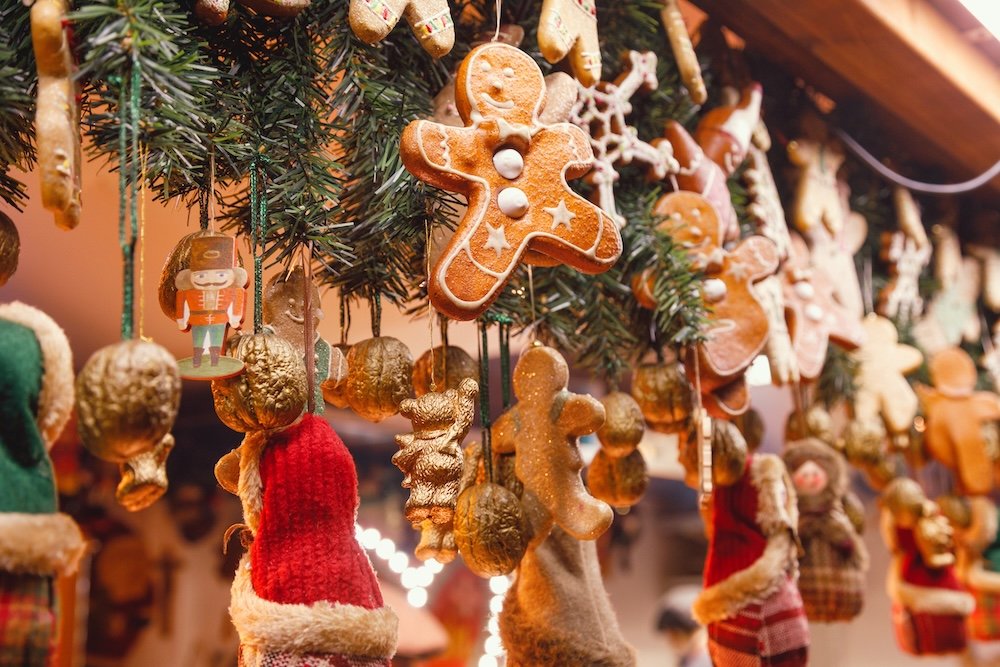
Cold is not a design flaw. It’s the reason the mulled wine tastes like something instead of nothing, the reason roasted chestnuts are worth the trouble, the reason a warm stall selling Lebkuchen feels like a small event rather than a snack. Dress for it the way locals do, in real boots and a coat that closes, and the cold becomes weather rather than an obstacle. Every market I’ve listed here also has enclosed areas, fire pits, or simply enough stalls packed close enough together that standing still for ten minutes doesn’t require heroics.
As for the holiday travel conflict, most of these markets open in the second half of November and run through the third week of December, closing before Christmas Eve or shortly after. They are not competing with Christmas Day at home. They are the weeks before it, the part of the calendar that otherwise gets spent wrapping presents and rewatching the same three movies. A market trip fits into late November or the first two weekends of December and still gets you home in time for whatever your family actually does on the 25th. A few, notably Brussels and Bolzano, run into early January, which makes them a genuine option for people who’d rather travel after the holiday rush than before it.
Here is where I’d send you, and why.
Germany, Nuremberg
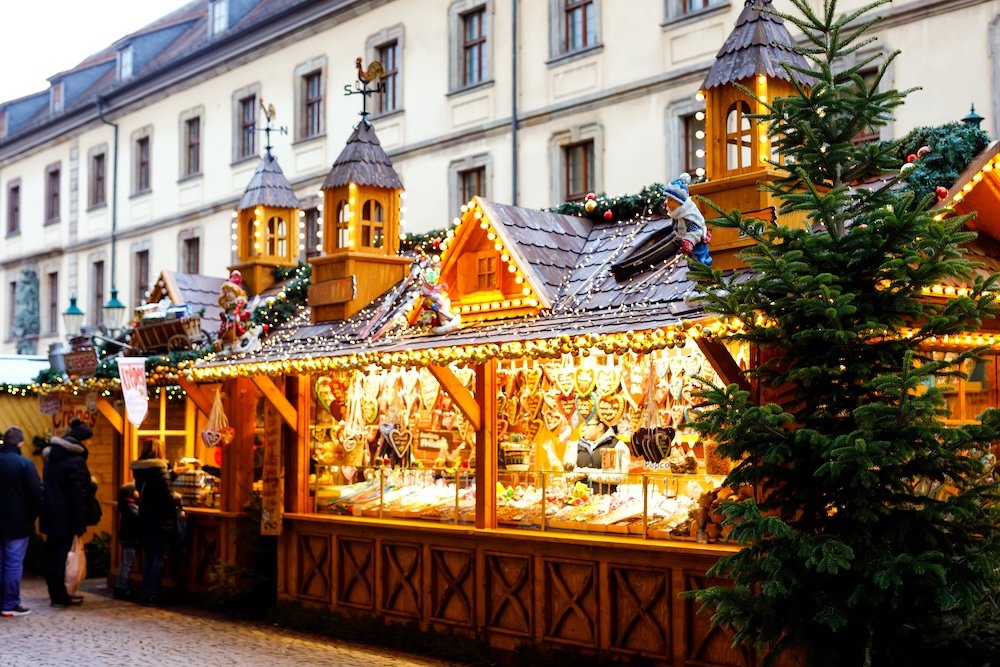
Nuremberg’s Christkindlesmarkt has been setting up in the Hauptmarkt in some form since the 1600s, which makes it one of the oldest of its kind and gives it an authority the newer markets don’t bother pretending to have. The stalls are red and white striped by regulation, not accident, and the smoke from the sausage grills settles over the square by early afternoon. Ask for a Nuremberg bratwurst and you’ll get something roughly the length of a finger, a product of a 700-year-old civic recipe, usually served three or six to a roll. The market opens each year with a girl chosen from the city to deliver the Christkind’s prologue from the balcony of the Frauenkirche, a role Nuremberg takes more seriously than most cities take their mayoral elections. Buy the Lebkuchen here rather than anywhere else on this list. It’s the standard the others are measured against.
Austria, Vienna
The market in front of the Rathaus enters through an arched gateway lit with candles, which tells you before you’ve bought anything that Vienna intends this to feel formal rather than folksy. It mostly succeeds. The stalls sell delicate glass and wood ornaments instead of the mass-produced kind, the roasted chestnut vendors work the perimeter, and somewhere nearby a small orchestra is usually playing something that isn’t “Jingle Bells.” Vienna’s market runs longer than most, well into the day after Christmas, so it absorbs the crowds that funnel through in early December without ever feeling as tight as Nuremberg’s.
France, Strasbourg
Strasbourg has been doing this since 1570, which it will remind you of, repeatedly, and which it has earned the right to. The city calls itself the Capital of Christmas without much argument from anyone, and the centerpiece is a fir tree on Place Kléber that runs about thirty meters tall, wrapped in enough lighting to be visible from the surrounding hills. What makes Strasbourg different from the German markets nearby is the Alsatian half-timbering: narrow lanes of black-and-white houses strung with lights, which turns the whole old town into a market rather than confining the market to one square. Go for the tree. Stay for the vin chaud and the fact that you can wander for two hours without doubling back on yourself.

Czech Republic, Prague
Old Town Square sits under the twin spires of Týn Church, and the market fills in beneath them with wooden chalets selling trdelník, the cinnamon-dusted pastry cylinder that has become something closer to a tourist rite of passage than a traditional Czech food, and mulled wine strong enough to justify the wool socks. A large lit tree anchors the square, and the tree lighting itself is treated as a proper event, with music and a crowd that gathers early to claim a sightline. The market runs long, typically into the first week of January, which makes Prague a reasonable choice for travelers who’d rather avoid the pre-Christmas rush entirely.
Hungary, Budapest
Vörösmarty Square does the expected things well: genuine handmade crafts rather than the imported kind, kürt?skalács rolled and grilled over coals until the sugar on the outside turns brittle, mulled wine by the dozens of stalls. What sets it apart is the Gerbeaud building at the square’s edge, where a light show is projected onto the façade at intervals through the evening, timed to music, drawing a small standing crowd every time it runs. It’s the kind of detail that photographs well but plays even better in person, because you don’t expect a 19th-century café building to put on a show.
Switzerland, Basel
Basel spreads its market across three squares, Barfüsserplatz, Münsterplatz, and Claraplatz, roughly 150 wooden chalets in total, and the result feels less like a single event and more like a city that has simply decided to keep its lights on later than usual. Try the Basler Läckerli, a spiced honey biscuit with a recipe that predates the market itself by centuries, and expect a market that runs quieter and more orderly than its counterparts in nearby France and Germany. Basel sits at the seam of three cultures, and the food stalls make no effort to pretend otherwise: Swiss, French, and German specialties sit next to each other without apology.
Belgium, Brussels
Winter Wonders is the closest thing on this list to a full-scale winter festival rather than a market. More than 200 chalets stretch for roughly two kilometers from the Grand-Place toward the fish market, with a Ferris wheel, an ice rink, and a light and sound show projected hourly onto the guild houses ringing the Grand-Place itself, one of the more theatrical uses of a UNESCO World Heritage backdrop you’ll find anywhere in Europe. Belgian waffles and hot chocolate are, correctly, everywhere. The scale means Brussels handles crowds better than smaller markets do; there’s simply more market to absorb them.
United Kingdom, Manchester
Manchester’s markets spread across seven locations, including Albert Square, Exchange Square, and King Street, with roughly 225 stalls between them, and organizers routinely bill the combined footprint as among the largest and busiest in the country. The one wrinkle: Manchester Town Hall, the building most associated with the market’s postcard image, has been under restoration for years, with completion not expected until 2027, so the giant Santa that once perched near it now holds court in St Peter’s Square instead. It’s a minor disruption to the tradition and, honestly, a fairly Mancunian one; the city rebuilds around its own festivities rather than pausing for them. Expect bratwurst and mulled wine with a British accent, plus stalls that lean harder into gift shopping than the Continental markets do.
Italy, Bolzano
Bolzano sits in South Tyrol, close enough to the Austrian border that the market in Piazza Walther runs on Alpine rules rather than Italian ones. Menus list Knödel and strudel next to pasta, the streets are as likely to carry German as Italian, and the Dolomites are visible from the stalls on a clear day. Vin brulé replaces Glühwein in name only. The market runs a traditional Krampus parade at points in the season, performers in horned costumes trailing St. Nicholas through the crowd, which is a useful reminder that not every European Christmas tradition is built around comfort.
It was some version of that first mug, years ago, that started the shelf. I didn’t plan to collect anything. I just didn’t feel like standing in the return line in the cold, and the mug was small enough to fit in a coat pocket. Every market since has added one, whether I meant it to or not, and the shelf now reads like an itinerary I never wrote down on purpose. If you go this year, you’ll probably do the same thing. Bring an extra bag for the ride home.